Genesis 21
Chiga Tevaen'Jema Atesuja 1, Aisheve Caña'cho · Tap a verse to see its cross-references.
Isaacma isu'cho
1Na'su Chiga Abrahamnga suqquia'caen Sarama pporaen cuintsu tise suqquia'caen daye. 2Tsa'caen tsonsi surie dapa tsandie du'shuve isu. Nane Abraham tayo coenzasi tsu Saraja tise'be du'shuve isu. Chiga su'cho a'ta tsu tsama isu. 3Sara isusi Abraham tise dutssi'yema attepa Isaacve inisian. 4Toya'caen du'shu ocho a'tave an'bian'ni tsu Abrahamjan Chiga mandaqquia'caen tise du'shumbe shondusu'cho ttonoma chhiyitevaen. 5Abraham cien canqque'fave an'bian'ni tsa'caen Isaacma isu. 6Tsonsi Saraja asi'ttaen: “Chiga ñama in'jaensi gi avujapa feña. Nane poiyi'cco majan ña du'shuma isu'chone paña'da tsu ñai'ccu fae'ngae feña'faya. 7Majan ya'caen tson'chove paña'choecan'da tsu Abrahamnga ‘Saraja isuye oshambi’ qquen suye'can. Tsa'ma tiseja coenza ccashe'yeve dasi gi tsandie du'shuma tisenga afe.”
Agarma, Ismaelma'qque joqquitssian'cho
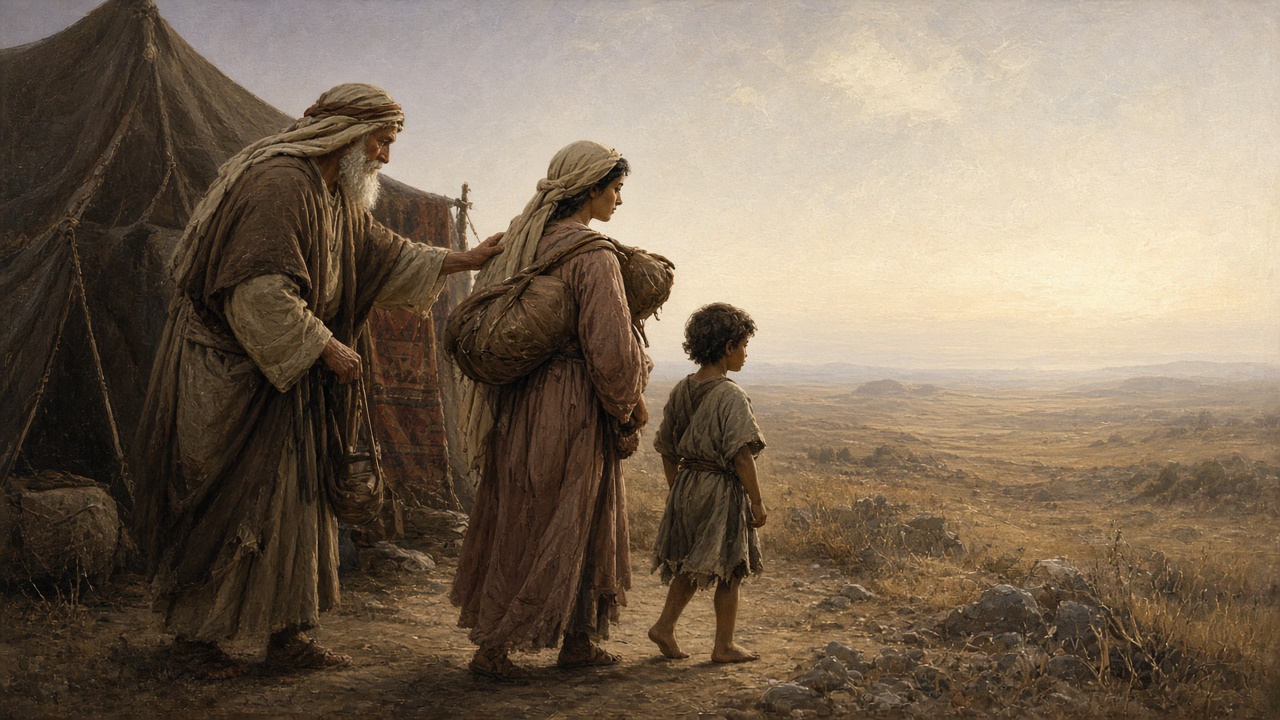
8Du'shu Isaacja coemba chochoma antte. Chochoma antte'cho a'ta Abrahamjan poiyi'cco a'ima ttu'sepa boñasi fiestaen'fa. 9Tsa'ma Abraham faesu dutssi'ye, tsa egipto'su pushesu Agar du'shu, Isaacma fe'ñasi Saraja attepa injama'choni iyicca'ye. 10Iyicca'yepa Abrahamnga su: “Va sema'su pushesu, tise du'shuma'qque joqquitssianjan. Nane va sema'su pushesumbe du'shuja fae'ngae ña du'shu Isaacui'ccu dutssi'ye osha'choma isuqquia'caen isuya'bi.”
11Tsama pañamba Abrahamjan ñoa'me ñombi'ye. Nane Ismael'qque tise dutssi'ye tsu. 12Tsa'ma Chigaja tisema su: “Ñombi'yejama que du'shune ni que sema'su pushesune. Tsa'ma Sara in'jamba iñajanqquia'caen tsonjan. Ñoa'me Isaacne que omba'su dutssiyendeccuve atapasi gi agattoya. 13Toya'caen sema'su pushesumbe du'shu'qque quembesi gi tise omba'su dutssiyendeccuve tsain'bitsse atapoensi tise'pa'qque joccapitssia a'ive da'faya.”
14Chiga tsa'caen susi ccaqui a'ta sinte'yi Abrahamjan panma Agarnga afepa ttono botiyanga'qque tsa'ccuma on'boemba tise opipa'chonga ottaen. Tsomba du'shui'ccu tisema joqquitssian moe tise tsa'o'ye. Tsa'caen joqquitssiangepa Agarja Beerseba'su a'i menia jacan. Mani jaya'chove atesumbipa injanga jacan. 15Ttono botiyani an'bian'cho tsa'ccuma sefaemba tsaqquie'supa Agarja du'shuma cati quini'ccosi tsosiccunga. 16Catipa biaccaccatsse japa dyai, du'shu paye tson'jen'choma caña'jeñe in'jambipa. Du'shu i'nañe ashaensi 17Chigaja pañamba tisema sefacconi'su shondo'suma moe. Sefaccone tsu Chigama shondo'suja Agarma ttu'sepa su: “¿Micomba qui tsa'caen dyai, Agar? Dyombe canjan. Tayo tsu Chigaja paña du'shu tseni ccuipa ina'jen'choma. 18Jangipa du'shunga japa tise tivema indipa tisema jangianjan. Ñoa'me gi tisema ccushaemba fuiteya cuintsu tise dutssiyendeccu joccapitssia aindeccuve da'faye.”
19Tsa'caen supa Chigaja Agarma canjaen tsa'ccu posoma. Tseni japa ttono botiyanga tsa'ccuma on'boen. Toya'caen Ismaelma cui'ña. 20Tise suqquia'caen Chigaja du'shu Ismaelma fuite. Fuitesi quin'anme dapa a'i menia can'jen. Battittianccui'ccu battiañe ñotsse atesupa canse. 21Nane Parán a'i menia can'jemba tise mama anttesi egipto'su pushesuma pushe.
Abraham, Abimelec injancco'fa'cho
22Tsa'caen tsonsi Abimelec, tise sundaro na'su, Ficoli'ccu Abrahamni can'su jipa tisema chigambiamba su:
—Chiga quema fuite'je'choma gi poiyi'cco in'jan'fa. 23Tsa'cansi ingi vani can'jensi Chiga pa'ccoma paña'jen'ninda, ingi'ccu fae'ngae injancco'faja. Chigáne, ñama egae tsonjama, ni ña dushundeccuma, ni ña omba'su dutssiyendeccuma'qque egae tsonjama. Nane ña quema ñotsse tsonqquia'caen ccane'qque ñama, ña ande'su a'ima'qque ñotsse tsonjan.
24Tsonsi Abrahamjan su:
—Chiga caña'jen qquen in'jamba gi tsa'caen tsoña. 25Tsa'ma tsa'caen condasepa Abraham tise tsa'ccu posone Abimelecnga conda. Nane Abrahambema tsu Abimelecmbe semasundeccuja itsa'fa. 26Pañamba Abimelecja su:
—Ja'ño gi tsane me'ttia'ye paña. Nane que ñanga condambisi gi atesumbe can'jen. Atesumbi gi majan tsu tsa'caen tson.
27Tsonsi Abraham ovejandeccuma vaurandeccuma'qque i'ngapa Abimelecnga afe. Afepa tsequi a'ta tsu fae'ngae injancco'fa. 28Tsa'ma Abraham siete oveja pushema tsa afe'cho'sumbe cca'ttinga attufaemba ccutsian. 29Ovejama attepa Abimelecja iñajampaña:
—¿Jongoesie qui tsa siete ovejama attufaemba ccutsian?
30Iñajampañasi Abrahamjan su:
—Ña afesi va siete oveja pushema isu'ta qui va posoja ña changoemba an'bian'cho qquen canjaeña.
31Tseni tsa'caen tsomba tsa posomajan inisian'fa Beersebave. Nane tseni fae'ngae injanccopa “injancco'fa'cho poso” qquen tsu su.
32Tsa'caen Beersebani Abrahami'ccu fae'ngae injanccopa Abimelec, tise sundaro na'su, Ficol'qque toequi ja'fa filisteo andeni. 33Ja'fasi Abrahamjan tseni tamarisco quini'jima jon. Quini'jima jomba Tsangae Canse'cho Na'su Chiga Quitsama iñajan. 34Bo'tssingae tsu Abrahamjan filisteo andeni can'jen.
Did you know?
Isaac’s birth, Hagar’s departure, and Beersheba
- Abraham was a hundred years old when Sarah bore him Isaac, their only son together, and he circumcised the child at eight days old, as God had commanded. Sarah said that God had made her laugh, and that everyone who heard of this would laugh with her. Easton's Bible Dictionary (1897) notes that a great feast was held when Isaac was weaned, probably when he was about two years old.Sources: the Bible text itself · Isaac
- Hagar, whose name is explained as “flight” or, according to others, “stranger,” was an Egyptian and Sarah’s handmaid, whom Sarah gave to Abraham as a secondary wife. After Isaac’s birth, Abraham sent Hagar and their son Ishmael into the Wilderness of Beersheba with bread and a skin of water. Ishmael later settled in the Wilderness of Paran, a desert tract in the northeastern Sinai Peninsula between the Arabah on the east and the wilderness of Shur on the west, became a great archer, and his mother got him a wife from Egypt.Sources: the Bible text itself · Hagar · Paran
- Beersheba, “well of the oath” or “well of seven,” was named when Abraham and Abimelech swore an oath there over a well that Abraham said he had dug; he set apart seven ewe lambs as a witness, and the two made a covenant. Phicol, chief captain of the army of Abimelech, the Philistine king of Gerar, entered that alliance with Abraham. Abraham then planted a tamarisk at Beersheba and lived for a long time in the land of the Philistines.Sources: the Bible text itself · Beersheba · Phichol
Notes written with AI assistance from open sources (Theographic Bible Metadata, CC BY-SA 4.0; Easton’s Bible Dictionary, public domain) and reviewed before publishing.
Places in this chapter
Only places identified with high confidence are shown (90% or more according to the scholarly sources compiled by OpenBible). Period map: DARE (Digital Atlas of the Roman Empire), CC BY 4.0; modern map: © OpenStreetMap contributors; places: OpenBible.info (CC BY 4.0).
Credits and license for this translation
Chiga Tevaen'Jema Atesuja 1, Aisheve Caña'cho
New Testament and Genesis in Cofán (EC:con:Cofán)
copyright © 2012 Wycliffe Bible Translators, Inc.
Language: Cofán
Translation by: Wycliffe Bible Translators, Inc.
Cofán
con
Ecuador
Copyright Information
©Wycliffe Bible Translators, Inc. All rights reserved.
This translation text is made available to you under the
terms of the Creative Commons License: Attribution-Noncommercial-No Derivative Works.
( http://creativecommons.org/licenses/by-nc-nd/3.0/ )
In addition, you have permission to port the text to different file formats, as long as you
do not change any of the text or punctuation of the Bible.
You may share, copy, distribute, transmit, and extract portions
or quotations from this work, provided that you include the above copyright
information:
You must give Attribution to the work.
You do not sell this work for a profit.
You do not make any derivative works that change any of the actual words or punctuation of the Scriptures.
Permissions beyond the scope of this license may be
available if you contact
us with your request.
The New Testament
in Cofán
©Wycliffe Bible Translators, Inc. All rights reserved.
This translation is made available to you under the terms of the
Creative Commons Attribution-Noncommercial-No Derivatives license 4.0.
You may share and redistribute this Bible translation or extracts from it in any format, provided that:
You include the above copyright and source information.
You do not sell this work for a profit.
You do not change any of the words or punctuation of the Scriptures.
Pictures included with Scriptures and other documents on this site are licensed just for use with those Scriptures and documents.
For other uses, please contact the respective copyright owners.
2014-04-22
Source: http://ebible.org/conNTpo/ · eBible.org