Genesis 20
Chiga Tevaen'Jema Atesuja 1, Aisheve Caña'cho · Tap a verse to see its cross-references.
Abraham, Abimelec iyicco'fa'cho
1Tsonsi Abraham tise can'jen'cho'ye sombopa Néguev andeni ja. Tseni japa Gerar canqqueni ca'nimba can'jen. Gerar tsu Cades canqque, Shur canqque enttingeni. 2Tseni can'jemba Abrahamjan tise pushe Sarama tise que'tte qquen poiyi'cconga conda. Tsa'caen condasi tsa canqque'su na'su Abimelecja manda cuintsu Sarama isi tise pusheve daye. 3Tsa'ma tsa'caen tsomba cosesi Abimelecja anamba ayo'o. Ayo'osi Chiga tisenga attiamba su: “Queja paye qui tson'jen. Nane que i'cho pushesuja faesumbe pushe tsu.”
4Tsa'ma Abimelec toya Sarai'ccu ccuimbipa Chiganga su: “Ña Na'su, ¿queta ti qui egae tsincombi'choama fi'ttiya? 5Abraham tsu su tsa pushesuja tise que'tte. Pushesu'qque Abrahamjan tise quindya qquen tsu su. Tsa'caen su'fasi gi afopoembi qquen in'jamba atesumbipa pushesuma i. Tsa'ma egae tsincombi qquen gi asi'ttaen.”
6Tsonsi Chiga ayo'oni tisema su: “In'jan gi queja atesumbipa tsa'caen tson. Tsa'cansi gi que injama'choma in'jaemba se'pi que tisei'ccu ccuipa ñama egae tsinconsa'ne. 7Tsa'ma ja'ño tsa pushesuma tise tsa'ndunga afeja. Nane tise tsa'nduja ñane afa'su tsu. Tise que'ine ñama iñajan'ninda qui ccusha'faya. Tsa'ma tise pushema afembi'ta qui ñoa'me que, que aindeccu'qque pa'faya.”
8Tsa'caen ayo'opa sinte'yi jangipa Abimelecja poiyi'cco tisema shondosundeccuma ttu'sepa pa'tssi tise ayo'o'choma conda. Tsama pañamba poiyi'cco dyo'fa. 9Omboe Abimelecja Abrahamma ttu'sepa su:
—¿Mingae qui inginga tson? ¿Jongoesui'ccu gi quema egae tsonsi qui tsa'caen ñama tson cuintsu va egae tsincon'cho ñanga, ña aindeccunga'qque shacave daye? Nane ñoa'me tsa'caen faesunga tsoñe ega tsu. 10¿Jongoesu qquen asi'ttaemba qui ingima tsa'caen tson?
Tsa'caen tsu Abimelecja Abrahamma su. 11Tsonsi Abrahamjan su:
—Ñajan ‘Vani'su a'i Chigave in'jambipa ñama fi'ttipa ña pushema itsa'faya’ qquen in'jamba gi tsa'caen tson. 12Tsa'ma afopoembi gi. Ñoa'me tsu tiseja ña que'tte. Nane ña yaya onque'nge tsu. Tsa'ma ña mamambembi. Tsa'cansi gi tisema pusheye osha. 13Toya'caen Chiga mandasi ña yaya tsaone sombopa cca'tti cca'tti jacamba gi tisema su cuintsu mani jacan'an'qque ñajan tise quindya qquen suye.
14Tsonsi Abimelecja Abrahamnga tise pushe Sarama afe. Toya'caen tsu oveja, vaura, sema'su tsandiendeccu, sema'su pushesundeccuma'qque Abrahamnga aqquia afe. 15Afepa su:
—Que canjan pa'cco ña andema. Ma'ttima ñotssiave atte'ta tseni can'jenjan.
16Toya'caen Saranga su:
—Ña que tsa'ndunga afe'cho tsu mil totoacori corifin'dive bare. Tsa'caen afepa gi poiyi'cco quei'ccu jacansundeccunga canjaen queja ñotssia. Nane quema afaseye osha'fambi tsu.
17Tsonsi Abrahamjan Abimelecne Chigama iñajan. Iñajansi Chigaja Abimelec, tise pushema'qque ccushaen. Poiyi'cco tise'pambe sema'su pushesundeccuma'qque ccushaen cuintsu ccase surie da'je'faye. Nane Abimelec Sarama tsa'caen itsasi tsu Na'su Chigaja poiyi'cco tseni'su pushesundeccuma pporaen cuintsu surive dambe'yi canse'faye. Tsa'ma ccushaensi ccase surie da'je'fa.
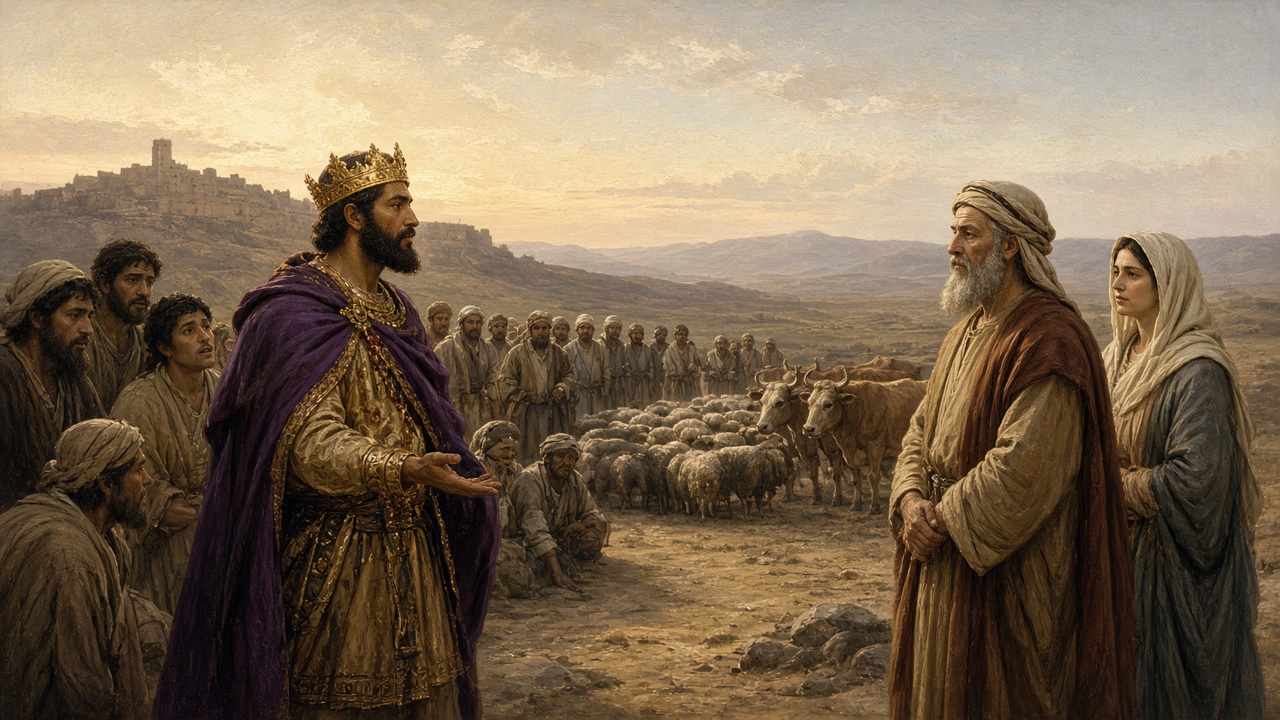
Did you know?
Sister and Wife in Gerar
- Abraham was staying in Gerar, a very ancient town and district on the southern border of Palestine, then ruled by a king named Abimelech. He had journeyed to the Negev, the arid district south of Palestine on the caravan route toward Egypt, and settled between Kadesh and Shur. Shur, a name meaning “wall,” was a desert region on Egypt’s northeastern edge, probably named for the frontier wall the Egyptians built there.Sources: the Bible text itself · Gerar · Negeb · Shur
- When Abraham said that Sarah was his sister, the kinship was not wholly invented: she was also his half-sister, the daughter of his father but not of his mother. Easton's Bible Dictionary (1897) gives the name Sarah as meaning “princess,” and says that name was given when it was announced that she would be the mother of the promised child.Sources: the Bible text itself · Sarah
- The name Abimelech appears again at Gerar in Isaac’s story. Easton's Bible Dictionary (1897) describes that later king as probably the son of the Abimelech Abraham met, and says he rebuked Isaac for a similar deception about his wife Rebekah, which the king discovered by accident. The same work says Gerar seems to have been a rich pastoral country.Sources: Abimelech (King of Gerar) · Gerar
Notes written with AI assistance from open sources (Theographic Bible Metadata, CC BY-SA 4.0; Easton’s Bible Dictionary, public domain) and reviewed before publishing.
Places in this chapter
- Negeb · 31.245, 34.841 · verse 1
Only places identified with high confidence are shown (90% or more according to the scholarly sources compiled by OpenBible). Period map: DARE (Digital Atlas of the Roman Empire), CC BY 4.0; modern map: © OpenStreetMap contributors; places: OpenBible.info (CC BY 4.0).
Credits and license for this translation
Chiga Tevaen'Jema Atesuja 1, Aisheve Caña'cho
New Testament and Genesis in Cofán (EC:con:Cofán)
copyright © 2012 Wycliffe Bible Translators, Inc.
Language: Cofán
Translation by: Wycliffe Bible Translators, Inc.
Cofán
con
Ecuador
Copyright Information
©Wycliffe Bible Translators, Inc. All rights reserved.
This translation text is made available to you under the
terms of the Creative Commons License: Attribution-Noncommercial-No Derivative Works.
( http://creativecommons.org/licenses/by-nc-nd/3.0/ )
In addition, you have permission to port the text to different file formats, as long as you
do not change any of the text or punctuation of the Bible.
You may share, copy, distribute, transmit, and extract portions
or quotations from this work, provided that you include the above copyright
information:
You must give Attribution to the work.
You do not sell this work for a profit.
You do not make any derivative works that change any of the actual words or punctuation of the Scriptures.
Permissions beyond the scope of this license may be
available if you contact
us with your request.
The New Testament
in Cofán
©Wycliffe Bible Translators, Inc. All rights reserved.
This translation is made available to you under the terms of the
Creative Commons Attribution-Noncommercial-No Derivatives license 4.0.
You may share and redistribute this Bible translation or extracts from it in any format, provided that:
You include the above copyright and source information.
You do not sell this work for a profit.
You do not change any of the words or punctuation of the Scriptures.
Pictures included with Scriptures and other documents on this site are licensed just for use with those Scriptures and documents.
For other uses, please contact the respective copyright owners.
2014-04-22
Source: http://ebible.org/conNTpo/ · eBible.org