Zephaniah 2
Paipel · Tap a verse to see its cross-references.
Feiengauen chon ekewe mwü mi nom ünükün Juta
1Oupwe chufengen o amwichafengenikemi, ämi chon ewe mwü esap sile säw, 2me mwen eman epwe asükemiila usun asepwäl a ässala pön wiich, me mwen epwe wareitikemi än ewe Samol mi Lapalap song mi fokun watte, pwal mwen epwe torikemi ränin än ewe Samol mi Lapalap lingeringer. 3Oupwe kütta ewe Samol mi Lapalap, ämi meinisin mi tipetekison me lon ewe fanü, ämi mi aleasochis ngeni an kewe allük. Oupwe föri mine a pwüng o atekisonakemi. Eli oua tongeni sü seni ewe apwüng lon ränin än ewe Samol mi Lapalap lingeringer. 4Pun Kasa epwe pönüla, nge Askalon epwe wiliti eu fanüapö. Ekewe aramasen Astot repwe kasüla leoloas, nge ekewe chon Ekron repwe sä seni telinimwer.
5Feiengau epwe torikemi, ämi mi imweimw aroset, ämi chon Keret. Ewe Samol mi Lapalap a apwüngala pwe epwe ataela Kanaan, ewe fanüen chon Filistia. Epwe arosakemiila tori esap chüen wor eman lusun. 6Nge fanüemi mi nom aroset epwe wiliti eu mälämäl, ia chon masen sip ra nom ie me ar lenien sip. 7Ekewe chon Juta mi chüen manau repwe fanüeni ewe fanü mi nom aroset. Repwe foleni nöür sip won, nge lefäf repwe anut lon imwen chon Askalon. Ewe Samol mi Lapalap ar we Kot epwe kirikiröch ngeniir o aliwini ngeniir wöür.
8Iei alon ewe Samol mi Unusen Manaman, ewe Koten Israel, “Üa rongorong än chon Moap kapasen turunufas me än chon Amon kapasen ämängau usun nei aramas. Ra tunosikesik pwe repwe liapeni fanüer. 9Mwo manauei, ekewe fanü Moap me Amon repwe tala usun Sotom me Komora, repwe wiliti eu fanüen pötöwölingau me pwangen salt, repwe eu fanüapö tori feilfeilachök. Nei aramas mi chüen manau repwe angei pisekir fän pöchökül o fanüeni fanüer.” 10Iei usun mine epwe fis ngeni chon Moap me chon Amon pwe liwinin ar lamalamtekia, pun ra turunufas o tunosikesik ngeni nöün ewe Samol mi Unusen Manaman aramas. 11Ewe Samol mi Lapalap epwe eniweer, lupwen epwe ataela ekewe koten fanüfan meinisin. Mürin, chon ekewe mwü meinisin repwe fel ngeni Kot lon en me püsin fanüan.
12Pwal ämi chon Itiopia, oupwe ninnila ren nöün ketilas. 13Iwe, Kot epwe aitiela pöün ngeni efeng o ataela Asiria. Epwe föri pwe Ninifa epwe pönüla, epwe eu leni mi pwasapwas usun eu fanüapö. 14Epwe eu leni ia pwin sip me kow me sokopaten man repwe nom ie. Ekewe fukuro repwe nom letonen ekewe ür, nge tirisin ngüngür epwe towu seni ekewe asammwacho. Ioien pipi repwe nom lon ekewe asamalap, etippen ekewe imw seni setar repwe ripiwu. 15Iei usun mine epwe fis ngeni ewe telinimw mi tekia o nükünük. Aramasen lon ra ekieki pwe ar telinimw a iteföüla seni ekewe telinimwen fanüfan meinisin. Iei epwe wiliti eu leni mi fokun pönüla, eu leni ia manmwacho ra nom ie. Iteiten eman me eman mi pwere seni epwe ngäri o itiitini.
Did you know?
Judgments on the Surrounding Nations
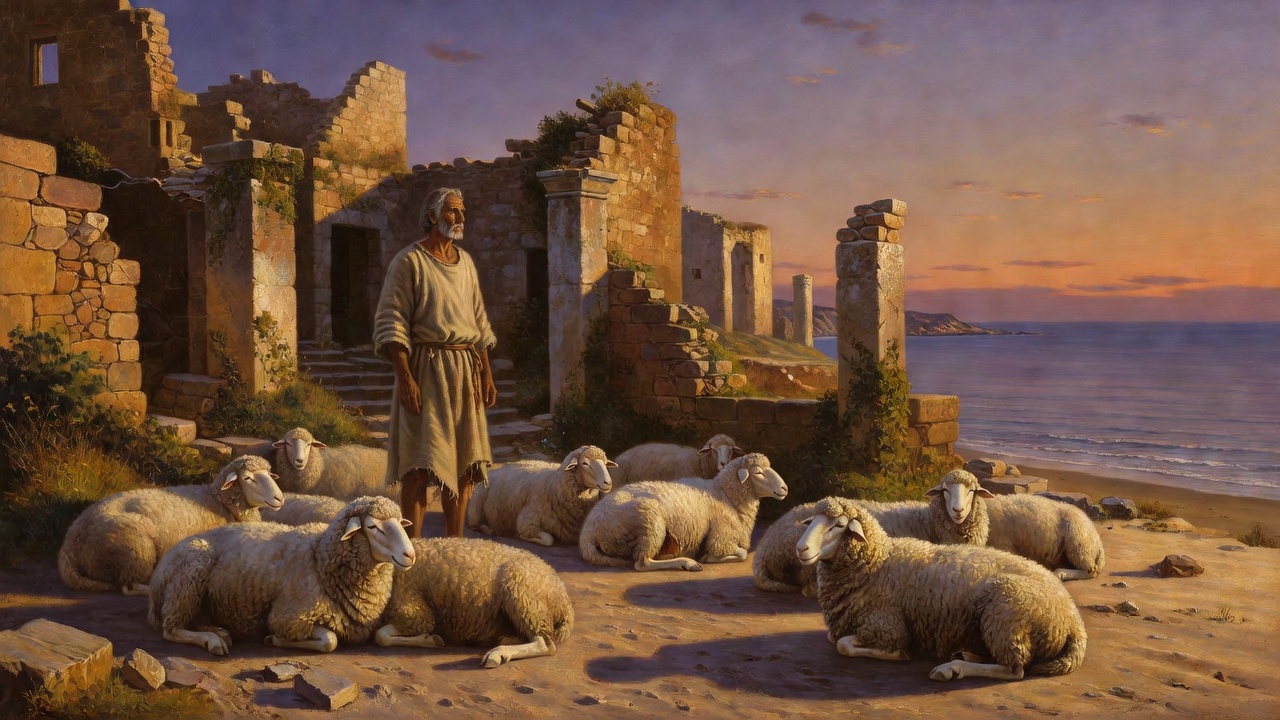
- Zephaniah lists four of the five major Philistine cities—Gaza, Ashkelon, Ashdod, and Ekron—situated along the Mediterranean coast. He prophesies that their bustling maritime settlements will become quiet pastures and sheepfolds for the surviving remnant of Judah.Sources: the Bible text itself · Gaza · Ashkelon · Ekron
- The chapter pronounces judgment in every direction around Judah: the Philistines to the west, Moab and Ammon to the east of the Jordan, Cush to the south, and Assyria to the north. Moab, located east of the Dead Sea, is warned that its pride and taunts will turn its territory into a wasteland of salt pits and weeds.Sources: the Bible text itself · Moab
- Zephaniah portrays the proud Assyrian capital of Nineveh as a future ruin where wild creatures roam and owls roost atop the pillars of its exposed cedar buildings.Sources: the Bible text itself
Notes written with AI assistance from open sources (Theographic Bible Metadata, CC BY-SA 4.0; Easton’s Bible Dictionary, public domain) and reviewed before publishing.
Places in this chapter
- Ashdod · Today: Tel Ashdod · 31.757, 34.658 · verse 4
- Ashkelon · Today: Tel Ashkelon · 31.664, 34.546 · verses 4, 7
- Ekron · Today: Tel Miqne · 31.777, 34.852 · verse 4
- Gaza · Today: Tell Harube · 31.504, 34.464 · verse 4
- Canaan · 32.767, 35.333 · verse 5
- Crete · 35.310, 24.893 · verse 5
- Ammon · 31.955, 35.934 · verses 8, 9
- Moab · Today: Moab 1 · 31.181, 35.701 · verses 8, 9
- Assyria · 36.359, 43.153 · verse 13
- Nineveh · 36.359, 43.153 · verse 13
Only places identified with high confidence are shown (90% or more according to the scholarly sources compiled by OpenBible). Period map: DARE (Digital Atlas of the Roman Empire), CC BY 4.0; modern map: © OpenStreetMap contributors; places: OpenBible.info (CC BY 4.0).
Credits and license for this translation
Paipel
The Holy Bible in the Chuukese language of the Federated States of Micronesia
copyright © 1984, 1989, 1991, 2001 Liebenzel Mission
Language: Chuukese
Translation by: Liebenzell Mission
Old Testament © 1989, 2001 Liebenzel Mission
New Testament © 1984, 1991 Liebenzel Mission
This translation is made available to you under the terms of the
Creative Commons Attribution-No Derivatives license 4.0.
You may share and redistribute this Bible translation or extracts from it in any format, provided that:
You include the above copyright and source information.
You do not make any derivative works that change any of the actual words or punctuation of the Scriptures.
Pictures included with Scriptures and other documents on this site are licensed just for use with those Scriptures and documents.
For other uses, please contact the respective copyright owners.
2024-01-24
Source: http://ebible.org/chk/ · eBible.org