Revelation 7
Paipel · Tap a verse to see its cross-references.
Ekewe ipükü faik me rüanüngeröü aramasen Israel mi pwau
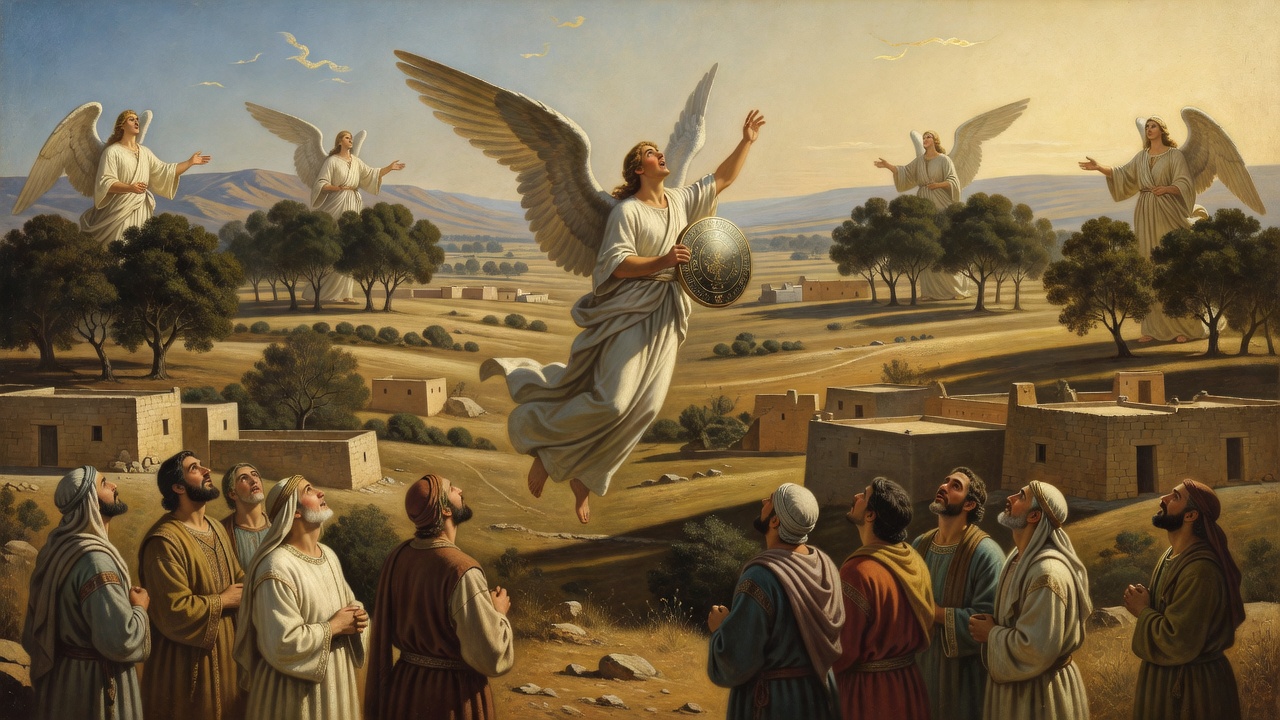
1Mürin ei, üa küna föman chon läng ra ütä le pwokukun fanüfan me rüanü, o ra amwöchü ekewe rüanü asepwäl, pwe esap chüen wor asepwäl a enien won fanüfan, ika won matau, ika won efoch irä. 2Mürin üa küna pwal eman chon läng, a feitä seni ötiu o a uwei ewe pwau än ewe Kot mi manau. Iwe, a kökköwu ren mwelian mi leüömong ngeni ekewe föman chon läng, chokewe Kot a ngeniir manaman, pwe repwe afeiengaua fanüfan me matau. 3A apasa, “Ousap afeiengaua fanüfan, ewe matau ika ekewe irä, tori aipwe pwauni won chamwen ekewe chon angang ngeni ach we Kot.” 4Iwe, üa rongorong pwe iteiten chokewe mi pwau won chamwer ükükün ipükü faik me rüanüngeröü, ir seni ekewe ainangen Israel meinisin. 5Seni ewe ainangen Juta engol me ruungeröü, seni ewe ainangen Rupen engol me ruungeröü, seni ewe ainangen Kat engol me ruungeröü, 6seni ewe ainangen Aser engol me ruungeröü, seni ewe ainangen Naftali engol me ruungeröü, seni ewe ainangen Manasa engol me ruungeröü, 7seni ewe ainangen Simeon engol me ruungeröü, seni ewe ainangen Lefi engol me ruungeröü, seni ewe ainangen Isakar engol me ruungeröü, 8seni ewe ainangen Sepulon engol me ruungeröü, seni ewe ainangen Josef engol me ruungeröü, seni ewe ainangen Peniamin engol me ruungeröü.
Ewe mwich mi fokun chocho
9Mürin ei, üa küna eu mwich mi fokun chocho, esap wor eman aramas a tongeni aleaniir. Ra feito seni sokopaten mwich, ainang, mwü me kapas meinisin. Iwe, ra ütä me mwen ewe lenien motun king me ewe Lam, ra üföüf üf mi pwechepwech o ra amwöchü paan nü lepöür. 10Iwe, ra kökkö ren mwelier mi leüömong, “Sia küna manau me ren ach we Kot, ewe mi mot won ewe lenien motun king, pwal me ren ewe Lam.” 11Ekewe chon läng meinisin ra ütä pwelin ünükün ewe lenien motun king, pwal ünükün ekewe souakom me ekewe föman mönümanau. Mürin ra chapetiu mwen ewe lenien motun king o fel ngeni Kot. 12Ra apasa, “Amen! Feiöch, ling, tipachem, kilisou, iteüöch, manaman me pöchökül än ach Kot tori feilfeilachök! Amen!”
13Mürin eman me lein ekewe souakom a aisiniei, “Iö kewe ir mi üföüf üf mi pwechepwech, nge ia ra feito me ie?” 14Üa pölüeni, “Ai samol, üsap silei, en mi silei.” Iwe, a üreniei, “Ekei aramas, ir chokewe mi towu seni ewe riaföü mi lapalap. Ra limeti üfer o apwecher lon chaan ewe Lam. 15Iei popun ra ütä mwen än Kot we lenien motun king o ra angang ngeni lerän me lepwin lon imwan imwenfel. Iwe, ewe mi mot won ewe lenien motun king epwe nonom rer o tütümwünüür. 16Resap chüen echik ika kaka, akkar esap chüen pwichitiir, nge och pwichikar esap toriir. 17Pun ewe Lam mi nom lukalapan mwen ewe lenien motun king epwe nöür chon mas o emweniir ngeni ekewe puächen kolukun manau. Iwe, Kot epwe talüpwasei chönün mas seni won meser meinisin.”
Did you know?
The sealed tribes and the great multitude
- Revelation 7 numbers the sealed as 144,000, twelve thousand from each of the tribes of Israel named in the chapter. Israel was another name for Jacob, the second-born of the twin sons of Isaac and Rebekah; Easton's Bible Dictionary (1897) explains Jacob's name as someone who follows on another's heels, or a supplanter.Sources: the Bible text itself · Jacob (Israel)
- Although Reuben was the eldest son of Jacob and Leah, the list of the sealed begins with Judah and then names Reuben. The list also includes both Joseph and Manasseh; Manasseh was Joseph's elder son, and Jacob adopted him and his brother Ephraim as his own sons.Sources: the Bible text itself · Reuben · Manasseh (son of Joseph)
- After the sealing, the vision shows a multitude too large to count, from every nation, tribe, people, and tongue, standing before the throne and the Lamb, wearing white robes and holding palm branches. One of the elders says they have come out of the great tribulation and have washed their robes and made them white in the blood of the Lamb.Sources: the Bible text itself
Notes written with AI assistance from open sources (Theographic Bible Metadata, CC BY-SA 4.0; Easton’s Bible Dictionary, public domain) and reviewed before publishing.
Credits and license for this translation
Paipel
The Holy Bible in the Chuukese language of the Federated States of Micronesia
copyright © 1984, 1989, 1991, 2001 Liebenzel Mission
Language: Chuukese
Translation by: Liebenzell Mission
Old Testament © 1989, 2001 Liebenzel Mission
New Testament © 1984, 1991 Liebenzel Mission
This translation is made available to you under the terms of the
Creative Commons Attribution-No Derivatives license 4.0.
You may share and redistribute this Bible translation or extracts from it in any format, provided that:
You include the above copyright and source information.
You do not make any derivative works that change any of the actual words or punctuation of the Scriptures.
Pictures included with Scriptures and other documents on this site are licensed just for use with those Scriptures and documents.
For other uses, please contact the respective copyright owners.
2024-01-24
Source: http://ebible.org/chk/ · eBible.org