Revelation 6
Paipel · Tap a verse to see its cross-references.
Ekewe fisu pwau
1Mürin üa küna pwe ewe Lam a ülei ewe aeuin pwau seni ekewe fisu. Iwe, üa rongorong pwe eman me lein ekewe föman mönümanau a apasa ren mwelian mi wewe ngeni chopun chopulap, “Etto!” 2Iwe, üa nenengeni o üa küna eman oris mi pwechepwech, nge ewe mi mot won a amwöchü efoch likapich, a pwal angei epa mwärämwär. Iwe, a feila, a pwora o win.
3Mürin ewe Lam a ülei ewe aruen pwau. Üa rongorong pwe ewe aruomanün mönümanau a apasa, “Etto!” 4Iwe, pwal eman oris mi parapar a towu, nge ewe mi mot won a mwümwü ngeni an epwe aworato maun won fanüfan, pwe aramas repwe nifengeniir. A angei efoch ketilas mi langatam.
5Mürin ewe Lam a ülei ewe aülüngatin pwau, iwe, üa rongorong ewe aülümanün mönümanau a apasa, “Etto!” Iwe, üa nenengeni o üa küna eman oris mi chochol, nge ewe mi mot won a amwöchü eu kilo lon pöün. 6Iwe, üa rongorong och mi wewe ngeni eu möngüngü mi feito seni lein ekewe föman mönümanau a apasa, “Liwinin ruu paun pilawa mi amas seni föün wiich iei ükükün peiofen eman chon angang lon eu rän, pwal liwinin wonu paun pilawa mi amas seni föün parli iei ükükün peiofen eman chon angang lon eu rän. Nge kosap afeiengaua ekewe irä olif me ekewe irän wain!”
7Mürin ewe Lam a ülei ewe arüanün pwau, iwe, üa rongorong ewe afömanün mönümanau a apasa, “Etto!” 8Iwe, üa nenengeni o üa küna eman oris mi sawepwech, nge ewe mi mot won a iteni mäla o ewe lenien sotup a tapw me mürin. A wor ar nemenem won eu lerüanün chon fanüfan ar repwe niirela ren maun, mailengita, samau me manmwacho.
9Mürin ewe Lam a ülei ewe alimuen pwau. Iwe, üa küna fän ewe rongen asor ngünün chokewe mi ninnila pokiten ar arongafeili än Kot kapas o eäni allükülük lon ar pwärätä itan. 10Ra kökkö fän mwelier mi leüömong, “Äm Samol mi Unusen Manaman, ka pin o let. Ifa langatamen fansoun tori om kopwe apwüngü ekewe aramas won fanüfan o kopwe ngeniir chappen ar nikeemila?” 11Mürin Kot a ngeni eman me eman leir echö üf mi pwechepwech o a üreniir, pwe repwe mwo asösö ekis chök fansoun mochomoch, tori epwe unus iteiten chiechier kewe chon angang me pwiir kewe repwe ninnila usun chök ir.
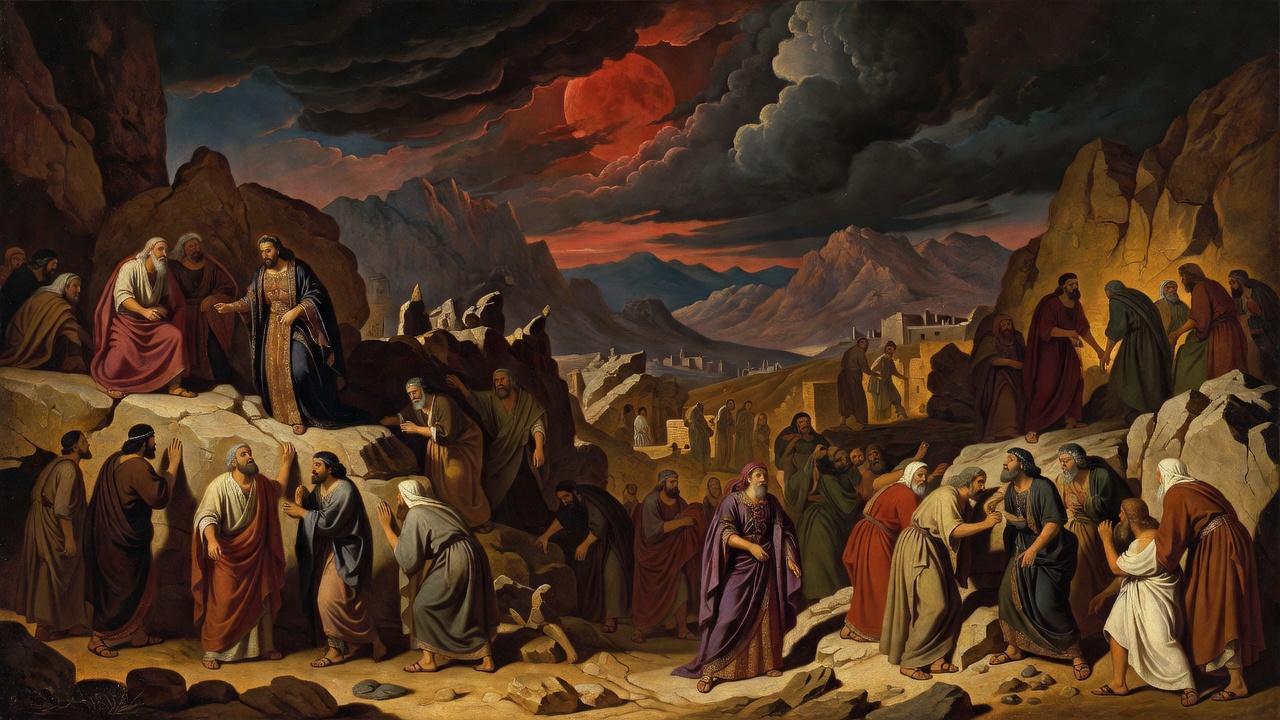
12Iwe, üa nenengeni pwe ewe Lam a ülei ewe awonuen pwau. A fis eu chechechin fanü mi fokun lapalap. Akkar a fokun rochola usun chök mangaku mi chol seni tuk, nge ewe maram a fokun parala usun chök paren cha. 13Iwe, ekewe fü ra turutiu won fanüfan usun chök föün ewe irä fiik resamwo nup ra turutiu, lupwen eu asepwäl mi pöchökül a amworeretiu. 14Läng a numufengen usun chök echö toropwe a numufengen o morola, nge ekewe chuk meinisin me ekewe fanüen leset ra mwöküt seni lenier. 15Mürin ekewe kingen fanüfan, ekewe sounemenem me meilapen sounfiu, ekewe chon pisekisek me ekewe mi wor maner, pwal ekewe aramas meinisin, ekewe amanau me ekewe mi ngas ra aopeer lon ekewe föüimw pwal fän säpereperen ekewe achau won ekewe chuk. 16Ra kökkö ngeni ekewe chuk me ekewe achau, “Oupwe turutiu wom o aopakem seni mesen ewe eman mi mot won ewe lenien motun king, pwal seni än ewe Lam song. 17Pun ewe rän mi lap a war, ewe ränin ar song, nge iö epwe tongeni ü ngeni?”
Did you know?
The Opening of the Six Seals
- The first four seals reveal four riders on white, bright red, black, and pale green horses, summoned one by one by the four living creatures. Each horseman brings a distinct affliction across the earth, ranging from conquest and the loss of peace to widespread famine, plague, and death.Sources: the Bible text itself
- The third horseman holds a pair of scales, accompanied by a proclamation setting the price of a quart of wheat or three quarts of barley at a denarius, reflecting severe inflation and food rationing while oil and wine are preserved.Sources: the Bible text itself
- When the fifth and sixth seals are opened, the focus shifts to the souls of slain believers waiting under the altar, followed by immense cosmic and earthly upheavals that lead people of every social station to hide in mountain caves.Sources: the Bible text itself
Notes written with AI assistance from open sources (Theographic Bible Metadata, CC BY-SA 4.0; Easton’s Bible Dictionary, public domain) and reviewed before publishing.
Credits and license for this translation
Paipel
The Holy Bible in the Chuukese language of the Federated States of Micronesia
copyright © 1984, 1989, 1991, 2001 Liebenzel Mission
Language: Chuukese
Translation by: Liebenzell Mission
Old Testament © 1989, 2001 Liebenzel Mission
New Testament © 1984, 1991 Liebenzel Mission
This translation is made available to you under the terms of the
Creative Commons Attribution-No Derivatives license 4.0.
You may share and redistribute this Bible translation or extracts from it in any format, provided that:
You include the above copyright and source information.
You do not make any derivative works that change any of the actual words or punctuation of the Scriptures.
Pictures included with Scriptures and other documents on this site are licensed just for use with those Scriptures and documents.
For other uses, please contact the respective copyright owners.
2024-01-24
Source: http://ebible.org/chk/ · eBible.org