Malachi 1
Paipel · Tap a verse to see its cross-references.
About this book
About Malachi
- Easton's Bible Dictionary (1897) presents Malachi, a name meaning "messenger" or "angel," as the last of the minor prophets and the writer of the last book of the Old Testament canon. Nothing is known of him beyond what is contained in his book of prophecies.Sources: Easton: Malachi · Malachi
- Some have supposed that the name is simply a title for a messenger of Jehovah, not a proper name. Easton's Bible Dictionary (1897) concludes, however, that there is reason to regard Malachi as the prophet's ordinary name.Sources: Easton: Malachi · Malachi
- Easton's Bible Dictionary (1897) dates the prophecies to about 420 B.C., after Nehemiah's second return from Persia, or possibly before that return. Because Ezra does not mention him and he does not mention the restoration of the temple, the dictionary infers that he prophesied after Haggai and Zechariah.Sources: Easton: Malachi
- Easton's Bible Dictionary (1897) treats Malachi as a contemporary of Nehemiah, comparing Malachi 2:8 with Nehemiah 13:15 and Malachi 2:10-16 with Nehemiah 13:23. It also notes that the temple services were still in existence, citing Malachi 1:10, 3:1 and 3:10.Sources: Easton: Malachi
Notes written with AI assistance from open sources (Theographic Bible Metadata, CC BY-SA 4.0; Easton’s Bible Dictionary, public domain) and reviewed before publishing.
Kot a echeni chon Israel
1Iei pwärien Malakai we, a asile ngeni chon Israel fän alon ewe Samol mi Lapalap. 2Iei alon ewe Samol mi Lapalap ngeni nöün aramas, “Üa echenikemi.” Nge ämi oua ais, “Ifa usun om echenikem?” Iwe, ewe Samol mi Lapalap a pälüeni, “Ifa usun, Esau sap pwin Jakop? Üa echeni Jakop, 3nge üa oput Esau. Üa ataela fanüan mi chukuchukutä o likitala fanüan seni saman ngeni ekewe manmwachon lon fanüapö.” 4Are chon Etom repwe apasa, “Äm kewe telinimw ra tatakis, nge äm aipwe aüsefäliretä,” mürin ewe Samol mi Unusen Manaman epwe apasa, “Repwe tongeni aüretä, nge ngang üpwe ataretiu, tori aramas repwe aita ngeni: Ewe fanü mi ngau, pwal eu mwichen aramas ewe Samol mi Lapalap a song ngeniir tori feilfeilachök.” 5Püsin mesemi repwe küna ei, nge oupwe apasa, “Ewe Samol mi Lapalap a tekia, an iteüöch a tori lükün kiännin Israel.”
Kot a apwüngü ekewe souasor
6Iei alon ewe Samol mi Unusen Manaman ngeni ekewe souasor, “Eman nau a asamolu saman, nge eman chon angang a asamolu an samol. Are ngang sememi, pwota ousap asamoluei? Nge are ngang nöümi samol, pwota ousap meninitiei? Ämi souasor oua turunufaseei. Nge oua ais, ‘Met aia turunufaseek ren?’ 7Ren ämi eäni asor mongö mi limengau won ai rongen asor. Nge ämi oua ais, ‘Met aia alimengaua ren?’ Ren ämi apasa pwe ai rongen asor a aücheangau. 8Ifa usun, lupwen oua eäni asor ekewe man mi chun, esap ngau? Nge ifa usun, lupwen oua eäni asor ekewe man mi ter ika samau, esap ngau? Are oupwe fang ngeni nöümi kepina ei sokun man, ifa usun, epwe pwapwa ngenikemi ika kirikiröch ngenikemi? 9Nge iei oua tüngor ngeni Kot pwe epwe kirikiröch ngenikemi. Ifa usun, epwe kirikiröch ngenikemi ren ena sokun lifang mi nom lepöümi?” 10Iei alon ewe Samol mi Unusen Manaman, “Amwo epwe wor eman me leimi epwe apüngala ekewe asamalap, pwe ousap akümwäli ekkei me won ai rongen asor. Üsap pwapwaitikemi, üsap etiwa eu asor seni lepöümi. 11Pun seni ewe ia akkar a töta me ie tori ewe ia a tuputiu me ie chon ekewe mwü ra asamolu itei. Ekis meinisin ra eäni asor apach mi pwokus ngeniei, eu asor mi limöch. Pun chon ekewe mwü ra asamoluei. 12Nge oua apiningaua pinin ewe rongen asor, lupwen oua apasa pwe ai rongen asor a limengau, nge ewe mongö mi nom won a anioput. 13Oua apasa, ‘Aia chipwang ren ei lapalap,’ oua pwal oputaei. Ämi oua uwato pwe ämi asor mine oua fen soläni ika mine a ter ika mine a samau. Ifa usun, oua ekieki pwe ngang üpwe etiwa ei sokun asor seni lepöümi? 14A anümamau eman chon atuputup mi pwon pwe epwe eäni ngeniei asor eman ätemwänin sip seni nöün pwiin man, nge mürin a eäni asor eman mi wor terin. Pun ngang eman king mi lap, nge chon ekewe mwü ra meninitiei.”
Did you know?
Honoring God and Defective Offerings
- The name Malachi means messenger or angel. While some have suggested it was a title rather than a proper name, scholars and traditions widely treat it as the prophet's personal name, placing his ministry during the period of Nehemiah, after Haggai and Zechariah.Sources: Malachi
- The opening dispute recalls the twin brothers Jacob and Esau, the ancestors of Israel and Edom. The text contrasts God's covenant love for Israel with the judgment and desolation coming upon the mountainous region of Edom.Sources: Esau (Edom) · Jacob (Israel) · Edom · the Bible text itself
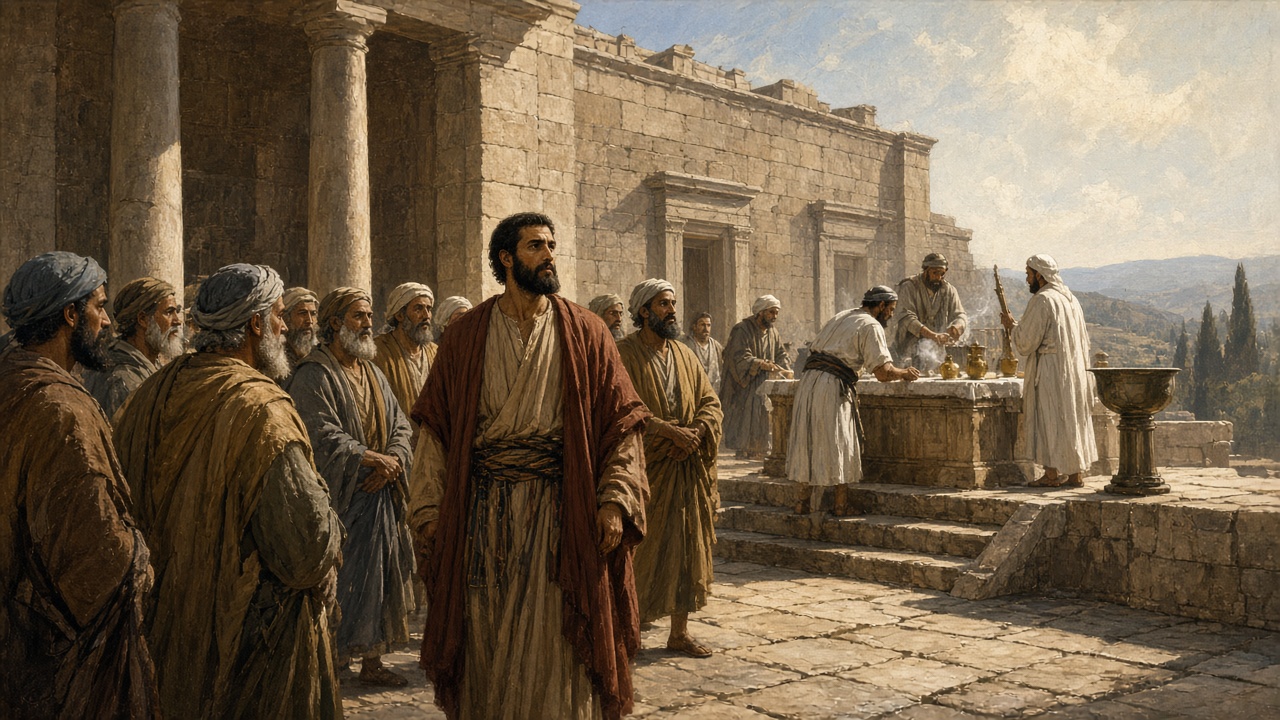
- The priests are rebuked for offering blind, lame, and diseased animals on the altar rather than unblemished livestock. Malachi exposes their disrespect by asking whether a civil governor would accept such inferior gifts.Sources: the Bible text itself
Notes written with AI assistance from open sources (Theographic Bible Metadata, CC BY-SA 4.0; Easton’s Bible Dictionary, public domain) and reviewed before publishing.
Places in this chapter
- Edom · 30.746, 35.604 · verse 4
Only places identified with high confidence are shown (90% or more according to the scholarly sources compiled by OpenBible). Period map: DARE (Digital Atlas of the Roman Empire), CC BY 4.0; modern map: © OpenStreetMap contributors; places: OpenBible.info (CC BY 4.0).
Credits and license for this translation
Paipel
The Holy Bible in the Chuukese language of the Federated States of Micronesia
copyright © 1984, 1989, 1991, 2001 Liebenzel Mission
Language: Chuukese
Translation by: Liebenzell Mission
Old Testament © 1989, 2001 Liebenzel Mission
New Testament © 1984, 1991 Liebenzel Mission
This translation is made available to you under the terms of the
Creative Commons Attribution-No Derivatives license 4.0.
You may share and redistribute this Bible translation or extracts from it in any format, provided that:
You include the above copyright and source information.
You do not make any derivative works that change any of the actual words or punctuation of the Scriptures.
Pictures included with Scriptures and other documents on this site are licensed just for use with those Scriptures and documents.
For other uses, please contact the respective copyright owners.
2024-01-24
Source: http://ebible.org/chk/ · eBible.org