Numbers 1
Asang Khongca Bible (2019) · Tap a verse to see its cross-references.
About this book
About Numbers
- Numbers is the fourth book of the Pentateuch. In Hebrew it is called be-midbar, “in the wilderness”; the Greek Septuagint called it Numbers, the name still usual, because it records a census in the wilderness of Sinai and a later census on the plain of Moab.Sources: Easton: Numbers, Book of
- Easton's Bible Dictionary (1897) presents Numbers, like the other books of the Pentateuch, as written by Moses. The history it contains runs from the second month of the second year after the Exodus to the beginning of the eleventh month of the fortieth year, about thirty-eight years and ten months.Sources: Easton: Numbers, Book of
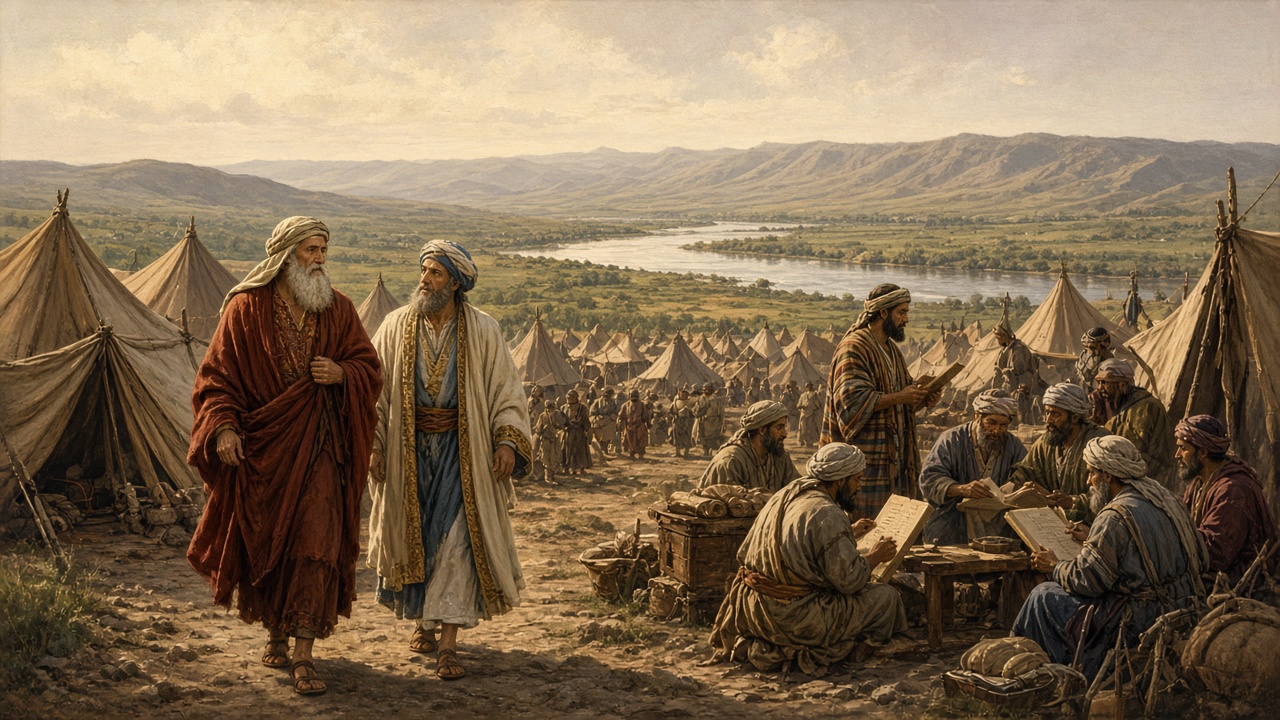
- The narrative begins at Sinai, the mountain district Israel reached in the third month after the Exodus and where they camped for about a year, and follows their route and encampments through the wilderness. It ends on the plains of Moab, east of the Jordan and the Dead Sea, opposite Jericho, their last camp before entering Canaan, the country west of the Jordan. Easton describes those years as a time of wandering in which that generation died in the wilderness, and notes that the people were fewer then than when they left Egypt.Sources: Easton: Numbers, Book of · Sinai · Moab · Canaan
- Easton divides the book into three parts: the census at Sinai and preparations to resume the march, including the Nazirite vow (1–10:10); the journey from Sinai to Moab, the sending of the spies and the report they brought back, and the people’s murmurings, eight times, at the hardships of the way (10:11–21:20); and the events on the plain of Moab before the crossing of the Jordan (21:21–36).Sources: Easton: Numbers, Book of
- While Israel was camped on the plains of Moab, Balak, son of Zippor and king of Moab, fearing them, sent to Pethor in Mesopotamia for Balaam, son of Beor, to curse them; the narrative says Balaam was unable to do so. Numbers 21:14 also cites “the book of the wars of the Lord,” a work that Easton says is uncertain, perhaps a lost writing of Israel or an Amorite record of the victories of their king Sihon.Sources: Easton: Numbers, Book of · Balaam · Balak
Notes written with AI assistance from open sources (Theographic Bible Metadata, CC BY-SA 4.0; Easton’s Bible Dictionary, public domain) and reviewed before publishing.
Kami kroekhaih
1Israel kaminawk Izip prae thung hoi tacawthaih saning hnet, khrah hnetto haih hmaloe koek niah, Sinai praezaek ih kaminawk amkhuenghaih kahni imthung ah, Angraeng mah Mosi khaeah hae tiah lokthuih pae, 2nawnto amkhueng Israel kaminawk thungah, angmacae acaeng hoi angmacae imthung takoh thung ih nongpanawk boih, 3nang hoi Aaron mah saning pumphaeto pacoeng ranui bang kaom, misatuh thaih Israel kaminawk boih to milu kok hoih, tiah a naa. 4Acaeng maeto thung ih acaeng zaehoikung lu koek kami maeto mah nang hnik to abom o tih. 5Milu kroek naah nang hnik hoi nawnto angdoe han kami ahminnawk loe, Reuben acaeng thung hoiah Shedeur capa Elizur. 6Simeon acaeng thung hoiah, Zurishaddai capa Shelumiel. 7Judah acaeng thung hoiah, Amminadab capa Nahshon. 8Issakar acaeng thung hoiah, Zuar capa Nathanel. 9Zebulun acaeng thung hoiah, Helon capa Eliab. 10Joseph ih caanawk; Ephraim acaeng thung hoiah, Ammihud capa Elishama; Manasseh acaeng thung hoiah, Pedahzur capa Gamaliel. 11Benjamin acaeng thung hoiah, Gideoni capa Abidan. 12Dan acaeng thung hoiah, Amishaddai capa Ahiezer. 13Asher acaeng thung hoiah, Okran capa Pagiel. 14Gad acaeng thung hoiah, Deuel capa Eliasaph. 15Naphtali acaeng thung hoiah, Enan capa Ahira cae hae ni. 16Hae kaminawk loe amkhueng kaminawk salakah ahmin kamthang, acaeng zaehoikung hoi Israel kaminawk lu koek ah oh o.
17To tiah ahmin paek ih kaminawk to Mosi hoi Aaron mah kawk moe, 18kaminawk to khrah hnetto haih, hmaloe koek niah amkhuengsak; kaminawk loe angmacae ih acaeng hoi imthung takoh ahmin to thuih o moe, saning pumphaeto hoi ranui bang kaminawk ih ahmin to pakoep o. 19Angraeng mah Mosi khae paek ih lok baktih toengah, Israel kaminawk to Sinai mae ah a kroek.
20Israel ih calu, Reuben ih caanawk thungah, angmacae ih acaeng hoi imthung takoh caanawk boih, saning pumphaeto pacoeng ranui bang kaom, misatuh thaih nongpa boih ahmin to kroek naah, 21Reuben acaengnawk loe, sing pali, sang taruk, cumvai pangato oh o.
22Simeon ih caanawk thungah, angmacae ih acaeng hoi imthung takoh caanawk boih, saning pumphaeto pacoeng ranui bang kaom, misatuh thaih nongpa boih ahmin to kroek naah, 23Simeon acaengnawk loe, sing panga, sang takawt, cumvai thumto oh o.
24Gad ih caanawk thung hoiah, angmacae ih acaeng hoi imthung takoh caanawk boih, saning pumphaeto pacoeng ranui bang kaom, misatuh thaih nongpa boih ahmin to kroek naah, 25Gad acaengnawk loe, sing pali, sang panga, cumvai taruk, qui pangato oh o.
26Judah ih caanawk thung hoiah, angmacae ih acaeng hoi imthung takoh caanawk boih, saning pumphaeto pacoeng ranui bang kaom, misatuh thaih nongpa boih ahmin to kroek naah, 27Judah acaengnawk loe, sing sarih, sang pali, cumvai tarukto oh o.
28Issakar ih caanawk thung hoiah, angmacae ih acaeng hoi imthung takoh caanawk boih, saning pumphaeto pacoeng ranui bang kaom, misatuh thaih nongpa boih ahmin to kroek naah, 29Issakar acaengnawk loe sing panga, sang pali, cumvai palito oh o.
30Zebulun ih caanawk thung hoiah, angmacae ih acaeng hoi imthung takoh caanawk boih, saning pumphaeto pacoeng ranui bang kaom, misatuh thaih nongpa boih ahmin to kroek naah, 31Zebulun acaengnawk loe sing panga, sang sarih, cumvai palito oh o.
32Joseph ih capa hnik; Ephraim ih caanawk thung hoiah, angmacae ih acaeng hoi imthung takoh caanawk boih, saning pumphaeto pacoeng ranui bang kaom, misatuh thaih nongpa boih ahmin to kroek naah, 33Ephraim acaengnawk loe sing pali, cumvai pangato oh o.
34Manasseh ih caanawk thungah, angmacae ih acaeng hoi imthung takoh caanawk boih, saning pumphaeto pacoeng ranui bang kaom, misatuh thaih nongpa boih ahmin to kroek naah, 35Manasseh acaengnawk loe, sing thum, sang hnet, cumvai hnetto oh o.
36Benjamin ih caanawk thung hoiah, angmacae ih acaeng hoi imthung takoh caanawk boih, saning pumphaeto pacoeng ranui bang kaom, misatuh thaih nongpa boih ahmin to kroek naah, 37Benjamin acaengnawk loe sing thum, sang panga, cumvai palito oh o. 38Dan ih caanawk thungah, angmacae ih acaeng hoi imthung takoh thung ih caanawk boih, saning pumphaeto pacoeng ranui bang kaom, misatuh thaih nongpa boih ahmin to kroek naah, 39Dan acaengnawk loe sing taruk, sang hnet, cumvai sarihto oh o.
40Asher ih caanawk thungah, angmacae ih acaeng hoi imthung takoh caanawk boih, saning pumphaeto pacoeng ranui bang kaom, misatuh thaih nongpa boih ahmin to kroek naah, 41Asher acaengnawk loe, sing pali, sangto pacoeng, cumvai pangato oh o.
42Naphtali ih caanawk thung hoiah, angmacae ih acaeng hoi imthung takoh caanawk boih, saning pumphaeto pacoeng ranui bang kaom, misatuh thaih nongpa boih ahmin to kroek naah, 43Naphtali acaengnawk loe, sing panga, sang thum, cumvai palito oh o.
44Hae kaminawk loe Mosi hoi Aaron mah, angmacae imthung takoh maeto thung hoi kami maeto, Israel zaehoikung hatlai hnetto thung hoiah qoih hoi ih kami ah oh o. 45Saning pumphaeto pacoeng ranui bang kaom, misatuh thaih kaminawk boih, Israel caanawk thungah angmacae imthung takoh kaminawk boih ahmin to kroek naah, 46Sangqum boih ah kami sang cumvai taruk, sang thum, cumvai panga, qui pangato oh o.
47Toe Levi acaeng hoi nihcae imthung takohnawk loe, nihcae hoi nawnto kroek o ai. 48Angraeng mah Mosi khaeah, 49Levi acaeng loe kroek hmah loe, Israel kaminawk thungah doeh athumsak hmah. 50Toe Levi kaminawk loe hnukung lokthuihaih kahni im khenzawnkung, laom sabaenawk boih hoi to imthung ah kaom hmuennawk boih toepkung ah suem ah; nihcae loe kahni im hoi laom sabaenawk boih to apu o tih; nihcae mah kahni im thung ih sak han koi tok to sah o ueloe, ataihaih ahmuen phak o naah, kahni im taengah om o tih. 51Kahni im puenhaih tue phak naah, Levi kaminawk mah pakuem o ueloe, kahni im sakhaih tue phak naah doeh, Levi kaminawk mah sah o tih; kahni im taengah kacaeh kalah kami loe paduek han oh. 52Israel kaminawk mah angmacae ih im sak o naah, misatuh kami boih mah, angmacae ataihaih ahmuen to angmacae hoi karaem ah sah o tih. 53Toe amkhueng Israel kaminawk nuiah palungphuihaih phak han ai ah, Levi kaminawk loe hnukung lokthuihaih kahni im taengah atai o ueloe, hnukung lokthuihaih kahni im to khenzawn o tih, tiah a naa. 54Angraeng mah Mosi khaeah thuih ih lok baktih toengah, Israel kaminawk mah sak o.
Did you know?
The Census in the Wilderness of Sinai
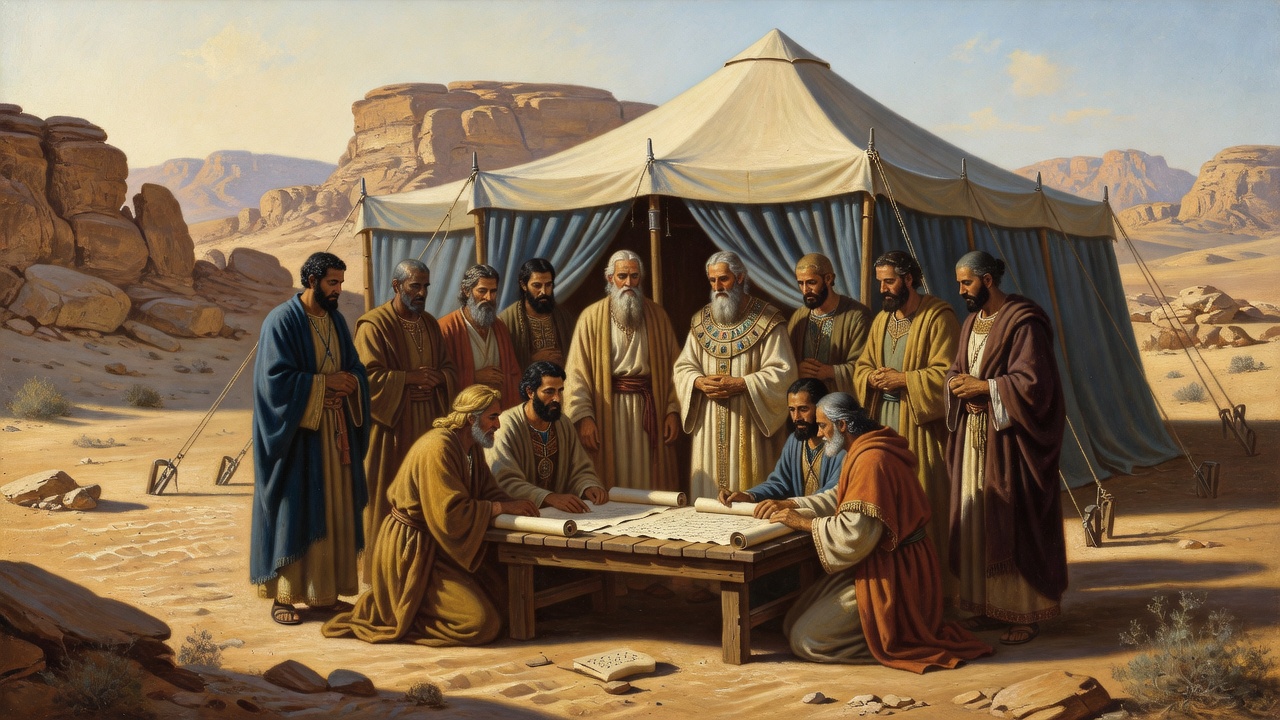
- The census was ordered in the Wilderness of Sinai on the first day of the second month in the second year after the Israelites departed Egypt. It counted every male aged twenty or older who was able to serve in the army, arriving at a total of 603,550 fighting men.Sources: the Bible text itself · Sinai
- Moses and Aaron conducted the registration alongside twelve appointed tribal leaders. Joseph was represented as two distinct tribal divisions named after his sons, Ephraim and Manasseh.Sources: the Bible text itself · Ephraim · Manasseh (son of Joseph)
- The tribe of Levi was entirely exempted from the military count. Instead, the Levites were assigned exclusively to care for, transport, assemble, and guard the tabernacle of the Testimony and its furnishings.Sources: the Bible text itself
Notes written with AI assistance from open sources (Theographic Bible Metadata, CC BY-SA 4.0; Easton’s Bible Dictionary, public domain) and reviewed before publishing.
Places in this chapter
- Egypt · 30.129, 31.308 · verse 1
- Wilderness of Sinai · Today: about 50 km around Jebel Musa · 28.540, 33.973 · verses 1, 19
Only places identified with high confidence are shown (90% or more according to the scholarly sources compiled by OpenBible). Period map: DARE (Digital Atlas of the Roman Empire), CC BY 4.0; modern map: © OpenStreetMap contributors; places: OpenBible.info (CC BY 4.0).
Credits and license for this translation
Asang Khongca Bible (2019)
The Holy Bible in the Asang Khongca language of Mynmar
Public Domain
Language: Asang Khongca (Chin, Eastern Khumi)
Dialect: Asaang Khongca
Published in Mynmar, which is not a signatory to international copyright treaties. Copyright may apply locally in Mynmar. Translator names withheld for security reasons.
2020-09-24
Source: http://ebible.org/cekak/ · eBible.org