Genesis 45
Yosë nanamën · Tap a verse to see its cross-references.
Iinpitari Cosi nohuitopiso'
1Ya'ipi piyapinënpita ni'tonënquë Cotari nontërinso tonitohuachina, Cosiso co huachi ahuantërinhuë'. Co huachi ahuantatonhuë', Iquipito nananquë chiníquën nonin: “¡Ya'ipinquëma pipico'!” itërin. Napotohuachina, ya'ipi piyapinënpita pipipi. Iinpitarëáchin nicaso', nohuitacaiso marë' sha'huirin. 2Sha'huiton Cosiso', na'nëmiatarin huachi. Chiníquën na'nërin ni'ton, ya'ipi iquipitoro'sa nitotopi. Huaraon pëinënquë huarë' a'naquënso pa'sahuatona', sha'huitonpi. 3Naporo huarë' Cosiso', inahuara nanamënaquë iinpita nontërin:
—¡Ca mini Cosico! ¿Nanpiárin iporahuanta tata? itërin. Napotopirinhuë', iinpitariso pa'pi të'huatatona', co nanitopihuë' nonacaiso'. 4Të'huatopirinahuë', Cosiriso itapon:
—Ama iyaro'sa të'huatocosohuë', ya'caritoco', itërin. Naporo huarë' iinpitari ya'caririn. Ya'carihuachinara, itaantarin:
—Ca mini iyaparimaco. ¿Co'ta iráca nicatono'sa Iquipitoquë huëcasoi pa'anamaco?
5Napotëramacoso marë' ama canpitaora nino'huicosohuë'. Co canpitaso yonquipiramahuë', Yosë chachin aquëchitiirinco. Notohuaro' piyapi'sa ananpicaso marë' aquëchitërinco. 6Ipora huarë' iso no'paquë, cato pi'ipi nisarin tanarotopiso'. A'natërápo pi'i chachin, pahuanarin. Ina nápo pi'i sha'topirinahuënta', co manta nitërinso' macaponahuë'. 7Napotëranquëmaso chachin nisarin. Yosëso nipirinhuë', aquëchitiirinco. Canpitanta shiparima ya'huëtiinquëmaso marë' naporin. Canpita chachinta', huëhuëpiro ninin quëran nicha'ëinquëmaso marë' aquëchitiirinco. 8Inapocaso ni'ton, co canpita nohuanton isoporinquë huë'nahuë'. Yosë chachin a'parinco ni'ton, huë'nahuë. Ina nohuanton, huaraon ayonquina'pi nica'huaso marë' ya'conahuë. Ya'ipi ma'shanënpita a'paiato, piyapinënpitanta', camaica'huaso marë' ya'conahuë. Naporahuaton, ya'ipi Iquipitoquë huaraon ya'huërënamën hua'anënta'huaso marë' acorinco.
9Manóton paantatoma', tata sha'huitonco': “Cosi ya'huëarin, iso pochin nanan a'patiarinquën: ‘Ya'ipi Iquipito no'paquë hua'anënta'huaso marë' Yosë acorinco. Manóton o'maton, ni'quimaco. 10Ya'ipi hui'nanpita, shia'huaro'sa', inapitarë chachin, o'maco'. Pë'tahuanëmapita, ma'shanëmapita, ya'ipi ya'huëtërinquëmaso', quiquiimaco'. O'mahuatama', Cosin parti acoaranquëma'. Inapohuatama', co aquëya quëranhuë' nini'sáparihua'. 11Naro'pa huachi carima cosharo quëtáponquëma'. Ya'ipi huë'namaso nápo chachin co manta ichipahuantaranquëmahuë'. A'natërápo pi'ipi pahuanarin tanaro tahuëri'sa na'huëcaso ni'ton, napotápënquëma',’ itoco'. 12Iya'huanta', canpitanta', ya'ipi naporahuëso', nani natanamaco. 13Chiníquën nanantato Iquipitoquë hua'anëntërahuësonta', nani ni'nama'. Ya'ipi ni'namaso' tata sha'huitonco'. ¡Manóton paantatoma tata macontaco'!” itërin.
14Napotahuaton, iya'huain iporin. Ina iporin quëran na'nërin. Mincaminta', Cosi iporin quëran na'nërin. 15Ina quëran Cosiso', ya'ipi iinpita noya nontaton së'quërin. Inapitanta iporahuaton na'nërin. Ina piquëran inapitarinta co huachi të'huatatonahuë', noya nontopi huachi.
16Huaraon pëinënquënta', a'naroáchin nanan nincanin: “Cosi iinpita canquipi,” itopi. Ina natanahuaton, huaraonso catahuarinsopita hua'ano'sarë chachin noya cancantopi. 17Noya cancantaton huaraoniso', Cosi itapon:
—Iyaro'sa sha'huitëquë', pë'tahuanënaquë trico a'mitahuatona', Canaan parti pananta'ina'. 18Paantatona', pa'pina quëma'ina'. Ya'ipi quëmopinënpitarë chachin, o'ma'ina'. O'mahuachina', Iquipitoquë noya noya no'pa' nininso', cari quëtarahuë. Napoaton inapitaso', iso no'paquë ma'sha noya noyatërinsopita, capona'. 19Sa'ina', hui'nina', pa'pina', inapita quëmacaiso marë', camaiquë toronano'sa isëran quëpa'ina'. Sha'huitëquë a'naroáchin huë'ina'. 20Naporahuaton, ama aquëtë ma'shanënapita yonqui'inasohuë'. Iquipitoquë ma'sha noya noya nininsopita, inapitari hua'anëntapona', itëquë', itërin. 21Napotohuachina, Cacopo hui'ninpitaso' ina inachachin nipi. Huaraon camaitërinso chachin, Cosiri toronano'sa quëtërin. Naporahuaton cosharo iraquë caracaisonta', quëtërin. 22O'nanpiracaisonta', ya'ipi iinpita ananitëra'piarin. Mincaminso nipirinhuë', cara pasa coriqui prata quëran nininso' quëtahuaton, a'natërápo a'mocaso quëtërin. 23Pa'pionta', shonca moraquë, noya noya ma'sha Iquipitoquë ya'huërinso', a'patontarin. Naporahuaton shonca moraquë chachin, trico, pan, cosharo', inapita a'patontarin. O'mahuachina carimacaiso marë' a'patontarin. 24Pacacaiso marë' nontohuachinara, Cosiso iinpita itapon:
—Osharan paco'. Amana iraquë nino'huíracosohuë', itërin. Napotohuachina pa'pi huachi.
25Inapitaso', Iquipito quëran pipirahuatona', Canaan parti canconpi. Pa'pina ya'huërinquë chachin canconpi huachi. 26Pa'pina nontatona sha'huitopi: “¡Cosi nanpiárin tata! ¡Inari ya'ipi Iquipito no'pa' hua'anëntërin!” itopi. Ina natanahuaton, Cacoposo pa'yanënquë tachianantërin. Sha'huitopirinahuë', co natëtërinhuë'. 27Napoaponahuë', Cosiri nanan a'patërinso natanin. Ina natanahuaton, toronano'sa quëpamacaiso marë' a'patontarinsonta', ni'nin. Naporo huarë' capa cancantomiatërin huachi. 28Capa cancantaton tapon: “¡Tëhuënchachin Cosi nanpiárin! Co'huara chimiantërasocohuë' pa'mato nimai,” tënin.
Did you know?
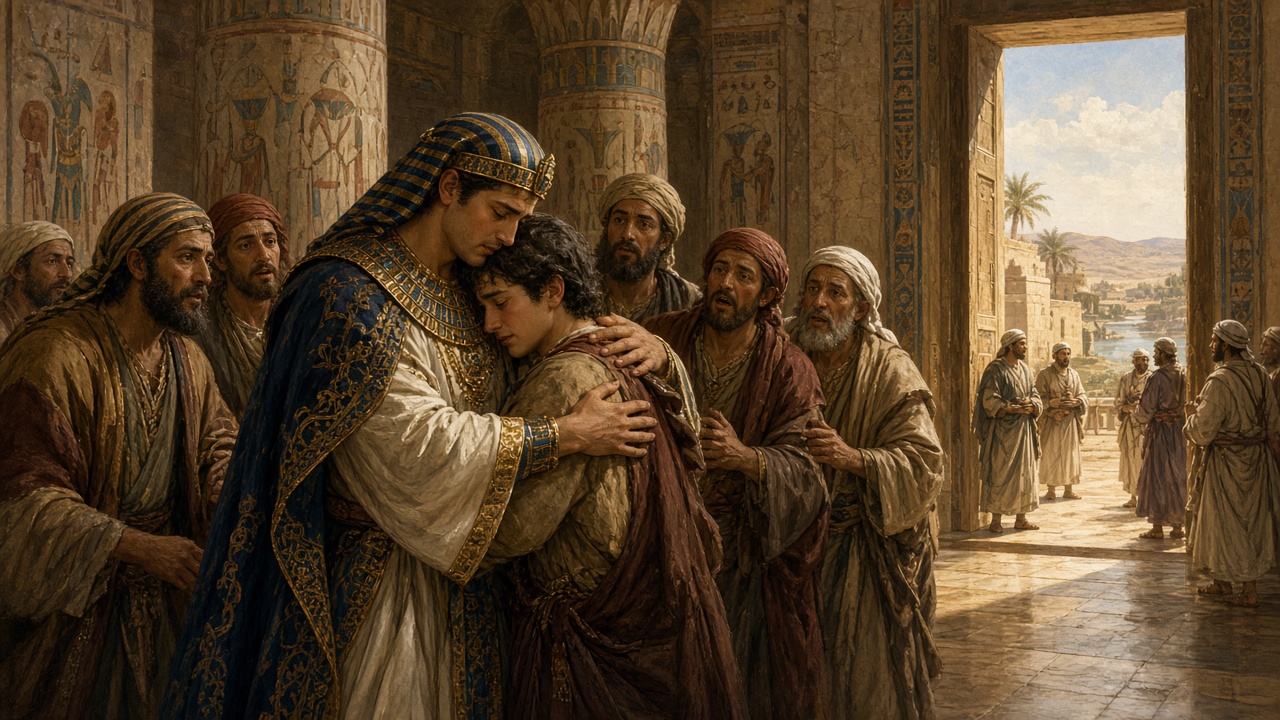
Joseph Reveals Himself to His Brothers
- Goshen, the district where Joseph tells his brothers to settle near him with their children, grandchildren, flocks, and herds, lay east of the Nile and apparently not far from the royal residence. Easton's Bible Dictionary (1897) notes that it is first mentioned in Joseph's message to his father, and that it was also called the land of Rameses, because the towns of Pithom and Rameses lay within its borders.Sources: Goshen · the Bible text itself
- Joseph weeps so loudly that the Egyptians hear him, and Pharaoh's household soon hears of it; Pharaoh and his servants are pleased when they learn the brothers have come, and he offers them the best of the land of Egypt. Easton's Bible Dictionary (1897) says the Pharaoh of Joseph's days was probably Apopi, or Apopis, the last of the Hyksos kings. It adds that Hyksos kings welcomed Asiatic shepherds, whereas older native Egyptians regarded shepherds as an abomination, though some argue that Joseph came to Egypt in the reign of Thothmes III, long after the Hyksos were expelled.Sources: Pharaoh (of Joseph) · the Bible text itself
- Benjamin was the younger son of Jacob by Rachel, and Joseph the elder of her two sons; their mother died giving birth to Benjamin at Ephrath and named him Ben-oni, meaning son of my pain, a name his father changed to Benjamin. At the reunion Joseph embraces Benjamin and weeps, giving him three hundred shekels of silver and five sets of clothes, while each of the other brothers receives a new garment.Sources: Benjamin (patriarch) · Joseph (son of Jacob) · the Bible text itself
Notes written with AI assistance from open sources (Theographic Bible Metadata, CC BY-SA 4.0; Easton’s Bible Dictionary, public domain) and reviewed before publishing.
Places in this chapter
- Egypt · 30.129, 31.308 · verses 4, 8, 9, 13, 18, 19, 20, 23, 25, 26
- Goshen · Today: Goshen 1 · 30.799, 31.834 · verse 10
- Canaan · 32.767, 35.333 · verses 17, 25
Only places identified with high confidence are shown (90% or more according to the scholarly sources compiled by OpenBible). Period map: DARE (Digital Atlas of the Roman Empire), CC BY 4.0; modern map: © OpenStreetMap contributors; places: OpenBible.info (CC BY 4.0).
Credits and license for this translation
Yosë nanamën
New Testament in Chayahuita (PE:cbt:Chayahuita)
copyright © 2011 Wycliffe Bible Translators, Inc.
Language: Chayahuita
Translation by: Wycliffe Bible Translators, Inc.
Chayahuita
cbt
Peru
Copyright Information
© 2011, Wycliffe Bible Translators, Inc. All rights reserved.
This translation text is made available to you under the
terms of the Creative Commons License: Attribution-Noncommercial-No Derivative Works.
( http://creativecommons.org/licenses/by-nc-nd/3.0/ )
In addition, you have permission to port the text to different file formats, as long as you
do not change any of the text or punctuation of the Bible.
You may share, copy, distribute, transmit, and extract portions
or quotations from this work, provided that you include the above copyright
information:
You must give Attribution to the work.
You do not sell this work for a profit.
You do not make any derivative works that change any of the actual words or punctuation of the Scriptures.
Permissions beyond the scope of this license may be
available if you contact
us with your request.
The New Testament
in Chayahuita
© 2011, Wycliffe Bible Translators, Inc. All rights reserved.
This translation is made available to you under the terms of the
Creative Commons Attribution-Noncommercial-No Derivatives license 4.0.
You may share and redistribute this Bible translation or extracts from it in any format, provided that:
You include the above copyright and source information.
You do not sell this work for a profit.
You do not change any of the words or punctuation of the Scriptures.
Pictures included with Scriptures and other documents on this site are licensed just for use with those Scriptures and documents.
For other uses, please contact the respective copyright owners.
2014-04-22
Source: http://ebible.org/cbtNTpo/ · eBible.org