Genesis 44
Yosë nanamën · Tap a verse to see its cross-references.
Cosi, iinpita tënirinso'
1Nani ca'pachinara, o'opachinara, Cosiso piyapinën camairin:
—Isopita quëmapi'sa costaronënaquë, trico amëntatëquë'. Naporahuaton coriquinëna pahuërëtopisonta', a'naya a'naya costaronënquë chachin acotaantaquë'. 2Minënëhuë prata quëran nininsonta', hua'hua nininso costaronënquë acotëquë'. Coriquinën, trico marë' pahuërëtërinso' pirayan acotëquë', itërin. Napotohuachina, piyapinënso' ina inachachin ninin.
3Tahuëririnquë pi'i pipirirahuaso Cosiso', iinpita nontahuaton a'parin. Napohuachina moranënapitarë chachin pa'pi huachi. 4Ninano quëran pipitona iinpitaso co aquëyátërasoihuë', Cosiso piyapinën itapon:
—Apira quëmapi'sa pa'piso', imaquë'. Cantonahuaton napotëquë': “¿Onpoatonta canpitaso nosoropirinënquëmahuë', co noyahuë' ninama'? Prata quëran minë nininso', hua'anëhuë o'oton ninorinso chachin ihuatërama'. ¡Pa'pi co noyahuëchi ninama paya!” itëquë', itërin.
6Cantonahuaton piyapinënso' Cosiri sha'huitërinso chachin itërin. 7Napotohuachina, inapitariso itaantapi:
—¿Ihuatërama', itërancoi ti? ¡Co'chi quiyaso onporo tëranta', inapo'itoihuë'! 8¿Co'ta Canan parti quëran huarë' coriqui costaronëhuëiquë quënanpatoira, quëshiantaranquën pora? ¿Onporahuatoita iporaso', pratahuë nipon, orohuë nipon, hua'anën pëinën quëran ihuachitoihuë'? 9Quiyaso' piyapinënpita pochincoi ninai. Incoi tëranta minë quënapahuatancoi, chimiin. Quiyanta', piyapinënpita pochin asacatocoi tënai, itopi. 10Napotohuachina, Cosi piyapinënso' taantarin:
—Noyapa'. Naporama ni'quëhuarë', inapochinquëma nipachin. Nipirinhuë', insosona minë quënaparahuësoíchin, piyapinëhuë nisarin. A'napitanquëmaso', co manta onpoaramahuë', itërin. 11Napotohuachina, a'naya a'naya costaronëna chinohuaratona', i'shiritapi huachi. 12I'shiritohuachina yonisarin. Paninan nininso costaronën quëran caniaritahuaton, hua'hua nininso costaronënquë huarë', yonirin. Yonípachina, Mincamin costaronënquë quënanin huachi. 13Ina nicatona iinpitaso', pa'pi sëtahuatona a'moanpiso oshapi. Napohuachina, a'naya a'naya pë'pëtonëna moranënaquë a'mitahuatona', naquëranchin ninanoquë ayaimantapi.
14Cotaso', iinpitarë chachin Cosi pëinënquë canconpachina, inaso ya'huëarin quënamantapi. Quënanahuatona', isonpi quëran no'paquë huarë' monshorahuatona', moshaipi. 15Moshasoi', Cosiso iinpita itapon:
—¡Co'chi canpitaso yonquinahuano'sa pochinhuë ninama paya! ¡Caso chiníquën nanantërahuë ni'ton, nito ninorahuë! itërin. 16Napotohuachina, Cotari itapon:
—¡Tëhuënchachin co onpo a'pania'huainso nanitëraihuë'! ¡Co naporaihuë', co ta'cahuaiso ya'huërinhuë'! Oshahuanaiso', nani Yosë nitotërin. Ma'tana ya'huarai. Minënën maninsorë chachin asacatocoi, itopi. 17Napotopirinahuë', Cosiriso itapon:
—Co napoarinhuë'. Insosona minënëhuë quënapapisoíchin piyapinëhuë nisarin. A'napitanquëmaso', tatama ya'huërinquë noya panantaco'. Co insonta ma'sha onpotarinquëmahuë', itërin.
Cota, Mincamin ya'huërënamën yaquëparitërinso'
18Cosi napohuachina, Cotari amasha ya'carirahuaton, itapon:
—Pi'piyan sinioro nonchinquën topirahuë. Yonquirahuëso no'tëquën sha'huichinquën. Quëmaso' huaraon pochachin chiníquën nanantëran. Napoaton ama no'huitonco ana'intaancoso marëhuë' napotaranquën. 19I'hua huë'naiquë, quëmaso natanancoi tatahuëi ya'huëtërincoiso'. A'na iyahuëinta ya'huëtërincoiso', natanancoi. 20Quiyarinta naporo sha'huitëranquën: “Tatahuëi ya'huëtërincoi, nani máshoya,” itërainquën. A'na iya'huanta hui'napi ya'huëtërincoiso', sha'huitërainquën. Inaso', tatahuëi nani máshoya niso' hua'huatërin. Naporo chachin sha'huitëranquën tatahuëri na'con nosororinso'. Ina yo'nanquëranchin hua'huatopisopita cato ya'huëpirinahuë', a'naso ayarin ni'ton, inaíchin quëparitërin. Napoaton nosoromiatërin. 21Naporo' sha'huitërancoi nohuitamaso marë' quëca'huaiso'. 22Napotohuatancoira, sha'huitërainquën: “Iya'huaso', co nanitërinhuë' pa'pin huëshicaso'. Huëshirin naporini, pa'pinso' sëtori tëpa'itonhuë',” itërainquën. 23Napotopiranquënhuë': “Co'so' iya'hua quëpatamahuë', co onporonta tahuërëtaranquëmahuë',” itërancoi.
24Tatahuëitaquë canconpatoira, ya'ipi quëma napotërancoiso' sha'huitërai.
25Hua'quimiachin quëran, tataso' camairincoi: “Pa'sahuatoma' trico pa'amantaco',” itopirincoihuë', quiyariso': “Co nanitëraihuë'. Iya'hua a'paantohuatancoi, naporo huarë' pa'sarai. Co'so' ina quëpahuatoihuë', co hua'an tahuërëtarincoihuë',” itërai. 27Napotohuatoira, tatahuëi sha'huitërincoi: “Canpita nitotërama sa'ahuëco' catoíchin hua'huaninso'. 28A'naso', ayarin. Napoaton naporo quëran huarë' co quënanchinahuë'. Pa'piniri ca'mara tënahuë. 29Iin ya'huërë' quëparamaquëya ma'sha onpohuachin, canpita tëhuëarama'. Canpita tëhuënëmaquë caso mashoco sëto tëpaponco huachi,” itërincoi.
30Tatahuëso', iya'huarë' a'naíchin pochin nipi. Co'so' quiyarë' pantahuachinhuë', tatahuëso chiminapon. Quiya tëhuënëhuëiquë tata mashoyaso' sëtori tëpapon. 32Co'huara huë'shamátërapoihuë' sha'huitërahuë: “Iya'hua a'paantohuatancoi, cari ni'sarahuë. Ma'sha onpohuachinso', ca ana'intoco huachi,” itërahuë. Naporahuaton napotomantarahuë: “Co'so' quëshintahuatënquënhuë', chiminaquë huarë' na'inarahuë,” itërahuë. 33Napoaton nontaranquën natanco topirahuë. Ca iya'hua ya'huërënamën quëma piyapinën quëparichi tënahuë. Inaso iinpitarë', pananta'in. 34Co'so' iya'hua pantahuachinso', co caso nanitërahuë tatahuëtaquë, pananta'huaso'. Tatahuë ma'sha onporinso', co yani'nahuë', itërin.
Did you know?
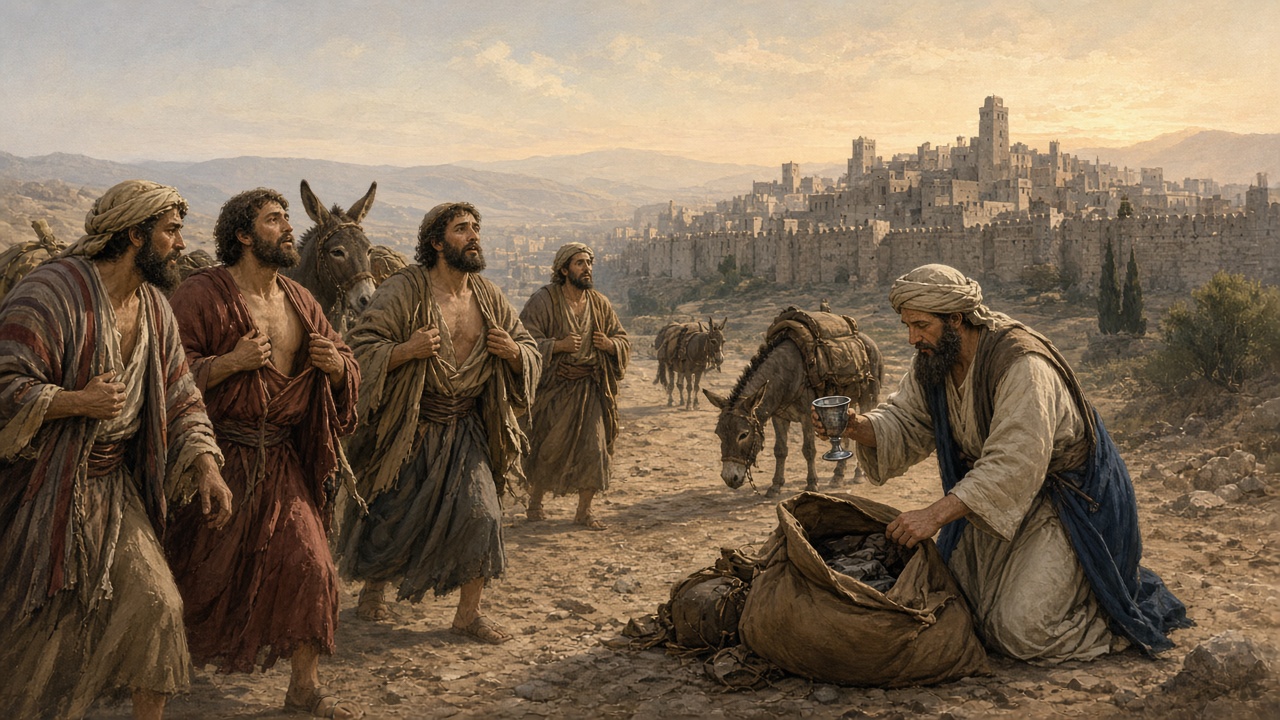
The Hidden Cup and Judah's Plea
- Judah, Jacob's fourth son by Leah, speaks for the brothers and offers to remain as a slave in the boy's place so that Benjamin may return with his brothers. Easton's Bible Dictionary (1897) notes that Judah had earlier intervened to spare Joseph's life, and that he took the lead in the family's affairs, including in the appeal recorded in this chapter.Sources: Judah (patriarch) · the Bible text itself
- Benjamin was the younger of Jacob's two sons by Rachel; she died giving birth to him and called him Ben-oni, "son of my pain," before his father named him Benjamin. The brothers tell Joseph that the boy is the only son of his mother still living, and that their father believes the other was torn to pieces. They say this to Joseph himself—Rachel's elder son, loved by Jacob as the child of his old age—while still speaking to him as a lord equal to Pharaoh.Sources: Benjamin (patriarch) · Joseph (son of Jacob) · the Bible text itself
- On Joseph's orders, the steward hid Joseph's silver cup—the cup he drank from and used for divination—in Benjamin's sack, along with the silver paid for the grain. When it was found, the brothers tore their clothes and returned to the city. Joseph then asked whether they did not know that a man like him could divine the truth, although the narrative shows that he had arranged for the cup to be found.Sources: the Bible text itself
Notes written with AI assistance from open sources (Theographic Bible Metadata, CC BY-SA 4.0; Easton’s Bible Dictionary, public domain) and reviewed before publishing.
Places in this chapter
- Canaan · 32.767, 35.333 · verse 8
Only places identified with high confidence are shown (90% or more according to the scholarly sources compiled by OpenBible). Period map: DARE (Digital Atlas of the Roman Empire), CC BY 4.0; modern map: © OpenStreetMap contributors; places: OpenBible.info (CC BY 4.0).
Credits and license for this translation
Yosë nanamën
New Testament in Chayahuita (PE:cbt:Chayahuita)
copyright © 2011 Wycliffe Bible Translators, Inc.
Language: Chayahuita
Translation by: Wycliffe Bible Translators, Inc.
Chayahuita
cbt
Peru
Copyright Information
© 2011, Wycliffe Bible Translators, Inc. All rights reserved.
This translation text is made available to you under the
terms of the Creative Commons License: Attribution-Noncommercial-No Derivative Works.
( http://creativecommons.org/licenses/by-nc-nd/3.0/ )
In addition, you have permission to port the text to different file formats, as long as you
do not change any of the text or punctuation of the Bible.
You may share, copy, distribute, transmit, and extract portions
or quotations from this work, provided that you include the above copyright
information:
You must give Attribution to the work.
You do not sell this work for a profit.
You do not make any derivative works that change any of the actual words or punctuation of the Scriptures.
Permissions beyond the scope of this license may be
available if you contact
us with your request.
The New Testament
in Chayahuita
© 2011, Wycliffe Bible Translators, Inc. All rights reserved.
This translation is made available to you under the terms of the
Creative Commons Attribution-Noncommercial-No Derivatives license 4.0.
You may share and redistribute this Bible translation or extracts from it in any format, provided that:
You include the above copyright and source information.
You do not sell this work for a profit.
You do not change any of the words or punctuation of the Scriptures.
Pictures included with Scriptures and other documents on this site are licensed just for use with those Scriptures and documents.
For other uses, please contact the respective copyright owners.
2014-04-22
Source: http://ebible.org/cbtNTpo/ · eBible.org