Genesis 9
Uyojroner e Dios xeꞌ Tzꞌijbꞌabꞌir Tama e Onian Tiempo · Tap a verse to see its cross-references.
Conda e Dios uche inteꞌ pacto taca e Noé
1Entonces e Dios uchojbꞌes ut e Noé y uyunenobꞌ cocha era y che: “Chꞌijrtesianenic este que ayan meyra imaxtac tuaꞌ axiobꞌ aturuanobꞌ tic taca este que axin abꞌutcꞌa tunor or e rum taca e gente. 2Y tunor e sian animalobꞌ lo que ayan tara tor e rum cꞌani axin abꞌactobꞌ uwirox. Y bꞌan tuaꞌ uchiobꞌ tunor e sian mut, y tunor e sian animalobꞌ xeꞌ aturuanobꞌ tacꞌopot, y tunor e sian animalobꞌ xeꞌ uquejruꞌ ubꞌobꞌ tut e rum, y tunor e sian chay. 3Pues era war inwareox que erer icꞌuxi tuqꞌuic tuqꞌuic animal lo que icꞌani. Y bꞌan cocha cay inwareox que erer icꞌuxi tuqꞌuic tuqꞌuic car ixnix, y era war inwareox que erer icꞌuxi tunor e animalobꞌ. 4Pero uwerir inteꞌ chamen animal xeꞌ ayanto uchꞌichꞌer tamar machi tuaꞌ icꞌuxi, cocha ucuxtar turu tama uchꞌichꞌer. 5Y cꞌani inwareox era que inteꞌ inteꞌ winic xeꞌ axin ulocse ucuxtar uyet winiquir ucꞌani tuaꞌ achamesna. Y jay ayan inteꞌ animal xeꞌ axin ulocse ucuxtar inteꞌ winic, ucꞌani tuaꞌ achamesna ubꞌan.
6“Pues e winicobꞌ chembꞌirobꞌ bꞌan cocha uwirnar e Dios,
y tamar era tin e axin uchamse uyet winiquir
ucꞌani tuaꞌ achamesna umen uyet winiquir ubꞌan.
7Pero nox, chꞌijrsenic meyra imaxtac
tuaꞌ axiobꞌ aturuanobꞌ tic taca este que axin abꞌutcꞌa tunor or e rum taca e gente”, che e Dios.
8Y de allí e Dios sutpa ojron taca e Noé y umaxtacobꞌ otronyajr y che: 9“Cꞌani inche inteꞌ pacto tacarox y taca tunor ichꞌajnarir, 10y taca tunor e sian animalobꞌ xeꞌ turobꞌ tacarox y xeꞌ locꞌoyobꞌ tama e barco, y taca tunor e sian mut y taca tunor e sian aracꞌobꞌ xeꞌ aturuanobꞌ tama tunor or e rum. 11Pues e pacto lo que cꞌani inche tacarox y xeꞌ ma tiaꞌ tuaꞌ aquetpa intiach jax era: Que ma tiaꞌ tuaꞌ insutpa incꞌapes tunor e winicobꞌ y tunor e animalobꞌ y tunor lo que ayan tara tor e rum taca e sian jajar xeꞌ axin ubꞌutꞌi tunor or e rum bꞌan cocha cay inche era. 12Pues cꞌani inturbꞌa inteꞌ chequerir tama e pacto lo que war inche tacarox xeꞌ tuaꞌ aquetpa bꞌan taca tama tunor e tiempo, y bꞌan tuaꞌ aquetpa taca tunor e sian animalobꞌ ubꞌan. 13Y e chequerir jax era, cꞌani inturbꞌa inteꞌ macchan tut e qꞌuin inyajr inyajr tuaꞌ aquetpa inteꞌ chequerir tama e pacto lo que war inche tacarox y taca tunor lo que ayan tara tor e rum. 14Entonces conda inwebꞌta watar inteꞌ tocar tara tor e rum, y achecta inteꞌ macchan macuir e tocar 15entonces axin acꞌajpa nimener que ayan inteꞌ pacto xeꞌ chembꞌir tacarox nimener y taca tunor e sian animalobꞌ, que ma tiaꞌ tuaꞌ insutpa inche acꞌaxi inteꞌ nuxi jajar xeꞌ axin ubꞌutꞌi tunor or e rum tuaꞌ ucꞌajpes tunor lo que ayan tamar. 16Entonces conda achecta inteꞌ macchan macuir e tocar nen tuaꞌ inwira y cꞌani incꞌajpes e pacto xeꞌ ma tiaꞌ tuaꞌ acꞌapa lo que cay inche taca tunor e winicobꞌ y taca tunor e animalobꞌ lo que ayan tama tunor or e rum. 17Pues jax era e chequerir tama e pacto lo que cꞌapa inche taca e winicobꞌ y taca tunor e sian animalobꞌ lo que ayan tara tor e rum.” Bꞌan che e Dios uyare e Noé.
Lo que numuy taca e Noé conda caray tama inyajr
18Pues uyunenobꞌ e Noé xeꞌ locꞌoyobꞌ tama e barco jax era: Ayan e Sem y ayan e Cam xeꞌ quetpa tatabꞌir tuaꞌ e Canaán, y ayan e Jafet. 19Pues jax era e uxteꞌ unembꞌirobꞌ tuaꞌ e Noé xeꞌ cꞌotoy quetpobꞌ tatabꞌirobꞌ tuaꞌ tunor e sian chꞌajnarirobꞌ lo que ayan tama tunor or e rum esto coner.
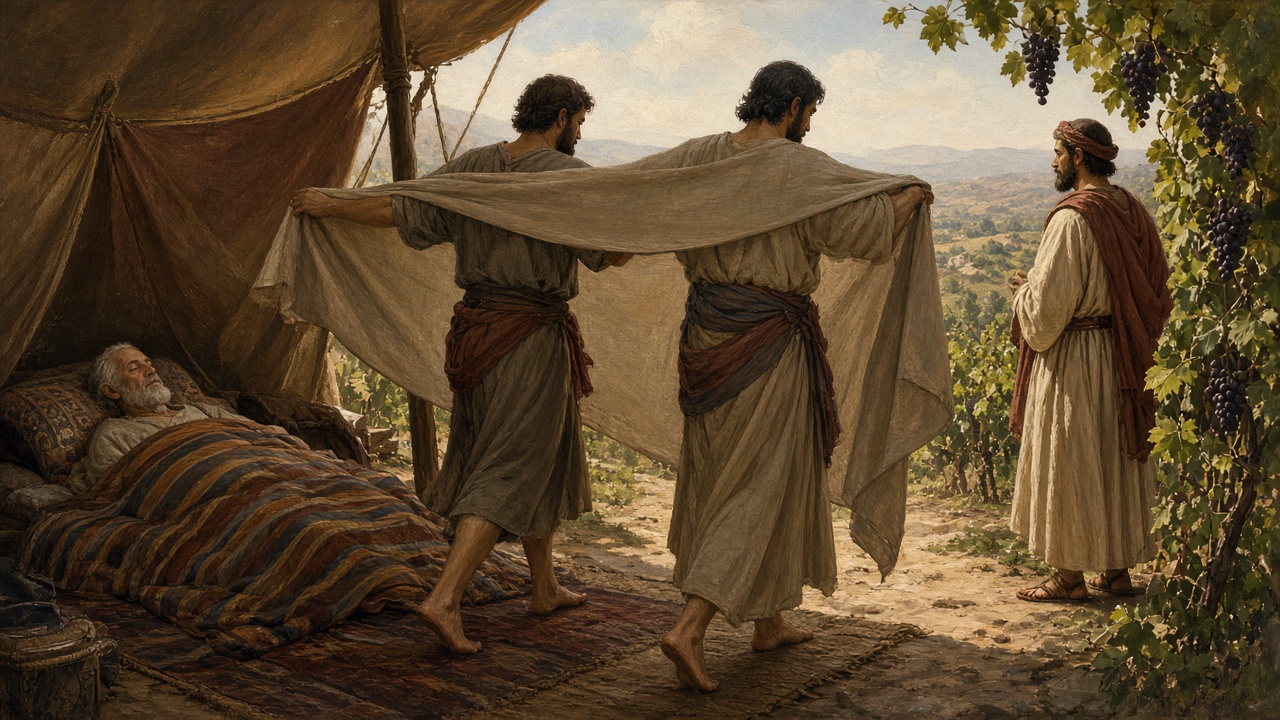
20Pues e Noé jax inteꞌ ajpatnar tama e rum y tamar era ixin upaqꞌui cora sian uva. 21Y conda checta e cosecha tama e uva era cay uche cora vino. Pues tama inteꞌ día e Noé cay uyuchꞌi meyra vino este que cay caray. Y de allí cucrema chꞌan wayan macuir uyotot y quetpa pispis. 22Conda e Cam uwira que pispis utata, locꞌoy patir y uchecsu tunor era tut usacunobꞌ. 23Y tamar era e Sem y e Jafet uchꞌamiobꞌ inteꞌ bꞌujc y uxichꞌiobꞌ tupatobꞌ y pacaxpatiobꞌ ochoyobꞌ y machi uwirobꞌ ut utatobꞌ y uyactobꞌ ojri e bꞌujc era tama ujor utatobꞌ tuaꞌ aquetpa macar.
24Pero conda sutpa bꞌixcꞌa e Noé tama ucarer cꞌotoy unata lo que chena tacar xeꞌ calapir umen e Cam xeꞌ jax e cumix sitz tuaꞌ. 25Y tamar era e Noé qꞌuijna meyra y uyare e Canaán cocha era y che:
“¡Quetpac bꞌaxbꞌir inyajrer uyunen e Cam xeꞌ jax e Canaán!
¡Jaxir tuaꞌ aquetpa inteꞌ man xeꞌ mambꞌir inyajrer tut usacunobꞌ!” che e Noé.
26Y wacchetaca sutpa ojron otronyajr e Noé y che:
“Que Niwinquirar Dios uchojbꞌesic ut e Sem,
y que e Canaán quetpac inteꞌ man xeꞌ mambꞌir inyajrer tut jaxir.
27Que e Dios uchic tuaꞌ abꞌoro meyra tunor e rum lo que ayan tuaꞌ e Jafet,
y que aturuan tujam uchꞌajnarir e Sem taca e jiriar,
y que uchꞌajnarir e Canaán quetpac manobꞌ tuaꞌ”, che e Noé.
28Pues conda cꞌapa numuy tunor e nuxi jajar, e Noé turuanto 350 año. 29Y bꞌan cocha era chamay e Noé conda cꞌotoy ucojco 950 año.
Did you know?
Noah's Covenant and the Words about His Sons
- God makes a covenant with Noah, with his descendants, and with every living creature that came out of the ark, promising never again to destroy all life by a flood. The sign is a rainbow set in the clouds, for all generations. One chronology dates this covenant to 2346 BC.Sources: the Bible text itself · God makes a covenant with Noah
- Genesis 9 says the whole earth was populated from Shem, Ham, and Japheth. Shem is explained as 'a name' or 'renown,' probably the eldest and the ancestor of the Israelites, though Japheth is also described as perhaps first by birth. Japheth means 'wide spreading,' a play on the Hebrew 'God shall enlarge Japheth,' and is linked to many tribes in the east of Europe and the north of Asia; Ham, meaning 'warm' or 'hot,' and hence the south, is called Noah's youngest son.Sources: the Bible text itself · Shem · Japheth · Ham
- Noah, a man of the soil, plants a vineyard, drinks the wine, and lies uncovered in his tent. Shem and Japheth cover him while walking backward, faces turned away, an act a dictionary calls filial piety and the occasion of the prophecy that Japheth's descendants would spread. The curse is spoken against Canaan, Ham's fourth son, because of what his father had done; one chronology dates the episode to 2345 BC.Sources: the Bible text itself · Japheth · Canaan · Noah gets drunk and Canaan is cursed
Notes written with AI assistance from open sources (Theographic Bible Metadata, CC BY-SA 4.0; Easton’s Bible Dictionary, public domain) and reviewed before publishing.
Credits and license for this translation
Uyojroner e Dios xeꞌ Tzꞌijbꞌabꞌir Tama e Onian Tiempo
The New Testament and Genesis, Ruth, Esther, and Jonah in the Chorti language of Guatemala
El Nuevo Testamento, Génesis, Rut, Ester y Jonás en Chortí, Guatemala
copyright © 1996, 2012, 2013, 2023 Wycliffe Bible Translators, Inc. and Evangel Bible Translators, International
Language: Chortí (Chorti)
Translation by: Evangel Bible Translators, International and Wycliffe Bible Translators
New Testament © 1996, 2012 Wycliffe Bible Translators, Inc.;
Old Testament © 2012, 2013, 2023 Evangel Bible Translators, International
This translation is made available to you under the terms of the
Creative Commons Attribution-Noncommercial-No Derivatives license 4.0.
You may share and redistribute this Bible translation or extracts from it in any format, provided that:
You include the above copyright and source information.
You do not sell this work for a profit.
You do not change any of the words or punctuation of the Scriptures.
Pictures included with Scriptures and other documents on this site are licensed just for use with those Scriptures and documents.
For other uses, please contact the respective copyright owners.
2023-08-23
Source: http://ebible.org/caa/ · eBible.org