Genesis 8
Uyojroner e Dios xeꞌ Tzꞌijbꞌabꞌir Tama e Onian Tiempo · Tap a verse to see its cross-references.
Conda cꞌapa numuy e nuxi jajar
1Pues entonces e Dios sutpa ubꞌijnu tama e Noé y tama tunor e sian animalobꞌ y tama tunor e sian aracꞌobꞌ lo que ayan tama e barco taca e Noé. Y tamar era e Dios cay uche jicna numuy inteꞌ nuxi icꞌar tama tunor or e rum y e jaꞌ cay ecmay ixin. 2Entonces e Dios umaqui tunor utiꞌ e jaꞌ tiaꞌ bꞌocbꞌa locꞌoy tama utamir e nuxi jaꞌ y umaqui e nuxi jaꞌ lo que chꞌur tama e tocar tut e qꞌuin ubꞌan, y tamar era quetruma e jajar tama tunor or e rum. 3Y cay ecmay ixin e jaꞌ cora cora lo que war tama tunor or e rum. Y conda numuy e 150 día chequer que warix ecmay e jaꞌ. 4Entonces tama e diecisiete día tama e siete mes e barco quetpa wawan tujor inteꞌ witzir tama e lugar xeꞌ ucꞌabꞌa Ararat. 5Pues e jaꞌ warto ecmay axin, y tama e bꞌajxan día tama e diez mes tama e año era, cay checta ujor cora witzir xeꞌ más nojta uwatar tujam tunor e sian witzirobꞌ.
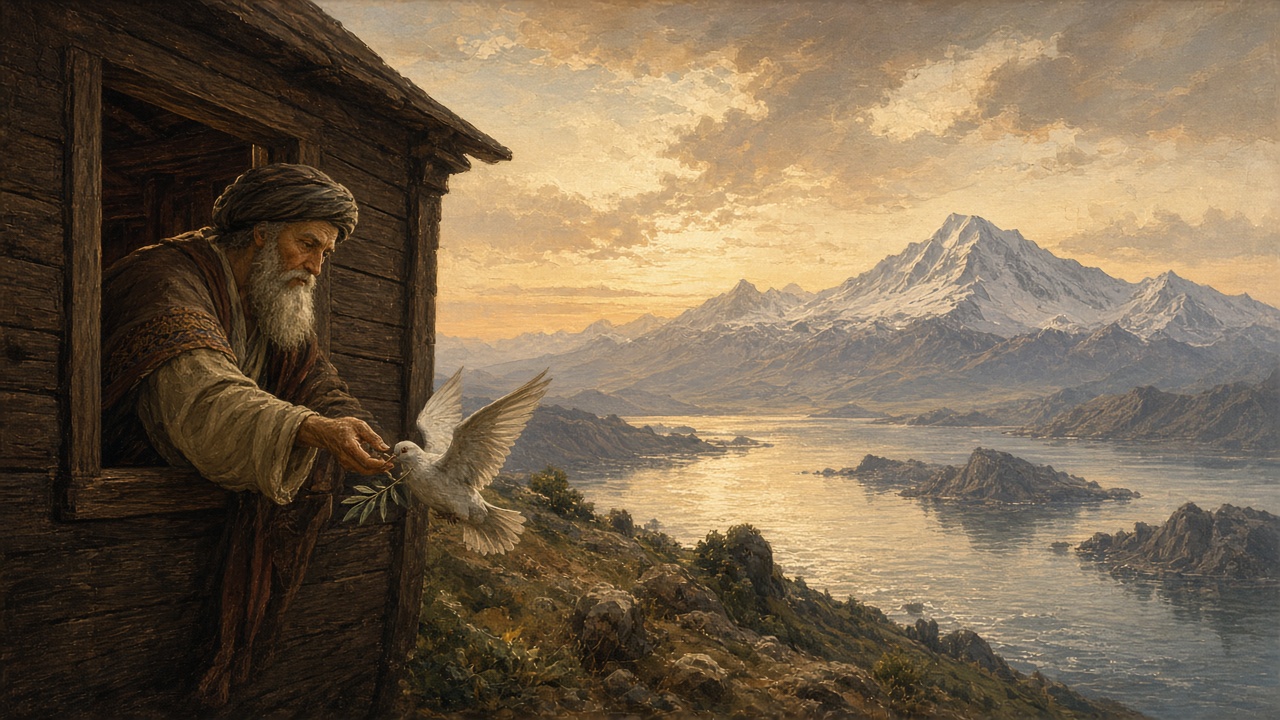
6Y conda numuy otro cuarenta día, e Noé upasi e ventana lo que ayan tama e barco lo que uche, 7y uyacta ixin inteꞌ oror, pero e mut era intaca chꞌuwan ixin cora cora este que utajwi inteꞌ lugar xeꞌ taquin. 8Y nacpat era e Noé uyebꞌta ixin incojt sacsac mut tuaꞌ uwira jay utajwi tiaꞌ taquin or e rum. 9Pero e mut era sutpa cꞌotoy tama e barco otronyajr umen que machi utajwi inteꞌ lugar tiaꞌ tuaꞌ apacuan ajiri cocha macbꞌirto tunor or e rum umen e jaꞌ. Entonces e Noé ulocse ucꞌabꞌ tama e barco y uchuqui e mut y uyose macuir e barco otronyajr.
10Y de allí e Noé ucojcoto otro siete día, y entonces uyebꞌta ixin e sacsac mut otronyajr. 11Y warix acbꞌare conda sutpa cꞌotoy e sacsac mut, y qꞌuecher umener inteꞌ uyopor teꞌ tama uniꞌ xeꞌ ucꞌabꞌa olivo, y tamar era e Noé cꞌotoy unata que warix ataqui e jaꞌ tor e rum. 12Y de allí ucojco otro siete día y sutpa uyebꞌta ixin e sacsac mut. Pero e sacsac mut machix sutpa cꞌotoy tut e barco otronyajr.
13Y conda e Noé war ucojco 601 año cꞌotoy quetpa taquin or e rum. Pues tama e bꞌajxan día tama e bꞌajxan mes e Noé upasi ujor e barco, y tamar era cꞌotoy uwira que war ataqui or e rum axin. 14Pues tama e veintisiete día tama e chateꞌ mes uwira que cꞌapa taqui tunor or e rum. 15Entonces e Dios uyare e Noé y che: 16“Loqꞌuen tama e barco taca awixcar y oynenobꞌ y awaribꞌobꞌ. 17Y locsen tunor e sian animalobꞌ y tunor e sian aracꞌobꞌ lo que ayan tacaret tama e barco. Y locsen tunor e mutobꞌ y tunor e animalobꞌ xeꞌ uquejruꞌ ubꞌobꞌ tut e rum, y tamar era erer axiobꞌ esto tama tunor or e rum tuaꞌ achꞌijrtesianobꞌ y tuaꞌ ubꞌutꞌiobꞌ tunor or e rum”, che e Dios.
18Entonces e Noé y uwixcar y uyunenobꞌ y uyaribꞌobꞌ locꞌoyobꞌ tama e barco. 19Y locꞌoyobꞌ ubꞌan tunor e sian aracꞌobꞌ taca upiarobꞌ, y locꞌoyobꞌ tunor e animalobꞌ taca upiarobꞌ, y locꞌoyobꞌ tunor e animalobꞌ xeꞌ uquejruꞌ ubꞌobꞌ tut e rum taca upiarobꞌ, y locꞌoyobꞌ tunor e sian mut taca upiarobꞌ. 20Y nacpat era e Noé cay umorojse cora tun tuaꞌ aquetpa bꞌan cocha inteꞌ altar. Y de allí uchuqui incojt arac y incojt mut xeꞌ imbꞌutz tut e Dios tama inteꞌ inteꞌ clase, y de allí uchamse y uputa inteꞌ intiobꞌ tut Cawinquirar Dios tujor e tun xeꞌ morojsebꞌir turu umener. 21Y conda cꞌotoy uyujtzner ubꞌutzꞌar tunor e aracꞌobꞌ era esto tichan, cay tzay Cawinquirar Dios cocha galan ojtzꞌun tunor era tut. Y entonces ojron Cawinquirar Dios jax taca y che: “Pues motor que e winicobꞌ war taca uchiobꞌ meyra e sian mabꞌambꞌanir iraj iraj, cocha bꞌan acay ubꞌijnuobꞌ tuaꞌ uchiobꞌ conda chꞌom maxtacobꞌto, y bꞌan taca axin uchiobꞌ iraj iraj, pero ma tiaꞌ tuaꞌ insutpa incꞌapes tunor lo que ayan tor e rum cocha cay inche era. Y ma tiaꞌ tuaꞌ insutpa incꞌapes tunor e animalobꞌ y tunor e aracꞌobꞌ otronyajr bꞌan cocha cay inche era”, che Cawinquirar Dios. 22Y de allí sutpa ojron e Dios y che:
“Este que axin acꞌapa or e rum era
cꞌani achecta watar e pacmar y e cosecha tama utiempo.
Y cꞌani achecta e calor y e sisar tama inteꞌ inteꞌ año,
y cꞌani acꞌaxi e jajar y cꞌani watar e verano y e invierno,
y cꞌani achecta e día y e acbꞌar iraj iraj”, che Cawinquirar Dios.
Did you know?
The Waters Recede
- The ark came to rest on the mountains of Ararat, a name meaning “sacred land” or “high land” for a country on whose mountains the ark settled after the flood. Easton's Bible Dictionary (1897) suggests those mountains were probably the Kurdish range of southern Armenia, though the name is also commonly applied to a high, almost inaccessible peak rising from the plain of the Araxes. In 2 Kings 19:37 and Isaiah 37:38 the Authorized Version renders the name “Armenia” and the Revised Version “land of Ararat,” while Jeremiah 51:27 uses it for central or southern Armenia.Sources: Ararat · the Bible text itself
- Noah’s Hebrew name means “rest,” and in this chapter the ark itself comes to rest as the waters go down. He was the son of Lamech and the grandson of Methuselah, and the father of Shem, Ham, and Japheth. Easton's Bible Dictionary describes him as the connecting link between the old world and the new, and as a second great progenitor of the human family.Sources: Noah · the Bible text itself
- Chronological notes place the Great Flood in 2347 BC, lasting one year; the subsiding of the waters in 2346 BC, over 220 days; and the leaving of the ark in 2346 BC, as a single day. In the chapter itself, the waters have gone down after 150 days and the ark rests on the seventeenth day of the seventh month; on the first day of the first month of Noah’s six hundred and first year the waters have dried up, and by the twenty-seventh day of the second month the earth is fully dry.Sources: The Great Flood · The flood subsides · Leaving the Ark · the Bible text itself
Notes written with AI assistance from open sources (Theographic Bible Metadata, CC BY-SA 4.0; Easton’s Bible Dictionary, public domain) and reviewed before publishing.
Places in this chapter
- Ararat · Today: Urartu · 39.703, 44.300 · verse 4
Only places identified with high confidence are shown (90% or more according to the scholarly sources compiled by OpenBible). Period map: DARE (Digital Atlas of the Roman Empire), CC BY 4.0; modern map: © OpenStreetMap contributors; places: OpenBible.info (CC BY 4.0).
Credits and license for this translation
Uyojroner e Dios xeꞌ Tzꞌijbꞌabꞌir Tama e Onian Tiempo
The New Testament and Genesis, Ruth, Esther, and Jonah in the Chorti language of Guatemala
El Nuevo Testamento, Génesis, Rut, Ester y Jonás en Chortí, Guatemala
copyright © 1996, 2012, 2013, 2023 Wycliffe Bible Translators, Inc. and Evangel Bible Translators, International
Language: Chortí (Chorti)
Translation by: Evangel Bible Translators, International and Wycliffe Bible Translators
New Testament © 1996, 2012 Wycliffe Bible Translators, Inc.;
Old Testament © 2012, 2013, 2023 Evangel Bible Translators, International
This translation is made available to you under the terms of the
Creative Commons Attribution-Noncommercial-No Derivatives license 4.0.
You may share and redistribute this Bible translation or extracts from it in any format, provided that:
You include the above copyright and source information.
You do not sell this work for a profit.
You do not change any of the words or punctuation of the Scriptures.
Pictures included with Scriptures and other documents on this site are licensed just for use with those Scriptures and documents.
For other uses, please contact the respective copyright owners.
2023-08-23
Source: http://ebible.org/caa/ · eBible.org