Genesis 28
Uyojroner e Dios xeꞌ Tzꞌijbꞌabꞌir Tama e Onian Tiempo · Tap a verse to see its cross-references.
1Entonces e Isaac upejca e Jacob y uchojbꞌes ut. Y de allí uyare cocha era y che: “Machi tuaꞌ inujbꞌi taca inteꞌ ijchꞌoc xeꞌ ajlugar tara Canaán. 2Sino que quiqui esto tama e lugar Padán-aram esto tama uyotot e Betuel xeꞌ jax atatanoy, y yajaꞌ taca nujbꞌien taca incojt uwijchꞌoc e Labán xeꞌ jax amamaꞌ. 3Y que Cadiosir xeꞌ ayan meyra ucꞌotorer axin uchojbꞌesiquet y que axin uche abꞌoro meyra achꞌajnarir, y que uche alocꞌoy meyra chinamobꞌ tama achꞌajnarirobꞌ. 4Y que Cawinquirar Dios uchojbꞌesiquet taca achꞌajnarirobꞌ bꞌan cocha cay uchojbꞌes ut e Abraham tuaꞌ erer ixcꞌotoy ixquetpa ajyumox tama e lugar era tiaꞌ war caturuan bꞌan cocha ajnajtir gention. Porque jax Cawinquirar Dios xeꞌ che que cꞌani uyajcꞌu tunor e rum era e Abraham taca uchꞌajnarir”, che e Isaac uyare e Jacob.
5Entonces bꞌan cocha era e Isaac uyebꞌta ixin e Jacob esto tama e lugar Padán-aram. Entonces cꞌotoy e Jacob esto tama uyotot e Labán xeꞌ jax uyunen e Betuel xeꞌ tuaꞌ uchꞌajnarir e Aram y xeꞌ jax uwijtzꞌin e Rebeca.
Conda nujbꞌi e Esaú
6Entonces e Esaú cꞌotoy unata lo que arobꞌna e Jacob umen utata y que ebꞌtana ixin esto tama e lugar Padán-aram tuaꞌ anujbꞌi bꞌana. Y cꞌotoy unata ubꞌan que conda cꞌapa chojbꞌesna ut e Jacob que arobꞌna tuaꞌ machi anujbꞌi taca inteꞌ ijchꞌoc xeꞌ ajlugar Canaán. 7Y de allí cꞌotoy unata que e Jacob ubꞌian tut utata y tut utuꞌ tuaꞌ axin esto tama e lugar Padán-aram bꞌan cocha arobꞌna umenerobꞌ. 8Y tamar era e Esaú cꞌotoy unata que machi atzayobꞌ utatobꞌ que anujbꞌi uyunenobꞌ taca e ijchꞌoctac xeꞌ ajlugarobꞌ Canaán. 9Entonces lo que uche e Esaú, ixin tuaꞌ uwarajse e Ismael xeꞌ jax uyunen e Abraham, y uchꞌami inteꞌ uwijchꞌoc xeꞌ ucꞌabꞌa Mahalat tuaꞌ aquetpa uwixcar motor que ayix chateꞌ uwixcar xeꞌ ajlugarobꞌ Canaán. Pues e Mahalat jax uwijtan e Nebayot y sitzbꞌir tuaꞌ e Abraham.
Conda e Dios uchectes ubꞌa tut e Jacob tama e lugar Betel
10Entonces e Jacob locꞌoy tama e lugar Beerseba tuaꞌ axin esto tama e chinam Harán. 11Y war axana tor e bꞌir conda cay acbꞌare, entonces yajaꞌ taca quetpa tuaꞌ unumse e acbꞌar. Y uchꞌami ingojr tun tuaꞌ aquetpa bꞌan cocha utꞌijribꞌ ujor, y de allí chꞌan wayan. 12Y cay waycꞌa y tama uwayac uwira que ayan inteꞌ escalera xeꞌ war tama ut e rum y xeꞌ acꞌotoy esto tut e tocar tichan, y uwira que ayan cora uyangelobꞌ e Dios xeꞌ war atꞌabꞌayobꞌ y xeꞌ war ecmayobꞌ tama e escalera era. 13Y uwira que war Cawinquirar Dios tama ujor e escalera. Entonces Cawinquirar Dios uyare e Jacob y che: “Pues nen jax Awinquiraren Dios xeꞌ ujtzna niut umen atatanoy Abraham y umen atata Isaac ubꞌan. Pues jax nen xeꞌ war inwaret que cꞌani inwajqꞌuet tunor e lugar era y cꞌani aquetpa tuaꞌ tunor achꞌajnarir ubꞌan. 14Y jaxirobꞌ tuaꞌ acꞌotoy aquetpobꞌ inteꞌ nuxi chinam bꞌan cocha ayan meyra tanlum tara tor e rum, y cꞌani aturuanobꞌ tama tunor or e lugar tama e lado tiaꞌ atobꞌoy watar e qꞌuin, y tama e lado tiaꞌ anamtzꞌa axin e qꞌuin, y tama e lado bꞌana, y tama e lado yajaꞌ. Y tunor e sian chꞌajnarir lo que ayan tama tunor or e rum cꞌani achojbꞌesnobꞌ tamaret y tama achꞌajnarir xeꞌ axin watar ubꞌan. 15Pues nen cꞌani inquetpa tacaret, y cꞌani incojcuet tic taca tiaꞌ iꞌxin, y cꞌani intareset esto tama e lugar era otronyajr. Y machi tuaꞌ inwactet este que acꞌapa inche tunor lo que war inwaret era”, che Cawinquirar Dios uyare e Jacob tama uwayac. “Y e Jacob uwira tama uwayac que ayan cora uyangelobꞌ e Dios xeꞌ war atꞌabꞌayobꞌ y xeꞌ war ecmayobꞌ tama e escalera.” (Génesis 28:15)|alt="Jacobꞌs latter" src="CO00683b.tif" size="col" loc="Génesis 28:10-17" copy="David C. Cook" ref="GENESIS 28:15"
16Pues conda e Jacob bꞌixcꞌa, cay ubꞌijnu cocha era y che: “Erach ajchi que Cawinquirar Dios turu tama e lugar era, y nen machi ani innata”, xeꞌ ubꞌijnu e Jacob. 17Entonces bꞌacta meyra y sutpa ojron jax taca otronyajr y che: “Pues imbꞌacꞌajr uwirnar e lugar era cocha jax e lugar tiaꞌ aturuan e Dios, y jax e ocher tut e qꞌuin ubꞌan”, che e Jacob jax taca.
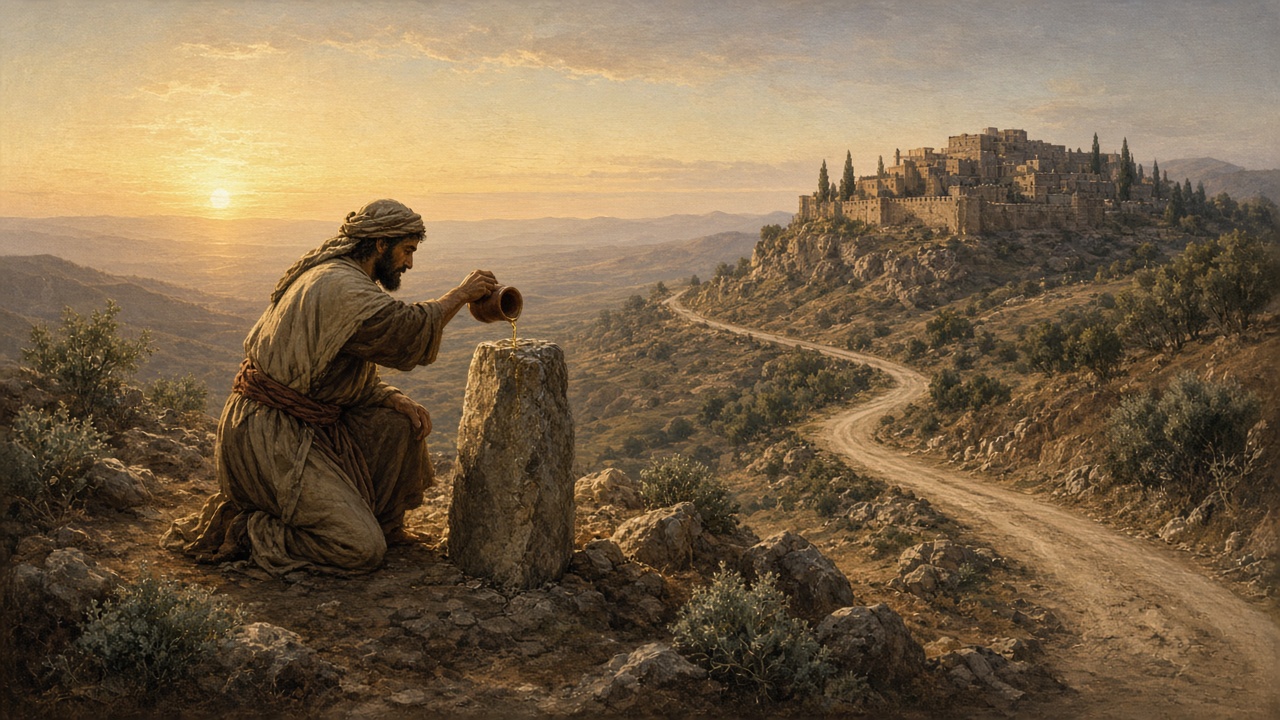
18Pues conda sacojpa tama otronteꞌ día, e Jacob ixin uchꞌami e tun lo que cay utꞌiri ujor tamar, y uwabꞌu tuaꞌ aquetpa bꞌan cocha inteꞌ chequerir, y de allí uyari e aceite olivo tamar tuaꞌ aquetpa chequer que erach e tun era tut e Dios. 19Y uturbꞌa ucꞌabꞌa e lugar era Betel xeꞌ war che uyotot e Dios, motor que arobꞌna ani Luz.
20Pues jax tama e lugar era tiaꞌ e Jacob cay uche inteꞌ acuerdo taca Cawinquirar Dios y che: “Pues jay Net iꞌxin tacaren y iꞌxin acojcuen tama tunor e xambꞌar lo que war inche era, y jay awajqꞌuen tucꞌa tuaꞌ incꞌuxi y tucꞌa tuaꞌ inlapi, 21y jay matucꞌa innumse nibꞌa xeꞌ imbꞌacꞌajr uwirnar tor e bꞌir, y jay matucꞌa innumse nibꞌa conda insutpa incꞌotoy tama uyotot nitata, entonces net san tuaꞌ iquetpa Nidiosiret. 22Y e tun era lo que inwabꞌu cꞌani aquetpa bꞌan cocha inteꞌ chequerir que e lugar tara jax uyotot e Dios. Y tama tunor lo que iꞌxin awajqꞌuen, cꞌani inwajqꞌuet e diezmo tamar”, che e Jacob uyare Cawinquirar Dios.
Did you know?
Jacob's Journey and Dream at Bethel
- Isaac sent Jacob from Beersheba to Paddan-aram to take a wife from the daughters of Laban, his mother Rebekah's brother, rather than from the Canaanite women. Paddan-aram, called the plain of Aram, is commonly regarded as the Mesopotamian district around Haran, where Laban lived; Haran, also called the city of Nahor, was where Abraham stayed after leaving Ur until his father Terah died.Sources: the Bible text itself · Paddan-aram · Haran · Laban
- The place where Jacob dreamed, set up as a pillar the stone he had put under his head, and poured oil on it was the royal Canaanite city of Luz; he renamed it Bethel. Easton's Bible Dictionary (1897) locates Bethel in central Palestine, about ten miles north of Jerusalem, and notes that the name was at first apparently given to a sanctuary in the neighborhood of Luz, and was not given to the city itself until after the tribe of Ephraim conquered it.Sources: the Bible text itself · Luz · Bethel (of Palestine)
- When Esau learned that Isaac had blessed Jacob and ordered him not to marry a Canaanite woman, he went to Ishmael and married Mahalath, sister of Nebaioth and daughter of Abraham's son Ishmael, in addition to the wives he already had. Easton's Bible Dictionary (1897) also calls her Bashemath and notes that Esau's three wives receive different names in the Edomite genealogy of Genesis 36 from those given in the narrative of Genesis 26 and 28.Sources: the Bible text itself · Bashemath
Notes written with AI assistance from open sources (Theographic Bible Metadata, CC BY-SA 4.0; Easton’s Bible Dictionary, public domain) and reviewed before publishing.
Places in this chapter
- Canaan · 32.767, 35.333 · verses 1, 6, 8
- Haran · Today: Harran · 36.864, 39.033 · verse 10
- Luz · Today: Beitin · 31.923, 35.241 · verse 19
Only places identified with high confidence are shown (90% or more according to the scholarly sources compiled by OpenBible). Period map: DARE (Digital Atlas of the Roman Empire), CC BY 4.0; modern map: © OpenStreetMap contributors; places: OpenBible.info (CC BY 4.0).
Credits and license for this translation
Uyojroner e Dios xeꞌ Tzꞌijbꞌabꞌir Tama e Onian Tiempo
The New Testament and Genesis, Ruth, Esther, and Jonah in the Chorti language of Guatemala
El Nuevo Testamento, Génesis, Rut, Ester y Jonás en Chortí, Guatemala
copyright © 1996, 2012, 2013, 2023 Wycliffe Bible Translators, Inc. and Evangel Bible Translators, International
Language: Chortí (Chorti)
Translation by: Evangel Bible Translators, International and Wycliffe Bible Translators
New Testament © 1996, 2012 Wycliffe Bible Translators, Inc.;
Old Testament © 2012, 2013, 2023 Evangel Bible Translators, International
This translation is made available to you under the terms of the
Creative Commons Attribution-Noncommercial-No Derivatives license 4.0.
You may share and redistribute this Bible translation or extracts from it in any format, provided that:
You include the above copyright and source information.
You do not sell this work for a profit.
You do not change any of the words or punctuation of the Scriptures.
Pictures included with Scriptures and other documents on this site are licensed just for use with those Scriptures and documents.
For other uses, please contact the respective copyright owners.
2023-08-23
Source: http://ebible.org/caa/ · eBible.org