Genesis 25
Uyojroner e Dios xeꞌ Tzꞌijbꞌabꞌir Tama e Onian Tiempo · Tap a verse to see its cross-references.
Uchꞌajnarir e Abraham taca e Quetura
1Entonces conda numuy cora tiempo nacpat que chamay e Sara, e Abraham sutpa uchꞌami otronteꞌ uwixcar xeꞌ ucꞌabꞌa Quetura. 2Y jaxir ixin ucuxi seis tejromtac taca e Abraham xeꞌ jax era: ayan e Zimrán y e Jocsán y e Medán y e Madián y e Isbac y e Súah. 3Y e Jocsán cꞌotoy quetpa tatabꞌir tuaꞌ e Sebá y e Dedán. Y e Dedán cꞌotoy quetpa tatabꞌir tuaꞌ tin e chꞌajnarir tuaꞌ e Asir, y tuaꞌ tin e chꞌajnarir tuaꞌ e Letus, y tuaꞌ tin e chꞌajnarir tuaꞌ e Leum. 4Y e Madián cꞌotoy quetpa tatabꞌir tuaꞌ e Efá y e Éfer y e Hanoc y e Abidá y e Eldaá. Pues tunor era chꞌajnarir tuaꞌ e Quetura taca e Abraham. 5Y e Abraham uyacta que jax e Isaac xeꞌ tuaꞌ uchꞌami tunor lo que ayan tuaꞌ conda axin achamay. 6Pero conda merato achamay e Abraham ixin uxere cora regalo taca umaxtacobꞌ xeꞌ uchꞌijrse taca e inmojr uwixcar, y de allí utzacre locꞌoyobꞌ najtir tut uyunen Isaac tuaꞌ aturuanobꞌ tama e lugar tiaꞌ atobꞌoy watar e qꞌuin.
Conda chamay e Abraham y mujca
7Pues e Abraham turuan 175 año tama tunor ucuxtar. 8Entonces conda e Abraham onian winiquix, chamay. Y ixin tuaꞌ aquetpa taca utata viejobꞌirobꞌ xeꞌ turuanobꞌ tama e onian tiempo. 9Y mujca umen uyunenobꞌ xeꞌ jax e Isaac y e Ismael tama e chꞌen lo que ayan tama e lugar Macpelá xeꞌ aquetpa tuyejtzꞌer e lugar Mamré. Pues e rum era majna tuaꞌ e Efrón xeꞌ uyunen e Zohar xeꞌ tuaꞌ uchꞌajnarir e Het. 10Pues jax era e rum lo que mambꞌir umen e Abraham tacar uchꞌajnarir e Het. Y yajaꞌ taca mujca e Abraham tuyejtzꞌer tiaꞌ mucbꞌir uwixcar Sara. 11Pues nacpat que chamay e Abraham, e Isaac chojbꞌesna ut meyra umen e Dios, y ixin turuan tuyejtzꞌer ut e jaꞌ xeꞌ ucꞌabꞌa “Ut e jaꞌ xeꞌ tuaꞌ Tin e Turu xeꞌ Uwiren”.
Uchꞌajnarir e Ismael
12Pues entonces jax era uyunenobꞌ e Ismael xeꞌ jax uyunen e Abraham taca e Agar xeꞌ uman e Sara y xeꞌ ajlugar Egipto. 13Y ucꞌabꞌobꞌ bꞌan cocha cuxpobꞌ jax era: Ayan e Nebayot xeꞌ jax e yaxar sitz y de allí ayan e Quedar y e Adbeel y e Mibsam 14y e Mismá y e Dumá y e Masá 15y e Hadar y e Temá y e Jetur y e Nafís y e Quedmá. 16Pues jax era ucꞌabꞌobꞌ e doce unembꞌirobꞌ tuaꞌ e Ismael, y bꞌan taca cocha ucꞌabꞌobꞌ y bꞌan quetpa ucꞌabꞌa ulugarobꞌ inteꞌ intiobꞌ ubꞌan. Y inteꞌ intiobꞌ quetpobꞌ ajcꞌotorer tujor ufamilia.
17Pues e Ismael war ucojco 137 año conda chamay, y ixin tuaꞌ aquetpa taca utata viejobꞌirobꞌ xeꞌ turuanobꞌ tama e onian tiempo. 18Y uchꞌajnarir e Ismael quetpobꞌ tama e lugar xeꞌ turu tuyuxin e chinam Havilá y tuyuxin e chinam Sur xeꞌ aquetpa tuyejtzꞌer e lugar Egipto tama e bꞌir xeꞌ axin esto tama e lugar Asiria. Y jaxirobꞌ war uchiobꞌ e tzꞌojyir taca ubꞌobꞌ iraj iraj.
Conda cuxpobꞌ e Jacob y e Esaú
19Pues jax era e checsuyaj tamar lo que numuy tama ucuxtar e Isaac xeꞌ jax uyunen e Abraham. 20Pues e Isaac war ucojco cuarenta año conda nujbꞌi taca e Rebeca xeꞌ jax uwijchꞌoc e Betuel y sacumbꞌir tuaꞌ e Labán. Pues jaxirobꞌ tuobꞌ uchꞌajnarir e Aram xeꞌ turobꞌ tama e lugar Padán-aram. 21Pero e Rebeca machi obꞌna achꞌijrtesian, motor que numuy veinte año que nujbꞌabꞌir taca e Isaac. Entonces jaxir cay ucꞌajti taca Cawinquirar Dios tuaꞌ atacarna uwixcar. Y Cawinquirar Dios uyubꞌi lo que ucꞌajti e Isaac tacar, y e Rebeca cꞌotoy quetpa wawan taca uyar. 22Pero cocha cuach war ucojco e Rebeca, e chꞌurcabꞌobꞌ era cay uyobꞌi ubꞌobꞌ macuir unac. Entonces cay ubꞌijnu y che: “Pues jay bꞌan war uchiobꞌ conda merato acuxpobꞌ, ¿tucꞌa tuaꞌ inxin innumse nibꞌa conda acuxpobꞌ?” xeꞌ che e Rebeca jax taca. Entonces jaxir cay uyubꞌi tuaꞌ Cawinquirar Dios tama tunor era, 23y Cawinquirar Dios uyare cocha era y che:
“Pues tama anac ayan chateꞌ bꞌiqꞌuit maxtac
xeꞌ tuaꞌ axin aquetpobꞌ chateꞌ nuquir chinam,
y conda axin acuxpobꞌ cꞌani uchiobꞌ e tzꞌojyir iraj iraj.
Y inteꞌ chinam cꞌani aqꞌuecꞌo más que inteꞌ,
y e ijtzꞌimbꞌir tuaꞌ acꞌotori tujor e yaxar”, che Cawinquirar Dios uyare e Rebeca.
24Entonces conda cꞌotoy e día tuaꞌ acuxpobꞌ, e Rebeca uwira que erach que cuach. 25Y xeꞌ cuxpa bꞌajxan chacchac ut y ayan meyra tzutz tama tunor ucuerpo, y tamar era turbꞌana ucꞌabꞌa Esaú xeꞌ war che “Tzutz”. 26Y de allí cuxpa uwijtzꞌin y chucur usuy uyoc usacun umener, y tamar era turbꞌana ucꞌabꞌa Jacob. Pues e Isaac war ucojco sesenta año conda cuxpobꞌ uyar e Rebeca.
Conda e yaxar sitz xeꞌ jax e Esaú uchoni uyerencia taca uwijtzꞌin
27Pues entonces chꞌiobꞌ e cuach. Y e Esaú atzay aturuan tama e choquem lugar y cꞌotoy cano corma. Pero e Jacob incꞌun uwirnar y atzay aquetpa tama uyotot xeꞌ chembꞌir taca e bꞌujc. 28Pues e Esaú más chojresbꞌir ut umen utata xeꞌ jax e Isaac cocha jaxir atzay ucꞌuxi lo que achujca umen e Esaú. Pero e Jacob más atzay eꞌrna umen utuꞌ xeꞌ jax e Rebeca.
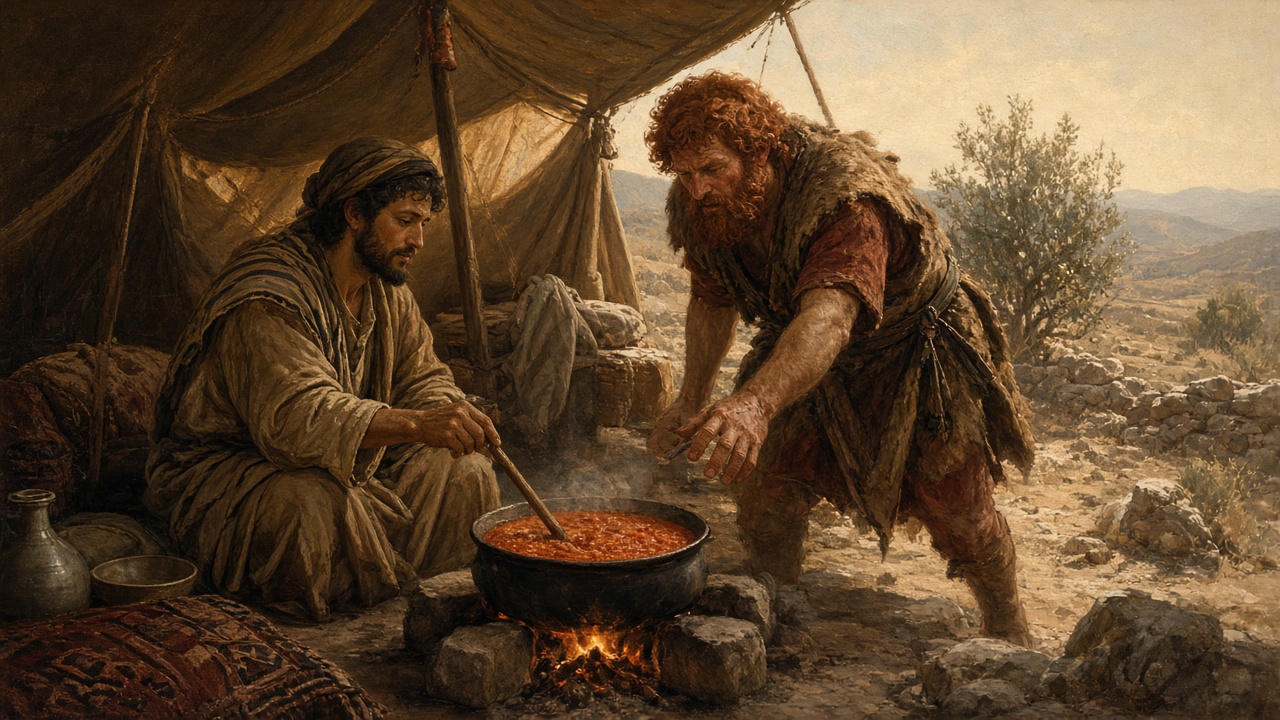
29Pues entonces tama inyajr conda e Jacob war apatna tama e cocina cꞌotoy e Esaú tama uxambꞌar taca meyra winar. 30Entonces uyare uwijtzꞌin y che:
—Quisinic awajqꞌuen imbꞌijc e chacchac quisado lo que war ache, porque nen war inchamay umen e winar, che e Esaú. Y tamar era e Esaú arobꞌna Edom ubꞌan. Pues e ojroner Edom lar uyubꞌnar cocha inteꞌ ojroner hebreo xeꞌ war che “Chacchac”.
31Entonces ojron e Jacob y che:
—Pero bꞌajxan ucꞌani tuaꞌ awajqꞌuen awerencia xeꞌ ajcꞌunet, cocha net jax e yaxar unembꞌiret, che e Jacob.
32Entonces ojron e Esaú y che:
—Pues war inchamay umen e winar. Y jay inxin ani inchamay rajxa era, matucꞌa ucꞌampibꞌir niwerencia taniut motor que yaxar unembꞌiren, che e Esaú.
33Entonces ojron e Jacob y che:
—Bꞌajxan arenen cocha era y che: San tuaꞌ inwajqꞌuet niwerencia, che e Jacob.
Entonces bꞌan uche e Esaú y bꞌan cocha era uchoni uyerencia lo que ayan ani tuaꞌ umen que jaxir jax e yaxar sitz, y cꞌotoy quetpa e herencia tuaꞌ e Jacob. 34Entonces e Jacob uyajcꞌu e Esaú e chacchac guisado y e pan. Y conda cꞌapa weꞌ y cꞌapa uyuchꞌi e vino e Esaú achpa locꞌoy ixin, y machi war ubꞌijnu jay nojta ucꞌampibꞌir lo que quetpa ani tuaꞌ uchꞌami tuaꞌ utata umen que jaxir jax e yaxar unembꞌir.
Did you know?
Abraham’s heirs and the twin brothers
- Keturah, whose name Easton's Bible Dictionary (1897) explains as “incense,” is introduced here as another wife of Abraham. That dictionary says he probably married her after Sarah’s death, though her nationality is unknown, and notes that 1 Chronicles calls her a concubine. She bore him six sons, including Jokshan and Midian, the father of the Midianites; while Abraham was still alive he gave gifts to the sons of his concubines and sent them away from Isaac to the land of the east.Sources: Keturah · Midian · the Bible text itself
- Isaac and Ishmael together buried Abraham in the cave of Machpelah near Mamre, in the field Abraham had bought from Ephron the Hittite, where Sarah already lay. Easton's Bible Dictionary (1897) explains Machpelah as “portion” or “double cave,” set on a hillside east of Hebron and facing Mamre, a place called the oaks—or, in a margin, the terebinths—of Mamre.Sources: Machpelah · Mamre · the Bible text itself
- Esau, Rebekah’s firstborn twin, was born red and covered with hair like a fur coat. Easton's Bible Dictionary (1897) links the further name Edom, “red,” to the red lentil stew for which he sold his birthright, and explains Jacob as “one who follows on another’s heels” or “supplanter,” matching the report that Jacob was born grasping Esau’s heel. Esau grew up as a skillful hunter and a man of the field, while Jacob was a quiet man who stayed at home.Sources: Esau (Edom) · Jacob (Israel) · the Bible text itself
Notes written with AI assistance from open sources (Theographic Bible Metadata, CC BY-SA 4.0; Easton’s Bible Dictionary, public domain) and reviewed before publishing.
Places in this chapter
- East · Today: region around Amman · 31.955, 35.934 · verse 6
- Machpelah · Today: Cave of the Patriarchs · 31.525, 35.111 · verse 9
- Negeb · 31.245, 34.841 · verse 11
- Assyria · 36.359, 43.153 · verse 18
- Egypt · 30.129, 31.308 · verse 18
Only places identified with high confidence are shown (90% or more according to the scholarly sources compiled by OpenBible). Period map: DARE (Digital Atlas of the Roman Empire), CC BY 4.0; modern map: © OpenStreetMap contributors; places: OpenBible.info (CC BY 4.0).
Credits and license for this translation
Uyojroner e Dios xeꞌ Tzꞌijbꞌabꞌir Tama e Onian Tiempo
The New Testament and Genesis, Ruth, Esther, and Jonah in the Chorti language of Guatemala
El Nuevo Testamento, Génesis, Rut, Ester y Jonás en Chortí, Guatemala
copyright © 1996, 2012, 2013, 2023 Wycliffe Bible Translators, Inc. and Evangel Bible Translators, International
Language: Chortí (Chorti)
Translation by: Evangel Bible Translators, International and Wycliffe Bible Translators
New Testament © 1996, 2012 Wycliffe Bible Translators, Inc.;
Old Testament © 2012, 2013, 2023 Evangel Bible Translators, International
This translation is made available to you under the terms of the
Creative Commons Attribution-Noncommercial-No Derivatives license 4.0.
You may share and redistribute this Bible translation or extracts from it in any format, provided that:
You include the above copyright and source information.
You do not sell this work for a profit.
You do not change any of the words or punctuation of the Scriptures.
Pictures included with Scriptures and other documents on this site are licensed just for use with those Scriptures and documents.
For other uses, please contact the respective copyright owners.
2023-08-23
Source: http://ebible.org/caa/ · eBible.org