Genesis 23
Uyojroner e Dios xeꞌ Tzꞌijbꞌabꞌir Tama e Onian Tiempo · Tap a verse to see its cross-references.
Conda chamay y mujca e Sara
1Pues e Sara turuan 127 año, 2y de allí chamay tama inteꞌ lugar xeꞌ ucꞌabꞌa Quiriat-arbá xeꞌ arobꞌna Hebrón coner xeꞌ aquetpa tama e lugar Canaán. Pues e Abraham cay aru tama uchamer e Sara y cay tzꞌintzꞌa meyra tiempo. 3Y de allí locꞌoy tama e lugar tiaꞌ quetpa chꞌar ucuerpo e Sara, y ixin usicbꞌa tin e tuobꞌ uchꞌajnarir e Het xeꞌ turobꞌ tama e lugar era y che:
4—Pues motor que nen majax ajlugaren tara y matucꞌa nirum, pero quisinic achoni tacaren inteꞌ tajo rum tiaꞌ tuaꞌ amujca niwixcar, che e Abraham.
5Entonces ojronobꞌ tin e tuobꞌ uchꞌajnarir e Het y chenobꞌ:
6—Pues net jax inteꞌ winic xeꞌ nojta acꞌampibꞌir ticajam y sicbꞌabꞌiret umen e Dios. Y tamar era cꞌani cawaret que sicbꞌan tuqꞌuic tuqꞌuic rum lo que acꞌani tiaꞌ tuaꞌ amujca awixcar tama tunor e rum lo que ayan ticabꞌa tara. Pues mamajchi ticajam tuaꞌ utzunle e rum era, chenobꞌ tin e tuobꞌ uchꞌajnarir e Het.
7Entonces e Abraham achpa wawan y uchꞌubꞌa ut tut tin e tuobꞌ uchꞌajnarir e Het 8y che cocha era:
—Pues jay erach que war icꞌani tuaꞌ inmuqui niwixcar tama e lugar era, entonces quisinic iware e Efrón xeꞌ jax uyunen e Zohar 9tuaꞌ uchoni e chꞌen tacaren lo que ayan tama unac e peña tama e lugar Macpelá xeꞌ aquetpa tama urum jaxir. Y nen cꞌani intoyi bꞌan taca cocha atujri e chꞌen yax, y bꞌan cocha era cꞌani inquetpa ajyum tama inteꞌ tajo rum tiaꞌ tuaꞌ amujca chi chi xeꞌ axin achamay tama nifamilia, che e Abraham uyare tin e tuobꞌ uchꞌajnarir e Het.
10Y cocha yajaꞌ taca turu e Efrón taca e inmojr era xeꞌ tuobꞌ uchꞌajnarir e Het, achpa y cay ojron taca e Abraham taca inteꞌ nuxi nuc tuaꞌ uyubꞌiobꞌ tunor tin e morojsebꞌir turobꞌ tama uyocher e chinam era y che:
11—Machi, niwinquiret. Nen cꞌani inwajqꞌuet e rum bꞌan taca lo que war cojron tamar taca tunor e chꞌen lo que ayan tamar. Y cꞌani aquetpobꞌ ajchecsuyajobꞌ tunor tin e turobꞌ tara que nen war inwajqꞌuet e rum era, y tamar era erer amuqui awixcar tamar bꞌan taca, che e Efrón uyare e Abraham.
Pero e Efrón machi war ucꞌani tuaꞌ uyajcꞌu e rum bꞌan taca, pero bꞌan quetpa tuaꞌ uyare cocha bꞌan e costumbre tuobꞌ conda cꞌani uchoni inteꞌ tajo rum.
12Entonces e Abraham sutpa uchꞌubꞌa ut otronyajr tut e winicobꞌ era 13y uyare e Efrón tut e inmojr era y che:
—Ubꞌin. Pues ayan lo que cꞌani inwaret era. Quisinic que awacten intoyi bꞌan taca cocha atujri e rum, porque ma cocha erer inmuqui ucuerpo niwixcar tamar jay machi inquetpa ajyum tamar. Pero jay awacten inmani e rum erer asisa niwalma tuaꞌ inmuqui ucuerpo niwixcar tamar. Entonces arenen jayteꞌ atujri e rum y bꞌan tuaꞌ intoyi, che e Abraham uyare e Efrón.
14Entonces ojron e Efrón y che:
15—Niwinquiret, ubꞌin lo que cꞌani inwaret. Jay cꞌani amani e rum ucꞌani tuaꞌ atoyen lo que atujri xeꞌ jax e 400 ut tumin xeꞌ chembꞌir taca e plata. Pero cocha nuquir winicon net y nen, machi aquetpa meyra e tumin era ticoit, che e Efrón uyare e Abraham.
16Entonces quetpa imbꞌutz tunor era tut e Abraham y utoyi e Efrón bꞌan taca cocha atujri e rum y quetpobꞌ ajchecsuyajobꞌ tama e manuar tunor tin e tuobꞌ uchꞌajnarir e Het. Y utoyi 400 ut tumin xeꞌ chembꞌir taca e plata, bꞌan cocha atujri e tumin xeꞌ cꞌampesna umen tin e ajchonmarobꞌ tama e tiempo yajaꞌ. 17Y bꞌan cocha era e tajo rum xeꞌ tuaꞌ ani e Efrón xeꞌ aquetpa tama e lugar Macpelá xeꞌ turu tuyejtzꞌer e lugar Mamré taca tunor e chꞌen xeꞌ turu tamar y taca tunor e sian teꞌ xeꞌ war tama e rum cꞌotoy quetpa tuaꞌ e Abraham. 18Y bꞌan cocha era e Abraham cꞌotoy quetpa ajyum tama e rum, y tin e tuobꞌ uchꞌajnarir e Het xeꞌ turobꞌ tama uyocher e chinam quetpobꞌ ajchecsuyajobꞌ tama e chonmar era.
19Entonces e Abraham umuqui ucuerpo e Sara tama inteꞌ chꞌen xeꞌ turu tama unac inteꞌ peña xeꞌ turu tama e rum xeꞌ intocto umani. Pues e rum era aquetpa tuyejtzꞌer e chinam Mamré xeꞌ arobꞌna Hebrón ubꞌan y aquetpa tama e lugar Canaán. 20Y bꞌan cocha era e Abraham cꞌotoy quetpa ajyum tama inteꞌ tajo rum xeꞌ umani tuaꞌ e Efrón xeꞌ tuaꞌ uchꞌajnarir e Het taca tunor e chꞌen xeꞌ turu tamar. Pues umani tuaꞌ uyubꞌi acꞌampesna bꞌan cocha inteꞌ lugar tiaꞌ tuaꞌ amujca tin e axin achamay tama ufamilia e Abraham.
Did you know?
Sarah’s death and the cave of Machpelah
- Sarah died at the age of 127 in Kiriath-arba, that is, Hebron, in the land of Canaan. Easton's Bible Dictionary (1897) notes that this is the only place in Scripture where a woman’s age is recorded, and that her death led Abraham to buy the cave of Machpelah as a family burial place.Sources: the Bible text itself · Sarah
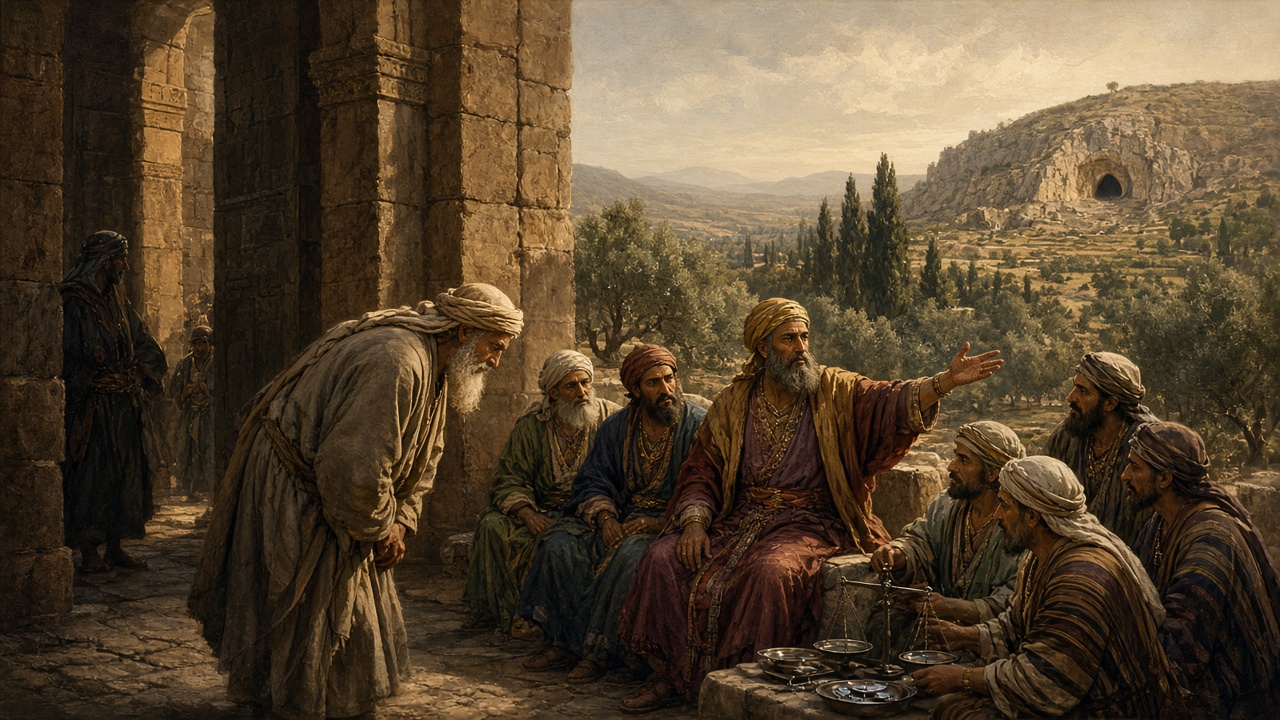
- Abraham told the sons of Heth—the Hittites, descended from Canaan through Heth and living near Hebron—that he was a foreigner among them and needed a burial site. At the city gate, before the Hittites gathered there, he bought the field and cave of Ephron son of Zohar for four hundred shekels of silver, weighed according to the merchants’ standard.Sources: the Bible text itself · Heth · Ephron
- The name Machpelah is explained as “portion” or “double cave.” The cave Abraham bought stood in Ephron’s field near Mamre, on a hillside east of Hebron, and the same place later received the bodies of Abraham and Sarah, Isaac and Rebekah, and Jacob and Leah.Sources: Machpelah · the Bible text itself
Notes written with AI assistance from open sources (Theographic Bible Metadata, CC BY-SA 4.0; Easton’s Bible Dictionary, public domain) and reviewed before publishing.
Places in this chapter
- Canaan · 32.767, 35.333 · verses 2, 19
- Hebron · Today: Tel Rumeida · 31.525, 35.102 · verses 2, 19
- Machpelah · Today: Cave of the Patriarchs · 31.525, 35.111 · verses 9, 17, 19
Only places identified with high confidence are shown (90% or more according to the scholarly sources compiled by OpenBible). Period map: DARE (Digital Atlas of the Roman Empire), CC BY 4.0; modern map: © OpenStreetMap contributors; places: OpenBible.info (CC BY 4.0).
Credits and license for this translation
Uyojroner e Dios xeꞌ Tzꞌijbꞌabꞌir Tama e Onian Tiempo
The New Testament and Genesis, Ruth, Esther, and Jonah in the Chorti language of Guatemala
El Nuevo Testamento, Génesis, Rut, Ester y Jonás en Chortí, Guatemala
copyright © 1996, 2012, 2013, 2023 Wycliffe Bible Translators, Inc. and Evangel Bible Translators, International
Language: Chortí (Chorti)
Translation by: Evangel Bible Translators, International and Wycliffe Bible Translators
New Testament © 1996, 2012 Wycliffe Bible Translators, Inc.;
Old Testament © 2012, 2013, 2023 Evangel Bible Translators, International
This translation is made available to you under the terms of the
Creative Commons Attribution-Noncommercial-No Derivatives license 4.0.
You may share and redistribute this Bible translation or extracts from it in any format, provided that:
You include the above copyright and source information.
You do not sell this work for a profit.
You do not change any of the words or punctuation of the Scriptures.
Pictures included with Scriptures and other documents on this site are licensed just for use with those Scriptures and documents.
For other uses, please contact the respective copyright owners.
2023-08-23
Source: http://ebible.org/caa/ · eBible.org