Genesis 22
Uyojroner e Dios xeꞌ Tzꞌijbꞌabꞌir Tama e Onian Tiempo · Tap a verse to see its cross-references.
Conda Cawinquirar Dios uwira cobꞌa ucꞌubꞌesiaj e Abraham
1Pues entonces conda numuy cora año Cawinquirar Dios cay ubꞌijnu que cꞌani uwira cobꞌa cꞌubꞌesiaj ayan tuaꞌ e Abraham, y jay axin oꞌbꞌian tut. Y tamar era upejca y che:
—Abraham, che e Dios. Y e Abraham che:
—Tara turen, che e Abraham.
2Entonces Cawinquirar Dios sutpa ojron y che:
—Pues e Isaac jax acojto oynen xeꞌ turu tacaret y xeꞌ war ayajta ut meyra. Cꞌani inwaret tuaꞌ aqꞌueche axin esto tor e witzir xeꞌ ucꞌabꞌa Moria. Y conda ixcꞌotoy, ajcꞌun e Isaac bꞌan cocha inteꞌ arac conda achamesna y apurutna. Bꞌan tuaꞌ ache tor inteꞌ witzir xeꞌ cꞌani inwirset, che Cawinquirar Dios uyare e Abraham.
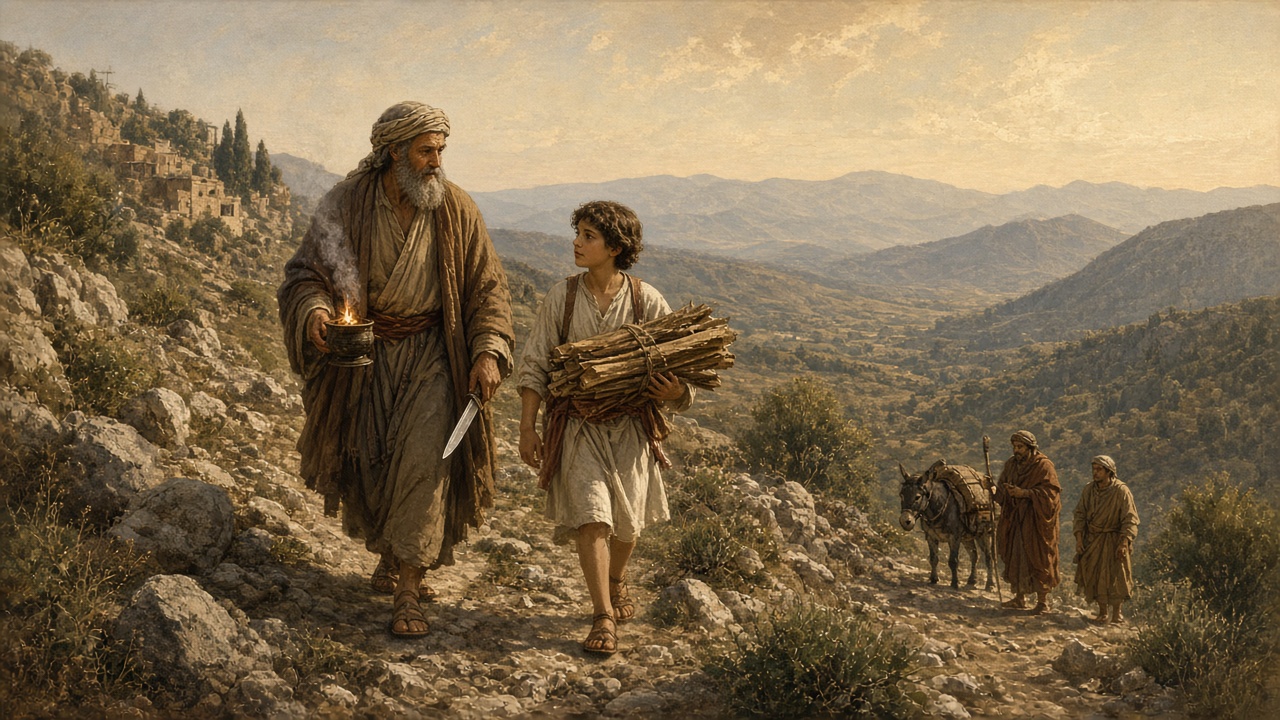
3Entonces tama otronteꞌ día conda sacojpa, achpa e Abraham y ucachi e turibꞌ tupat uchij. Y usicbꞌa cora siꞌ tuaꞌ uqꞌueche axin tuaꞌ uxuni e cꞌajc tacar, y de allí ixin esto tama e lugar tiaꞌ arobꞌna umen e Dios. Y uqꞌueche ixin uyunen xeꞌ jax e Isaac y chateꞌ uman. 4Y tama e uxteꞌ día e Abraham uchꞌujcu uwira innajt cora tiaꞌ turu or e witzir tiaꞌ aquetpa tuaꞌ acꞌotoy. 5Entonces e Abraham ojron taca umanobꞌ y che:
—Quetpenic tara tuaꞌ icojco e chij. Nen taca e sitz cꞌani caxin más tichambꞌir tuaꞌ cojytzꞌi ut e Dios, y de allí cꞌani casutpa waton otronyajr, che e Abraham uyare e chateꞌ uman.
6Entonces e Abraham ucachi e siꞌ lo que cꞌani ucꞌampes tuaꞌ uxuni e cꞌajc tacar y ucꞌatbꞌu tujor uquejrebꞌ e Isaac tuaꞌ uqꞌueche axin. Y de allí uchꞌami ingojr bꞌejt xeꞌ bꞌutꞌur taca ut e cꞌajc, y inteꞌ cuchillo y locꞌoy ixiobꞌ. 7Y conda war axanobꞌ tor e bꞌir ojron e Isaac taca utata y che:
—Tata, che e chꞌom sitz. Y e Abraham ojron y che:
—¿Tucꞌa acꞌani, sitz? che e Abraham. Y che e Isaac:
—Non war caqꞌueche axin e siꞌ y ayan ut e cꞌajc ubꞌan, pero ¿tiaꞌ aquetpa e arac lo que aquetpa tuaꞌ cachamse? che e Isaac.
8Y ojron e Abraham y che:
—Pues jax Cadiosir xeꞌ tuaꞌ uturbꞌa e arac lo que tuaꞌ cachamse, che e Abraham.
Y cayto xanobꞌ. 9Y conda cꞌotoyobꞌ tujor e witzir tiaꞌ irsenobꞌ umen e Dios, e Abraham upetzꞌe cora tun tuaꞌ aquetpa bꞌan cocha inteꞌ altar y de allí uturbꞌa e siꞌ tujor. Y de allí uchuqui uyunen xeꞌ jax e Isaac y uturbꞌa tujor e siꞌ tama e altar. 10Pero conda uchꞌami e cuchillo y ujachi ucꞌabꞌ tuaꞌ uchamse uyunen 11wacchetaca pejcna umen inteꞌ ángel tuaꞌ Cawinquirar Dios tut e qꞌuin y che:
—Abraham, Abraham, che e ángel.
Y ojron e Abraham y che:
—Tara turen, che e Abraham.
12Y sutpa ojron e ángel tuaꞌ Cawinquirar Dios otronyajr y che:
—Ira ayobꞌi oynen era. Pues inwirix que turix tuaꞌ iyubꞌian taniut, y que turetix tuaꞌ awajqꞌuen esto oynen xeꞌ jax acojto, che e ángel uyare e Abraham.
13Entonces e Abraham sutpa eron tupat, y uwira que war incojt utata oveja macuir e cꞌopot xeꞌ cachbꞌir ucacho tama cora chꞌan. Entonces ixin uchuqui e oveja y uchamse y uputa tama e altar tuaꞌ aquetpa uyeror ut uyunen. 14Entonces e Abraham uturbꞌa ucꞌabꞌa or e witzir era que: “Cawinquirar Dios uche achecta tunor lo que ucꞌani inteꞌ.” Y bꞌanto arobꞌna esto coner, “Pues tor e witzir era Cawinquirar Dios uche achecta tunor lo que ucꞌani inteꞌ.”
15Entonces Cawinquirar Dios sutpa upejca e Abraham otronyajr 16y che:
—Pues bꞌan cocha inware nen xeꞌ Awinquiraren Dios: ‘Pues cocha war ache tunor lo que inwaret, y machi atzunle tuaꞌ awajqꞌuen oynen xeꞌ jax acojto, nen cꞌani inwaret tama nicꞌabꞌa 17que san tuaꞌ inchojbꞌeset meyra. Y cꞌani inche abꞌoro meyra tunor achꞌajnarir este que aquetpobꞌ bꞌan cocha e sian lucero que meyra ayan tut e qꞌuin, y cꞌani inche abꞌoro este que aquetpobꞌ bꞌan cocha e sian jiꞌ lo que ayan tutiꞌ e nuxi jaꞌ que machi uyubꞌiet atziqui. Y cꞌani inqꞌuecꞌojse tunor achꞌajnarirobꞌ tuaꞌ oꞌbꞌnobꞌ ucucru tunor e chinamobꞌ tuaꞌ tin e aqꞌuijna uwira ubꞌobꞌ tacar. 18Y cocha ubꞌianet taniut cꞌani aquetpa chojbꞌesbꞌir utobꞌ tunor e gente xeꞌ turobꞌ tara tor e rum umen inteꞌ sitzbꞌir tabꞌa.’ Bꞌan che Cawinquirar Dios uyare e Abraham.
19Entonces e Abraham sutpa ixin esto tiaꞌ turobꞌ umanobꞌ. Y de allí ixiobꞌ esto tama e lugar Beerseba cocha jax e lugar tiaꞌ war aturuan e Abraham.
Uyunenobꞌ e Nahor
20Entonces conda numuy cora tiempo ayan chi xeꞌ yopa tut e Abraham tuaꞌ uchecsu tut que qꞌuechuan cora uyar e Milcá xeꞌ jax uwixcar uwijtzꞌin e Abraham xeꞌ jax e Nahor. 21Pues e yaxar sitz xeꞌ cuxpa jax e Us, y de allí cuxpa uwijtzꞌin xeꞌ ucꞌabꞌa Buz, y de allí cuxpa e Quemuel xeꞌ cꞌotoy quetpa tatabꞌir tuaꞌ e Aram. 22Y nacpat era cuxpobꞌ e Quésed y e Hazó y e Pildás y e Idlaf y e Betuel. 23Y e Betuel uchꞌijrse inteꞌ uwijchꞌoc xeꞌ ucꞌabꞌa Rebeca. Pues jax era e ocho uyunenobꞌ xeꞌ ajcꞌuna e Nahor umen e Milcá, xeꞌ jax uwijtzꞌin e Abraham.
24Pues e Nahor ayan umaxtac taca inteꞌ uman ubꞌan xeꞌ ucꞌabꞌa Reumá xeꞌ cꞌotoy quetpa inteꞌ uwixcar. Pues uyunenobꞌ xeꞌ ajcꞌuna umen e Reumá jax e Teba y e Gáham y e Tahas y e Maacá.
Did you know?
God Tests Abraham
- Isaac was Abraham’s only son by Sarah. The next memorable event recorded in his life, after he was weaned, is God’s command that Abraham offer him as a burnt offering on a mountain in the land of Moriah.Sources: Isaac · the Bible text itself
- Easton's Bible Dictionary (1897) notes that some contend the land of Moriah is Mount Gerizim, but regards it as most probably one of the hills of Jerusalem, northeast of Zion, where Solomon’s temple was built on the threshing-floor of Ornan the Jebusite.Sources: Moriah
- The chapter ends with news of Abraham’s relatives: his brother Nahor had remained in Haran, east of the Euphrates, and Milcah had borne him eight sons, among them Bethuel, Rebekah’s father. Rebekah became Isaac’s wife, and contact between the family in Canaan and the kin at Haran lasted until Jacob left Haran.Sources: Nahor (brother of Abraham) · Bethuel · the Bible text itself
Notes written with AI assistance from open sources (Theographic Bible Metadata, CC BY-SA 4.0; Easton’s Bible Dictionary, public domain) and reviewed before publishing.
Credits and license for this translation
Uyojroner e Dios xeꞌ Tzꞌijbꞌabꞌir Tama e Onian Tiempo
The New Testament and Genesis, Ruth, Esther, and Jonah in the Chorti language of Guatemala
El Nuevo Testamento, Génesis, Rut, Ester y Jonás en Chortí, Guatemala
copyright © 1996, 2012, 2013, 2023 Wycliffe Bible Translators, Inc. and Evangel Bible Translators, International
Language: Chortí (Chorti)
Translation by: Evangel Bible Translators, International and Wycliffe Bible Translators
New Testament © 1996, 2012 Wycliffe Bible Translators, Inc.;
Old Testament © 2012, 2013, 2023 Evangel Bible Translators, International
This translation is made available to you under the terms of the
Creative Commons Attribution-Noncommercial-No Derivatives license 4.0.
You may share and redistribute this Bible translation or extracts from it in any format, provided that:
You include the above copyright and source information.
You do not sell this work for a profit.
You do not change any of the words or punctuation of the Scriptures.
Pictures included with Scriptures and other documents on this site are licensed just for use with those Scriptures and documents.
For other uses, please contact the respective copyright owners.
2023-08-23
Source: http://ebible.org/caa/ · eBible.org