Exodus 1
Tte Pa̱'a̱li̱ Me' Skëköl tö Se' a̱ · Tap a verse to see its cross-references.
About this book
About Exodus
- Easton's Bible Dictionary (1897) dates Israel's departure from Egypt to about 1490 B.C., four hundred and eighty years before Solomon's temple was built. How long they had sojourned there is disputed: Exodus 12:40 gives four hundred and thirty years, Genesis 15 speaks of about four hundred, and the Greek and Samaritan versions also count the years in Canaan, so some reckon only two hundred and fifteen years in Egypt.Sources: Easton: Exodus
- Easton's Bible Dictionary (1897) does not name the author of Exodus. The entry on Moses says Jacob and his sons went down into Egypt, probably about three hundred and fifty years before Moses was born, and that a Hyksos king, from a pastoral Semitic people of Asia who then ruled Egypt, settled them in Goshen. Moses later spent forty years in Midian, where that people pastured flocks on the Sinai peninsula, and became the son-in-law of Jethro, priest of Midian.Sources: Moses · Easton: Exodus · Midian · Jethro
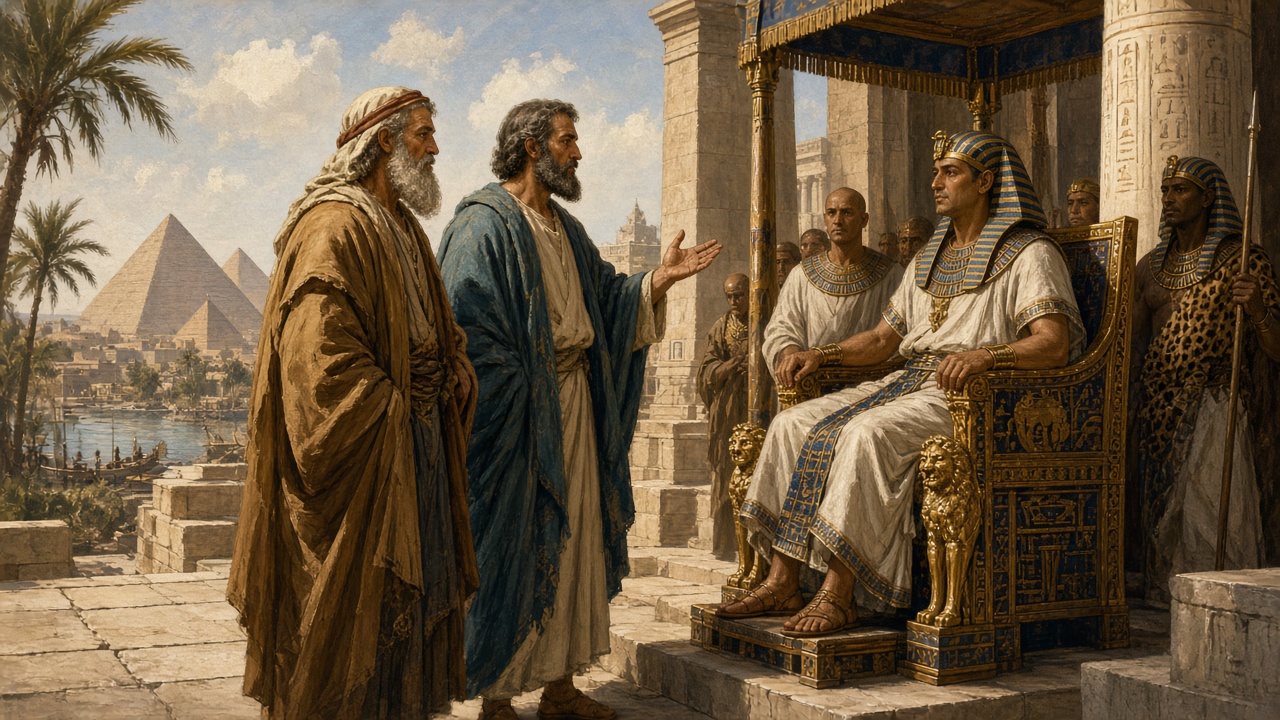
- Who was Pharaoh at the departure is also disputed. Easton's Bible Dictionary (1897) calls him probably Menephtah I, the fourteenth and eldest surviving son of Rameses II, who lived at Zoan and met Moses and Aaron there, while noting that some favor Seti II, whose reign began peacefully and ended in sudden disaster.Sources: Pharaoh (of the Exodus)
- The plagues, Easton writes, loosened Pharaoh's hold, and the Passover was instituted as a perpetual memorial, with the lamb's blood sprinkled on the doorposts. In the third month the people reached Mount Sinai, also called Horeb, about one hundred and fifty miles from the Red Sea, and camped there about a year. The last twenty-two chapters of Exodus record that stay, including the tabernacle, whose Holy Place had no opening for daylight and was lit only by the golden candlestick.Sources: Easton: Exodus · Mount Sinai · Holy Place
- Aaron, eldest son of Amram and Jochebed, was born in Egypt three years before Moses and was sent to meet him so the two could work together. At Rephidim, Joshua, also born in Egypt, commanded Israel's fighters when the Amalekites, a pastoral people living between the Dead Sea and the Red Sea, tried to bar their way.Sources: Aaron · Joshua · Amalek
Notes written with AI assistance from open sources (Theographic Bible Metadata, CC BY-SA 4.0; Easton’s Bible Dictionary, public domain) and reviewed before publishing.
Israel aleripa tso' Egipto e'pa weine tai̱ë
1Israel kiè ñies Jacob e' ala'r dë'mi Egipto ie' ta̱, e'pa ko̱s yamipa ta̱'. Ie'pa kiè Rubén, Simeón, Leví, Judá, Isacar, Zabulón, Benjamín, Dan, Neftalí, Gad ena Aser. 5Jacob yamipa mìne ie' ta̱ Egipto e'pa döka̱ dabom kuryök (70) se̱raa̱. Erë José, e' tso'tke Egipto ke̱we iyamipa yöki̱.
6Ka̱wö tka tai̱ë, eta̱ José ena iëlpa blërulune. Ñies iyamipa dë'mi Egipto ie'pa ta̱, e'pa ko̱s blërulune se̱. 7Erë Israel aleripa alöne tai̱ë, e' kue̱ki̱ ie'pa de diché ta̱' tai̱ë. Ie'pa tso' Egipto wa'ñe.
8E' ukuöki̱ ta̱ blu' ské tkëneka̱ eköl e' kë̀ wa̱ José pakè jche̱r. Ie' tö iché egiptowak a̱: 9“Ye' ttö̀ ttsö́. Israel aleripa dör tai̱ë. Ie'pa diché tkö̀ka̱ se' diché tsa̱ta̱, dö' ie'pa e̱' alö̀ka̱ se' ki̱. 10Mik se' bolökpa ñippö̀mi se' ta̱, e' ta̱ dö' ie'pa ñì wöiöka̱ se' ppök se' bolökpa ta̱, ta̱ es imi'miyal se' yöki̱. E' kue̱ki̱ se' tö ibikeitsö́ bua'iewa̱ tö we̱s se' tö ie'pa wöklö'wè̱mi a̱s kë̀ ikí̱ alör tai̱ë.”
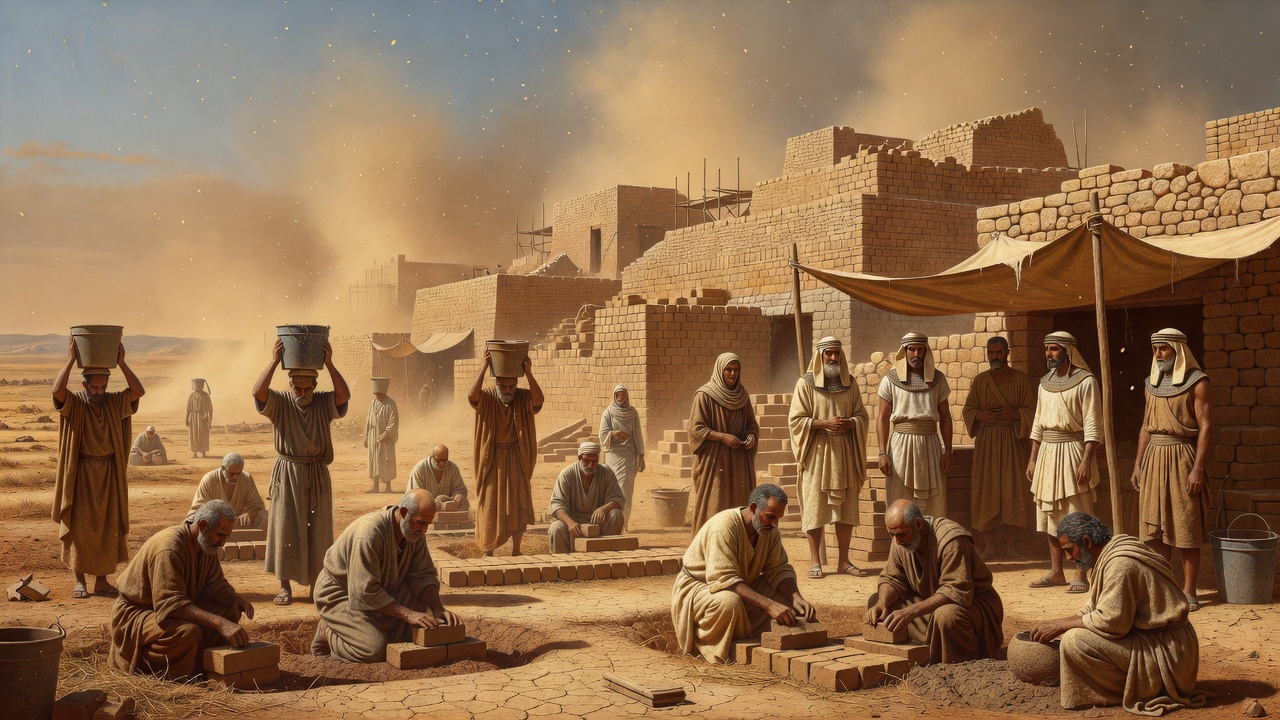
11E' kue̱ki̱ egiptowak tö iwökirpa patké Israel aleripa we'ikök kanè darërë wa a̱s ie̱riardak. Ie'pa tö ikérak ká̱ yuök böt chkewö dapa'wo̱ie Egipto blú a̱. Ká̱ e' kiè Pitón ena Ramsés. 12Israel aleripa we'ikeke ie'pa tö sia̱rë, erë ikí̱ alörkerak tai̱ë. E' kue̱ki̱ egiptowak suarke tai̱ë ie'pa yöki̱.
13Egiptowak tö ie'pa ké kaneblök kësik wa. 14E' tö ie'pa e̱riawé̱ tai̱ë. Ikérakitö ska̱u̱chka yuök shtrót shtrót u yuoie. Ñies ikérakitö kaneblök kañika̱ kanè ulitane u̱k. Es Israel aleripa ko̱s we'ikérakitö sia̱rë. 15E' kí̱ie ta̱ Egipto blú tté alakölpa kiè Sifrá ena Puvá e'pa ta̱. Ie'pa dör hebreowak alakölpa alà ku̱rke e' kanéu̱kwakpa. Ie' tö iché ie'pa a̱:
16—Mik a' tö hebreowak alakölpa alà ku̱rke, e' kanewe̱ke, eta̱ isa̱ú̱ ¿ì iwák dör? Iwák wëm e' ta̱ ittö́wa̱. Iwák dör alaköl, e' ta̱ imúa̱t, kë̀ ittarwa̱.
17Erë alakölpa e'pa tö Skëköl dalöieta̱'. E' kue̱ki̱ ie'pa kë̀ wa̱ Egipto blú ttö̀ iu̱tëne we̱s itö iché es. Ie'pa ala'r wëpa méa̱t ttsë'ka. 18Eta̱ Egipto blú tö ie'pa kiére ta̱ ichéitö ia̱rak:
—¿Iö́k a' tö iwamblé es? ¿Iö́k a' tö ala'rla wëpa e' méa̱t ttsë'ka?
19Ie'pa tö iiu̱té:
—Hebreowak alakölpa kë̀ alà ku̱r we̱s egiptowak alakölpa es. Ie'pa alakölpa dör darërë. Ie'pa alà ku̱r bet buaë. Mik sa' demi, eta̱ ie'pa alà ku̱netke.
20Es Israel aleripa kí̱ alönèmi tai̱ë. Ie'pa diché kí̱ iërke tai̱ë. Sifrá ena Puvá e'pa tö Skëköl dalöieta̱'. E' kue̱ki̱ Skëköl tö ie'pa ki̱mé, ala'r méitö ie'pa a̱ tai̱ë.
22Eta̱ Egipto blú tö ikue̱blupa ulitane a̱ ka̱wö mé tö hebreowak ala'rla wëpa ku̱ne ko̱s e' ö́mi di' ki̱. Alakölpala ë̀ múa̱t.
Did you know?
Israel's Growth and Oppression in Egypt
- Easton's Bible Dictionary (1897) says that the Hebrews in Egypt were under Joseph's protection for about seventy years, and that after his death their condition changed only gradually. It notes that the new king who did not know Joseph was generally supposed to be Aahmes I, whom Josephus calls Amosis, though discoveries of that time led the dictionary to conclude that he was Seti, after the Hyksos were driven out and the former dynasty restored.Sources: Pharaoh · the Bible text itself
- Set to forced labor, the Israelites built Pithom and Rameses as store cities for Pharaoh. Easton's Bible Dictionary (1897) explains Pithom as Egyptian Pa-Tum, 'house of Tum,' the sun-god, and calls it a treasure city built for Pharaoh Rameses II; it identifies the site with Tell-el-Maskhuta, where ruins of supposed grain-chambers were reported in 1883.Sources: Pithom · Raamses · the Bible text itself
- Pharaoh then commanded that every son born to the Hebrews be thrown into the river. Easton's Bible Dictionary (1897) notes that the name Nile does not appear in Scripture; the Old Testament calls that river Sihor, 'the black stream,' or simply 'the river,' as in Exodus 1:22.Sources: Nile · the Bible text itself
Notes written with AI assistance from open sources (Theographic Bible Metadata, CC BY-SA 4.0; Easton’s Bible Dictionary, public domain) and reviewed before publishing.
Places in this chapter
- Egypt · 30.129, 31.308 · verses 1, 5, 8, 15, 17, 18
- Nile · Today: Nile River · 31.465, 30.367 · verse 22
Only places identified with high confidence are shown (90% or more according to the scholarly sources compiled by OpenBible). Period map: DARE (Digital Atlas of the Roman Empire), CC BY 4.0; modern map: © OpenStreetMap contributors; places: OpenBible.info (CC BY 4.0).
Credits and license for this translation
Tte Pa̱'a̱li̱ Me' Skëköl tö Se' a̱
New Testament and Shorter Old Testament in Bribri (CS:bzd:Bribri)
copyright © 2010 Wycliffe Bible Translators, Inc.
Language: Bribri
Translation by: Wycliffe Bible Translators, Inc.
Bribri
bzd
Costa Rica
Copyright Information
© 2010, Wycliffe Bible Translators, Inc. All rights reserved.
This translation text is made available to you under the
terms of the Creative Commons License: Attribution-Noncommercial-No Derivative Works.
( http://creativecommons.org/licenses/by-nc-nd/3.0/ )
In addition, you have permission to port the text to different file formats, as long as you
do not change any of the text or punctuation of the Bible.
You may share, copy, distribute, transmit, and extract portions
or quotations from this work, provided that you include the above copyright
information:
You must give Attribution to the work.
You do not sell this work for a profit.
You do not make any derivative works that change any of the actual words or punctuation of the Scriptures.
Permissions beyond the scope of this license may be
available if you contact
us with your request.
The New Testament and Shorter Old Testament
in Bribri
© 2010, Wycliffe Bible Translators, Inc. All rights reserved.
This translation is made available to you under the terms of the
Creative Commons Attribution-Noncommercial-No Derivatives license 4.0.
You may share and redistribute this Bible translation or extracts from it in any format, provided that:
You include the above copyright and source information.
You do not sell this work for a profit.
You do not change any of the words or punctuation of the Scriptures.
Pictures included with Scriptures and other documents on this site are licensed just for use with those Scriptures and documents.
For other uses, please contact the respective copyright owners.
2014-04-22
Source: http://ebible.org/bzdNTpo/ · eBible.org