Isaiah 54
Buka Tabuna Tefadi · Tap a verse to see its cross-references.
Guyau ena Gadosisi Isalaela Enehedi
5Tau Ginaulim mate doha lahum.
Hesana mate Guyau Gigigibwalina.
In tau une fahim,
Yaubada fafatabuna Isalaela enehem.
Hesana mate “Tanoꞌubu mahudoꞌina edi Yaubada.”
6Isalaela, um doha waihin hasahasalana,
lahuna ya lau afulen be nuwana ya heyaya.
In moho Guyau em Yaubada ya yoga fafuyom na iye,
7“E ꞌwaiyoꞌoꞌem maihala tupotupo.
In moho E fanuwatohatohaem,
Be haba E fafuyom.
8E manabala heyaya be E sana mulimuliyem fuya tupotupo.
In moho egu gadosisi otaꞌota fahina debana yai
haba E fanuwatohatohaem!
Yau em Guyau, tau fofofahim E falibam doha ite.”
9“Nowa ena fuya yai E angwala mate
ibege tanoꞌubu ya faheyaya bodai ai utufi.
Be aho te E angwala mate
ibege ya manabala be ya faheyayam.
10Tuꞌa lalaꞌi sa dihodiho,
yo kikiꞌina sa tauyamuhi,
in moho egu gadosisi, enehem,
haba ya ota esegahi lisim yai.
Nuwa talu angwalana E ginauli
haba ya ota esegahi.
Yau, Guyau, tau fafanuwatohatohaem E falibam doha ite.”
Did you know?
The Covenant of Peace and Restoration
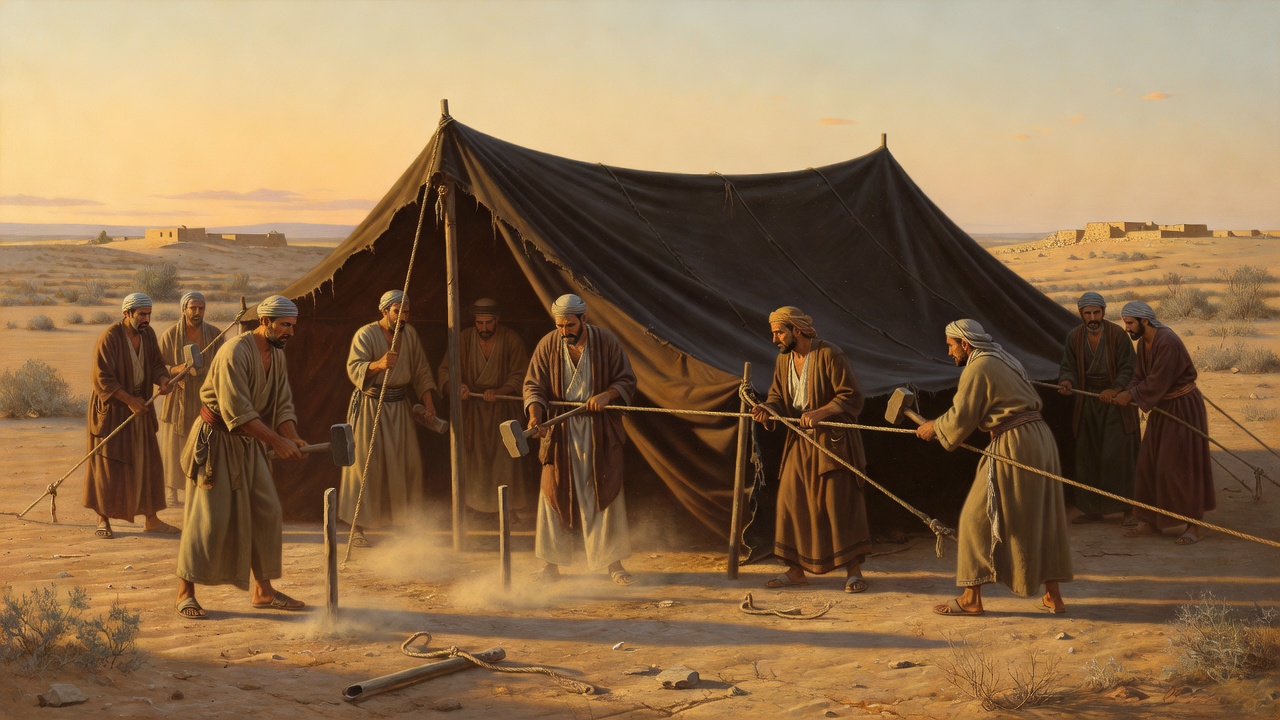
- Isaiah uses the imagery of enlarging a tent—lengthening ropes and driving stakes deep—to portray a barren and desolate woman making room for an unexpected multitude of descendants.Sources: the Bible text itself
- The text links God's enduring kindness to the days of Noah, recalling the oath that floodwaters would never again submerge the earth to assure that this covenant of peace will never be removed.Sources: the Bible text itself · Noah
- The chapter describes an afflicted, storm-tossed city being rebuilt with rare beauty, picturing its stones set in antimony, its foundations laid with sapphires, and its pinnacles made of rubies.Sources: the Bible text itself
Notes written with AI assistance from open sources (Theographic Bible Metadata, CC BY-SA 4.0; Easton’s Bible Dictionary, public domain) and reviewed before publishing.
Places in this chapter
Only places identified with high confidence are shown (90% or more according to the scholarly sources compiled by OpenBible). Period map: DARE (Digital Atlas of the Roman Empire), CC BY 4.0; modern map: © OpenStreetMap contributors; places: OpenBible.info (CC BY 4.0).
Credits and license for this translation
Buka Tabuna Tefadi
Mark, Acts, and selected excerpts of the Old Testament in the Buhutu language of Papua New Guinea
Buk Baibel long tokples Buhutu long Niugini
copyright © 2015 Wycliffe Bible Translators, Inc.
Language: Buhutu
Translation by: Wycliffe Bible Translators
This translation is made available to you under the terms of the
Creative Commons Attribution-Noncommercial-No Derivatives license 4.0.
You may share and redistribute this Bible translation or extracts from it in any format, provided that:
You include the above copyright and source information.
You do not sell this work for a profit.
You do not change any of the words or punctuation of the Scriptures.
Pictures included with Scriptures and other documents on this site are licensed just for use with those Scriptures and documents.
For other uses, please contact the respective copyright owners.
2015-10-06
Source: http://png.bible/bxh/ · eBible.org