Genesis 19
Buka Tabuna Tefadi · Tap a verse to see its cross-references.
Sodom yo Gomola Yaubada ya Lau Kwayaidi
1Maimailafina yai, Anelu luwaga sa mahano lau Sodom, na Lota mate ya taꞌataꞌai duhu laꞌi luhuluhu launa yai. Fuyana ya itadi mate ya obiyo fahi, be ya lau ya failobahidi, na ya hoba lidi, be ena faꞌatiti ya ginauli. 2Na ya libalau lisidi iyen,
Aee–, egu Guyau, Yauwedo! Au laoma egu luma be ahemiu au kaisudi. Haba iꞌipa aiteꞌi ami lau eno, na hwalahwalala haba ami aulaha boda.
Alinana sa bui, tiyen,
Higeꞌe, haba ai duhu laꞌi dobidobina ꞌe eno.
3Na Lota ya dudu wananaha be ena nuwatuhu sa lau watan, yo fede, sa lau ena luma, be fwalawa fafayisti gesana ya tegategai, be ya fakalahedi. 4Hola ma tuhutuhulidi, na Sodom duhu laꞌi dodogadi, hewahewali yo tatau lalaꞌi sa laoma be luma sa gana panpanen. 5Na sa yogayoga lau Lota lisina, tiyen,
Maihona yai tatau sa laoma lisim, mate somo yai? U ledima be ma afa haidamai ai luma gwaꞌu.
6Lota ya kalamahano lau ganamuli be luma edaꞌedana ya gudu. 7Na ya libalau lebedi, iyebom,
Afa haidagu, hafena! Tabu laulau heyaheyayana ni au ginauli.
8Nanatugu luwaga wawahin hola hige gindi ti soꞌedi, haba E fakalamahanodima be emi nuwatuhu somo ai lebedi ami ginauli na tatau luwaga te, tabu somo ai lebedi au ginauli. Sa laoma te agu gilu. Iti agu matagabano.
9Sa yogayoga tiyen,
Um sai? U suha. Um yogayoga hiti, na sidohana bena wa famala ama tanuwaga? Doꞌata ꞌe tala faheyayam.
Maꞌedi Lota sa faiꞌabi, be bena edaꞌeda sa lubi lopa.
10Yo fede, matagabano luwaga luma ganahewana yai sa abilau Lota sa solu fafuyo ganahewa, na edaꞌeda sa gudu. 11Dodoga edaꞌeda hafohafona yai, matadi sa fakwanabunabudi be edaꞌeda hafohafona sa fakaukau.
12Yo fede, matagabano luwaga Lota sa faliba, tiyen,
Afa botiyam, nanatum tatau yo wawahin e afa efam haisa duhu laꞌi ganahewana yai, e higeꞌe? U gelaedi. 13Paꞌana dobuna te edi heyaheyaya sa laꞌi wananaha, logena be Guyau ya fatamalimai ꞌe laoma bena ꞌe gabu golu.
14Be Lota ya lau nanatuna wawahin luwaga afa lalahudi haꞌa ya fasinabodi, ya falibadi iyen,
Feula! Au aulaha, paꞌana Guyau duhu laꞌi te, haba ya gabu golu.
Na edi nuwatuhu bena haga ya laulau faliuhwa.
15Ya ifi tatatali, anelu, Lota sa eli duduidi, tiyebom,
Feula! U aulaha! Lahum yo afa nanatum wawahin luwaga u gelaedi. Doꞌata duhu laꞌi ena heyaheyaya yai, ami aiheyadoiti.
16In moho, Lota nuwana ya luwaluwaga. Yo fede, anelu sa abilau ma lahuna yo nanatudi wawahin luwaga nimadi yai sa solu weꞌaweꞌadi, be sa lau duhu laꞌi ganamulina yai, paꞌana Guyau ya nuwatohatohaedi. 17Sa lau ganamuli yai, na anelu hesa ya falibadi, iyen,
Nanabumiu, au gela! Tabu au timuli bui, yo tabu ai gonu au anyawasi. Au gela au lau tuꞌa. Haba ibege au peꞌi.
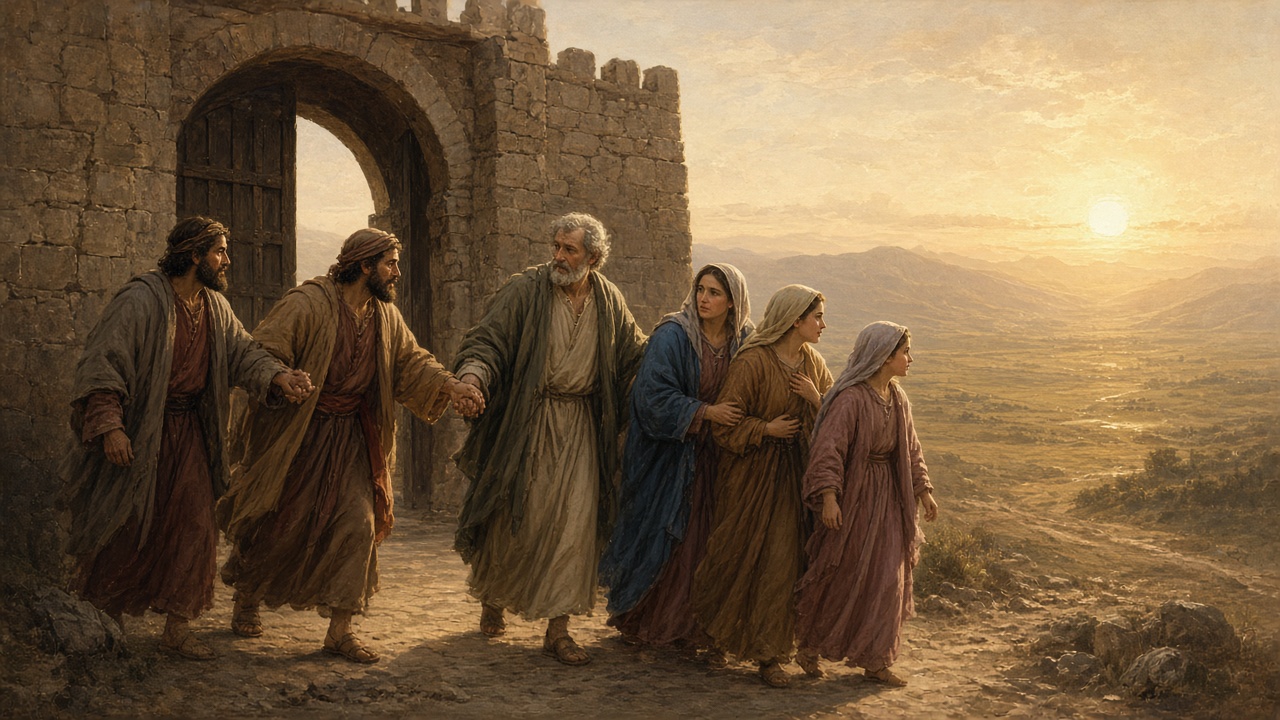
23Maihala ya kepama, Lota ya mahano nuꞌuna yai. 24Habahim, galewa yai, umeꞌehu ala balebalelemdi Guyau ya fatamalidima. Yo fede, Sodom yo Gomola sa alagolu. 25Duhu laꞌi lalalaꞌi yo kikiꞌina mahudoꞌidi ya faheyayadi. Ginauli mwahumwahulidi yo umaꞌuma, oyagi, hawahawa yo suisui mahudoꞌidi ya gabu goludi. 26Lota lahuna mate mulidi yai ya laolaoma, na bena haga ya timuli. Yo fede, ya falen alita tupina ya obiꞌobiyo doha oitau.
Did you know?
The Destruction of Sodom and Gomorrah
- The town Lot begged to flee to was Zoar, a name Easton's Bible Dictionary (1897) explains as “small,” matching his plea that it was only a little place. The same entry says it was first called Bela and lay east or southeast of the Dead Sea, and that the prophets Isaiah and Jeremiah later refer to it.Sources: Zoar · the Bible text itself
- Easton's Bible Dictionary (1897) gives Sodom, in the vale of Siddim, the meaning “burning” or “the walled,” and says the wickedness of its inhabitants brought down fire from heaven that destroyed the city. The same dictionary explains Gomorrah as “submersion,” one of five cities of that plain, and says they probably stood close together near the northern end of what is now the Dead Sea, and that Gomorrah is always mentioned next after Sodom.Sources: Sodom · Gomorrah · the Bible text itself
- Lot’s older daughter named her son Moab, and the narrative calls him the father of the Moabites, a name later books use for that people. The younger daughter named her son Ben-ammi, father of the Ammonites; Easton's Bible Dictionary (1897) explains Ben-ammi as “son of my kindred” and identifies him as Lot’s son by his youngest daughter.Sources: the Bible text itself · Moab · Ben-ammi
Notes written with AI assistance from open sources (Theographic Bible Metadata, CC BY-SA 4.0; Easton’s Bible Dictionary, public domain) and reviewed before publishing.
Places in this chapter
Only places identified with high confidence are shown (90% or more according to the scholarly sources compiled by OpenBible). Period map: DARE (Digital Atlas of the Roman Empire), CC BY 4.0; modern map: © OpenStreetMap contributors; places: OpenBible.info (CC BY 4.0).
Credits and license for this translation
Buka Tabuna Tefadi
Mark, Acts, and selected excerpts of the Old Testament in the Buhutu language of Papua New Guinea
Buk Baibel long tokples Buhutu long Niugini
copyright © 2015 Wycliffe Bible Translators, Inc.
Language: Buhutu
Translation by: Wycliffe Bible Translators
This translation is made available to you under the terms of the
Creative Commons Attribution-Noncommercial-No Derivatives license 4.0.
You may share and redistribute this Bible translation or extracts from it in any format, provided that:
You include the above copyright and source information.
You do not sell this work for a profit.
You do not change any of the words or punctuation of the Scriptures.
Pictures included with Scriptures and other documents on this site are licensed just for use with those Scriptures and documents.
For other uses, please contact the respective copyright owners.
2015-10-06
Source: http://png.bible/bxh/ · eBible.org