Genesis 18
Buka Tabuna Tefadi · Tap a verse to see its cross-references.
Taumana Faihona
1Mamale ena oyagi laꞌilaꞌi sadaina yai, Guyau ya taumahata Abelaham lisina yai. Lahai laꞌi yai ena palai luhuluhu launa yai ya taꞌataꞌai. 2Abelaham ena aba taꞌataꞌai yai, ya itaꞌita hasa be tatau faihona ya itadi. Yo fede, ya feula lau lebedi, na ya failobahidi ma faꞌatitina ya dulu tanohi yai.
3Abelaham ya liba, iyen,
Aee–, egu guyau! Ibe wa mata amnaꞌegu, tabu u bayawaigu. Yau, um em tau paisowa. 4Hola au anyawasi oyagi te ai loguloguna, na E lau hoꞌowa E yahiyama be ahemiu ami kaisudi. 5Kalahe hola ami ya leyama au an, be haba amnamiu sa loholoho na habahim ami lau. Aho te ami laoma emi tau paisowa lebena.
Alinana sa bui, tiyen,
Ya loholoho wananaha! Somo wa nuwatuhui, u ginauli.
6Yo fede, Abelaham ya fabelele lau Sala lisina palai ganahewana yai be iyen,
Feula! U lau be fwalawa loholohona u tepa falaꞌi be u gabu.
7Habahim ya fabelele ya lau bulumakau baiwadi yai, gubugubufwauna ya tohai, be ena paula tau abina ya felen, be ya asui feufeulai. 8Na ya lau be bata yo miluki yo bulumakau asuꞌasuna ya abi nonohaidi ya ledima, be ya fakalahedi. Sa kalahe na in ya mwaimwaito oyagi ubuna yai.
9Na sa fatiꞌoi, tiyen,
Lahum Sala somo yai?
Alinadi ya bui iyen,
Kwalau au–, palai yai.
10Habahim Guyau iyen,
Bolima hesa maihala doha itete, Haba E fuyoma, na lahum Sala haba natum taumoho ya yosi.
Sala ya ataꞌatahi, ena palai luhuluhu launa yai. 11Abelaham haꞌa ya tautaulaꞌi na Sala ya tinatinalaꞌi be hige gonowana i fanatu. 12Yo fede, Sala ya liuhwa, na nuwa ganahewana yai iyen,
Lahugu haꞌa ya tautaulaꞌi, yo yau haꞌa E tinalaꞌi, na haba sidohana bena E fanatu?
13Habahim Guyau ya libalau Abelaham lisina, iyen,
Paꞌana somo be Sala ya liuhwa na iyen, “Yau haꞌa E tinalaꞌi na sidohana haba E fanatu?”
14Ginauli somo hige gonowana Guyau i ginauli? Bolima hesa lahaina doha itete, Haba E fuyoma lisim, na lahum Sala haba natuna taumoho.
15Sala ya ꞌwasabu. Yo fede, ya bwala, iyen,
Yau hige ya liuhwa.
Na Guyau iyen,
Na fede, wa liuhwa!
Abelaham, Sodom Nuꞌuna edi ya Anꞌeta
16Fuyana taumana sa auꞌaulaha sa lau, Abelaham ya faꞌalatuhudi, Sodom sa itaꞌita lawen, amainiya ya ita faꞌoiluhudi. 17Habahim Guyau iyebom,
Somo bena E ginauli, haba Abelaham E faliba, e hafena? 18Abelaham laulauwewena haba sa adidili yo sa ouli, be dodoga mahudoꞌidi tanoꞌubu yai ai lisina haba loholoho sa abi. 19Logena E fasinabo be haba nanatuna yo wahawahana, ya eda bwaꞌiyedi be Guyau ena laulau sa miyamiyaꞌedi, be Guyau ena liba fasunuma Abelaham lisina yai, ya ginauli.
20Habahim Guyau iyen,
Sodom yo Gomola dodogadi mate edi heyaheyaya sa laꞌi wananaha, yo laulau heyaheyayadi sa laulau ginauli mate, wasadi E atahiyedi. 21Lisina yai, haba E lidi E itadi haba E sibai mate wananaha e bwalabwala.
22Tatau luwaga sa aulaha sa lau Sodom, na Abelaham mate Guyau nuwanuwana yai ya obiꞌobiyo. 23Habahim, Abelaham ya sigilau lisina, iyen,
Haba tau dudulai yo tau heyaya wa wunu gogonidi? 24Ibe dodoga dudulaidi 50 duhu laꞌi ganahewana yai, haba sidohadi? Wananaha haba nuꞌuna wa faheyaya fahudoꞌi? E, haba nuꞌuna wa lau nuwa sahafu, dodoga 50 debadi yai? 25Um, bena dodoga dudulaidi yo heyaheyayadi wa lau funuhi gogonidi? Mate hige laulau loholohona. Hige gonowana tau heyaya yo tau dudulai ai lisidi u ginauli doha. Tanoꞌubu tau fakasana bena laulau dudulaina ya ginauli.
26Guyau iyen,
Yena dodoga dudulaidi 50 Sodom duhu laꞌi ai ganahewana E lobahidi mate, ai debadi haba nuꞌuna ibege ya faheyaya.
27Habahim Abelaham ya liba fuyo, iyen,
Yau afusa gaibu. Hige egu loholoho hesa. In moho, aho te, E libalau Guyau lisina. Hige ya ꞌwasabu. 28Ibe dudulaidi 50, na faligigi sa heyaya? Haba duhu laꞌi mahudoꞌina wa faheyaya dodoga faligigi debadi yai?
Guyau iyen,
Ibe dudulaidi 45, hige gonowana ya faheyayadi.
29Abelaham ya liba fuyo Guyau lisina iyen,
Ibe ainiya 40 wa lobahidi, haba sidohadi?
Guyau iyen,
40 debadi yai ibege somo ya ginauli ai lisidi.
30Habahim, iyen,
Guyau tabu u manabala, hola ya falibam. Na ibe dodoga 30 dudulaidi ainiya wa lobahidi, haba nuꞌuna wa faheyaya?
Yaubada iyen,
Yena 30 E lobahidi, ibege somo ya ginauli.
31Abelaham iyen,
Aho te, E libalau Guyau lisina, hige ya ꞌwasabu. Ibe 20 ainiya wa lobahidi, haba nuꞌuna wa faheyaya e higeꞌe?
Guyau iyen,
Yena 20, ibege ya lau kwaya.
32Habahim, Abelaham iyen,
Guyau tabu u manabala, na hola ya liba fuyo ma esega. Ibe safuhudohudoꞌi ainiya wa lobahidi, haba sidohadi?
Alinana Guyau ya bui, iyen,
Safuhudohudoꞌi ai debadi, ibege ya lau kwaya.
33Lahaina yai, Guyau maꞌena Abelaham sa libaliba ofi. Habahim Guyau ya aulaha na Abelaham ya fuyo ena palai.
Did you know?
Visitors at Mamre and a Plea for Sodom
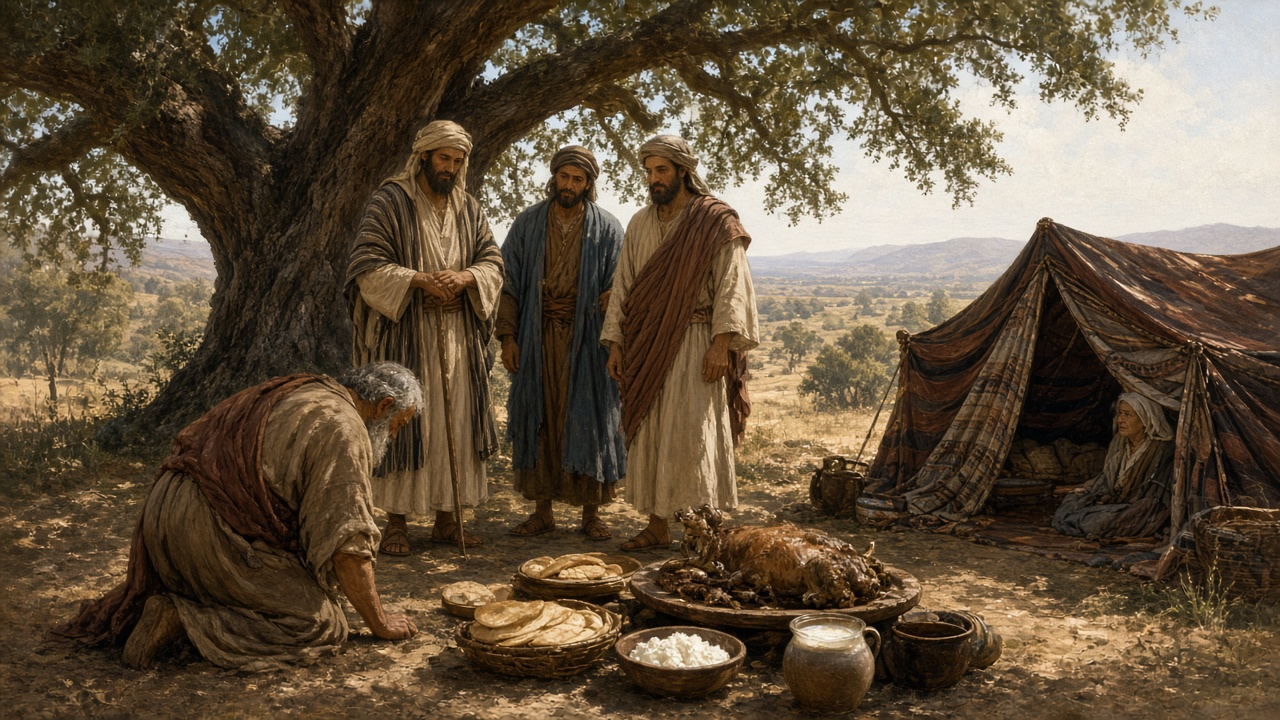
- In Genesis 18, the LORD appeared to Abraham by the Oaks of Mamre in the heat of the day, while Abraham sat at the entrance of his tent. Mamre was an Amorite chief in alliance with Abraham. Abraham ran to meet three men, bowed to the ground, offered them water for their feet and rest under the tree, and then set before them bread, a tender and choice calf, curds, and milk.Sources: the Bible text itself · Mamre
- Sarah, Abraham’s wife, is given the sense “Princess” in Easton's Bible Dictionary (1897), which says the name was given when it was announced that she would be the mother of the promised child. In Genesis 18 the LORD said he would return in about a year and Sarah would have a son, though both were already old and she had passed the age of childbearing. She laughed to herself and, because she was afraid, denied that she had laughed.Sources: Sarah · the Bible text itself
- Sodom, a city in the vale of Siddim, and Gomorrah, one of the five cities of that plain, are named together in Genesis 18 because of the great outcry against their grievous sin. Easton's Bible Dictionary (1897) says the cities of that plain probably stood close together near the northern end of what is now the Dead Sea, and explains Sodom and Gomorrah as “Burning; the walled” and “Submersion.” Two of the men went toward Sodom, while Abraham stayed and asked the LORD to spare the city for the sake of the righteous, lowering the number from fifty to ten.Sources: Sodom · Gomorrah · the Bible text itself
Notes written with AI assistance from open sources (Theographic Bible Metadata, CC BY-SA 4.0; Easton’s Bible Dictionary, public domain) and reviewed before publishing.
Credits and license for this translation
Buka Tabuna Tefadi
Mark, Acts, and selected excerpts of the Old Testament in the Buhutu language of Papua New Guinea
Buk Baibel long tokples Buhutu long Niugini
copyright © 2015 Wycliffe Bible Translators, Inc.
Language: Buhutu
Translation by: Wycliffe Bible Translators
This translation is made available to you under the terms of the
Creative Commons Attribution-Noncommercial-No Derivatives license 4.0.
You may share and redistribute this Bible translation or extracts from it in any format, provided that:
You include the above copyright and source information.
You do not sell this work for a profit.
You do not change any of the words or punctuation of the Scriptures.
Pictures included with Scriptures and other documents on this site are licensed just for use with those Scriptures and documents.
For other uses, please contact the respective copyright owners.
2015-10-06
Source: http://png.bible/bxh/ · eBible.org