Ezra 3
Buka Tabuna Tefadi · Tap a verse to see its cross-references.

About this book
About Ezra
- Easton's Bible Dictionary (1897) says Ezra was probably the author of at least the greater part of the book, and also of Chronicles, whose close forms Ezra's opening passage. It dates the record from Cyrus's decree in 536 B.C. to Ezra's reformation in 456 B.C., about eighty years. Articles on Ezra and Artaxerxes place the second return in the seventh year of Artaxerxes, called Longimanus, and give that year as 459 or 458 B.C.Sources: Easton: Ezra, Book of · Ezra · Artaxerxes
- The book records events at the close of the Babylonian exile. Cyrus, king of Persia and conqueror of Babylon, issued a decree freeing the Jews. In Cyrus's first year Zerubbabel led back 42,360 exiles, besides a large number of servants, and in the second year he raised an altar and laid the temple foundation on ruins left by Nebuchadnezzar.Sources: Easton: Ezra, Book of · Cyrus · Zerubbabel
- Easton describes two principal divisions. Chapters 1–6 cover the first return until the new temple was completed and dedicated in the sixth year of Darius Hystapes, which he dates to 515 B.C. Chapters 7–10 give the second return under Ezra and events in Jerusalem after his arrival, following a gap of about sixty years.Sources: Easton: Ezra, Book of
- Easton notes that the book was once included in Nehemiah, the Jews regarding the two as one volume, while the Vulgate still distinguishes them as I and II Esdras. Rehum, called Artaxerxes' chancellor, tried to turn the king against rebuilding Jerusalem's walls and temple. Before leaving Babylon, Ezra's company gathered by the Ahava, taken either as a Mesopotamian river flowing into the Euphrates or as a place.Sources: Easton: Ezra, Book of · Rehum · Ahava
Notes written with AI assistance from open sources (Theographic Bible Metadata, CC BY-SA 4.0; Easton’s Bible Dictionary, public domain) and reviewed before publishing.
Aba Antalasam sa Ginauli Fuyoi
1Nawalahi fafaligigi-luwagana yai Isalaela dodogadi edi taon sa miyaidi. Mahudoꞌidi sa faꞌoigogo Yelusalem yai. 2Habahim Diyosadaki natuna, Diyesuwa, falena tau antalasam yo Silitiyeli natuna, Selubabeli maꞌana boga sa fatubu antalasam aba angabuna sa ginauli Isalaela edi Yaubada enehena. Bena ainiya Guyau antalasam sa gabu. Laugagayo somo Guyau ena peloweta Mose, ya uli mate sa falau watan. 3Diuda dodogadi tau miya fataꞌiꞌilidi mate sa ꞌwasabuwedi. In moho aba anꞌantalasam sa ginauli boda somo yai beyabeyana edi aba ginaulina, be amainiya lisina yai hwalahwala yo maimailafi ouꞌouli antalasam sa angabu lau Guyau lisina. 4Habahim Mose laugagayo ya uli sa falau watan be anꞌangogona gwaꞌuna sa ginauli. Lahai hesa - hesa antalasam sa gabudi ana nonoi yai. 5Muliyai, Fuya Ouꞌouli Ainauya sa ginaginaulidi mate sa ginaulidi yo Nawalahi Fwaufwau Antalasamna, Guyau ena Mataꞌasi Lahaidi Tabudi Fafasinabodi mahudoꞌidi antalasamdi, yo hinaga Ainauya Ma Nuwa Ofifahidi sa Ledima Antalasamna, mate hinaga sa gabudi, Guyau enehena. 6Guyau ena Dubu Tabuna aba faꞌobiyona umeꞌehudi hola hige ti toledi na haꞌa antalasam sa angabu nawalahi fafaligigi-luwagana yai, lahai bwaꞌibwaꞌina yai.
7Habahim Kin Sailusi, Diuda dodogadi ya falibadi be Dubu Tabuna sa ginauli fuyoi, umeꞌehu tau pidipididi yo luma tau lau ginauli sa famaisadi. Sidon yo Taiya dodogadi adi kalahe, wain yo oliwe gilisina sa feledi, be oyagi sida haba ai Lebanon gabogabona sa fapouli lawen Diyopa nuꞌuna. Pesia edi kin ya yaliyen doha.
8Bolima fafaluwagana na nawalahi fafaluwagana yai, Diuda dodogadi edi fuyoma Yelusalem na mulina yai, sa fatubu Guyau ena Dubu Tabuna sa ginauli.
Tau paisowadi mate: Silitiyeli natuna, Selubabeli yo Diyosadaki natuna, Diyesuwa maꞌadi boga, yo afa haidadi hahaisa: antalasam tau gabugabudi, sulu Lewi dodogadi yo salumadi mahudoꞌidi adi waiyunu sa lawedi Babilon sa falau fayofayoꞌidi na sa fuyoma Yelusalem.
Sulu Lewi hewahewalidi edi bolima 20 yo ya hasaen sa fasinabodi be paisowa sa uluꞌuluwen.
Did you know?
Rebuilding the Altar and Temple Foundation
- The returned exiles restored sacrificial worship on the temple mount before beginning major construction. Under Zerubbabel and the priest Jeshua, they rebuilt the altar on its original site to resume daily offerings and celebrate the Feast of Tabernacles before laying the temple foundation.Sources: the Bible text itself · Zerubbabel · Joshua
- To secure timber for the rebuilding effort, the community paid masons and carpenters, and sent food, drink, and oil to Tyre and Sidon to transport cedar logs from Lebanon by sea to the port of Joppa, as permitted by Cyrus, king of Persia.Sources: the Bible text itself · Lebanon · Joppa · Cyrus
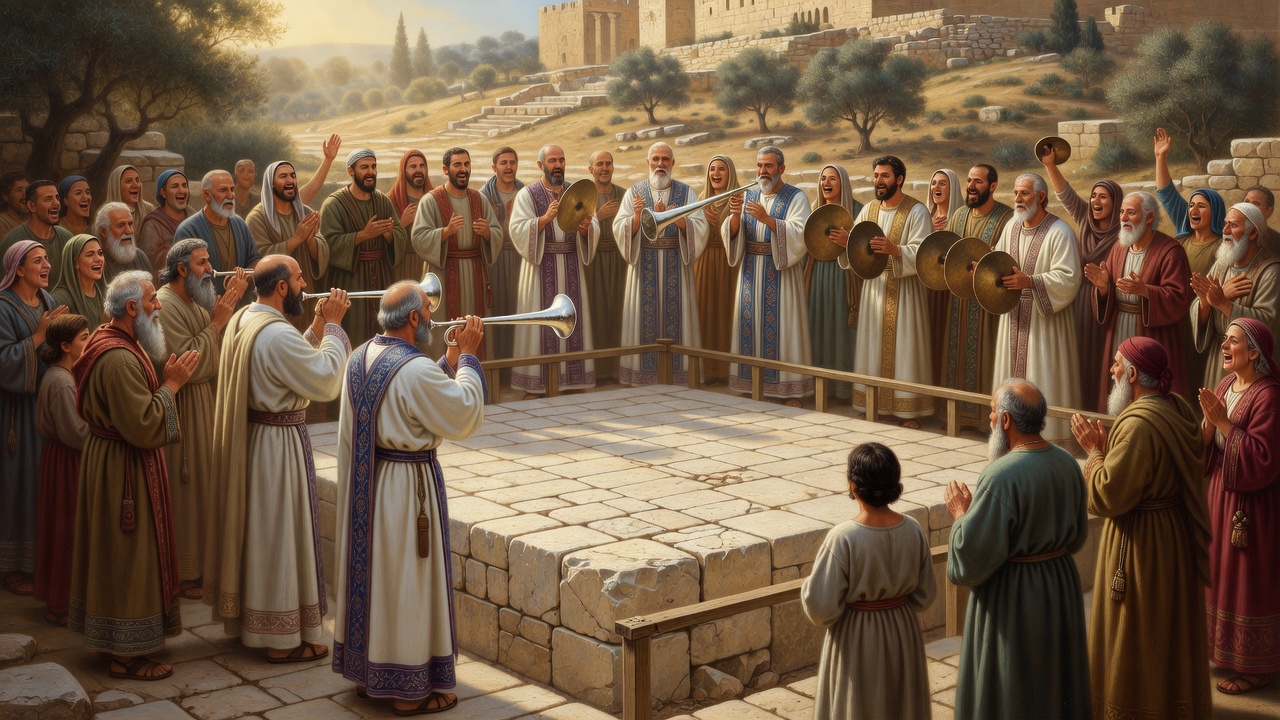
- Laying the foundation of the house of the Lord triggered intense, mixed reactions. While many shouted joyfully to the accompaniment of trumpets and cymbals, older priests, Levites, and family heads who remembered the first temple wept aloud.Sources: the Bible text itself
Notes written with AI assistance from open sources (Theographic Bible Metadata, CC BY-SA 4.0; Easton’s Bible Dictionary, public domain) and reviewed before publishing.
Places in this chapter
- Jerusalem · 31.777, 35.234 · verses 1, 8
- Great Sea · Today: Mediterranean Sea · 31.805, 34.170 · verse 7
- Joppa · Today: Jaffa · 32.054, 34.753 · verse 7
- Lebanon · 33.540, 35.584 · verse 7
- Persia · 34.806, 48.516 · verse 7
- Sidon · Today: Sandikli archaeological site in Sidon · 33.561, 35.372 · verse 7
- Tyre · 33.271, 35.196 · verse 7
Only places identified with high confidence are shown (90% or more according to the scholarly sources compiled by OpenBible). Period map: DARE (Digital Atlas of the Roman Empire), CC BY 4.0; modern map: © OpenStreetMap contributors; places: OpenBible.info (CC BY 4.0).
Credits and license for this translation
Buka Tabuna Tefadi
Mark, Acts, and selected excerpts of the Old Testament in the Buhutu language of Papua New Guinea
Buk Baibel long tokples Buhutu long Niugini
copyright © 2015 Wycliffe Bible Translators, Inc.
Language: Buhutu
Translation by: Wycliffe Bible Translators
This translation is made available to you under the terms of the
Creative Commons Attribution-Noncommercial-No Derivatives license 4.0.
You may share and redistribute this Bible translation or extracts from it in any format, provided that:
You include the above copyright and source information.
You do not sell this work for a profit.
You do not change any of the words or punctuation of the Scriptures.
Pictures included with Scriptures and other documents on this site are licensed just for use with those Scriptures and documents.
For other uses, please contact the respective copyright owners.
2015-10-06
Source: http://png.bible/bxh/ · eBible.org