2 Chronicles 36
Buka Tabuna Tefadi · Tap a verse to see its cross-references.

About this book
About 2 Chronicles
- Easton's Bible Dictionary (1897) reports that Jewish tradition, which he says was universally received until the middle of the seventeenth century, regarded Ezra as the author of Chronicles, an opinion he finds supported by many points of resemblance and contact with the Book of Ezra. He dates the composition after the Babylonian exile, probably between 450 and 435 B.C., noting that the language is, in its general character, Aramaean, like other books written after the exile, and that the writer gives details of Zerubbabel's family.Sources: Easton: Chronicles, Books of
- The two books of Chronicles were originally one. In the Masoretic Hebrew the title is Dibre hayyamim, “Acts of the Days,” which Jerome rendered Chronicon, hence Chronicles; the Septuagint divides the work and calls it Paraleipomena, “things omitted” or “supplements,” because it contains many things omitted in the Books of Kings. Easton groups the contents in four parts: genealogies in the line of Israel down to David, the reign of David, Solomon’s reign in the first nine chapters of the second book, and the history of the separate kingdom of Judah until the return from the Babylonian exile.Sources: Easton: Chronicles, Books of
- Easton presents these books as didactic rather than primarily historical: the writer’s principal aim appears to be moral and religious truth, and he gives less prominence to political events than Samuel and Kings do, and more to ecclesiastical institutions. He adds that the genealogies were an important part of the Hebrew state’s public records, the basis both for distributing and holding land and for arranging and conducting temple service, to which the Levites and their descendants alone were entitled.Sources: Easton: Chronicles, Books of
- The first nine chapters of 2 Chronicles recount the reign of Solomon, David’s son by Bathsheba, whom his father chose as successor. The remaining chapters follow the separate kingdom of Judah until the return from the Babylonian exile. Rehoboam succeeded Solomon, while the ten tribes revolted and invited Jeroboam, who had fled to Egypt, to become their first king.Sources: Easton: Chronicles, Books of · Solomon · Rehoboam · Jeroboam
- The book closes with the proclamation of Cyrus permitting the Jews to return to their own land. Easton notes that this ending and the beginning of Ezra are almost identical in expression, and he treats Ezra as a continuation of Chronicles.Sources: Easton: Chronicles, Books of
Notes written with AI assistance from open sources (Theographic Bible Metadata, CC BY-SA 4.0; Easton’s Bible Dictionary, public domain) and reviewed before publishing.
Yelusalem Dodogadi, Guyau sa Awayagalaʼen
14Tau antalasam babaꞌisadi mahudoꞌidi yo dodoga mate Yaubada hige ti sunusunumaꞌen. Nuꞌu hahaisa dodogadi edi laulau heyaheyayadi sa laulauwedi yo Guyau ena Dubu Yelusalem yai haꞌa ya fatabu, edi abiꞌabina doha luma gaibu.
Waiyunu Yelusalem Taonna sa Faheyaya
15Afa wahawahadi edi Guyau yo edi Yaubada, fuya ouꞌouli ya liba fanuwa tagudi ena wasa tau lawendi lebedi yai, paꞌana ena dodoga yo ena Aba Miya, Dubu Tabuna, ya nuwatohatohaedi. 16In moho Yaubada ena liba sa ꞌwaiyoꞌoꞌen, ena wasa tau lawendi, sa ala liuliuhwaꞌedi, yo ena peloweta sa ita lidilidiyedi ee–, Yaubada ya manabalaꞌedi, be hige aba famamayona.
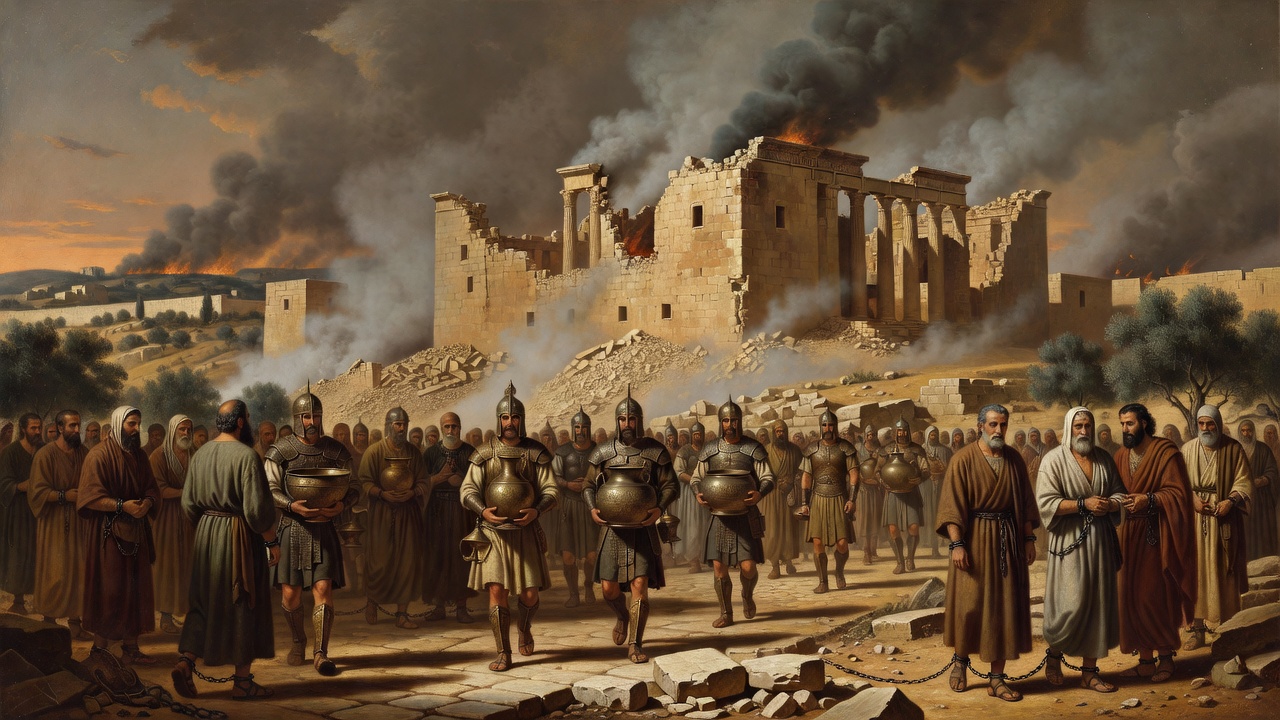
17Habahim Guyau, Babilon edi Kin, Nebukanesa, nuwana ya lafei, be edi tau hiyala Yelusalem taonna sa tulufi, be Diuda hewahewalidi Dubu Tabuna ganahewana yai, sa wunuidi baineti yai. Hige hewali, hasala e tautaulaꞌi hesa i mwahuli. Yaubada, mahudoꞌidi ya tole afuledi Nebukanesa nimana yai. 18Ginaulidi mahudoꞌidi, lalalaꞌi yo kikiluka, maisadi lalaꞌi Yaubada ena Dubu Tabuna yai, yo Kin maꞌena tau paisowa edi ginauli mahudoꞌidi sa lawedi Babilon. 19Yaubada ena Dubu Tabuna sa gabu yo Yelusalem ganana sa dem lopalopa, luma lalaꞌi mahudoꞌidi sa gabudi yo ginauli maisadi lalaꞌi, amainiya sa faheyayadi.
20Diuda dodogadi salumadi hige ti wunuidi na sa mwahuli mate sa lawedi Babilon be Kin ma nanatuna edi tau lau fayofayo ee–, Pesia, Babilon Nuꞌuna sa lei hafihafitidi, habahim, sa lau fayofayo tauwendi. 21Fuyanna Diuda edi tanohi yai sa miyamiya, mate bolima faligigi-luwaga ganahewana yai tanohina hige ti faꞌanyawasi. Na fuyana sa lawe hudoꞌiyedi Babilon yai mate tanohina sa ita afulen bee–, bolima 70. Be Guyau ena liba fasunuma peloweta Delamaiya lisina yai wa, ya fawananaha. (Delamaiya 25:11, Lewitikusi 26:40-45)
22Boliman bwaꞌibwaꞌina yai Sailusi ena fuya kin Pesia nuꞌuna yai, Guyau liba fasunuma peloweta Delamaiya haꞌa ya faliba mate ya fawananaha be Kin Sailusi nuwa ya lafei bena ya libalibaen yo ya uli.
23Somo Kin Sailusi ya libaen mate itete,
“ Guyau, Galewa Yaubadana,
mate nuꞌu mahudoꞌina tanoꞌubu yai ya felegu
yo ya fasinabogu bena ena Dubu Tabuna
ai Yelusalem E ginauli, Diuda Nuꞌuna yai.
Salumadi Yaubada enehena
mate Guyau emi Yaubada
haba maꞌemiu, mate au leu niya.”
Did you know?
The Fall of Jerusalem and the Decree of Cyrus
- In the final decades of Judah, foreign rulers repeatedly dictated the royal succession in Jerusalem. Pharaoh Neco of Egypt deposed Jehoahaz and placed his brother Eliakim on the throne under the name Jehoiakim, while King Nebuchadnezzar of Babylon later installed Zedekiah.Sources: the Bible text itself · Jehoiakim · Zedekiah
- Nebuchadnezzar and his Chaldean forces destroyed Jerusalem by burning down the temple and royal palaces, breaking down the city walls, and carrying the sacred vessels and surviving population into exile in Babylon.Sources: the Bible text itself · Jerusalem · Babylon
- In fulfillment of the word spoken through the prophet Jeremiah, the land lay desolate for seventy years until Cyrus, king of Persia, issued a royal decree granting the Jewish exiles permission to return and rebuild the house of God in Jerusalem.Sources: the Bible text itself · Cyrus · Jeremiah
Notes written with AI assistance from open sources (Theographic Bible Metadata, CC BY-SA 4.0; Easton’s Bible Dictionary, public domain) and reviewed before publishing.
Places in this chapter
- Jerusalem · 31.777, 35.234 · verses 1, 2, 3, 4, 5, 6, 9, 10, 11, 14, 19, 23
- Egypt · 30.129, 31.308 · verses 3, 4
- Babylon · 32.543, 44.422 · verses 6, 7, 10, 17, 18, 20
- Chaldea · 30.962, 46.104 · verse 17
- Persia · 34.806, 48.516 · verses 20, 22, 23
Only places identified with high confidence are shown (90% or more according to the scholarly sources compiled by OpenBible). Period map: DARE (Digital Atlas of the Roman Empire), CC BY 4.0; modern map: © OpenStreetMap contributors; places: OpenBible.info (CC BY 4.0).
Credits and license for this translation
Buka Tabuna Tefadi
Mark, Acts, and selected excerpts of the Old Testament in the Buhutu language of Papua New Guinea
Buk Baibel long tokples Buhutu long Niugini
copyright © 2015 Wycliffe Bible Translators, Inc.
Language: Buhutu
Translation by: Wycliffe Bible Translators
This translation is made available to you under the terms of the
Creative Commons Attribution-Noncommercial-No Derivatives license 4.0.
You may share and redistribute this Bible translation or extracts from it in any format, provided that:
You include the above copyright and source information.
You do not sell this work for a profit.
You do not change any of the words or punctuation of the Scriptures.
Pictures included with Scriptures and other documents on this site are licensed just for use with those Scriptures and documents.
For other uses, please contact the respective copyright owners.
2015-10-06
Source: http://png.bible/bxh/ · eBible.org