Judges 16
Luda yã takada kↄ̃n Bokobaru yão · Tap a verse to see its cross-references.
Samusĩ Gaza gɛ̃kii gbà gborona
1Samusĩ gàa Gaza à kaarua ke è gwe, ben à gɛ̃̀ à daɛo. 2Wà bè Gazadeenↄnɛ: Samusĩ kú kɛ̀. Ben aↄ̃ lìga guu pìzi, wèe à kpákpaa wɛ́tɛ gɛ̃kiia gwãavĩ. Aↄ̃ yĩ̀tɛ gwãavĩ pìa wà bè: Tó guu dↄ̀, wé à dɛmɛ. 3Samusĩ dàɛ gwe ai lezãndo, ben à fɛ̀ɛ à gàa à wɛ́tɛ gɛ̃kii gbà kũ̀ kↄ̃n a lípɛɛ mɛ̀n plaaanↄ à wùrɛ kↄ̃n à gbãngao lɛdo. À dà a gã̀n à gàa à zĩ̀nna sĩ̀sĩ kɛ̀ aɛ dↄ Ɛblↄnua musu.
Samusĩ kↄ̃n Dɛlilao
4Beee gbɛra Samusĩ yè nↄgbɛ̃ kezi zaa Sↄrɛki guzurɛn, à tↄ́n Dɛlila. 5Ben Filisitininↄ kínanↄ gàa wà nↄgbɛ̃ pì lè aↄ̃ bènɛ: Ǹ ↄ̃ndↄ̃ↄ daɛzi lɛ ǹ e ǹ à gbãa bíta pì asii dↄ̃ kↄ̃n dian wé kɛ nà wà gbãaa mↄ́nɛo. Tó wa à yì bào wa à gbãaa bùsa, wa baade é n gba kondogi ↄↄ mɛ̀n wàa sↄↄro kpɛ́ basↄↄro. 6Ben Dɛlila bè Samusĩnɛ: Ǹ ń gbãa bíta asii omɛ kↄ̃n dian weé kɛ nà wà n yi bào wà n gbãaa busao. 7À wèàla à bè: Tó wà ma yi kↄ̃n kyã yĩi mɛ̀n swɛɛplaaao, beee bé eé ma busa màgↄ̃ dɛ lán baade bà. 8Filisitininↄ kínanↄ mↄ̀ Dɛlilanɛ kↄ̃n kyã yĩi kɛ̀ èe kori kũrooo mɛ̀n swɛɛplaaa, ben à à yìo. 9À kũ̀rinↄↄ utɛna kpɛ́tu, ben Dɛlila bè Samusĩnɛ: Samusĩ! Filisitininↄↄɛ zɛnla fá! Ben à kyã pìnↄ kɛ̃̀kɛ̃ lán bà mùna bà, wèe à gbãaa asii dↄ̃ro.
10Ben Dɛlila bènɛ: Nɛ́ɛ ma lalandi kɛɛ, nɛ́ɛ ɛgɛɛ toomɛmɛ. Ǹ omɛ sa dian weé n yi nà. 11Ben à bènɛ: Tó wà ma yi kↄ̃n bà gègete dufu kɛ̀ wèe zĩi kɛo zikirooo, eé ma busa màgↄ̃ dɛ lán baade bà. 12Ben Dɛlila bà pì sɛ̀ à à yìo. À kũ̀rinↄↄ utɛna kpɛ́tu, ben à bè: Samusĩ! Filisitininↄↄɛ zɛnlaee! Ben Samusĩ bà kɛ̀ dↄ a ↄↄa pì kɛ̃̀kɛ̃ lán sↄbuba bà. 13Dɛlila bènɛ: Nɛ́ɛ ma lalandi kɛɛ ai tia. Nɛ́ɛ ɛgɛɛ toomɛ. Ǹ omɛ sa dian weé n yi nà? Ben à bènɛ: Tó n ma mìkã gbã̀a mɛ̀n swɛɛplaaanↄ kũ̀ ń dà àsan ń tã̀, ben n káro pɛ̀a, mɛ́ busa màgↄ̃ dɛ lán baade bà. Dɛlila tò ii à sɛ̀, ben à à mìkã gbã̀a mɛ̀n swɛɛplaaa pìnↄ kũ̀ à tã̀ lán bisatãna bà 14à káro pɛ̀a. Ben à bè: Samusĩ! Filisitininↄↄɛ zɛnlaee! Ben à vù à àsa pì gà à wùrɛ kↄ̃n a mìkão.
15Dɛlila ɛ̀ara à bènɛ dↄ: Nɛɛ̀gↄ̃ bee ń yemazi, bensↄ̃ nɛɛ̀ ma náanɛ kɛro nɛ́? N ma lalandi kɛ̀ à kà gɛ̃̀n aagↄ̃. Nɛ́ɛ n gbãa bíta asii omɛro. 16Lɛn ègↄ̃ nakↄ̃rɛɛa lɛ kↄ̃n yã beee takao yãana sai. Èe a zĩnda busaanɛ ai à gàa à fù mɛnaa à yezi à ga. 17Ben à yã kɛ̀ kú a swɛ̃̀n ònɛ píngi sa à bè: Gɛ̃ɛ e na ma mìa zikiro, zaakɛ wà ma kɛ Luda pↄ́ ũmɛ. Tó wà ma mì bò, ma gbãaa é bↄmagu, mɛ́ busa màgↄ̃ dɛ lán baade bà. 18Kɛ̀ Dɛlila è à yã kɛ̀ kú à swɛ̃̀n òare píngi, ben à lɛ́kpãsã kɛ̀ Filisitininↄ kínanↄnɛ à bè: À ɛara à mↄ́ gɛ̃̀n do dↄ, zaakɛ à à píngi òmɛ sa. Ben aↄ̃ ɛ̀ara wà mↄ̀ à kiia, aↄ̃ↄ kondogi pì kũna. 19Dɛlila tò ii Samusĩ sɛ̀ a gbála, ben à gↄ̃gbɛ̃ ke sìsi. À à mìkã gbã̀a mɛ̀n swɛɛplaaa pìnↄ bò, ben à nà busanaa à gbãaa pì bↄ̀n. 20Dɛlila bè: Samusĩ! Filisitininↄↄɛ zɛnlaee! Ben à vù èe daa é kɛ lán yãa bà à a zĩnda bↄmɛ. À dↄ̃ kɛ̀ Dii a tonlo. 21Ben Filisitininↄ à kũ̀, wà à wɛ́ɛnↄ bↄ̀bↄ, ben aↄ̃ gàao Gaza. Aↄ̃ mↄ̀gotɛ̃ gata kpànɛ, ben wà à dà èe wísi lↄↄ kpɛ́siaan. 22À mìkã pì ɛ̀ara à nà kpaɛnaa dↄ à bona gbɛra.
Samusĩ gana
23Filisitininↄ kínanↄ kↄ̃ kàkↄ̃a lɛ wà ń tãa Dagↄni gbãgbã, ben aↄ̃ↄe pↄnnaa kɛɛ wèe bè: Wa tãa wa ibɛɛ Samusĩ nàwe wa ↄzĩ. 24Kɛ̀ Filisitininↄ à è, aↄ̃ ń tãa sáabu kpà wà bè:
Wa ibɛɛ wa bùsu dɛ̀,
à wa gbɛ̃nↄ dɛ̀dɛ dúgudugu,
ben wa tãa à nàwe wa ↄzĩ.
25Lán aↄ̃ pↄↄ kɛ̀ nna nà aↄ̃ bè: À Samusĩ sísi à kↄ̃kↄ̃ owe. Ben wà à bↄ̀ kpɛ́siaan à yáadↄziyã kɛ̀ńnɛ.
Kɛ̀ wà à zɛ̀ kpɛ́ wesagbanↄ dagura, 26à bè gↄ̃kparɛ kɛ̀ à à ↄ kũnanɛ: Ǹ gámao wesagba kɛ̀ aↄ̃ kpɛ́ sɛnanↄ saɛ lɛ mà ↄ nanaa mà gbãaa ea. 27Tãakpɛ pì pà, gↄ̃gbɛ̃nↄ kↄ̃n nↄgbɛ̃nↄↄ kú gwe kↄ̃n Filisitininↄ kínanↄ ń píngi. Gbɛ̃ kɛ̀ aↄ̃ↄ kú kpɛ́ pì musu kà gↄ̃ↄn bↄrↄ aagↄ̃, kɛ̀ aↄ̃ mↄ̀ Samusĩ kↄ̃kↄ̃ gwa.
28Samusĩ wɛ́ɛ kɛ̀ Diia à bè: Dii Luda, ǹ tó ma yã dↄngu. Luda, ǹ ma gba gbãaa gɛ̃̀n do dↄ lɛ mà gɛ̃ɛ boo Filisitininↄa ma wɛ́ɛ mɛ̀n plaa yã musu. 29À ↄ nàna wesagba mɛ̀n plaaa kɛ̀ aↄ̃ kpɛ́ pì kũna gura súusunↄa, à ↄplaa kú à dooa à ↄzɛɛ kú à dooa dↄ. 30À bè: Ǹ tó mà ga kↄ̃n Filisitininↄo! À nàɛ, ben à ↄ yĩ̀pazi kↄ̃n gbãaao, ben kpɛ́ pì gbòro à sì Filisitininↄ kínanↄa kↄ̃n gbɛ̃ kɛ̀ aↄ̃ↄ kú à guunↄ ń píngi. Gbɛ̃ kɛ̀ Samusĩ ń dɛ́dɛ a gagurↄↄnↄↄ pari dɛ gbɛ̃ kɛ̀ à ń dɛ́dɛ gurↄↄ kɛ̀ à kú wɛ̃̀ndiola. 31À dãaronↄ kↄ̃n à de bɛdeenↄ mↄ̀ ń píngi aↄ̃ à gɛ̀ sɛ̀ wà tào, ben aↄ̃ à mira kpàkↄ̃zi kↄ̃n à de Manↄa pↄ́o, Zↄra kↄ̃n Ɛsɛtaoluo dagura. À yã gↄ̃̀gↄ̃ Isarailinↄnɛ ai wɛ̃̀ baro.
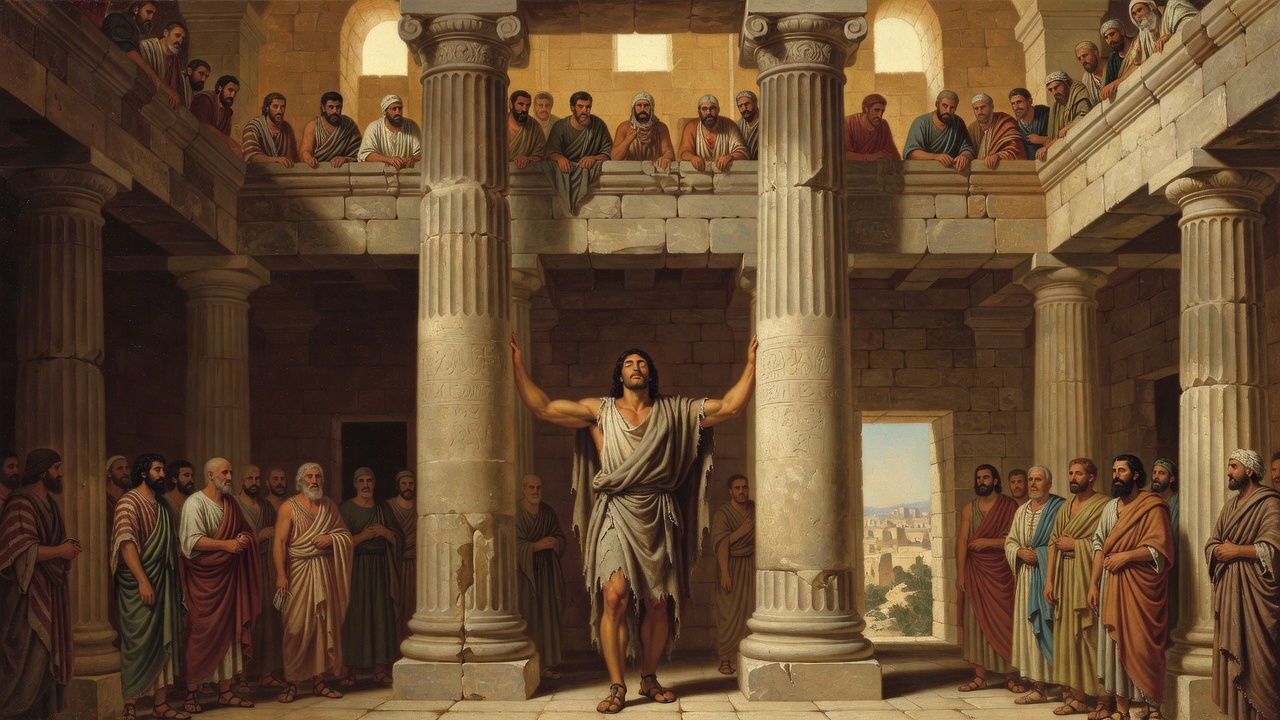
Did you know?
The Downfall and Death of Samson
- Delilah lived in the Valley of Sorek, where Philistine rulers offered her silver to discover the secret of Samson's strength. Samson, consecrated as a Nazirite from birth, finally revealed that cutting the seven braids of his hair would break his consecration and leave him weak.Sources: Delilah · Samson · the Bible text itself
- The Philistines gathered in Gaza to celebrate Samson's capture and offer sacrifices to Dagon, their national god. Easton's Bible Dictionary describes Dagon as a deity represented with the body of a fish and the head and hands of a man, with major temples at Gaza and Ashdod.Sources: Dagon · Gaza · the Bible text itself
- After leading Israel for twenty years, Samson was recovered by his relatives and buried in the tomb of his father Manoah. This burial place was situated between Zorah and Eshtaol in the Judean lowlands.Sources: Zorah · Eshtaol · the Bible text itself
Notes written with AI assistance from open sources (Theographic Bible Metadata, CC BY-SA 4.0; Easton’s Bible Dictionary, public domain) and reviewed before publishing.
Places in this chapter
- Gaza · Today: Tell Harube · 31.504, 34.464 · verses 1, 2, 21
- Hebron · Today: Tel Rumeida · 31.525, 35.102 · verse 3
- Valley of Sorek · Today: Nahal Sorek · 31.756, 35.050 · verse 4
Only places identified with high confidence are shown (90% or more according to the scholarly sources compiled by OpenBible). Period map: DARE (Digital Atlas of the Roman Empire), CC BY 4.0; modern map: © OpenStreetMap contributors; places: OpenBible.info (CC BY 4.0).
Credits and license for this translation
Luda yã takada kↄ̃n Bokobaru yão
The New Testament and portions of the Old Testament in the Bokobaru language of Nigeria
copyright © 2005 SIM International
Language: Bokobaru
Translation by: SIM
This translation text is made available to you under the
terms of the Creative Commons License: Attribution-Noncommercial-No Derivative Works.
( http://creativecommons.org/licenses/by-nc-nd/3.0/ )
In addition, you have permission to port the text to different file formats, as long as you
do not change any of the text or punctuation of the Bible.
You may share, copy, distribute, transmit, and extract portions
or quotations from this work, provided that you include the above copyright
information:
You must give Attribution to the work.
You do not sell this work for a profit.
You do not make any derivative works that change any of the actual words or punctuation of the Scriptures.
Permissions beyond the scope of this license may be
available if you contact
us with your request.
This translation is made available to you under the terms of the
Creative Commons Attribution-Noncommercial-No Derivatives license 4.0.
You may share and redistribute this Bible translation or extracts from it in any format, provided that:
You include the above copyright and source information.
You do not sell this work for a profit.
You do not change any of the words or punctuation of the Scriptures.
Pictures included with Scriptures and other documents on this site are licensed just for use with those Scriptures and documents.
For other uses, please contact the respective copyright owners.
2014-09-22
Source: http://ebible.org/bus/ · eBible.org