Genesis 32
Luda yã takada kↄ̃n Bokobaru yão · Tap a verse to see its cross-references.
Yakubu gbɛ̃nↄ zĩna Isaua
1Yakubu dà zɛ́n, ben Luda malaikanↄ dààlɛ. 2Kɛ̀ à ń é, à bè: Luda bùran kɛ̀. Ben à tↄ́ kpà guu pìnɛ Manaimu. 3À zĩ̀rinↄ zĩ̀ a aɛ a vĩ̀i Isaua Sei bùsu kɛ̀ wè be dↄ Ɛdↄmu bùsun. 4À bè a zĩ̀rinↄnɛ: À gá à o ma dii Isaunɛ à zↄ̀bleri Yakubu gurↄ plaa kɛ̀ Labã bɛ èe suu sa. 5À onɛ má zùnↄ vĩ kↄ̃n zaakinↄ kↄ̃n sãanↄ kↄ̃n blènↄ kↄ̃n gↄ̃gbɛ̃ zĩkɛrinↄ kↄ̃n nↄgbɛ̃ zĩkɛrinↄo. Mámbe ma a zĩ à onɛ lɛ ma à pↄnnaa e.
6Kɛ̀ zĩ̀rinↄ ɛ̀ara wà sù Yakubu kiia, aↄ̃ bè: Wa gaa n vĩ̀i kiia, èe mↄ́ à danlɛ kↄ̃n gↄ̃ↄn wàa plaaanↄ. 7Vĩa Yakubu kũ̀ èe bídi kɛɛ maamaa, ben à gbɛ̃ kɛ̀ aↄ̃ kúonↄ kpàatɛ lɛo plaa kↄ̃n sãanↄ kↄ̃n blènↄ kↄ̃n zùnↄ kↄ̃n lakuminↄo à bè: 8Tó Isau mↄ̀ à sì à lɛo dooa, à lɛo doo kɛ̀ gↄ̃̀ é bↄ. 9Ben à adua kɛ̀ à bè: Dii, ma dezi Ibraĩ kↄ̃n ma de Isaakuo Luda, ń òmɛ mà su ma bùsun ma danɛnↄ kiia, nɛ́ aubarika damagu. 10N gbɛ̃kɛɛ kↄ̃n náanɛ yão kɛ̀mɛ maamaa ma bɛ̀ɛ e káro. Gurↄↄ kɛ̀ ma bikũ Yodaa, gò bé à na ma ↄzĩ ado. Tia sa ma su kↄ̃n auziki lɛo plaaa kɛ̀nↄ. 11Ma wɛ́ɛ kɛ̀mma ǹ ma sí ma vĩ̀ia, zaakɛ mɛ́ɛ vĩa kɛɛnɛ kɛ̀ eé sí wa tɛ́ à nↄgbɛ̃nↄ kↄ̃n nɛ́nↄ dɛdɛ yãnzi. 12Mpi sↄ̃, n bè nɛ́ aubarika damagu nɛ́ ma borii kaara lán ísialɛa bùsu'ãatɛ̃ bà weé fↄ̃ wà ń naroro ń pari yãnzi.
13Gwen Yakubu ìn. Pↄ́ kɛ̀ à plɛ̀plɛ à a vĩ̀i gbaanↄn yɛ̀: 14Blèda mɛ̀n wàa do, à kofĩi mɛ̀n baro, sãda mɛ̀n wàa do, à karo mɛ̀n baro, 15lakumida mɛ̀n baaakuri kↄ̃n ń nɛ́ bↄ̀rↄnↄ, zùda mɛ̀n baplaa, à sware mɛ̀n kuri, zaakida mɛ̀n baro, à kyà mɛ̀n kuri. 16À ń ná a zↄ̀blerinↄnɛ ń ↄzĩ bori kↄ̃n boriio, ben à bèńnɛ: Àgↄ̃ tɛ́ ma aɛ à kpàngu da a dagura gã̀ kↄ̃n gã̀o. 17À bè gbɛ̃ káakunɛ: Tó ma vĩ̀i dànlɛ à n la à bè: Démɛ n dii ũu? Nɛ́ɛ gaa mámɛ? Dé bé à pↄ́ kɛ̀ nɛ́ɛ dãa kɛ̀nↄ vĩi? 18Ǹ onɛ à zↄ̀bleri Yakubu pↄ́mɛ, pↄ́ kɛ̀ à a dii gbà à kpã̀sãnɛnↄn gwe, àpi e suu kpɛɛ. 19À yã dↄ̃nkↄ̃ pì ò gbɛ̃ plaadeenɛ kↄ̃n gbɛ̃ aagↄ̃deeo kↄ̃n pↄ́dãrinↄ ń píngi à bè: Tó a da Isaulɛ, à onɛ lɛ. 20À onɛ à zↄ̀bleri Yakubu e suu kpɛɛ. Zaakɛ à laasuu lɛ̀ à bè: Mɛ́ à làakari kpáɛ kↄ̃n pↄ́ kɛ̀ má kpà aɛ kɛ̀nↄ, wé wɛ́ɛ sikↄ̃lɛ. Eé gí gbãakɛ kpámazi saↄ́? 21Gbaa pìnↄ dↄ̀nɛ aɛ, ben à gↄ̃̀ bùran gwãavĩ mↄ̀a à ì gwe.
Yakubu ↄsikana kↄ̃n Ludao
22À fɛ̀ɛ gwãavĩ à a nↄ mɛ̀n plaaanↄ sɛ̀ɛ kↄ̃n a nↄgbɛ̃ zĩkɛri gↄ̃ↄn plaaanↄ kↄ̃n a nɛ́gↄ̃gbɛ̃ gↄ̃ↄn kuri awɛɛdoonↄ, ben à bikũ̀ńyo Yaboku íbikũkiia. 23Kɛ̀ à bikũ̀ńyo, ben à pↄ́ kɛ̀ à vĩinↄ sɛ̀ɛ à bikũ̀o píngi. 24Yakubu gↄ̃̀ ado, ben gↄ̃gbɛ̃ ke mↄ̀ èe ↄsi kaao ai guu kà dↄna. 25Kɛ̀ gↄ̃gbɛ̃ pì è é fↄ̃ à à nɛ́ro, à à lɛ̀ a gisipɛkↄ̃rɛkiia, ben à gisi bↄ̀kũn ↄsikana pì guu. 26Gↄ̃gbɛ̃ pì bè: Ǹ ma gbarɛ, zaakɛ guu e dↄↄ. Ben Yakubu bènɛ: Tó èe kɛ ǹ aubarika damagu baasiro, mɛ́ n gbarɛro. 27Gↄ̃gbɛ̃ pì à là à bè: N tↄ́n diaa? À wèàla à bè: Ma tↄ́n Yakubu. 28Ben à bè: Weé bennɛ Yakubu dↄro, séde Isaraili, zaakɛ n ↄsi kà kↄ̃n Ludao kↄ̃n gbɛ̃nteenↄ, ben n ↄsii nɛ̀. 29Yakubu bènɛ: Ǹ n tↄ́ omɛ se. A wèàla à bè: Bↄ́yãnzi nɛ́ɛ ma tↄ́ gbekaazi? Ben à aubarika dàn gwe. 30Yakubu tↄ́ kpà guu pìnɛ Pɛniɛli, zaakɛ à bè: Wa wɛ́ɛ sìkↄ̃lɛ kↄ̃n Ludao, ben mɛ́ɛ garo. 31À bↄ̀ Pɛniɛli ↄfãntɛ̃bↄɛna, èe tↄ̃ↄtɛɛ a gisi yãnzi. 32Bee yãnzi ai gbã̀a Isarailinↄ è nↄ̀bↄ túgisi sóro, kɛ̀ Luda Yakubu lɛ̀ à túgisia yãnzi.
Did you know?
At the Jabbok, on the Way to Esau
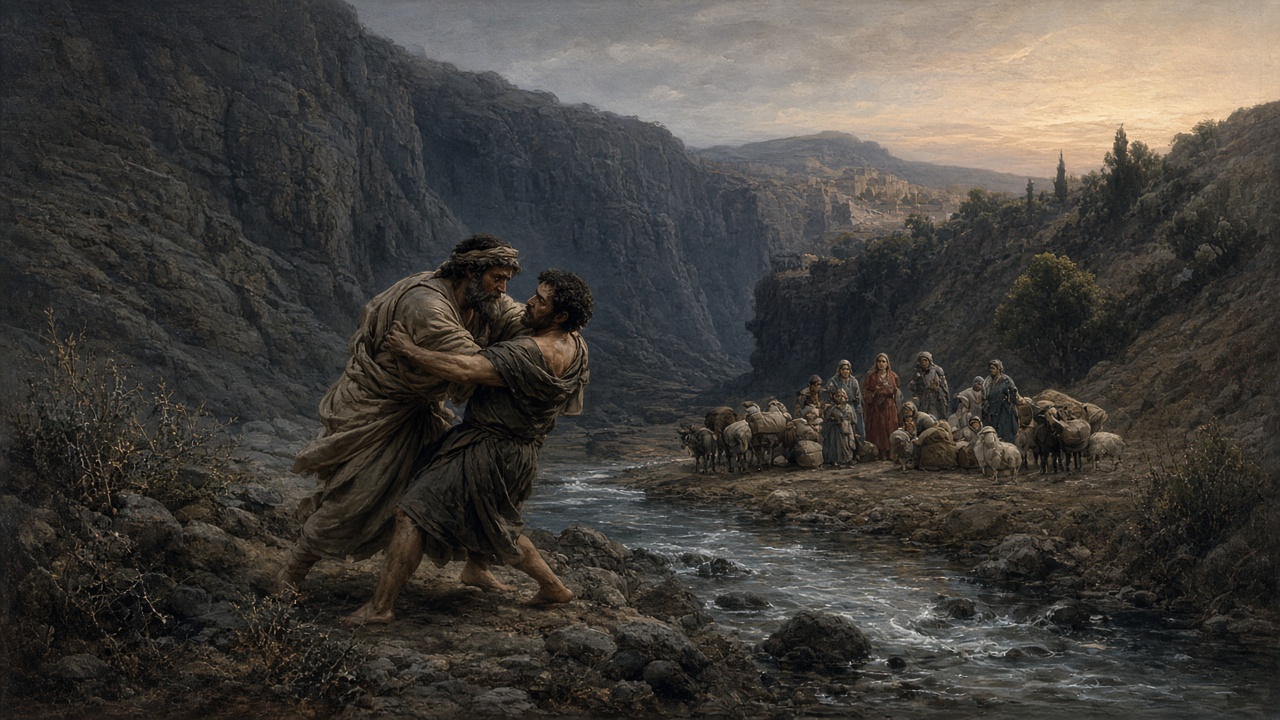
- Mahanaim means “two camps.” Jacob gave that name to the place near the Jabbok, beyond the Jordan, when the angels of God met him and he said, “This is the camp of God.” There he also divided his people, flocks, herds, and camels into two camps, hoping one might escape if Esau attacked the other.Sources: Mahanaim · the Bible text itself
- The Jabbok, whose name is explained as “a pouring out, or a wrestling,” is a stream east of the Jordan. It joins the Jordan about midway between the Sea of Galilee and the Dead Sea, after a course of about 65 miles through a wild, deep ravine. At its ford Jacob sent his two wives, two maidservants, eleven sons, and all he owned across, then remained alone and wrestled with a man until daybreak.Sources: Jabbok · the Bible text itself
- Jacob sent messengers to Esau in the land of Seir, the country of Edom, calling him lord and himself a servant. Seir is a mountainous region along the east side of the Arabah, from the southeastern end of the Dead Sea toward Akabah, the eastern branch of the Red Sea; the Edomites occupied it, and it was allotted to Esau’s descendants. Esau, the firstborn twin and a hunter, had sold his birthright for red lentil stew and was also called Edom, “red,” while Jacob—whose name means “one who follows on another’s heels,” or “supplanter”—had conspired with his mother to deceive Isaac.Sources: the Bible text itself · Seir · Esau (Edom) · Jacob (Israel)
Notes written with AI assistance from open sources (Theographic Bible Metadata, CC BY-SA 4.0; Easton’s Bible Dictionary, public domain) and reviewed before publishing.
Places in this chapter
- Edom · 30.746, 35.604 · verse 3
- Jordan · Today: Jordan River · 31.761, 35.558 · verse 10
- Jabbok · Today: Zarqa River · 32.115, 35.543 · verse 22
Only places identified with high confidence are shown (90% or more according to the scholarly sources compiled by OpenBible). Period map: DARE (Digital Atlas of the Roman Empire), CC BY 4.0; modern map: © OpenStreetMap contributors; places: OpenBible.info (CC BY 4.0).
Credits and license for this translation
Luda yã takada kↄ̃n Bokobaru yão
The New Testament and portions of the Old Testament in the Bokobaru language of Nigeria
copyright © 2005 SIM International
Language: Bokobaru
Translation by: SIM
This translation text is made available to you under the
terms of the Creative Commons License: Attribution-Noncommercial-No Derivative Works.
( http://creativecommons.org/licenses/by-nc-nd/3.0/ )
In addition, you have permission to port the text to different file formats, as long as you
do not change any of the text or punctuation of the Bible.
You may share, copy, distribute, transmit, and extract portions
or quotations from this work, provided that you include the above copyright
information:
You must give Attribution to the work.
You do not sell this work for a profit.
You do not make any derivative works that change any of the actual words or punctuation of the Scriptures.
Permissions beyond the scope of this license may be
available if you contact
us with your request.
This translation is made available to you under the terms of the
Creative Commons Attribution-Noncommercial-No Derivatives license 4.0.
You may share and redistribute this Bible translation or extracts from it in any format, provided that:
You include the above copyright and source information.
You do not sell this work for a profit.
You do not change any of the words or punctuation of the Scriptures.
Pictures included with Scriptures and other documents on this site are licensed just for use with those Scriptures and documents.
For other uses, please contact the respective copyright owners.
2014-09-22
Source: http://ebible.org/bus/ · eBible.org