Genesis 31
Luda yã takada kↄ̃n Bokobaru yão · Tap a verse to see its cross-references.
Yakubu bàalɛna Labãnɛ
1Yakubu yã kɛ̀ Labã nɛ́nↄↄ e oo mà kɛ̀ aↄ̃ bè: Yakubu wa de pↄ́nↄ sìa píngi. Wa de auziki guun à kaarana èn. 2Yakubu dↄ̃̀ Labã wɛ́ɛa, kɛ̀ a yã kú à nↄ̀sɛ guu lán yãa bà dↄro. 3Ben Dii bènɛ: Ǹ ɛara ǹ tá n dezi bùsun n danɛnↄ bɛ, mɛ́gↄ̃ kúnyo. 4Ben Yakubu Rasɛli kↄ̃n Leao sìsi aↄ̃ mↄ́ a pↄ́nↄ kiia sɛ̃̀n. 5À bèńnɛ: Má dↄ̃̀ a de wɛ́ɛa kɛ̀ ma yã kú à nↄ̀sɛn lán yãa bà dↄro. Baa kↄ̃n beeeo ma de Ludaa kúmao. 6Á dↄ̃ a zĩndanɛ kɛ̀ ma zĩi kɛ̀ a denɛ ma gbãa lɛ́mmɛ. 7A de ↄ̃ndↄ̃ↄ kɛ̀mɛ à ma láada lìɛ gɛ̃̀n kuri, ben Ludaa e tó à yãke kɛ̀mɛro. 8Tó à bè sã bakebakenↄn ma baka ũ, sãanↄ ègↄ̃ nɛ́ bakebakenↄ ii. Tó à bè à wɛ̃zãdeenↄ bé wà ma baka ũ, sãanↄ ègↄ̃ nɛ́ wɛ̃zãdeenↄ ii. 9Luda a de sãanↄ sìa à kpàma.
10Gurↄↄ kɛ̀ blènↄↄ e kpákpa oo, ma nanaa ò, ben nanaa guu má è blèkofĩi kɛ̀ aↄ̃ↄe kpákpa oonↄ nɛ́ blè wɛ̃zãdeenↄmɛ kↄ̃n à bakebakenↄ kↄ̃n à togetogenↄo. 11Ben Luda Malaika bèmɛ nanaa pì guu: Yakubu! Ben ma weàla ma bè: Maɛ kɛ̀! 12À bè: Ǹ wɛ́ɛ sɛ́ ǹ gwa. Blèkofĩi kɛ̀ aↄ̃ↄe kpákpa oonↄ píngi blè wɛ̃zãdeenↄmɛ kↄ̃n à bakebakenↄ kↄ̃n à togetogenↄo, zaakɛ ma yã kɛ̀ Labã kɛ̀nnɛɛ è píngi. 13Mámbe Luda kɛ̀ bↄ̀ à mↄ̀nzi Bɛtɛli ũ, guu kɛ̀ n gbɛ̀ pɛ̀ɛn n nↄ́si kùa n lù sɛ̀ma. Tia sa ǹ fɛɛ ǹ bↄ bùsu kɛ̀n ǹ tá n bɛ bùsun. 14Ben Rasɛli kↄ̃n Leao bènɛ: Wá túbi vĩ wa de bɛ dↄↄ́? 15Èe wa diɛɛ gbɛ̃ zĩ̀tↄnↄ ũnloo? A wa yamma, ben à à ↄↄ blè píngi. 16Auziki kɛ̀ Ludaa sì wa dea gↄ̃̀ wa pↄ́ ũ píngimɛ kↄ̃n wa nɛ́nↄ. Ǹ yã kɛ̀ Ludaa ònnɛɛ kɛ píngi sa.
17Ben Yakubu fɛ̀ɛ à a nɛ́nↄ kↄ̃n a nↄↄnↄ dì lakuminↄ kpɛɛ. 18À a pↄ́kãdeenↄ kↄ̃n auziki kɛ̀ à è Mɛsↄpↄtamianↄ sɛ̀ɛ píngi, ben à dà zɛ́n èe taa a de kiia Kanaa bùsun. 19Kɛ̀ Labã gàa a sãanↄ kã kɛ̃ɛ, ben Rasɛli à tãanↄ sɛ̀ kpãi à kpɛɛ. 20Yakubu sↄ̃ ↄ̃ndↄ̃ↄ kɛ̀ Siria bori Labãnɛ èe lɛ́ zaaro. 21À fɛ̀ɛ à bàalɛ kↄ̃n a pↄ́nↄ píngi à bikũ̀ Yuflatia, ben à mì pɛ̀ Giliada gusĩsĩdeea.
Labã pɛɛna Yakubuzi
22À gurↄ aagↄ̃dee zĩ wà bè Labãnɛ Yakubu bàalɛ. 23À a gbɛ̃nↄ kàkↄ̃a, ben à pɛ̀ɛzi. À táa ò gurↄ swɛɛplaa, ben à à lè Giliada gusĩsĩdeen. 24Ben Luda bↄ̀ à mↄ̀zi gwãavĩ nanaa guu à bènɛ: Ǹ làakari kɛ yã kɛ̀ nɛ́ o Yakubunɛzi à maaa ke à zaaa.
25Labã Yakubu bùra lè pɛɛna Giliada gusĩsĩdeen, ben à bùra kàɛ gwe kↄ̃n a gbɛ̃nↄo se. 26Ben Labã gàa à bè Yakubunɛ: Bↄ́yãnzi n ↄ̃ndↄ̃ↄ kɛ̀mɛ n ma nɛ́nↄ sɛ̀ɛ n tańyo lán zĩ̀zↄnↄ bà? 27Bↄ́yãnzi n ↄ̃ndↄ̃ↄ kɛ̀mɛ n wurɛ kpãi nɛ́ɛ lɛ́ zamaro, lɛ ma gaa zɛnnɛ kↄ̃n pↄnnakɛnao kↄ̃n lɛ̀sinao kↄ̃n gã̀gão kↄ̃n mↄrↄo. 28Nɛ́ɛ tó ma lɛ́ zà ma nɛ́nↄ kↄ̃n ma dionↄaro. N yↄ̃nkↄyã kɛ̀. 29Ma gbãaa kà mà yã zaaa kɛare, ben n de Luda yã òmɛ gwãavĩ à bè mà làakari kɛ yã kɛ̀ mɛ́ onnɛɛzi à maaa ke à zaaa. 30Nɛ́ɛ taa sa, kɛ̀ nɛ́ɛ n de bɛ bɛgɛ kɛɛ yãnzi. À kɛ̀ dia n ma tãanↄ sɛ̀ kpãii? 31Yakubu wèàla à bè: Ma vĩa kɛ̀ mɛ́ɛ daa nɛ́ n nɛ́nↄ símamɛ. 32Gbɛ̃ kɛ̀ n n tãanↄ è à kiia, wà à dɛ. Ǹ ma pↄ́nↄ gwagwa wa gbɛ̃nↄ wáa. Tó n n pↄ́ è, ǹ sɛ́. Yakubu sↄ̃ↄ dↄ̃ kɛ̀ Rasɛli Labã pↄ́ sɛ̀ kpãiro. 33Labã gɛ̃̀ Yakubu bisa kutaan à gɛ̃̀ Lea kutaan à gɛ̃̀ nↄgbɛ̃ zĩkɛri gↄ̃ↄn plaaa pìnↄ kutaan èe pↄ́ke ero. Kɛ̀ à bↄ̀ Lea kutaan, à gɛ̃̀ Rasɛli kutaan. 34Rasɛli tãa pìnↄ sɛ̀ à ùtɛ lakumi gàari guumɛ, ben à vɛ̃̀ɛa. Labã à kuta guu gwàgwa píngi, èe pↄ́ke ero. 35Rasɛli bè a denɛ: Baa, ǹton pↄ fɛ̃maziro, zaakɛ mɛ́ɛ e mà fɛɛro kɛ̀ má ↄ kũna yãnzi. Lɛmɛ Labã a tãanↄ wɛ̀tɛ lɛ èe ero. 36Ben Yakubu pↄ fɛ̃̀ à lɛ́fↄtↄↄ kà Labãzi à bè: Bↄ́ dàn má kɛ̀? Bↄ durunn má kɛ̀ ben n pɛɛmazi wãawãa lán kɛ̀ bà? 37Kɛ̀ n ma pↄ́nↄ gwàgwa píngi, n n bɛ pↄ́nↄ è gweↄ́? Ǹ bↄo gupuraaa ma gbɛ̃nↄ kↄ̃n n gbɛ̃nↄ wáa, aↄ̃ yã nnaa kpá gbɛ̃ kɛ̀ a yã nnaaa. 38Ma kɛ n bɛ wɛ̃̀ baro. N sãanↄ kↄ̃n n blènↄ e nↄ̀ bↄɛro, mɛ́ɛ n sãa ke sóro. 39Mɛ́ɛ sunnɛ kↄ̃n pↄ́ kɛ̀ nↄ̀bↄ pãsĩnↄ kũ̀ keoro, mɛɛ̀ à fĩa bonnɛ ma zĩndamɛ. Nɛɛ̀ pↄ́ kɛ̀ wà à kpãi ò gwãavĩ ke fãantɛ̃ fĩa lama. 40Ɔfãntɛ̃ è ma lɛ fãantɛ̃, ĩa è ma dɛ gwãavĩ, mɛɛ̀ itɛ̃ kɛ. 41Lɛn ma kɛ n bɛ lɛ ai wɛ̃̀ baro. Wɛ̃̀ gɛ̃ro dosai ma zĩi kɛ̀nnɛ n nɛ́nↄgbɛ̃ gↄ̃ↄn plaaanↄ yãnzi. Ma wɛ̃̀ swɛɛdoo kɛ̀ n kpàsa yã musu. N ma láada lìɛ gɛ̃̀n kuri. 42Tó èe kɛ ma dezi Ibraĩ Luda kɛ̀ ma de Isaaku à vĩa vĩi zɛ̀mao baasiro, lɛ n ma gbarɛ ↄkori. Luda zĩi kɛ̀ má kɛ̀ kↄ̃n nawɛ̃ao è, ben à kpã̀kɛ̃nzi gĩa gwãavĩ.
43Ben Labã wè Yakubula: Nↄgbɛ̃ kɛ̀kiinↄ sↄ̃ ma nɛ́nↄmɛ. Nɛ́ kɛ̀kiinↄ sↄ̃ ma dionↄmɛ. Pↄ́kãdee kɛ̀kiinↄ sↄ̃ ma pↄ́kãdeenↄmɛ. Pↄ́ kɛ̀ ń è kɛ̀ píngi ma pↄ́mɛ. Bↄ́n mɛ́ kɛ ma nɛ́nↄgbɛ̃nↄ kↄ̃n nɛ́ kɛ̀ aↄ̃ↄ ìnↄnɛ gbã̀a? 44Ǹ tó wà lɛdolɛ kɛ àgↄ̃ dɛ sèeda ũ wa dagura. 45Ben Yakubu gbɛ̀ sɛ̀ à pɛ̀ɛ yã pì dↄngupↄ ũ. 46À bè a gbɛ̃nↄnɛ aↄ̃ gbɛ̀nↄ sɛ́ɛ, ben aↄ̃ↄ sɛ̀ɛ aↄ̃ↄ dìdikↄ̃a, ben aↄ̃ pↄ́ blè à saɛ. 47Ben Labã tↄ́ kpà gbɛ̀didikↄ̃ana pìnɛ Yega Saaduta. Yakubu tↄ́ kpànɛ Galɛɛdi. 48Labã bè: Gbɛ̀didikↄ̃ana kɛ̀kiin sèeda ũ wa dagura gbã̀a. Bee yãnzi wà tↄ́ kpànɛ Galɛɛdi. 49Wè be dↄ Mizipa, zaakɛ Labã bè: Dii wa dãkpa wa kɛ̃kↄ̃ana gbɛra lɛ wàton zakↄ̃nlo yãnzi. 50Tó n ĩa dà ma nɛ́nↄgbɛ̃nↄa ke tó n nↄ pãndenↄ sɛ̀ dↄ, baa tó wá kú kↄ̃ kiiaro, ǹgↄ̃ dↄ̃ sãnsãn kɛ̀ Ludan wa yã pì sèedadee ũ. 51Ben Labã bènɛ dↄ: Ǹ gbɛ̀didikↄ̃ana kɛ̀kii gwa kↄ̃n gbɛ̀ kɛ̀ má pɛ̀ɛ wa dagurao. 52Eégↄ̃ dɛ sèeda ũ kɛ̀ mɛ́ vĩàla mà mↄ́ mà à zaaa kɛnnɛro, mpi sↄ̃ nɛ́ vĩàla ǹ mↄ́ ǹ à zaaa kɛmɛro. 53Ibraĩ kↄ̃n Naoo kↄ̃n ń deo Ludan wa yãkpaɛkɛri ũ.
Ben Yakubu sì kↄ̃n Luda kɛ̀ a de Isaaku à vĩa vĩ tↄ́o. 54À saa ò gusĩsĩdeen gwe, ben à a gbɛ̃nↄ sìsi aↄ̃ pↄ́ ble. Kɛ̀ aↄ̃ pↄ́ blè, ben aↄ̃ ì gwe. 55Labã fɛ̀ɛ kↄngↄ idɛ'idɛ, à lɛ́ zà a dionↄa kↄ̃n a nɛ́nↄ à sa maaa òńnɛ, ben à lìara à tà a bɛ.
Did you know?
Parting at the Heap of Witness
- Laban called the stone heap Jegar-sahadutha, an Aramaic name, and Jacob called it Galeed, Hebrew for “heap of witness.” A Bible dictionary suggests that Nahor’s family originally spoke Aramaic, while Abraham and his descendants learned Hebrew, a kindred dialect, in Canaan.Sources: Galeed · the Bible text itself
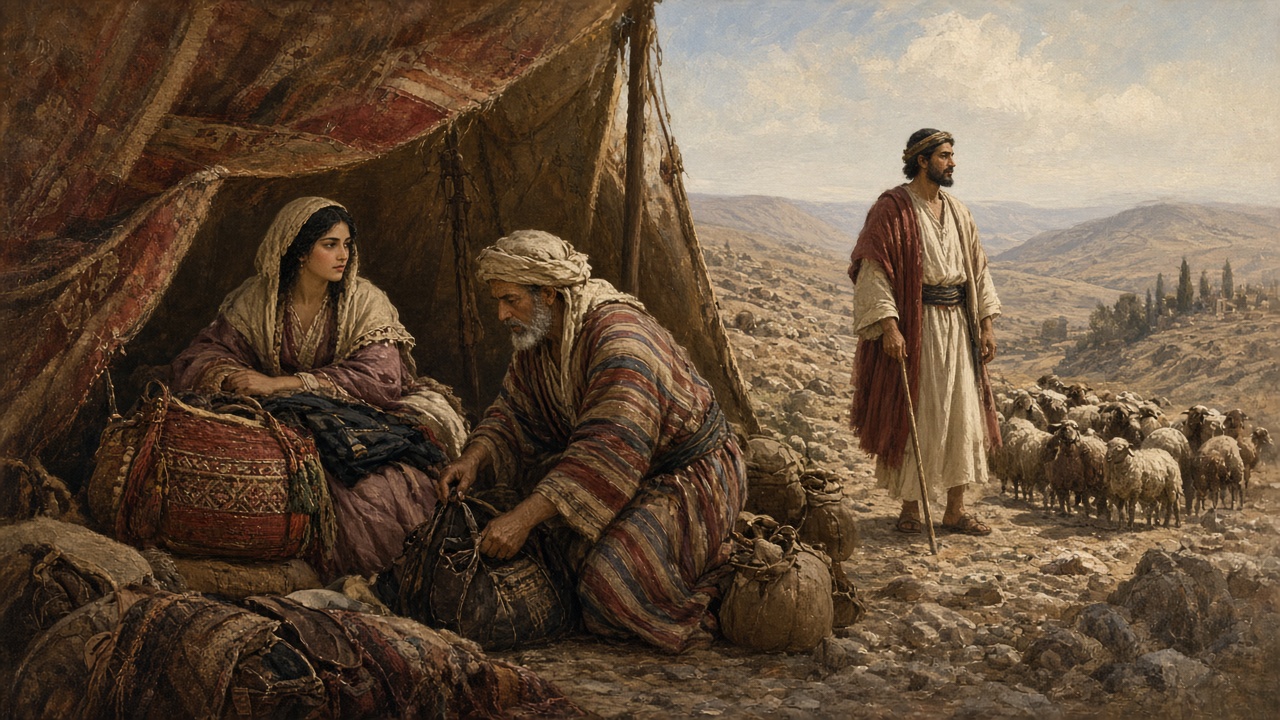
- As they left, Rachel took her father’s household idols, the teraphim, hid them in her camel’s saddlebag, and sat on them while Laban searched the tents. Jacob did not know she had stolen them, though he had declared that anyone found with the idols would not live.Sources: Rachel · the Bible text itself
- Jacob left Paddan-aram, the plain of Aram, commonly regarded as the Mesopotamian district around Haran, crossed the Euphrates, and was overtaken in the hill country of Gilead after a pursuit of seven days. Gilead is described as a “hill of testimony,” a mountainous region east of the Jordan. A dictionary notes that, when Jacob fled from Haran, contact between Abraham’s family in Canaan and the relatives who had remained there came to an end.Sources: Paddan-aram · Gilead · Nahor (brother of Abraham) · the Bible text itself
Notes written with AI assistance from open sources (Theographic Bible Metadata, CC BY-SA 4.0; Easton’s Bible Dictionary, public domain) and reviewed before publishing.
Places in this chapter
- Canaan · 32.767, 35.333 · verse 18
- Euphrates · Today: Euphrates River · 31.004, 47.442 · verse 21
- Gilead · Today: Gilead 1 · 32.187, 35.692 · verses 21, 23, 25
Only places identified with high confidence are shown (90% or more according to the scholarly sources compiled by OpenBible). Period map: DARE (Digital Atlas of the Roman Empire), CC BY 4.0; modern map: © OpenStreetMap contributors; places: OpenBible.info (CC BY 4.0).
Credits and license for this translation
Luda yã takada kↄ̃n Bokobaru yão
The New Testament and portions of the Old Testament in the Bokobaru language of Nigeria
copyright © 2005 SIM International
Language: Bokobaru
Translation by: SIM
This translation text is made available to you under the
terms of the Creative Commons License: Attribution-Noncommercial-No Derivative Works.
( http://creativecommons.org/licenses/by-nc-nd/3.0/ )
In addition, you have permission to port the text to different file formats, as long as you
do not change any of the text or punctuation of the Bible.
You may share, copy, distribute, transmit, and extract portions
or quotations from this work, provided that you include the above copyright
information:
You must give Attribution to the work.
You do not sell this work for a profit.
You do not make any derivative works that change any of the actual words or punctuation of the Scriptures.
Permissions beyond the scope of this license may be
available if you contact
us with your request.
This translation is made available to you under the terms of the
Creative Commons Attribution-Noncommercial-No Derivatives license 4.0.
You may share and redistribute this Bible translation or extracts from it in any format, provided that:
You include the above copyright and source information.
You do not sell this work for a profit.
You do not change any of the words or punctuation of the Scriptures.
Pictures included with Scriptures and other documents on this site are licensed just for use with those Scriptures and documents.
For other uses, please contact the respective copyright owners.
2014-09-22
Source: http://ebible.org/bus/ · eBible.org