Exodus 9
Luda yã takada kↄ̃n Bokobaru yão · Tap a verse to see its cross-references.
Pↄ́kãdeenↄ gagana
1Dii bè Musanɛ: Ǹ gá ǹ Fili'auna le ǹ onɛ Dii Eberunↄ Luda bè à ma gbɛ̃nↄ gbarɛ aↄ̃ gá dↄnzi kɛmɛ. 2Tó à gì ń gbarɛzi, tó à kpɛ́ ń kũna ai tia, 3mɛ́ ↄ tↄ̃ à pↄ́kãdeenↄa bura. Mɛ́ gagyã pãsĩ ká à sↄ̃nↄn kↄ̃n à zaakinↄ kↄ̃n à lakuminↄ kↄ̃n à zùnↄ kↄ̃n à sãanↄ kↄ̃n à blènↄ. 4Mɛ́ Isaraili pↄ́kãdeenↄ dↄ̃kↄ̃zi kↄ̃n Igipitinↄ pↄ́nↄo. Isarailinↄ pↄ́kãdeenↄ ke é garo. 5Mamↄma Dii ma à gurↄↄ dìɛ. Zian mɛ́ beee kɛ bùsu kɛ̀n.
6Kɛ̀ guu dↄ̀, ben Dii kɛ̀ lɛ. Igipitinↄ pↄ́kãdeenↄ gàga píngi, mↄde Isarailinↄ pↄ́kãdeenↄ kee e garo. 7Fili'auna yã kɛ̀ kɛ̀ pì gbèka, à mà Isarailinↄ pↄ́kãdeenↄ kee e garo, mↄde à swã kpɛ́ gbãa, à gì gbɛ̃ pìnↄ gbarɛzi.
Bↄ̀gĩi kana Igipitinↄn
8Dii bè Musanɛ kↄ̃n Arunao: À mↄ̀dakpɛ túbu kↄ ↄkũ doodo, Musa fã Fili'auna aɛ. 9Eé da Igipiti bùsula píngi lán lutɛ̃ bà, eé ká gbɛ̃nteenↄn kↄ̃n nↄ̀bↄnↄ bↄ̀gĩi ũ gu píngia. 10Ben aↄ̃ mↄ̀dakpɛ túbu sɛ̀ɛ aↄ̃ gàao Fili'auna kiia. Kɛ̀ Musa túbu pì fã̀ musu, ben à kà gbɛ̃nteenↄn kↄ̃n nↄ̀bↄnↄ bↄ̀gĩi ũ. 11Ɛ̃zɛ̃deenↄↄ e fↄ̃ wà gàa Musa kiiaro bↄ̀gĩi pìnↄ yãnzi, zaakɛ à dàńla kↄ̃n Igipitinↄ ń píngi. 12Ben Dii Fili'auna kù kɛ̀ gbãa lán à ò Musanɛ nà, ben à gì ń yã mazi.
Lougbɛ mana
13Dii bè Musanɛ: Ǹ fɛɛ kↄngↄ idɛ'idɛ ǹ gá ǹ Fili'auna le, ǹ onɛ mamↄma Dii Eberunↄ Luda ma bè à ma gbɛ̃nↄ gbarɛ aↄ̃ gá dↄnzi kɛmɛ. 14Tia sa mɛ́ yã pãsĩ píngi daàla kↄ̃n a ìbanↄ kↄ̃n à gbɛ̃nↄ, lɛ àgↄ̃ dↄ̃ kɛ̀ anduna guu píngi gbɛ̃kee dɛ lán ma bàro. 15Zaakɛ tó ma ↄ tↄ̃̀ḿma ma gagyãa kàńgu yã, lɛ àpi kↄ̃n a gbɛ̃nↄ yã̀a anduna guu. 16Ma à kà kpatan lɛ mà a gbãaa ↄdↄanɛ, wà ma tↄ́ kpá anduna guu píngi. 17Lán èe a zĩnda sɛɛ lezĩ dɛ ma gbɛ̃nↄla nà ai tia, èe ń gbarɛro, 18zia mↄndaa'i mɛ́ tó lougbɛ pãsĩ ma maamaa, lougbɛ kɛ̀ a taka e ma Igipiti zikiro zaa lán wà à kàɛ nà ai mↄna gbã̀a. 19Ǹ onɛ à gbɛ̃nↄ zĩ aↄ̃ à pↄ́kãdeenↄ kↄ̃n pↄ́ kɛ̀ à vĩ buraanↄ sɛ́ɛ wà káka kpɛ́n píngi. Gbɛ̃nteenↄ kↄ̃n pↄ́ kɛ̀ aↄ̃ↄ kú bàazinↄ, tó wèe gɛ̃ńyo kpɛ́nlo, lougbɛ é maḿma aↄ̃é gagamɛ.
20Fili'auna ìba kenↄ vĩa kɛ̀ Dii yãnɛ, aↄ̃ ń zĩkɛrinↄ kↄ̃n ń pↄ́kãdeenↄ kàka kpɛ́n. 21Mↄde gbɛ̃ kɛ̀ aↄ̃ↄe Dii yã daroonↄ ń zĩkɛrinↄ kↄ̃n ń pↄ́kãdeenↄ tò bàazi. 22Ben Dii bè Musanɛ: Ǹ ↄ sɛ́ musu, lougbɛ é ma gbɛ̃nteenↄ kↄ̃n pↄ́kãdeenↄ kↄ̃n bura pↄ́nↄa Igipiti bùsu gu píngia. 23Kɛ̀ Musa a gò dↄ̀ musu, Dii tò lou e pũtãa èe maa kↄ̃n gbɛ̀o èe pii, ben laa e pɛɛɛ tↄↄtɛa. Dii tò lougbɛ mà Igipitinↄla. 24Lougbɛ e maa, lou e pii. Lougbɛ pì pãsĩ. Zaa lán Igipiti bùsu kuu nà, lou beee taka e ma zikiro. 25Lougbɛ pì pↄ́ kɛ̀ kú bàazi Igipiti bùsu guunↄ ásaru kɛ̀ píngi, gbɛ̃nteenↄ kↄ̃n pↄ́kãdeenↄ kↄ̃n bura pↄ́nↄ píngi. À sɛ̃̀tɛ línↄ ɛ̀'ɛ píngi. 26Gosɛ̃ bùsu guu kɛ̀ Isarailinↄↄ kúnn lougbɛ pì e kánlo ado.
27Fili'auna Musa kↄ̃n Arunao sìsi à bèńnɛ: Tia sa ma durun kɛ̀. Dii yã bé à nna, mapi kↄ̃n ma gbɛ̃nↄ taarideenↄn wa ũ. 28À agbaa kpánɛ. Lapatana kↄ̃n lougbɛ kɛ̀kiio mↄ̀ lɛ. Mɛ́ a gbarɛ sa, mɛ́ gíare dↄro. 29Musa bènɛ: Tó ma bↄ wɛ́tɛ kpɛɛ, mɛ́ ma ↄↄnↄ dↄ Dii kúkiia, lapatana é zɛ, lougbɛ é yãa, lɛ ǹgↄ̃ dↄ̃ kɛ̀ tↄↄtɛ nɛ́ Dii pↄ́mɛ. 30Mↄde má dↄ̃ kɛ̀ mpi kↄ̃n n ìbanↄ, ée vĩa kɛɛ Dii Ludanɛro ai tia.
31Nagã kↄ̃n gbadoo yàka, zaakɛ nagãa gĩakɛ à pìa, gbado mↄree bↄ̀. 32Ése kↄ̃n weaao e yakaro kɛ̀ aↄ̃è ma zãa yãnzi. 33Musa bↄ̀ Fili'auna kiia à gàa wɛ́tɛ kpɛɛ à a ↄↄnↄ dↄ̀ Dii kúkiia, ben lapatana kↄ̃n lougbɛo zɛ̀, lou e ma dↄro. 34Kɛ̀ Fili'auna è lou kↄ̃n lougbɛo kↄ̃n lapatanao zɛ̀, ben à kpɛ́ èe durun kɛɛ, à swã kpɛ́ gbãa, àpi kↄ̃n a ìbanↄ. 35À kù kpɛ́ gbãa à gì Isarailinↄ gbarɛzi lán Ludaa dà Musanɛ à ònɛ nà.
Did you know?
Livestock, Boils, and Hail
- This chapter draws a sharp line between Egypt and the Israelites: all the livestock of the Egyptians die, but not one animal belonging to the Israelites dies, and the hail falls on all the land of Egypt except Goshen, where the Israelites lived. Goshen, also called the land of Rameses, lay east of the Nile and apparently not far from the royal residence, and it had been assigned to Jacob’s family as the best of the land.Sources: the Bible text itself · Goshen · Moses
- The Pharaoh whom Moses and Aaron confront is not named in the chapter. Easton's Bible Dictionary (1897) identifies him as probably Menephtah I, a son of Rameses II, who lived at Zoan, where his interviews with Moses and Aaron took place, and notes that some instead favor Seti II. After the hail, Moses leaves the city and spreads out his hands to the LORD until the thunder and hail cease.Sources: the Bible text itself · Pharaoh (of the Exodus)
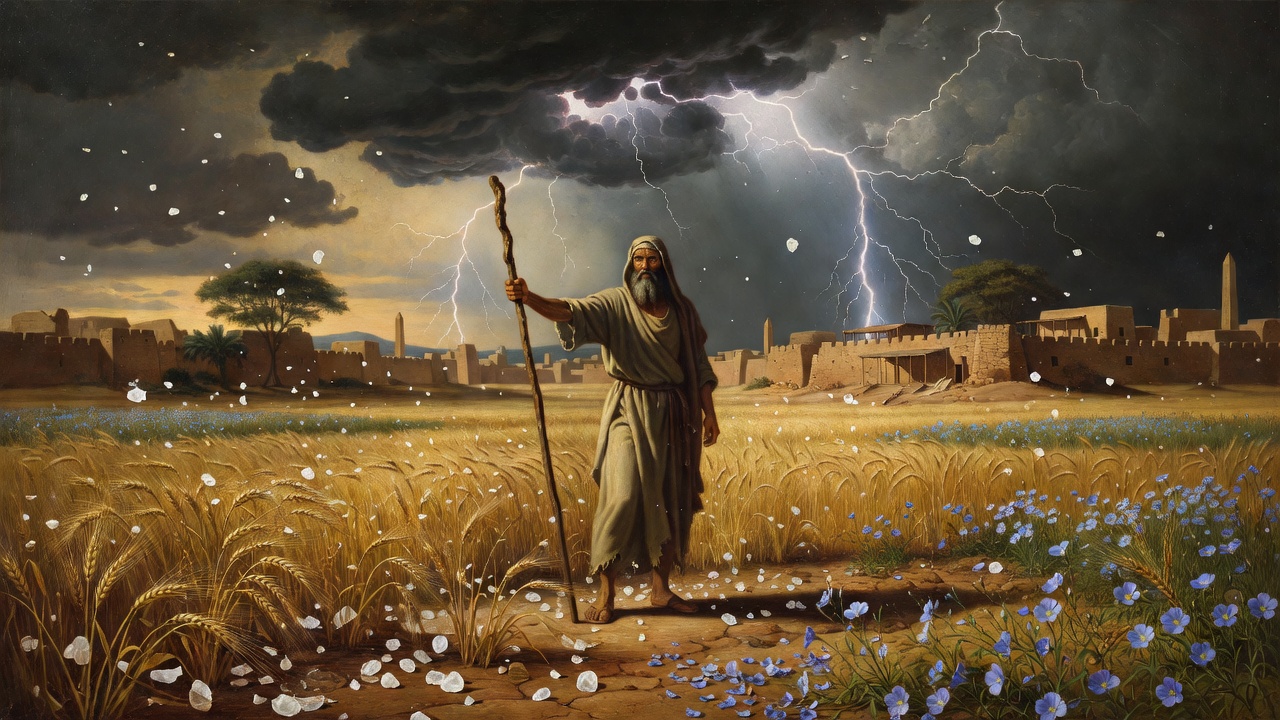
- The hail destroyed the flax and the barley, but not the wheat and the spelt. The narrative explains the difference: the barley was already ripe and the flax was in bloom, while the wheat and spelt were late crops.Sources: the Bible text itself
Notes written with AI assistance from open sources (Theographic Bible Metadata, CC BY-SA 4.0; Easton’s Bible Dictionary, public domain) and reviewed before publishing.
Places in this chapter
- Egypt · 30.129, 31.308 · verses 4, 6, 9, 18, 22, 23, 24, 25
- Goshen · Today: Goshen 1 · 30.799, 31.834 · verse 26
Only places identified with high confidence are shown (90% or more according to the scholarly sources compiled by OpenBible). Period map: DARE (Digital Atlas of the Roman Empire), CC BY 4.0; modern map: © OpenStreetMap contributors; places: OpenBible.info (CC BY 4.0).
Credits and license for this translation
Luda yã takada kↄ̃n Bokobaru yão
The New Testament and portions of the Old Testament in the Bokobaru language of Nigeria
copyright © 2005 SIM International
Language: Bokobaru
Translation by: SIM
This translation text is made available to you under the
terms of the Creative Commons License: Attribution-Noncommercial-No Derivative Works.
( http://creativecommons.org/licenses/by-nc-nd/3.0/ )
In addition, you have permission to port the text to different file formats, as long as you
do not change any of the text or punctuation of the Bible.
You may share, copy, distribute, transmit, and extract portions
or quotations from this work, provided that you include the above copyright
information:
You must give Attribution to the work.
You do not sell this work for a profit.
You do not make any derivative works that change any of the actual words or punctuation of the Scriptures.
Permissions beyond the scope of this license may be
available if you contact
us with your request.
This translation is made available to you under the terms of the
Creative Commons Attribution-Noncommercial-No Derivatives license 4.0.
You may share and redistribute this Bible translation or extracts from it in any format, provided that:
You include the above copyright and source information.
You do not sell this work for a profit.
You do not change any of the words or punctuation of the Scriptures.
Pictures included with Scriptures and other documents on this site are licensed just for use with those Scriptures and documents.
For other uses, please contact the respective copyright owners.
2014-09-22
Source: http://ebible.org/bus/ · eBible.org