Exodus 10
Luda yã takada kↄ̃n Bokobaru yão · Tap a verse to see its cross-references.
Sutɛ̃nↄ dagulana
1Dii bè Musanɛ: Ǹ gá Fili'auna kiia, zaakɛ ma à kùgbãa kũ̀ kↄ̃n à ìbanↄ, lɛ mà a dabuyã kɛ̀kiinↄ kɛ ń tɛ́, 2lɛ ǹ e ǹ o n nɛ́nↄnɛ kↄ̃n n dionↄ lán ma wɛ́ɛ tã̀ Igipitinↄa nà kↄ̃n dabuyã kɛ̀ má kɛ̀ ń tɛ́nↄ, àgↄ̃ dↄ̃ kɛ̀ mámbe Dii ũ. 3Ben Musa kↄ̃n Arunao gàa wà bè Fili'aunanɛ: Dii Eberunↄ Luda bè nɛ́gↄ̃ kuu mìsiɛnaare sai ai bↄrɛmɛ? Ǹ a gbɛ̃nↄ gbarɛ aↄ̃ gá dↄnzi kɛare. 4Tó n gi ń gbarɛzi, zia eé sutɛ̃nↄ ká n bùsun. 5Aↄ̃é da tↄↄtɛla, weé guu ero. Aↄ̃é lɛ́ɛ pↄ́ kɛ̀ gↄ̃̀nnɛ lougbɛ gbɛraanↄa kↄ̃n línↄ píngi. 6Aↄ̃é pa n kpɛ́nↄ guu kↄ̃n n ìbanↄ pↄ́nↄ kↄ̃n Igipitinↄ pↄ́nↄ píngi. N denↄ kↄ̃n n dezinↄ e à taka e zikiro zaa gurↄↄ kɛ̀ aↄ̃ vɛ̃̀ɛ bùsu kɛ̀n ai mↄna gbã̀a. Ben Musa lìara à bↄ̀ Fili'auna kiia.
7Fili'auna ìbanↄ bènɛ: Gbɛ̃ pìnↄ égↄ̃ mↄ́nzi kpaawazi lɛ ai bↄrɛmɛ? Ǹ gbɛ̃ pìnↄ gbarɛ aↄ̃ gá dↄnzi kɛ Dii ń Ludanɛ. Ń dↄ̃ kɛ̀ Igipiti kàatɛroo? 8Ben wà ɛ̀ara wà sù kↄ̃n Musao kↄ̃n Arunao Fili'auna kiia, à bèńnɛ: À gá dↄnzi kɛ Dii a Ludanɛ. A dénↄ bé wé gáa? 9Musa wèàla à bè: Nɛ́ féte gbɛ̃nsi. Wé gá wa píngimɛ kↄ̃n wa nɛ́gↄ̃gbɛ̃nↄ kↄ̃n wa nɛ́nↄgbɛ̃nↄ kↄ̃n wa sãanↄ kↄ̃n wa blènↄ kↄ̃n wa zùnↄ, zaakɛ Dii zĩbaan wée gaa kɛ. 10Ben à bèńnɛ: Tó ma a gbarɛ kↄ̃n a nↄgbɛ̃nↄ kↄ̃n a nɛ́nↄ a píngi, ásarumɛ, Dii a bↄ! À làakari kɛ! Ée wɛtɛɛ à fɛ̃maomɛ. 11Auo! A gↄ̃gbɛ̃nↄ bé wé gá dↄnzi kɛ Diinɛ, zaakɛ lɛn á gbèka lɛ. Ben wà pɛ̀ḿma Fili'auna aɛzĩ.
12Dii bè Musanɛ: Ǹ n ↄↄ dↄ Igipiti bùsula, sutɛ̃nↄ é ká wà sɛ̃̀ kↄ̃n lá kɛ̀ bↄ̀ɛ lougbɛ gbɛraanↄ ble píngi. 13Kɛ̀ Musa a gò dↄ̀ Igipitila, Dii bↄ̀ kↄ̃n ĩao ↄfãntɛ̃bↄɛ kpa, èe paa bùsu pìa fãantɛ̃ kↄ̃n gwãavĩo zɛna sai. Kɛ guu dↄ̀, ↄfãntɛ̃bↄɛ ĩa pì sù kↄ̃n sutɛ̃nↄ. 14Ben sutɛ̃ pìnↄ mↄ̀ wà dà Igipiti bùsula píngi. Aↄ̃ↄ pari dɛ à yã pↄ́nↄla, à taka é kɛ ziki dↄro. 15Aↄ̃ dà tↄↄtɛla gu píngi, ben tↄↄtɛ sia kũ̀. Aↄ̃ sɛ̃̀ kↄ̃n lánↄ kↄ̃n líbɛɛ kɛ̀ bↄ̀ lougbɛ gbɛraanↄ blè píngi. Sɛ̃̀ kↄ̃n láo kú Igipiti bùsun dↄro.
16Gwe gↄ̃ↄ Fili'auna Musa kↄ̃n Arunao sìsi à bè: Ma durun kɛ̀ Dii a Ludanɛ kↄ̃n apinↄ. 17À sùu gɛ̃̀n doo kɛ̀kii kɛmɛ kↄ̃n ma durun-o à agbaa kpámɛ Dii a Ludanɛ à gagana kɛ̀kii kɛ̃ma. 18Kɛ̀ à bↄ̀ Fili'auna kiia, à agbaa kpà Diinɛ. 19Ben Dii bↄ̀ kↄ̃n ĩa gbãaao ↄfãntɛ̃gɛ̃kpɛn kpa, à mↄ̀ à sutɛ̃nↄ sɛ̀ɛ à kà Isia Tɛ̃aan. Baa sutɛ̃ mɛ̀n doo e gↄ̃ Igipiti dↄro. 20Mↄde Dii Fili'auna kù kɛ̀ gbãa, ben à gì Isarailinↄ gbarɛzi.
Gusia dana Igipitila
21Dii bè Musanɛ: Ǹ ↄ sɛ́ musu, gusiaa kɛ̀ weé fↄ̃ wà ↄ kɛa é da Igipitila. 22Kɛ̀ Musa a ↄↄ dↄ̀ musu, ben gusia níginigi dà Igipiti gu píngia ai gurↄ aagↄ̃. 23Wè kↄ̃ ero, gbɛ̃kee e gu a gbɛ̀nlo ai gurↄ aagↄ̃ↄ pìa. Mↄde gupuraa kú guu kɛ̀ Isarailinↄↄ kún píngi.
24Ben Fili'auna Musa sìsi à bè: À gá dↄnzi kɛ Diinɛ kↄ̃n a nↄgbɛ̃nↄ kↄ̃n a nɛ́nↄ a píngi, mↄde à a sãanↄ kↄ̃n a blènↄ kↄ̃n a zùnↄ tó. 25Musa bè: Ǹ tó wàgↄ̃ wa sa'opↄnↄ kↄ̃n sa'opↄ kɛ̀ wè ká tɛ́n à tɛ́ kũnↄ kũna, lɛ wà e wà Dii wa Luda gbãgbão. 26Séto wà gá kↄ̃n wa pↄ́kãdeenↄ, baa mɛ̀n doo é gↄ̃ro, zaakɛ aↄ̃ tɛ́n wé sa'opↄnↄ bↄn wà Dii wa Luda gbãgbão. Lɛ wà kpɛ́ wà ká gwe, wá dↄ̃ pↄ́ kɛ̀ wé sɛ́ wà saa ooa gĩaro. 27Dii Fili'auna kùgbãa kũ̀, èe we à ń gbarɛro. 28Fili'auna bè Musanɛ: Ǹ gu ma aɛ! Ǹton tó wa wɛ́ɛ kɛ siigↄ̃ dↄro. Zĩ kɛ̀ wa wɛ́ɛ sìkↄ̃lɛ, n gamɛ. 29Ben Musa bè: Lán ń ò nà, nɛ́ wɛ́ɛ simalɛ dↄro.
Did you know?
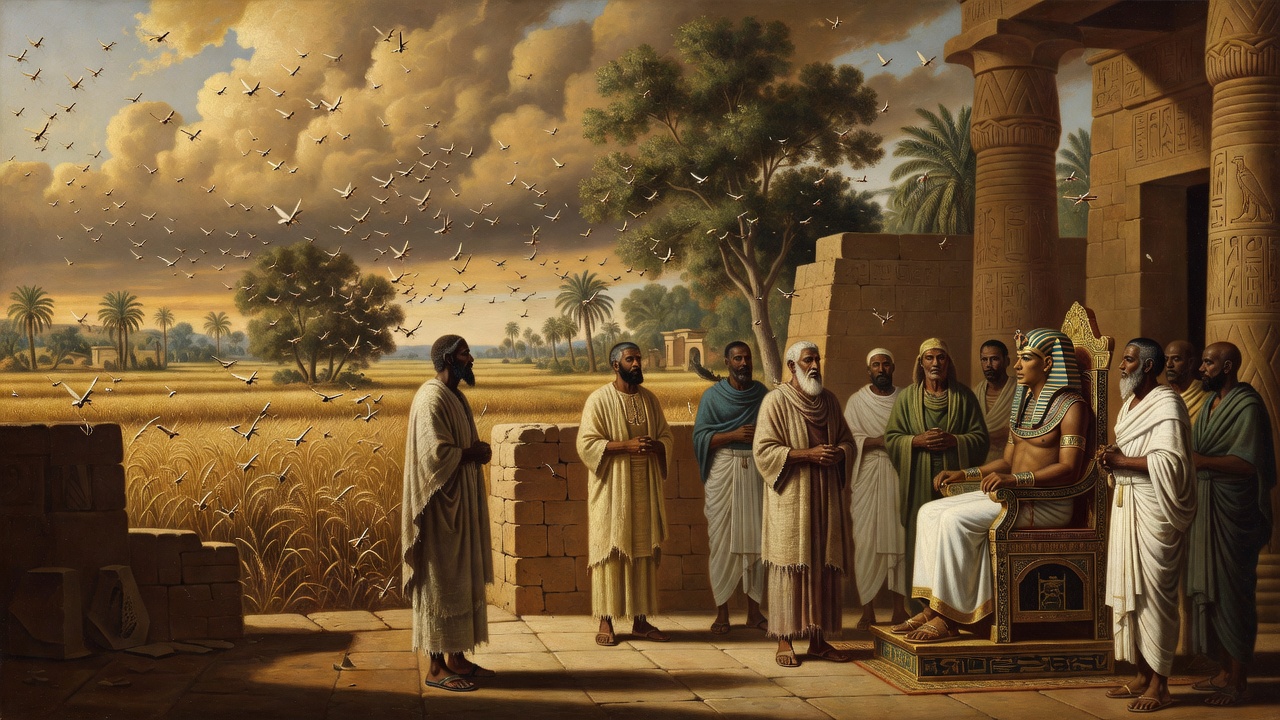
Locusts and Darkness in Egypt
- The conversations in this chapter are among the interviews that one reference places at Zoan, the residence of the Pharaoh of the Exodus. That reference identifies him as probably Menephtah I, the fourteenth and eldest surviving son of Rameses II, while noting that it is still a question whether Seti II or his father Menephtah was that Pharaoh.Sources: Pharaoh (of the Exodus) · the Bible text itself
- When Pharaoh asked that the locusts be removed, a very strong west wind carried them into the Red Sea, and not a single locust remained in Egypt. That sea extends about 1,400 miles along the west coast of Arabia and separates Asia from Africa; at Ras Mohammed, about 200 miles from its northern end, it divides into the Gulf of Suez on the west and the Aelanitic Gulf, now the Bahr el-Akabah, on the east.Sources: Red Sea · the Bible text itself
- Aaron went with Moses whenever the two stood before Pharaoh. He was the eldest son of Amram and Jochebed, born in Egypt three years before Moses, and he had been sent to meet his brother and cooperate with him in bringing about the Exodus.Sources: Aaron · the Bible text itself
Notes written with AI assistance from open sources (Theographic Bible Metadata, CC BY-SA 4.0; Easton’s Bible Dictionary, public domain) and reviewed before publishing.
Places in this chapter
Only places identified with high confidence are shown (90% or more according to the scholarly sources compiled by OpenBible). Period map: DARE (Digital Atlas of the Roman Empire), CC BY 4.0; modern map: © OpenStreetMap contributors; places: OpenBible.info (CC BY 4.0).
Credits and license for this translation
Luda yã takada kↄ̃n Bokobaru yão
The New Testament and portions of the Old Testament in the Bokobaru language of Nigeria
copyright © 2005 SIM International
Language: Bokobaru
Translation by: SIM
This translation text is made available to you under the
terms of the Creative Commons License: Attribution-Noncommercial-No Derivative Works.
( http://creativecommons.org/licenses/by-nc-nd/3.0/ )
In addition, you have permission to port the text to different file formats, as long as you
do not change any of the text or punctuation of the Bible.
You may share, copy, distribute, transmit, and extract portions
or quotations from this work, provided that you include the above copyright
information:
You must give Attribution to the work.
You do not sell this work for a profit.
You do not make any derivative works that change any of the actual words or punctuation of the Scriptures.
Permissions beyond the scope of this license may be
available if you contact
us with your request.
This translation is made available to you under the terms of the
Creative Commons Attribution-Noncommercial-No Derivatives license 4.0.
You may share and redistribute this Bible translation or extracts from it in any format, provided that:
You include the above copyright and source information.
You do not sell this work for a profit.
You do not change any of the words or punctuation of the Scriptures.
Pictures included with Scriptures and other documents on this site are licensed just for use with those Scriptures and documents.
For other uses, please contact the respective copyright owners.
2014-09-22
Source: http://ebible.org/bus/ · eBible.org