Exodus 1
Kitabu ka Kanu · Tap a verse to see its cross-references.
About this book
About Exodus
- Easton's Bible Dictionary (1897) dates Israel's departure from Egypt to about 1490 B.C., four hundred and eighty years before Solomon's temple was built. How long they had sojourned there is disputed: Exodus 12:40 gives four hundred and thirty years, Genesis 15 speaks of about four hundred, and the Greek and Samaritan versions also count the years in Canaan, so some reckon only two hundred and fifteen years in Egypt.Sources: Easton: Exodus
- Easton's Bible Dictionary (1897) does not name the author of Exodus. The entry on Moses says Jacob and his sons went down into Egypt, probably about three hundred and fifty years before Moses was born, and that a Hyksos king, from a pastoral Semitic people of Asia who then ruled Egypt, settled them in Goshen. Moses later spent forty years in Midian, where that people pastured flocks on the Sinai peninsula, and became the son-in-law of Jethro, priest of Midian.Sources: Moses · Easton: Exodus · Midian · Jethro
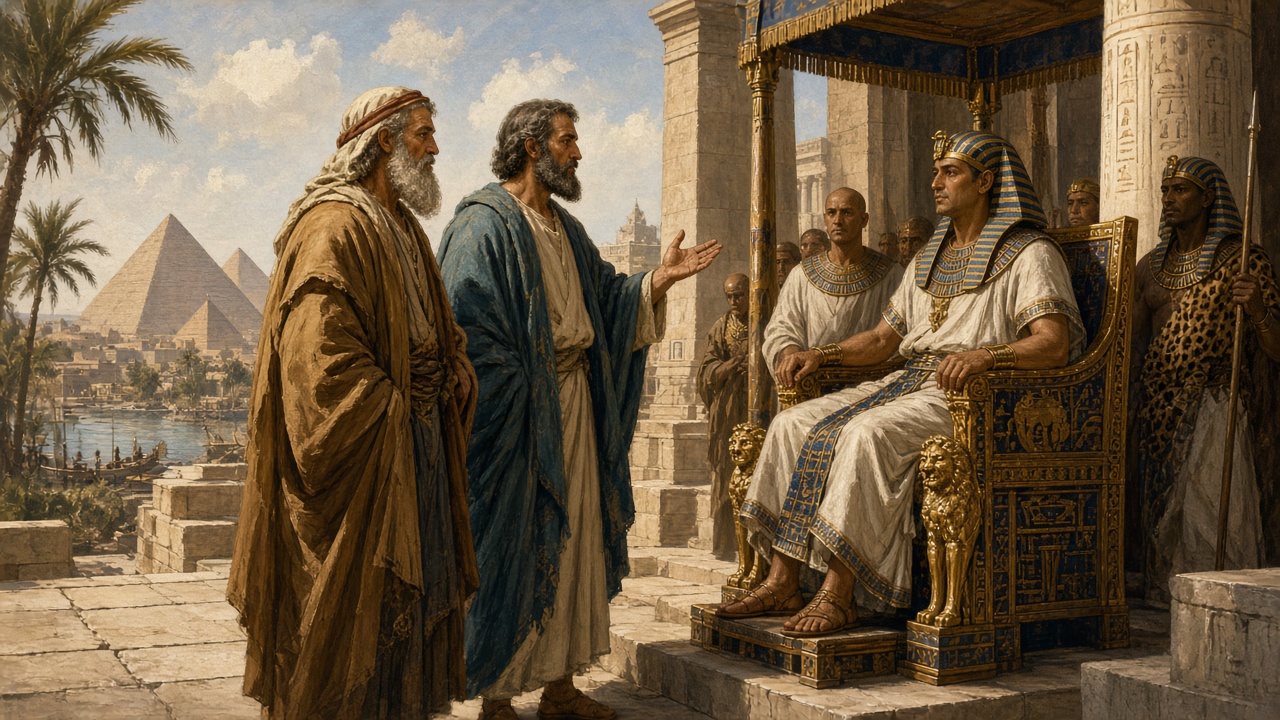
- Who was Pharaoh at the departure is also disputed. Easton's Bible Dictionary (1897) calls him probably Menephtah I, the fourteenth and eldest surviving son of Rameses II, who lived at Zoan and met Moses and Aaron there, while noting that some favor Seti II, whose reign began peacefully and ended in sudden disaster.Sources: Pharaoh (of the Exodus)
- The plagues, Easton writes, loosened Pharaoh's hold, and the Passover was instituted as a perpetual memorial, with the lamb's blood sprinkled on the doorposts. In the third month the people reached Mount Sinai, also called Horeb, about one hundred and fifty miles from the Red Sea, and camped there about a year. The last twenty-two chapters of Exodus record that stay, including the tabernacle, whose Holy Place had no opening for daylight and was lit only by the golden candlestick.Sources: Easton: Exodus · Mount Sinai · Holy Place
- Aaron, eldest son of Amram and Jochebed, was born in Egypt three years before Moses and was sent to meet him so the two could work together. At Rephidim, Joshua, also born in Egypt, commanded Israel's fighters when the Amalekites, a pastoral people living between the Dead Sea and the Red Sea, tried to bar their way.Sources: Aaron · Joshua · Amalek
Notes written with AI assistance from open sources (Theographic Bible Metadata, CC BY-SA 4.0; Easton’s Bible Dictionary, public domain) and reviewed before publishing.
Kanu kəwurɛnɛ aka Yisrayel Misira
Aka Yisrayel kəyi kəŋan dacar Misira
1Mewe ma awut a Yakuba mɔ mmɛ, aŋɛ ŋanader Misira kɔ nkɔn Yakuba mɔ. Fəp faŋan ŋanakɛrɛnɛ aka wɔlɔ waŋan disrɛ fəp: 2Ruben, Simeyɔŋ, Lewy, kɔ Yuda, 3Isakar, Sabulon, kɔ Beŋyamin, 4Dan, Naftali, Kadu kɔ Asɛr. 5Yuruya ya Yakuba fəp ŋanayi afum wəco camət-mɛrəŋ (70). Tɛnatəŋnɛ Isifu nkɔn pəyi tɛm tatɔkɔ Misira. 6Kɔ Isifu ende pəfi kɔ awɛnc aŋa, kɔ danapa dadɔkɔ fəp. 7Kɔ aka Yisrayel ŋande ŋasɔtɔ dokombəra, kɔ ŋala, kɔ kənay kəŋan kəsɔtɔ sɔkət kəcepərər. K'atɔf ŋa Misira ŋɛlarɛ ŋa.
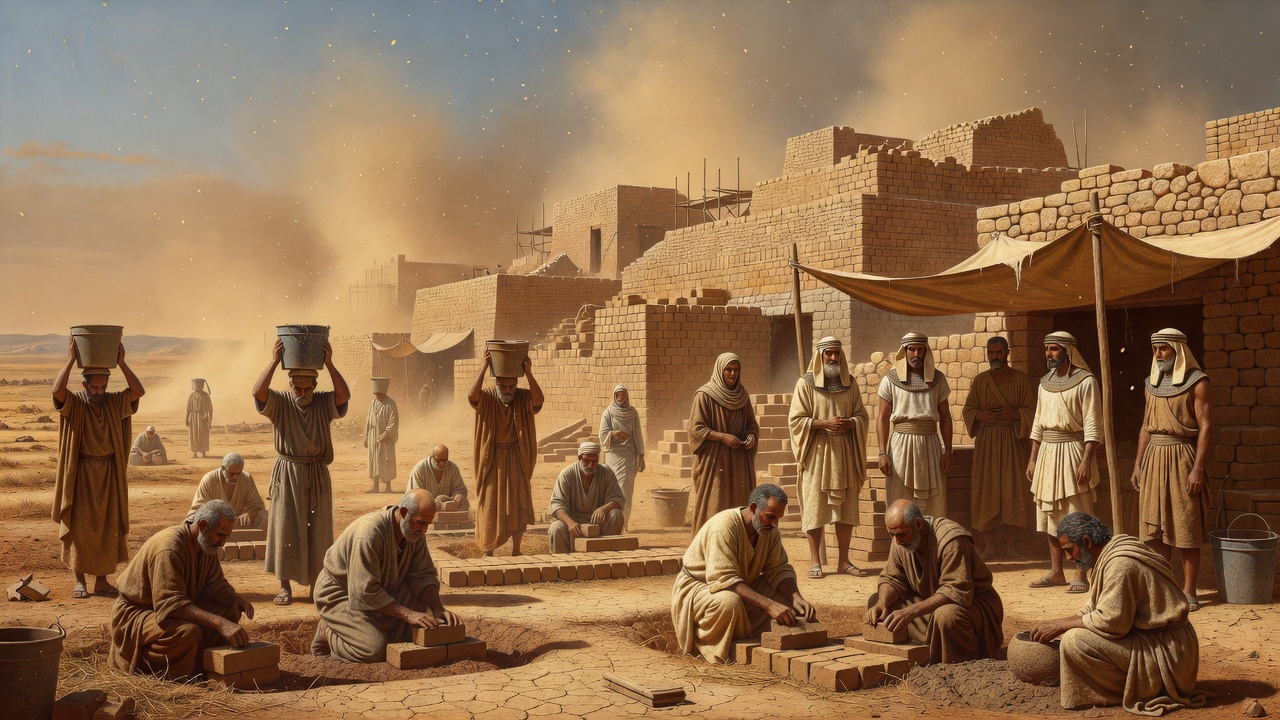
8Ntɛ tɛm tɔlɔma tencepər mɔ, kɔ fum wəlɔma nwɛ ɛnatɔcərɛ Isifu mɔ, ende pəyɔnɛ wəbɛ Misira. 9Kɔ wəbɛ nwɛ ende pəloku afum ɔn: «Nənəŋk, afum aka Yisrayel ŋala, kɔ ŋayɔ sɔkət ŋatas su. 10Mɛnɛ patɛn kəcərɛ kəkɔt, ntɛ andeyamsər ŋa dokombəra daŋan mɔ. Kɔ pəyɔnɛ fɛ ti-ɛ, kɔ kəwan kəyɛfɛ-ɛ, ŋantam kəmar aterɛnɛ asu kəsutɛnɛ, kɔ telip-ɛ, ŋamulpər su ŋawur atɔf ŋaŋɛ.» 11Awa, kɔ aka Misira ŋancəmbər akiriŋ aŋɛ ŋanakɔsɔŋəs aka Yisrayel yɛbəc ya dacar mɔ. Ti disrɛ, kɔ aka Yisrayel ŋancəmbər sədare sa Pitɔm kɔ Ramsɛs, pəyɔnɛ di dəkəmɛŋk da firawona. 12Mba pɔkɔt pa firawona pɛnakɔt fɛ few, bawo tatɔkɔ anctɔrəs aka Yisrayel mɔ, ti tɔ ŋanckom, ŋacla, ŋacwɔkələs dəkəndɛ daŋan, kɔ tɔsɔŋɛ pater aka Yisrayel pəpɔŋ. 13Kɔ aka Misira ŋancəmbər aka Yisrayel yɛbəc ya dacar yeyeŋki. 14K'aka Misira ŋandoktəsɛ aka Yisrayel doru yɛbəc yeyeŋki: Yɛbəc ya dos, ya birik, ya dalɛ fəp. Yɛbəc ya dacar yayɔkɔ yɔ ŋanacəmbər aka Yisrayel.
Firawona ɔntɔrəs aka Yisrayel
15Kɔ wəbɛ wəka Misira ende pəloku aran abaŋ awut aHebəre, pacwe wəkin «Sifra,» kɔ wəka mɛrəŋ «Puwa.» 16Kɔ wəbɛ wəka Misira oloku ŋa: «Kɔ nənde kəcbaŋ aran aHebəre awut-ɛ, nəcmɔmən ŋa kiriŋ. Nwɛ ɔŋyɔnɛ wərkun mɔ, nədif kɔ, nwɛ ɔŋyɔnɛ wəran mɔ, nəsak wəkakɔ pəyi doru.» 17Mba kɔ aran abaŋ awut aŋɛ ŋanesɛ Kanu, ŋayɔ fɛ ntɛ wəbɛ ka Misira ɛnaloku ŋa mɔ, kɔ ŋance awut arkun kɔ ŋayi doru. 18Kɔ wəbɛ wəka Misira ewe aran abaŋ awut aŋɛ, k'eyif ŋa: «Ta ake tɔ nəyɔnɛ tantɛ-ɛ? Ta ake tɔ nəncenɛ awut aŋan arkun ŋacyinɛ doru-ɛ?» 19Kɔ abaŋ awut aŋɛ ŋaloku firawona: «Ntɛ tɔsɔŋɛ ti mɔ, aran aHebəre ŋayi fɛ pəmɔ aran aka Misira. Aran aHebəre ŋayeŋk mɛnc dəŋkom, ŋaŋlip kəkom a səna abaŋ awut səcbəp di.»
20Kɔ Kanu kəyɔnɛ abaŋ awut aŋɛ pətɔt, k'aka Yisrayel ŋala, kɔ ŋasɔtɔ sɔ sɔkət kɔ ŋancepərər. 21Abaŋ awut aŋɛ ŋananesɛ Kanu, itɔ Kanu kənasɔŋɛ ŋa dokombəra. 22Kɔ firawona ende pəsom afum ɔn fəp: «Nəsumpər awut arkun aHebəre fəp, aŋɛ ande packom mɔ, nəcgbal ŋa nde kəŋgbɔkɔ ka Nil, mba nəcsak gbəcərəm awut aran ŋayi doru.»
Did you know?
Israel's Growth and Oppression in Egypt
- Easton's Bible Dictionary (1897) says that the Hebrews in Egypt were under Joseph's protection for about seventy years, and that after his death their condition changed only gradually. It notes that the new king who did not know Joseph was generally supposed to be Aahmes I, whom Josephus calls Amosis, though discoveries of that time led the dictionary to conclude that he was Seti, after the Hyksos were driven out and the former dynasty restored.Sources: Pharaoh · the Bible text itself
- Set to forced labor, the Israelites built Pithom and Rameses as store cities for Pharaoh. Easton's Bible Dictionary (1897) explains Pithom as Egyptian Pa-Tum, 'house of Tum,' the sun-god, and calls it a treasure city built for Pharaoh Rameses II; it identifies the site with Tell-el-Maskhuta, where ruins of supposed grain-chambers were reported in 1883.Sources: Pithom · Raamses · the Bible text itself
- Pharaoh then commanded that every son born to the Hebrews be thrown into the river. Easton's Bible Dictionary (1897) notes that the name Nile does not appear in Scripture; the Old Testament calls that river Sihor, 'the black stream,' or simply 'the river,' as in Exodus 1:22.Sources: Nile · the Bible text itself
Notes written with AI assistance from open sources (Theographic Bible Metadata, CC BY-SA 4.0; Easton’s Bible Dictionary, public domain) and reviewed before publishing.
Places in this chapter
- Egypt · 30.129, 31.308 · verses 1, 5, 8, 15, 17, 18
- Nile · Today: Nile River · 31.465, 30.367 · verse 22
Only places identified with high confidence are shown (90% or more according to the scholarly sources compiled by OpenBible). Period map: DARE (Digital Atlas of the Roman Empire), CC BY 4.0; modern map: © OpenStreetMap contributors; places: OpenBible.info (CC BY 4.0).
Credits and license for this translation
Kitabu ka Kanu
Portions of the Holy Bible in the Baga Sitemu language of Guinea
Des portions de la Sainte Bible dans la langue Baga Sitemu de Guinée
copyright © 2015 Pioneer Bible Translators
Language: Baga Sitemu
Translation by: Traducteurs Pionniers de la Bible
Contributor: Pioneer Bible Translators
This translation is made available to you under the terms of the
Creative Commons Attribution Share-Alike license 4.0.
You have permission to share and redistribute this Bible translation in any format and to make reasonable revisions and adaptations of this translation, provided that:
You include the above copyright and source information.
If you make any changes to the text, you must indicate that you did so in a way that makes it clear that the original licensor is not necessarily endorsing your changes.
If you redistribute this text, you must distribute your contributions under the same license as the original.
Pictures included with Scriptures and other documents on this site are licensed just for use with those Scriptures and documents.
For other uses, please contact the respective copyright owners.
Note that in addition to the rules above, revising and adapting God's Word involves a great responsibility to be true to God's Word. See Revelation 22:18-19.
2025-04-29
Source: http://ebible.org/bsp/ · eBible.org