Psalms 87
Luda yã takada kũ Bisã yão · Tap a verse to see its cross-references.
Zaiↄ̃ bi Luda wɛ̃tɛmɛ
Kora burinↄ lɛ̀ɛ.
1Luda a wɛ̃tɛ kàtɛ
kpi kũ à kú adona musu,
2Dikiri ye Zaiↄ̃ bĩnilɛnↄi
de Yakubu burinↄ wɛ̃tɛ kparanↄla pínki.
3Luda wɛ̃tɛ,
Luda gakuriyã ò n musu à pì:
4Mani Misilanↄ kũ Babilↄnudenↄ da
gbɛ̃ kũ ò ma dↄ̃nↄ tɛ́.
Filisitininↄn kú a gũn dↄ
kũ Tayadenↄ kũ Etiopianↄ.
Oni pi, ò gbɛ̃ birenↄ ì gwemɛ.
5Zaiↄ̃ yã musu oni pi:
Ò wãanɛ kũ wãanɛo ì gwemɛ,
Luda Musude mɛ́ àdi a zĩni pɛ́tɛ gíngin.
6Tó Dikiri tɛn gbɛ̃nↄ tↄ́ da takadan,
ani pi: Ò gbɛ̃ dí ì gwemɛ.
7Lɛ̀sirinↄ kũ ũwãrinↄ ń pínki ò pi:
Ó manakɛ pínki dì bo Zaiↄ̃mɛ.
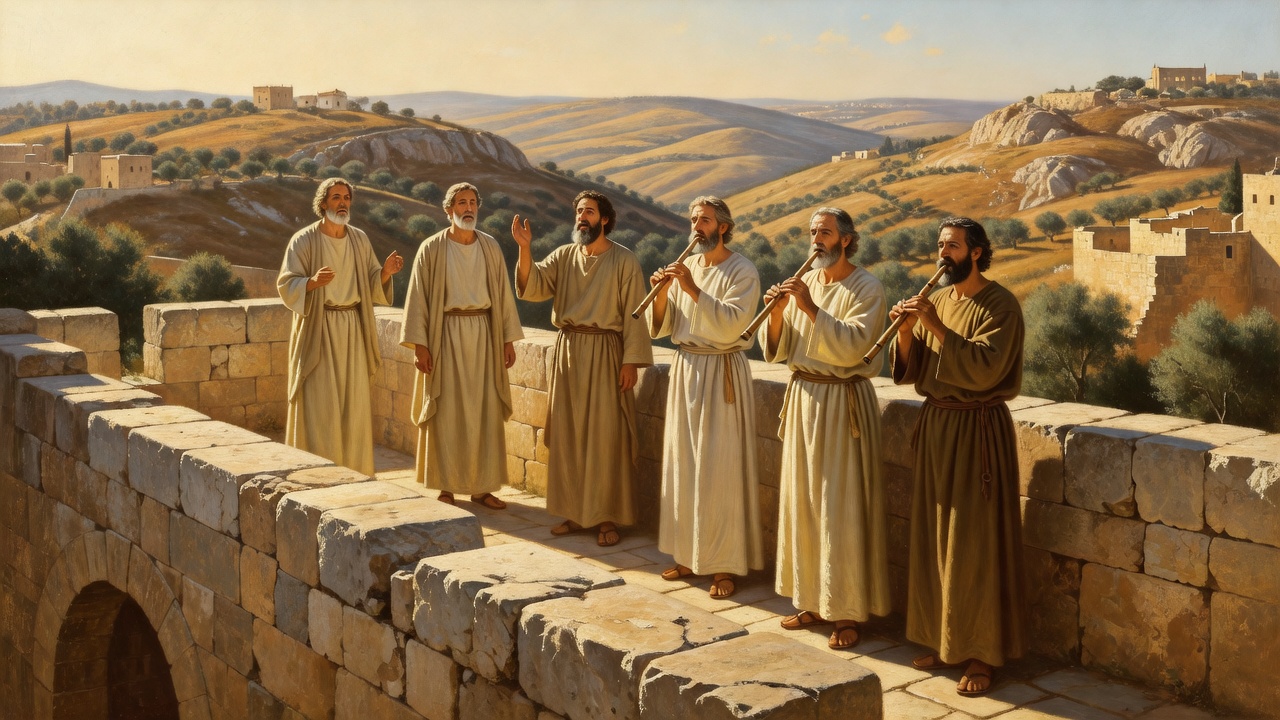
Did you know?
Zion and the Nations
- In Psalm 87, foreign and historically rival regions—including Babylon, Philistia, Tyre, and Cush—are depicted as being registered as native citizens born in Zion, the city of God.Sources: the Bible text itself · Zion · Tyre · Babylon
- The name 'Rahab' in verse 4 is a poetic Hebrew term meaning insolence or pride, used in biblical poetry as a symbolic designation for Egypt.Sources: Rahab · the Bible text itself
- The psalm is attributed to the 'sons of Korah,' a Levitical group that provided musical leadership in Jerusalem centuries after their ancestor Korah led a rebellion in the wilderness.Sources: Korah (Levite) · the Bible text itself
Notes written with AI assistance from open sources (Theographic Bible Metadata, CC BY-SA 4.0; Easton’s Bible Dictionary, public domain) and reviewed before publishing.
Places in this chapter
- Zion · Today: Jerusalem · 31.777, 35.234 · verses 2, 5
- Babylon · 32.543, 44.422 · verse 4
- Cush · Today: Cush 1 · 16.935, 33.751 · verse 4
- Egypt · 30.129, 31.308 · verse 4
- Jerusalem · 31.777, 35.234 · verses 4, 6, 7
- Philistia · 31.664, 34.546 · verse 4
- Tyre · 33.271, 35.196 · verse 4
Only places identified with high confidence are shown (90% or more according to the scholarly sources compiled by OpenBible). Period map: DARE (Digital Atlas of the Roman Empire), CC BY 4.0; modern map: © OpenStreetMap contributors; places: OpenBible.info (CC BY 4.0).
Credits and license for this translation
Luda yã takada kũ Bisã yão
Portions of the Holy Bible in the Busa language of Nigeria
copyright © 2005 SIM International
Language: Bisã (Busa)
Translation by: SIM
This translation text is made available to you under the
terms of the Creative Commons License: Attribution-Noncommercial-No Derivative Works.
( http://creativecommons.org/licenses/by-nc-nd/3.0/ )
In addition, you have permission to port the text to different file formats, as long as you
do not change any of the text or punctuation of the Bible.
You may share, copy, distribute, transmit, and extract portions
or quotations from this work, provided that you include the above copyright
information:
You must give Attribution to the work.
You do not sell this work for a profit.
You do not make any derivative works that change any of the actual words or punctuation of the Scriptures.
Permissions beyond the scope of this license may be
available if you contact
us with your request.
This translation is made available to you under the terms of the
Creative Commons Attribution-Noncommercial-No Derivatives license 4.0.
You may share and redistribute this Bible translation or extracts from it in any format, provided that:
You include the above copyright and source information.
You do not sell this work for a profit.
You do not change any of the words or punctuation of the Scriptures.
Pictures included with Scriptures and other documents on this site are licensed just for use with those Scriptures and documents.
For other uses, please contact the respective copyright owners.
2014-10-10
Source: http://ebible.org/bqp/ · eBible.org