2 Chronicles 10
Luda yã takada kũ Bisã yão · Tap a verse to see its cross-references.
1Roboɑmu u dɑ Sikɛmuɔ. Domi Isirelibɑ kpurowɑ bɑ dɑ mi bu kɑ nùn ko sunɔ. 2N deemɑ Yeroboɑmu, Nɛbɑtin bii, u rɑɑ kpikiru suɑ Sɑlomɔɔn sɔ̃ u dɑ u wɑ̃ɑ Egibitiɔ. Sɑnɑm mɛ u nuɑ Roboɑmu u bɑndu di, yerɑ u gɔsirɑmɑ Egibiti min di. 3Yerɑ bɑ nùn sɔmɔ gɔriɑ bɑ nɛɛ, u nɑ. Ye u tunumɑ, yerɑ wi kɑ Isirelibɑn bwese kɛri wɔkuru bɑ mɛnnɑ bɑ dɑ bɑ Roboɑmu sɔ̃ɔwɑ bɑ nɛɛ, 4wunɛn tundo u sun yoo sɔmɑ koosiɑ, mɑ yɑ sun buniɛ nge kɛtɛn sugu. Adɑmɑ wunɛ ɑ sun tu kɑwo kpɑ su nun swĩi.
5Mɑ u bu sɔ̃ɔwɑ u nɛɛ, i ginɑ doo. Ǹ n kuɑ sɔ̃ɔ itɑ kpɑ i wurɑmɑ.
Mɑ tɔn be, bɑ doonɑ. 6Yerɑ Roboɑmu u Isirelibɑn bukurobu mɛnnɑ win mi, be bɑ rɑ rɑɑ win tundo Sɑlomɔɔ bwisi kɛ̃. Mɑ u bu bikiɑ u nɛɛ, bwisi yirɑ̀ i mɑn kɛ̃mɔ n tɔn be sɔ̃.
7Mɑ bɑ nùn wisɑ bɑ nɛɛ, ɑ̀ n wurɑ sɑɑ gisɔn di, ɑ tɔn be nɔɔri kpɑ ɑ ko ye bɑ nun bikiɑ, kpɑ ɑ bu wisi kɑ kĩru, bɑ ko n sɑ̃ɑwɑ wunɛn tɔmbu sere kɑ bɑɑdommɑɔ.
8Adɑmɑ Roboɑmu wi, u ǹ bukuro ben gɑri wure. Win sɑɑrɑsi kɑ be u biru di sɑnnu, berɑ u bwisi bikiɑ. 9U bu sɔ̃ɔwɑ u nɛɛ, bwisi yirɑ̀ i mɑn kɛ̃mɔ n kɑ tɔn be wisi be bɑ nɛɛ, n bu yoo sɔmɑ kɑwo ye nɛn tundo u rɑɑ bu koosiɑ.
10Yerɑ bɑ nùn wisɑ bɑ nɛɛ, ɑ bu sɔ̃ɔwɔ ɑ nɛɛ, wunɛn niki bii piibu gɑ wunɛn tundon pɔrɑ bɔɔrum kere. 11Wunɛn tundo u rɑɑ bu yoo sɔmɑ koosiɑ. Mɛyɑ kɑɑ mɑɑ tu sosi. Wunɛn tundo u rɑɑ bu sɛɛyɑsiɑ kɑ yii sɛnnu. Mɛyɑ kɑɑ mɑɑ bu sɛɛyɑsiɑ kɑ som kpɑki.
12Yerɑ Yeroboɑmu kɑ tɔn be kpuro bɑ nɑ Roboɑmun mi sɔ̃ɔ itɑse te, nge mɛ u rɑɑ geruɑ. 13Roboɑmu u tɔn be wisɑ kɑ dɑm. U ǹ bukuro ben gɑri yi gɑrisi gɑ̃ɑnu. 14Adɑmɑ win sɑɑrɑsi ben bwisiyɑ u kɑ sɔmburu kuɑ, mɑ u nɛɛ, nɛn tundo u rɑɑ bɛɛ yoo sɔmɑ koosiɑ. Adɑmɑ tɛ̃, nɛgirɑ tɑ koo kerɑ. U rɑɑ bɛɛ sɛɛyɑsiɑ kɑ yii sɛnnu. Adɑmɑ nɛ, som kpɑkiyɑ kon kɑ bɛɛ sɛɛyɑsiɑ.
15Nge mɛyɑ Roboɑmu u yinɑ u tɔn begii swɑɑ dɑki, domi Yinni Gusunɔwɑ u derɑ n koorɑ mɛ, kpɑ win gɑri yi kɑ koorɑ yi u rɑɑ Yeroboɑmu, Nɛbɑtin bii sɔ̃ɔwɑ sɑɑ Akiyɑ, Silogiin nɔɔn di.
Roboɑmu
u kuɑ Yudɑbɑn sunɔ
16Ye Isirelibɑ kpuro bɑ wɑ mɑ sinɑ boko u ǹ ben gere swɑɑ dɑki, yerɑ bɑ nùn sɔ̃ɔwɑ bɑ nɛɛ,
mbɑ n sun mɔɔsinɛ bɛsɛ kɑ Dɑfidi, Isɑin bii.
Sɑ ǹ mɑɑ bɔnu gɑɑ mɔ kɑ wi.
Bɛsɛ Isirelibɑ i de su gɔsirɑ
su wurɑ bɛsɛn yɛnusɔ.
Wunɛ Roboɑmu,
ɑ wunɛn bweserun wunɑnɔ koowo.
Mɑ Isireli be, bɑ gɔsirɑ bɑ wurɑ ben yɛnusɔ. 17Mɑ Roboɑmu u kuɑ Yudɑbɑ tɔnɑn sunɔ. 18Sɑɑ ye sɔɔrɑ u Hɑdorɑmu gɔrɑ Isirelibɑn mi, wi u rɑ bu kpɑre bu kɑ wɔ̃ɔ gobi mwɑ. Mɑ bɑ nùn kpenu kɑsukɑ bɑ go. Yerɑ n derɑ Roboɑmun tii u win tɑbu kɛkɛ wɔri fuuku fuuku u dɑ Yerusɑlɛmuɔ. 19Nge mɛyɑ Isirelibɑn bwese kɛri wɔku te, tɑ kɑ Dɑfidin yɛnugibu kɑrɑnɑ sere kɑ gisɔ.
Did you know?
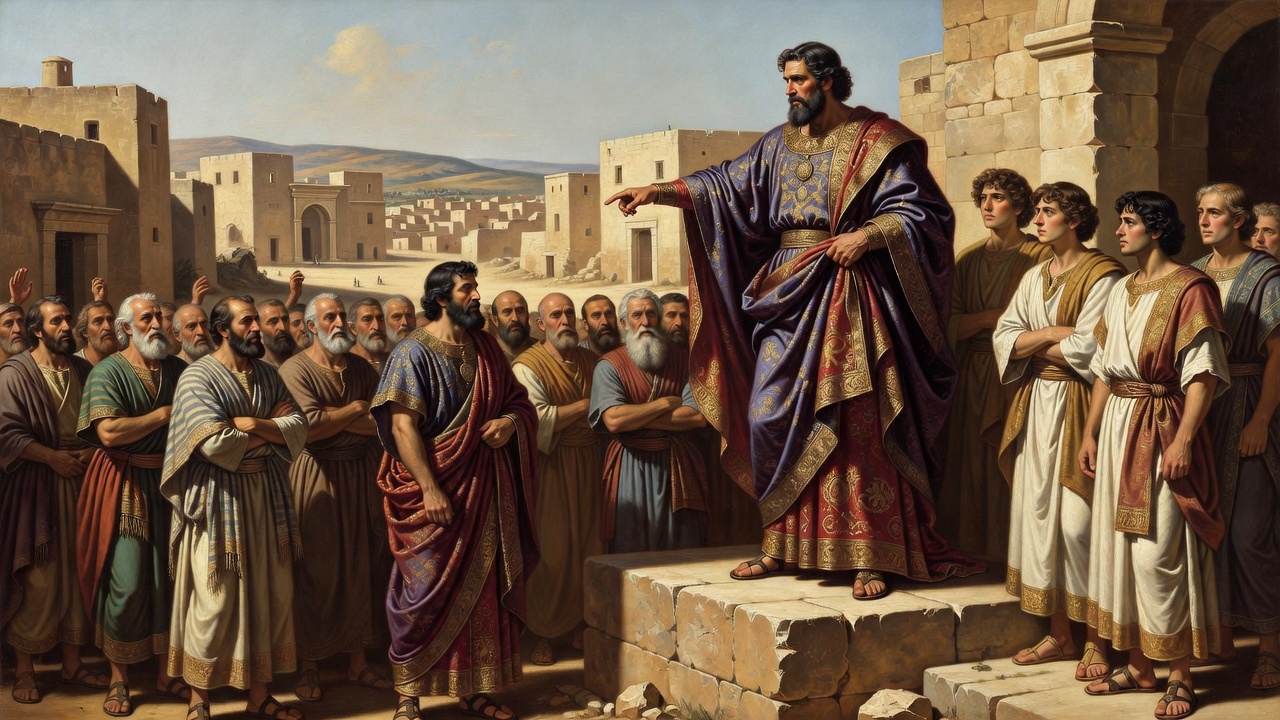
The Division of the Kingdom
- Rehoboam traveled to Shechem to be confirmed as king, where the assembly demanded relief from the heavy forced labor and taxation imposed under Solomon. Jeroboam, a former supervisor of forced labor who had fled to Egypt, returned to represent the people's appeal.Sources: the Bible text itself · Rehoboam · Jeroboam
- Rehoboam rejected the counsel of his father's veteran elders to speak kindly to the people, choosing instead the harsh answer suggested by the young men who grew up with him. The biblical narrative notes that this turn of events fulfilled the prophecy delivered by Ahijah the Shilonite.Sources: the Bible text itself · Ahijah
- When the northern tribes revolted from the house of David, Rehoboam sent Hadoram, his superintendent over forced labor, to address them. The Israelites stoned Hadoram to death, forcing Rehoboam to flee in his chariot to Jerusalem.Sources: the Bible text itself · Adoniram
Notes written with AI assistance from open sources (Theographic Bible Metadata, CC BY-SA 4.0; Easton’s Bible Dictionary, public domain) and reviewed before publishing.
Places in this chapter
- Shechem · Today: Tell Balatah · 32.214, 35.282 · verse 1
- Egypt · 30.129, 31.308 · verse 2
- Shiloh · Today: Khirbet Seilun · 32.056, 35.290 · verse 15
- Jerusalem · 31.777, 35.234 · verse 18
Only places identified with high confidence are shown (90% or more according to the scholarly sources compiled by OpenBible). Period map: DARE (Digital Atlas of the Roman Empire), CC BY 4.0; modern map: © OpenStreetMap contributors; places: OpenBible.info (CC BY 4.0).
Credits and license for this translation
Luda yã takada kũ Bisã yão
Portions of the Holy Bible in the Busa language of Nigeria
copyright © 2005 SIM International
Language: Bisã (Busa)
Translation by: SIM
This translation text is made available to you under the
terms of the Creative Commons License: Attribution-Noncommercial-No Derivative Works.
( http://creativecommons.org/licenses/by-nc-nd/3.0/ )
In addition, you have permission to port the text to different file formats, as long as you
do not change any of the text or punctuation of the Bible.
You may share, copy, distribute, transmit, and extract portions
or quotations from this work, provided that you include the above copyright
information:
You must give Attribution to the work.
You do not sell this work for a profit.
You do not make any derivative works that change any of the actual words or punctuation of the Scriptures.
Permissions beyond the scope of this license may be
available if you contact
us with your request.
This translation is made available to you under the terms of the
Creative Commons Attribution-Noncommercial-No Derivatives license 4.0.
You may share and redistribute this Bible translation or extracts from it in any format, provided that:
You include the above copyright and source information.
You do not sell this work for a profit.
You do not change any of the words or punctuation of the Scriptures.
Pictures included with Scriptures and other documents on this site are licensed just for use with those Scriptures and documents.
For other uses, please contact the respective copyright owners.
2014-10-10
Source: http://ebible.org/bqp/ · eBible.org