Psalms 144
Bibeli Luayãtaalá · Tap a verse to see its cross-references.
Wabikɛa misia yã́ musu
Davidi lɛ.
1Má Dii ma gbɛsi sáaukpa,
ì zĩkaa ↄ na damɛɛ,
ì to ma ↄ àↄ kai vĩ zĩ guu.
2Ɔ̃mɛ ma ulɛkĩi ũ, ì gbɛ̃kɛkɛmɛɛ,
ↄ̃mɛ ma zɛgikĩi ũ, ì ma suaba.
Ɔ̃mɛ ma sɛ̀ngbao pↄ́ mi mikpai ũ,
ì to buiↄ mikpaa.
3Dii, bↄ́n gbɛ̃nazĩna ũ an yã́ ìↄ dↄngui?
Bↄ́n ń ũ, ni laaidↄmái?
4Gbɛ̃nazĩna dɛ lán kàsafiiwaɛ,
aà wɛ̃ni ì gɛ̃zɛa lán uenawaɛ.
5Dii, ǹ n bɛ siilɛ ǹ pila,
ↄkã gbɛ̀sĩsĩↄwa aa súɛlɛbↄ.
6To lou pílɛpilɛ ǹ gbɛ̃́ↄ fãaa,
ka fã́ńgu, gili i gɛ̃ńgu.
7Ɔbↄ za musu ǹ ma kṹ.
Ma bↄ í zↄ̃ↄ guu,
ma si bui zĩ̀loↄwa.
8Yã pã oa mɛ́ ń lɛ́ pà,
aaì ↄlɛlɛ ń lɛ́ pã gbɛ̃ao.
9Lua, má lɛ̀ dafu sínɛ,
má n táasilɛ ń kúu bakwio.
10Ni to kíaↄ zĩble,
ni n zↄ̀blena Davidi bↄ fɛ̃n'ↄↄ lɛ́zĩ.
11Ma kũ ǹ ma bↄ bui zĩ̀loↄ guu,
yãpã oa mɛ́ ń lɛ́ pà,
aaì ↄlɛlɛ ń lɛ́ pã gbɛ̃ao.
12Wá nɛgↄ̃ɛↄ pɛ́lɛ ń ɛ̀waasokɛu lán lí pɛawa,
wá nɛnↄɛↄ aaↄ dɛ lán kibɛ gbɛ̀pɛlɛ kɛfɛnawa.
13Wá dↄ̃ↄ pa, aaↄ pↄ́pii vĩ,
wá pↄtuoↄ kↄ̃ lɛɛ ↄ̀aa sↄo,
aa ka ↄ̀aasↄsↄo lɛɛ kwi wá kpàsau.
14Wá zuↄ aso zↄ̃ↄ sɛ́sɛ.
Bĩ́igbooa aↄ kuo, lala'oa aↄ kuo,
búbuapɛa aↄ ku gãaɛ lↄo.
15Báaadeↄn gbɛ̃́ pↄ́ an kua dɛ màaↄ ũ.
Báaadeↄn gbɛ̃́ pↄ́ Dii dɛ ń Lua ũↄ ũ.
Did you know?
A King's Prayer for Deliverance and Prosperity
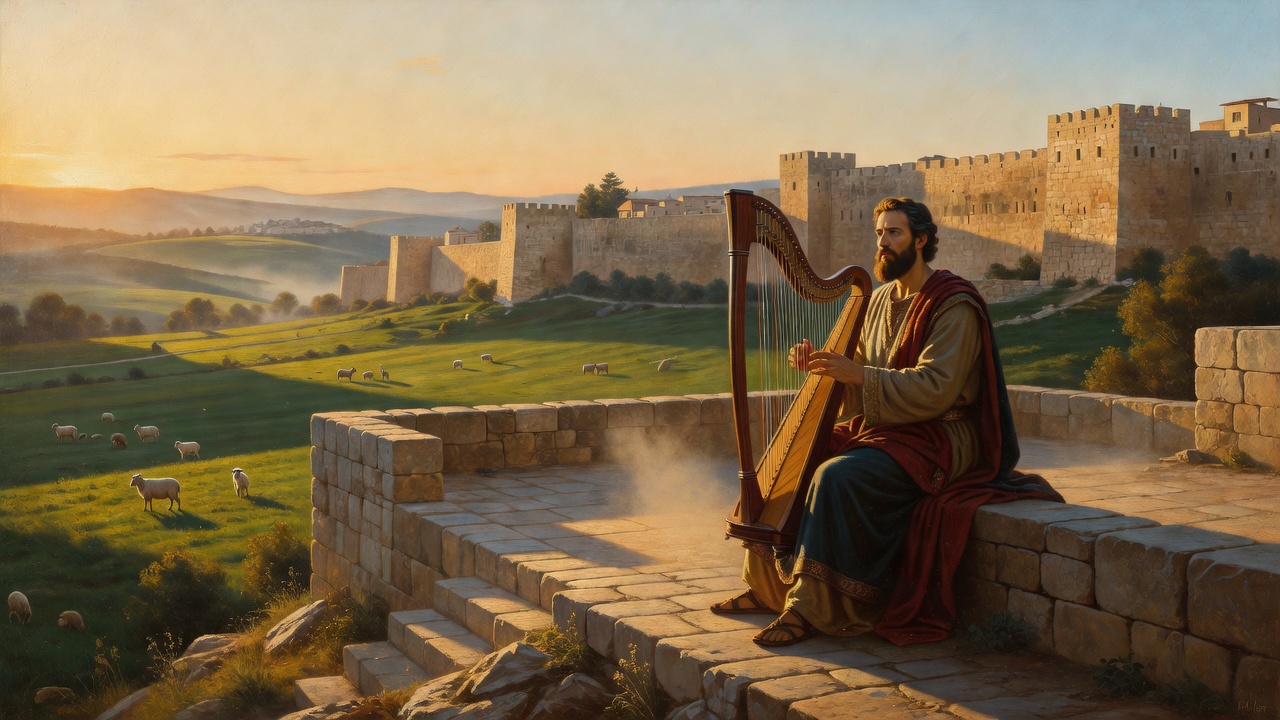
- The psalm is attributed to David, who combines prayers for military deliverance with musical praise, promising to sing a new song to God accompanied by a ten-stringed harp.Sources: David · the Bible text itself
- The text reflects on human fragility, describing man as a mere breath and human life as a passing shadow in contrast to divine majesty and power.Sources: the Bible text itself
- The concluding section envisions communal security and agricultural abundance, praying for thriving children, full storehouses, multiplying flocks, and cities with unbroken walls free from siege or captivity.Sources: the Bible text itself
Notes written with AI assistance from open sources (Theographic Bible Metadata, CC BY-SA 4.0; Easton’s Bible Dictionary, public domain) and reviewed before publishing.
Credits and license for this translation
Bibeli Luayãtaalá
The Holy Bible in the Boko language spoken in Benin and Nigeria
copyright © 2010 SIM International
Language: Boko
Translation by: SIM International
Boko Bibeli Luayãtaala
This translation, published by the SIM au Benin, was published in 2010.
If you are interested in obtaining a printed copy, please contact the SIM at ECWA/SIM H.Q., P.M.B. 2009, Jos, Plateau State, NIGERIA.
This translation text is made available to you under the
terms of the Creative Commons License: Attribution-Noncommercial-No Derivative Works.
( http://creativecommons.org/licenses/by-nc-nd/3.0/ )
In addition, you have permission to port the text to different file formats, as long as you
do not change any of the text or punctuation of the Bible.
You may share, copy, distribute, transmit, and extract portions
or quotations from this work, provided that you include the above copyright
information:
You must give Attribution to the work.
You do not sell this work for a profit.
You do not make any derivative works that change any of the actual words or punctuation of the Scriptures.
Permissions beyond the scope of this license may be
available if you contact
us with your request.
This translation is made available to you under the terms of the
Creative Commons Attribution-Noncommercial-No Derivatives license 4.0.
You may share and redistribute this Bible translation or extracts from it in any format, provided that:
You include the above copyright and source information.
You do not sell this work for a profit.
You do not change any of the words or punctuation of the Scriptures.
Pictures included with Scriptures and other documents on this site are licensed just for use with those Scriptures and documents.
For other uses, please contact the respective copyright owners.
2014-09-25
Source: http://ebible.org/bqcsim/ · eBible.org