Nehemiah 9
Bibeli Luayãtaalá · Tap a verse to see its cross-references.
Isailiↄ ń duunaↄ oa Luaɛ
1Mↄ doũpi gↄↄ baasↄo mɛ̀ndosaide zĩ́ Isailiↄ kↄ̃ kã̀aa ń lɛyeo ń zwã̀nkasaↄ dadaa, mɛ́ bùsu kákaa ń miu. 2Aa ńzĩa kɛ̃̀ buipãleↄwa ↄ̃ aa sĩa, aalɛ ń duunaↄ ń ń deziↄ yãvãikɛaↄ o. 3Aa gↄ̃̀ sĩa gu pↄ́ aa kuu, ↄ̃ wà Dii ń Lua ikoyã lá kyokɛ̀nɛ́ e mↄ̀ àaↄ̃, ↄ̃ aa ń duunaↄ ò aa kùlɛ Dii ń Luaɛ e mↄ̀ àaↄ̃. 4Levii buieↄ zɛ gba pↄ́ wa dànɛ́ musu, aa lɛzù Dii ń Luazi gbã́ugbãu. An tↄ́ↄn kɛ: Yesua, Bani, Kamiɛli, Sebania, Buni, Selebia, Bani ń Kenanio. 5Levii buiↄ Yesua ń Kamiɛlio ń Banio ń Asaniao ń Selebiao ń Odiao ń Sebaniao ń Petaiao mɛ̀: À fɛlɛ Dii á Lua táasilɛ! A ku za asĩnizĩ e gↄↄpii. To wà n tↄbↄ, asa n gawi dɛ lɛ́maama ń táasiola píi. 6Ḿmɛ ń Dii ũ ndo. N bàluma kɛ̀ ń n bɛ pↄ́ kú musuo ń pↄ́ pↄ́ kú weↄ píi. N dṹnia kɛ̀ ń pↄ́ pↄ́ kuwàↄ, n ísia kɛ̀ ń pↄ́ pↄ́ kú a guuↄ. Ni wɛ̃ni kpa ḿpiiwa, n bɛ malaika dasiↄ ì kúlɛnɛ.
7Ḿmɛ ń Dii Lua pↄ́ Ablaũ sɛ̀ ũ, n bↄaànↄ Ulu, Babiloni bùsuu, n aà tↄ́ lìlɛɛ̀ Ablahaũ. 8Ń è a n náai vĩ a sↄ̃ guu, ↄ̃ n mɛ̀ n bàa aↄ kuaànↄ, ńyↄ̃ Kanaa bùsu kpawà ń aà buiↄ, bùsu pↄ́ Itiↄ ń Amↄleↄ kuu ń Pɛliziↄ ń Yebusiↄ ń Giigasiↄ. Ɔ̃ n lɛ́ pↄ́ ń gbɛ̃̀ɛ̀pi kɛ̀, kɛ́ ń maa yã́i.
9N taasi pↄ́ wá deziↄ kɛ̀ Egipi è, n wii pↄ́ aa lɛ̀ Ísia Tɛ̃ai mà. 10N seelaↄ ń dabudabuↄ kɛ̀ Falaↄ̃ↄɛ, ń kpàaàzi ń aà ìwaↄ ń aà bùsudeↄ píi, asa ń dↄ̃ lá aa ãiapãsĩkɛ̀ ń wá deziↄ. N tↄbↄ̀ lá a ku e ń a gbãowa. 11N ísia zↄ̃̀ɛnɛ́, ↄ̃ aa táa'ò gugiiu aa bùa. N gbɛ̃́ pↄ́ pɛ̀lɛńziↄ zù ísiu, n ń zú lán gbɛwa í zↄ̃ↄpi guu. 12N dↄaa n gbɛ̃́ↄnɛ tɛlu guu fãanɛ, gwãasĩna sↄ̃ tɛ́ guu. N zɛ́ pↄ́ dɛ aa sɛ pùnɛ́.
13N pila Sinai gbɛ̀sĩsĩ musu, n yã'ònɛ́ za musu. N ikoyã zɛde sĩande kpàmá ń yãmaa pↄ́ ń dìlɛↄ. 14Ń tò aa kã́mabogↄↄ dↄ̃̀ ń pↄ́ ũ. N n yãdilɛaↄ ń n ↄtondↄkĩio ń n ikoyão dà n zↄ̀blena Mↄiziɛ, ↄ̃ a kpàmá. 15Kɛ́ nↄana ń dɛ́, n blɛ gbàɛnɛ́ za musu. Kɛ́ imi ń dɛ́, n ibↄ̀nɛ́ gbɛsiu. Bùsu pↄ́ n a lɛgbɛ̃̀nɛ́ n mɛ̀ ńyↄ̃ kpámá ↄ̃ ń ònɛ́ aa gɛ sí ń pↄ́ ũ.
16Ń beeo wá dezipiↄ kàamai vĩ, an swã́ gbãakũ̀, aaliↄ n yãdilɛaↄ kũao. 17Aa gì n yãmai, dabudabu pↄ́ ń kɛ̀nɛ́ↄ yã́ sã̀ńgu. An swã́ gbãakũ̀, aa bↄ̀ n yã́ kpɛ, aa dↄaana dìlɛ aà ɛa táńnↄ zↄbleu. Lua, ni gbɛ̃́ↄ duuna kɛ̃́má, ń sùuu vĩ ń sósobio, n pↄ lí pa kpaao, ń gbɛ̃kɛ vĩ zↄ̃ↄ, ↄ̃ ni pãkpańzio. 18Baa kɛ́ aa mↄkàsa lán gáaenawa, aa mɛ̀ ń dii pↄ́ ń bↄ́lɛ Egipin we, mɛ́ aa dↄ̀ɛnnↄ maamaa, 19ni pãkpańzi guwaiwaiuo n sósobi zↄ̃ↄ yã́i. Tɛlupi dↄ̀aa zɛ'ↄ̀lↄnɛ́ fãanɛ, tɛ́pi zɛ́ pↄ́ dɛ aa sɛ pùnɛ́ gwã́, i ń tó we ziio. 20N n Nisĩna kpàmá à yãdànɛ́. Ni ń tɛ̃́ manao. Kɛ́ imi lɛ́ ń dɛ, n ń gbá í. 21N ń gwá guwaiwaiu wɛ̃̀ bla, pↄe i kɛ̃́sãmáo. An pↄkasaↄ i yaao, an gbá i sɛ́sɛo.
22N buiↄ kpàmá ń ń bùsuↄ, n ń bùsupiↄ kpaalɛ̀nɛ́ míↄ. Aa Ɛsɛbↄ̃ kí Siↄ̃ bùsu sì ń pↄ́ ũ ń Basana kí Ogu pↄ́o. 23Ń tò an bui dasikũ̀ lán saanaↄwa, n gɛ̃ńnↄ bùsu pↄ́ ń ò ń maeↄnɛ aa gɛ sí ń pↄ́ ũ guu. 24Kɛ́ an nɛ́ↄ gɛ̀ bùsupi sì ń pↄ́ ũ, ↄ̃ n Kanaa pↄ́ kú weↄ kãdɛ̀nɛ́, n ń nánɛ́ ń ↄzĩ ń ń kíaↄ píi, n bùsupi buiↄ kpàmá, aa ń pↄeã kɛ̀má. 25Aa wɛ̃́lɛ bĩ́ideↄ sì ń tↄↄlɛ maao, aa kpɛ́ↄ sì ń pↄmaa pↄ́ kúuↄ ń lↄ̀ↄ pↄ́ wa yↄ̃̀ↄ ń vɛ̃ɛbuↄ ń kù kpɛ́ↄ ń lí pↄ́ wì a bɛ bleↄ à kɛ̀ zài. Aa pↄblè aa kã̀ aa mɛ̀kpa, aa namablè n ɛ̀fãai zↄ̃ↄ yã́i.
26Ń beeo an swã́ gbãakũ̀, ↄ̃ aa bↄ̀ n yã́ kpɛ, aa gì n ikoyãi. Aa ãnabi pↄ́ lɛdàmá aa sumaↄ dɛ̀dɛ, aa dↄ̀ɛnnↄ maamaa. 27N ń ná ń ibɛɛↄnɛ ń ↄzĩ, aa gbãamↄ̀nɛ́, ↄ̃ aa wiilɛ̀nzi ń taasikɛa guu. Kua za musu ń sìńnↄ n sósobi zↄ̃ↄ yã́i, n suabanaↄ dìlɛnɛ́, ↄ̃ aa ń bↄ́ ń ibɛɛpiↄ ↄzĩ. 28Tó aa niɛ è, aaì ɛa yã́ pↄ́ vãinɛ kɛɛ, ↄ̃ n ń kpá ń ibɛɛↄwa aa gbãablèmá. Aa ɛ̀a wiilɛ̀nzi, ↄ̃ kua za musu ń sìńnↄ, n ń bↄ́ gɛ̃n ũma'ũma n sósobi yã́i.
29N lɛdàmá aa zɛ ń n ikoyão, kási aa zazakũ̀ma, aaliↄ n yãdilɛaↄ kũao, n yã́ pↄ́ tó gbɛ̃́ kũa, aↄ ku a sabaiɛ. Aa zã̀ n yã́piↄwa aa mikpɛlìnɛ, an swã́ gbãakũ̀ aa gì n yãmai. 30N mɛnakɛ̀ńnↄ a wɛ̃ dasi, n Nisĩna yãdà ń ãnabiↄnɛ, ↄ̃ aa lɛdàomá, aai swãdↄio, ↄ̃ n ń ná buipãleↄnɛ ń ↄzĩ. 31N sósobi zↄ̃ↄ guu ni ń midɛo, Lua sùuude sósobiden n ũ, ni pãkpańzio.
32Ayãmɛto wá Lua, Lua zↄ̃ↄ gbãade pↄ́ ni tó ń mɛ séenata, lá n bàa ìↄ kúwanↄ gbɛ̃kɛ guu, taasi pↄ́ wá lé ń wá kíaↄ ń wá dↄaanaↄ ń wá sa'onaↄ ń wá ãnabiↄ ń wá deziↄ ń n gbɛ̃́ↄ píi za Asili kíaↄ gↄↄ e ń a gbão, ńsu to à kɛnɛ fɛ̃́nɛũo. 33Yã́ pↄ́ wá léↄ píi musu ń maa, baa kɛ́ wa yãvãikɛ̀, ń náai vĩ. 34Wá kíaↄ ń wá dↄaanaↄ ń wá sa'onaↄ ń wá deziↄ aai zĩkɛ ń ikoyãwao, aai laaidↄ ń yãdilɛaↄwao ge lɛ́ pↄ́ ń dàmáↄ. 35Baa gↄↄ pↄ́ aa ńzĩa vĩ, mɛ́ aa pↄmaa dasi pↄ́ n ń gbáↄ vĩ ń bùsu yàasa táaede pↄ́ ń kpàmáo, aai zↄblenɛo, aai mikɛ̃ ń yãvãiↄwao.
36Gwa! Zↄↄn wá ũ gbã. Bùsu pↄ́ ń kpà wá deziↄwa aa a libɛↄ ń a pↄmaaↄ ble, zↄↄn wá ũ a guu. 37Wá bugbɛ yàasaↄ gↄ̃̀ kí pↄ́ ń tò aa gbãablèwáↄ pↄ́ ũ wá duuna yã́i. Aaì kiblewá ń wá pↄtuoↄ lá aa yeiwa. Wá kú wɛ́tɛ̃a zↄ̃ↄ guu.
Did you know?
National Confession and Renewal
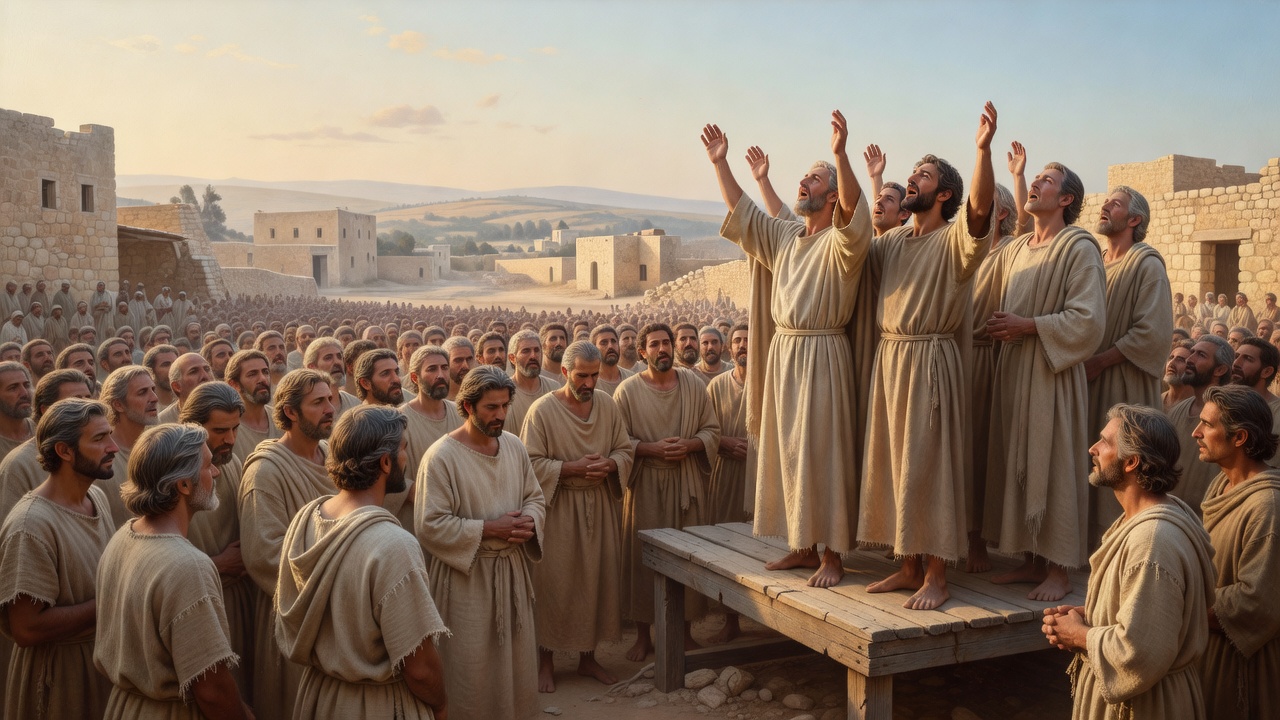
- The assembly gathered in fasting, wearing sackcloth and placing dust on their heads, dedicating a quarter of the day to hearing the Book of the Law and another quarter to confessing their sins and worshiping.Sources: the Bible text itself
- Levites including Jeshua, Kadmiel, and Shebaniah stood on an elevated platform to lead the people in prayer. Their prayer retells Israel's history, highlighting God's enduring faithfulness from the call of Abraham in Ur of the Chaldeans through the exodus and wilderness wanderings.Sources: the Bible text itself · Jeshua · Kadmiel · Shebaniah
- While recalling past victories over rulers such as Sihon of Heshbon and Og of Bashan, the prayer concludes by acknowledging the community's present hardship under foreign imperial rule, prompting them to establish a binding, written agreement.Sources: the Bible text itself · Heshbon · Bashan
Notes written with AI assistance from open sources (Theographic Bible Metadata, CC BY-SA 4.0; Easton’s Bible Dictionary, public domain) and reviewed before publishing.
Places in this chapter
- Chaldea · 30.962, 46.104 · verse 7
- Egypt · 30.129, 31.308 · verses 9, 17, 18
- Bashan · 32.781, 35.935 · verse 22
- Assyria · 36.359, 43.153 · verse 32
Only places identified with high confidence are shown (90% or more according to the scholarly sources compiled by OpenBible). Period map: DARE (Digital Atlas of the Roman Empire), CC BY 4.0; modern map: © OpenStreetMap contributors; places: OpenBible.info (CC BY 4.0).
Credits and license for this translation
Bibeli Luayãtaalá
The Holy Bible in the Boko language spoken in Benin and Nigeria
copyright © 2010 SIM International
Language: Boko
Translation by: SIM International
Boko Bibeli Luayãtaala
This translation, published by the SIM au Benin, was published in 2010.
If you are interested in obtaining a printed copy, please contact the SIM at ECWA/SIM H.Q., P.M.B. 2009, Jos, Plateau State, NIGERIA.
This translation text is made available to you under the
terms of the Creative Commons License: Attribution-Noncommercial-No Derivative Works.
( http://creativecommons.org/licenses/by-nc-nd/3.0/ )
In addition, you have permission to port the text to different file formats, as long as you
do not change any of the text or punctuation of the Bible.
You may share, copy, distribute, transmit, and extract portions
or quotations from this work, provided that you include the above copyright
information:
You must give Attribution to the work.
You do not sell this work for a profit.
You do not make any derivative works that change any of the actual words or punctuation of the Scriptures.
Permissions beyond the scope of this license may be
available if you contact
us with your request.
This translation is made available to you under the terms of the
Creative Commons Attribution-Noncommercial-No Derivatives license 4.0.
You may share and redistribute this Bible translation or extracts from it in any format, provided that:
You include the above copyright and source information.
You do not sell this work for a profit.
You do not change any of the words or punctuation of the Scriptures.
Pictures included with Scriptures and other documents on this site are licensed just for use with those Scriptures and documents.
For other uses, please contact the respective copyright owners.
2014-09-25
Source: http://ebible.org/bqcsim/ · eBible.org