Nehemiah 8
Bibeli Luayãtaalá · Tap a verse to see its cross-references.
Ɛzala Mↄizi ikoyã kyokɛa
1Gbɛ̃́pii kã̀aa ń lɛdoũo gãaɛ pↄ́ kú Í Bↄlɛ saɛ, ↄ̃ wa ò yãdanɛde Ɛzalaɛ aà bↄ ń Mↄizi ikoyã pↄ́ Dii dìlɛ Isailiↄnɛ láo. 2Mↄ sopla gↄↄ sɛ̃́ia zĩ́ sa'ona Ɛzala bↄ̀ ń Mↄizi ikoyão bíla aɛ. Gↄ̃ɛↄ ń nↄɛↄ ń gbɛ̃́ pↄ́ aa fↄ̃ yãmaↄ píi kú we. 3À aɛdↄ̀ gãaɛ pↄ́ kú Í Bↄlɛpi saɛwa, ↄ̃ àlɛ lápi kyokɛ za kↄↄkↄↄ e ĩatɛ̃ minanguo gↄ̃ɛↄ ń nↄɛↄ ń gbɛ̃́ pↄ́ aa fↄ̃ maↄ wáa. Gbɛ̃́pii swãdↄ̀ Mↄizi ikoyã lápi kyokɛai. 4Yãdanɛde Ɛzala zɛ gbà lɛsĩ pↄ́ wa dà ń lío lápi kyokɛa yã́i musu. Matitia ń Sɛmao ń Anaiao ń Uliao ń Ilikiao ń Maaseao ku aà ↄplaai. Pedaia ń Misaɛlio ń Malakiao ń Asuũo ń Asadanao ń Zakalio ń Mɛsulaũo ku aà ↄzɛɛi. 5Kɛ́ Ɛzala lá wɛ̃̀, gbɛ̃́pii è, asa aà zɛkĩi lɛsĩ dɛńla. Kɛ́ a wɛ̃̀, gbɛ̃́pii fɛ̀lɛ zɛ̀. 6Ɛzala Dii Lua zↄ̃ↄde sáaukpà, ↄ̃ gbɛ̃́pii ↄsɛ̀ musu aa mɛ̀: Ãmi! Ãmi! Ɔ̃ aa mipɛ̀lɛ tↄↄlɛ, aa kùlɛ Diiɛ. 7Gↄↄ pↄ́ gbɛ̃́ↄ zɛa we, Levii buieↄ Mↄizi ikoyã dàdanɛ́. Levii buipiↄ tↄ́n kɛ: Yesua, Bani, Selebia, Yamini, Akubu, Sabetai, Odia, Maasea, Kelita, Azalia, Yozaba, Anana ń Pelaiao. 8Aa Lua ikoyã lápi kyokɛ̀, ↄ̃ aa a bↄↄlɛkɛ̀, aa a wɛ́ wɛ̃̀nɛ́, kɛ́ aa e kyópi ma.
9Ɔ̃ bùsu gbãade Nɛɛmii ń yãdanɛde sa'ona Ɛzalao ń Levii bui pↄ́ lɛ́ yãdada gbɛ̃́ↄnɛↄ ònɛ́: Gↄↄɛ beeá Dii á Lua pↄ́ɛ. Ásu wɛ̃nakɛo, ásu ↄ́ↄlↄo. Asa kɛ́ aalɛ Mↄizi ikoyã ma, aalɛ ↄ́ↄlↄ ḿpiiɛ. 10Nɛɛmii mɛ̀: À gɛ pↄ́ níside ble, í í nana mi. À li gbɛ̃́ pↄ́ pↄe vĩoↄnɛ. Gↄↄɛ beeá wá Dii pↄ́ɛ. Ásu búbuapɛo, asa pↄna pↄ́ Dii ì kpámá dɛ á gbãa'ekĩi ũ. 11Levii buiↄ gɛ̀ gbɛ̃́ↄ nↄ̀sɛ nìninɛ́ aa mɛ̀: À nílɛ! Gↄↄɛ beeá Lua pↄ́ɛ, ásu búbuapɛo. 12Ɔ̃ aa fɛ̀lɛ gɛ̀ pↄblè aa imì, aa lìkↄ̃ɛ aa pↄnakɛ̀ maamaa, asa aa yã́ pↄ́ wa ònɛ́ mà sa.
13Mↄpi gↄↄ plaade zĩ́ uabeleↄ ń sa'onaↄ ń Levii buiↄ kã̀aa yãdanɛde Ɛzalazi, kɛ́ aa e wɛ́tɛ Mↄizi ikoyãi. 14Ɔ̃ aa yã́ pↄ́ Dii dìlɛ Mↄiziɛ è we à mɛ̀, Isailiↄ aaↄ ku lákpɛↄ guu mↄ soplade dikpɛgↄↄzĩ, 15mɛ́ aa yã́ɛ bee kpàwakɛ ń zↄ̃ɛwiaↄ guu ń Yelusalɛũo aa mɛ: À bↄlɛ gɛ́ sɛ̃u, í kulaↄ kaso suò ń baalalaↄ ń gbɛ́laↄ ń daminalaↄ ń lí uede láↄ, kɛ́ à lákpɛↄ dↄò lá a ku taalauwa. 16Ɔ̃ gbɛ̃́ↄ gɛ̀ kàsokaso aa sùò, baade lákpɛ dↄ̀ò a kpɛ́ musu ge ua ge Lua ua ge Í Bↄlɛ gãaɛ ge Ɛflaiũ Bↄlɛ gãaɛ. 17Gbɛ̃́ pↄ́ bↄ̀ zĩ̀zↄkɛupiↄ lákpɛↄ dↄ̀dↄ ḿpii, ↄ̃ aa ku a guu. Za Nuni nɛ́ Yozuee gↄↄ e gↄↄ bee Isailiↄ i dikpɛpi kɛ màao. Ɔ̃ aa pↄnakɛ̀ maamaa. 18Ɛzala ìↄ Lua ikoyã lá kyokɛ lá gu lɛ́ dↄ sɛa za dikpɛgↄↄ sɛ̃́ia zĩ́ e à gɛ midɛò. Aa dikpɛpi kɛ̀ gↄↄ soplaɛ. A gↄↄ swaaↄ̃de zĩ́ ↄ̃ aa kↄ̃kãaakɛ̀ lá wa dìlɛwa.
Did you know?
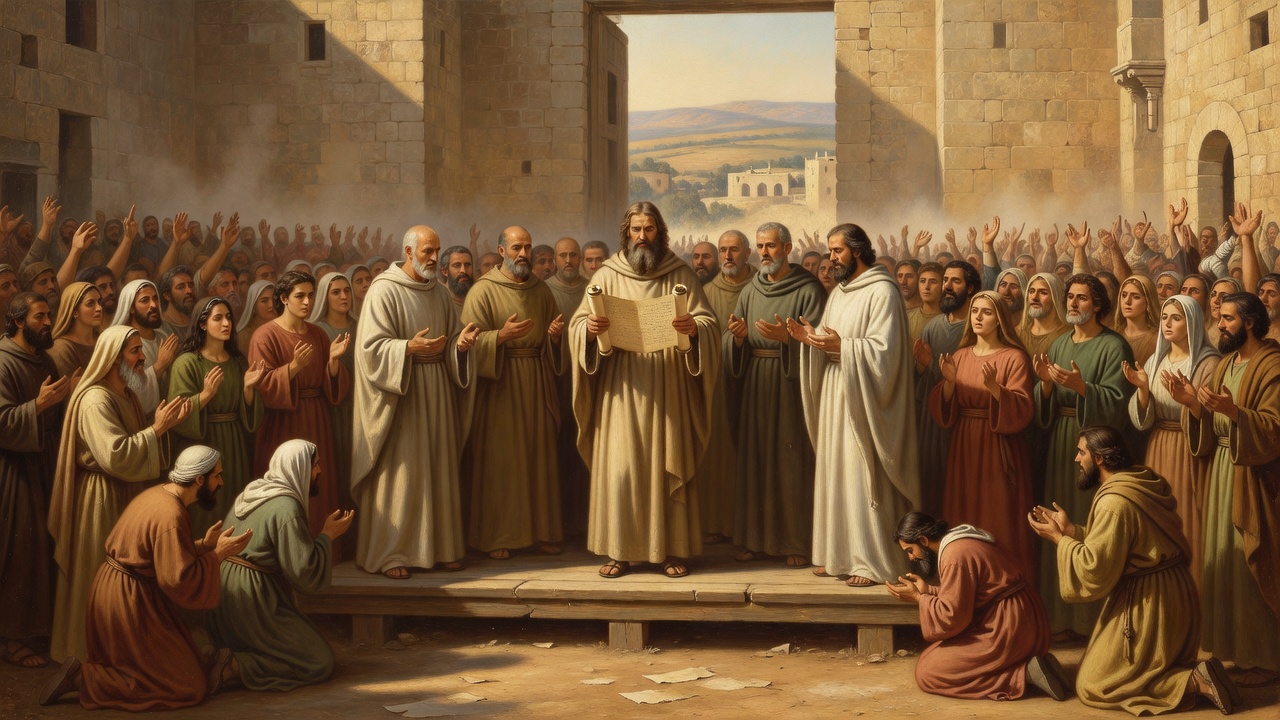
The Reading of the Law and the Feast of Booths
- Ezra the scribe, a priest descended from Aaron who had led exiles back from Babylon, read the Book of the Law of Moses from daybreak until noon to the assembly in Jerusalem. Standing on a high wooden platform in the square before the Water Gate, he read while Levites explained the text so the entire crowd could understand.Sources: the Bible text itself · Ezra · Water Gate · Jerusalem
- When the people wept upon hearing the Law read, Nehemiah the governor, Ezra, and the Levites instructed them not to grieve on a holy day. The people were told to celebrate with rich food and sweet drinks, share portions with those who had nothing prepared, and take comfort in the joy of the Lord.Sources: the Bible text itself
- After discovering the command in the Law to live in booths during the seventh month, the returned exiles gathered palm, olive, and myrtle branches to build shelters across Jerusalem's rooftops, courts, and squares by the Water Gate and the Gate of Ephraim. The text notes that the Israelites had not celebrated this feast in such a manner since the time of Joshua son of Nun.Sources: the Bible text itself · Water Gate · Gate of Ephraim
Notes written with AI assistance from open sources (Theographic Bible Metadata, CC BY-SA 4.0; Easton’s Bible Dictionary, public domain) and reviewed before publishing.
Places in this chapter
- Water Gate · Today: in Jerusalem · 31.777, 35.234 · verses 1, 3, 16
- Jerusalem · 31.777, 35.234 · verse 15
- Ephraim Gate · Today: in Jerusalem · 31.777, 35.234 · verse 16
Only places identified with high confidence are shown (90% or more according to the scholarly sources compiled by OpenBible). Period map: DARE (Digital Atlas of the Roman Empire), CC BY 4.0; modern map: © OpenStreetMap contributors; places: OpenBible.info (CC BY 4.0).
Credits and license for this translation
Bibeli Luayãtaalá
The Holy Bible in the Boko language spoken in Benin and Nigeria
copyright © 2010 SIM International
Language: Boko
Translation by: SIM International
Boko Bibeli Luayãtaala
This translation, published by the SIM au Benin, was published in 2010.
If you are interested in obtaining a printed copy, please contact the SIM at ECWA/SIM H.Q., P.M.B. 2009, Jos, Plateau State, NIGERIA.
This translation text is made available to you under the
terms of the Creative Commons License: Attribution-Noncommercial-No Derivative Works.
( http://creativecommons.org/licenses/by-nc-nd/3.0/ )
In addition, you have permission to port the text to different file formats, as long as you
do not change any of the text or punctuation of the Bible.
You may share, copy, distribute, transmit, and extract portions
or quotations from this work, provided that you include the above copyright
information:
You must give Attribution to the work.
You do not sell this work for a profit.
You do not make any derivative works that change any of the actual words or punctuation of the Scriptures.
Permissions beyond the scope of this license may be
available if you contact
us with your request.
This translation is made available to you under the terms of the
Creative Commons Attribution-Noncommercial-No Derivatives license 4.0.
You may share and redistribute this Bible translation or extracts from it in any format, provided that:
You include the above copyright and source information.
You do not sell this work for a profit.
You do not change any of the words or punctuation of the Scriptures.
Pictures included with Scriptures and other documents on this site are licensed just for use with those Scriptures and documents.
For other uses, please contact the respective copyright owners.
2014-09-25
Source: http://ebible.org/bqcsim/ · eBible.org