Ezekiel 17
Bibeli Luayãtaalá · Tap a verse to see its cross-references.
Kúu mɛ̀n plaↄ ń vɛ̃ɛlio
1Dii yã'òmɛɛ à mɛ̀: 2Gbɛ̃nazĩn nɛ́, yãlɛɛũ Isailiↄnɛ, ní yáasikɛnɛ́ 3ǹ mɛ, ma Dii Lua ma mɛ̀, kúu zↄ̃ↄe ku, aà gã̀sĩa gbãa mɛ́ a kã́ gbã̀a, mɛ́ aà sula wɛ̃̀sã pàɛ. À mↄ̀ Libã bùsuu à sɛdɛ lí misona kũ̀, 4ↄ̃ a zↄ̃̀ tàò laatanaↄ bùsuu, à gɛ̀ pɛ̀ tagɛnapiↄ wɛ̃́lɛu. 5À bùsupi vɛ̃ɛ bui sɛ̀ lↄ, a pɛ̀ swada saɛ bua lán swagbala líwa. 6Vɛ̃ɛpi lì kɛ̀ lí ũ, à ↄtà yɛɛɛnnↄ, ↄ̃ a gↄ̃naↄ yɛ̀ɛlɛ kúupi kĩ́i oi, mɛ́ a zĩ́naↄ tà aà zíɛ. Màa à gↄ̃naↄ kɛ̃̀kɛ̃, a lá sìsi à gↄ̃̀ vɛ̃ɛli ũ.
7Kúu zↄ̃ↄ pãle ku we, aà gã̀sĩa gbãa mɛ́ aà sula tìisi. Ɔ̃ vɛ̃ɛlipi zĩ́naↄ tà aà kĩ́i oi za kaa pↄ́ a pɛ̀u, àlɛ aà í nidɛ, ↄ̃ a gↄ̃naↄ tà aà kĩ́i. 8À mↄ lè a pɛa tↄↄlɛ maau swada saɛɛ, kɛ́ à ↄta, i nɛ'i vɛ̃ɛli gawide ũ.
9Onɛ́ ma Dii Lua ma mɛ̀, a kɛ maan wee? Vɛ̃ɛlipi a gɛ́ aɛe? Kúupi a gí a nɛ́ woloio. A lípi bilɛ à gao lé? A la bↄlↄↄ giigaga píiɛ. I kɛ gↄ̃sagbãakɛ ge dasikɛ wà kɛɛ̀ wà bilɛo. 10Tó wà ɛ̀a pɛ̀, a li lↄe? Tó gukpɛ ĩ́ana kàka sùwà, a giigagao lé? A giigaga kaa pↄ́ à bↄ̀lɛupiuɛ.
11Ɔ̃ Dii yã'òmɛɛ à mɛ̀: 12Bui swã́yãmansaidepiↄ la, aa yã́pi midↄ̃oa? Onɛ́ Babɛli kía mɛ́ gɛ̀ Yelusalɛũ, à a kía kũ̀ ń aà ìwaↄ à tàńnↄ Babɛli. 13Ɔ̃ à kíabuie dìlɛ, à lɛdoũkɛ̀aànↄ, a tò à lɛgbɛ̃̀ɛ a yã́ musu. À bùsupi dↄaanaↄ sɛ̀lɛ tàńnↄ lↄ, 14kɛ́ bùsupi e gↄ̃ kpɛɛ fɛlɛsai yã́i. Lɛdoũ pↄ́ kíabui kɛ̀aànↄpi mɛ́ tò a ku. 15Ɔ̃ kíabuipi bↄ̀ aà kpɛ, à zĩnaↄ zĩ̀ Egipi sↄ̃́ↄ ń zĩgↄ̃ↄ wɛɛlɛi dasi. Kípi a gɛ́ aɛe? Yã́pikɛna a bↄe? A lɛdoũpi gboo, i bↄa?
16Ma Dii Lua ma mɛ̀, ń ma kuao a ga kía pↄ́ à aà kpà kpalaupi mɛɛwia Babɛliɛ, kɛ́ à sakà lɛ́ pↄ́ a gbɛ̃̀ɛ̀u à lɛdoũ pↄ́ a kɛ̀aànↄ gbòo yã́i. 17Tó wà bùsu kàlɛkalɛ wɛ̃́lɛ bĩ́i saɛ, mɛ́ wà gbà lɛsĩↄ da lìai, kɛ́ wà e gbɛ̃́ↄ dɛdɛ dasi yã́i, Falaↄ̃ↄ ń a zĩgↄ̃ gbãaↄ ń a gbɛ̃́ bílaↄ fↄ̃ dↄaàlɛ zĩpi guuo. 18Asa kíabuipi sakà lɛ́ pↄ́ a gbɛ̃̀uɛ, à lɛdoũpi gbòo. Lá aa ↄdà kↄ̃ ↄu lɛdoũpi musu, ↄ̃ à yã́piↄ kɛ̀ píi, a bↄo.
19Ayãmɛto ma Dii Lua ma mɛ̀, lá lɛ́ pↄ́ a gbɛ̃̀ ń ma tↄ́o ↄ̃ à sakàu, mɛ́ lɛdoũ pↄ́ a kɛ̀ ń ma tↄ́o ↄ̃ a gbòo, ń ma kuao má tó a yã́ wí aà musuɛ. 20Má ba kpaɛ̀, i aà kṹ, mí taaànↄ Babɛli. We má yã́kpalɛkɛuaànↄ náaisaiyã pↄ́ a kɛ̀mɛɛ yã́i. 21Wi aà zĩgↄ̃ pↄ́ lɛ́ bàalɛaànↄↄ dɛdɛ ń fɛ̃ndao, mɛ́ wa ń gbɛ̃́ pↄ́ bↄ̀ↄ fãaa gupiiuɛ, íↄ dↄ̃ kɛ́ ma Dii mámɛ má ò.
22Ma Dii Lua ma mɛ̀,
má sɛdɛ lí lɛsĩ misona zↄ̃ gɛ pɛ́.
Má a misona gↄ̃n bↄlↄ zↄ̃,
mí gɛ pɛ gbɛ̀sĩsĩ zↄ̃ↄ lɛsĩ musu.
23Má pɛ́ Isaili gbɛ̀sĩsĩ lɛsĩ musuɛ,
i gↄ̃napa, i nɛ'i sɛdɛ lí gawide ũ,
bã bui píi i mↄ ue e a láu,
aai pɛpɛ a gↄ̃naↄwa.
24Sɛ̃̀a lí píi i dↄ̃ kɛ́ ma Dii
mi to lí lɛsĩ ɛɛnkũ,
mɛ́ mi to lí ɛɛna lɛsĩ kṹ.
Mi to lí ísi giigaga,
mɛ́ mi to lí gii bↄlↄbↄ.
Ma Dii mámɛ má ò mɛ́ má kɛɛ.
Did you know?
The Parable of the Eagles and the Cedar
- Ezekiel presents a political allegory where the first great eagle represents the king of Babylon, who captured Jerusalem's royal leadership and established a vassal king under a solemn covenant. The second eagle represents Egypt and its Pharaoh, to whom the Judean ruler turned for cavalry and military assistance in defiance of his sworn allegiance.Sources: the Bible text itself · Babylon · Egypt · Pharaoh
- In the prophetic message, breaking a political vassal oath made under Babylon was treated not merely as diplomatic rebellion, but as spiritual treason against God, who regarded the sworn pledge as His own oath.Sources: the Bible text itself
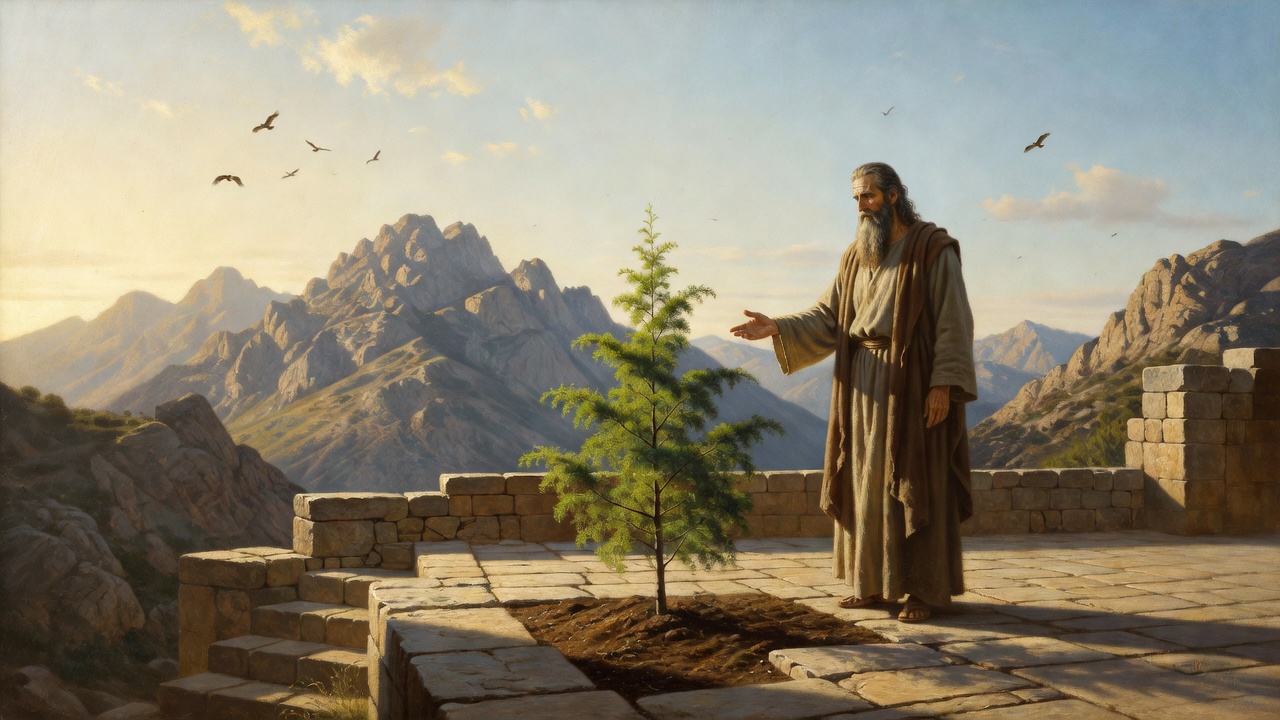
- The chapter concludes with a reversal of human political schemes: God Himself promises to take a tender shoot from the top of the cedar and plant it upon the mountain heights of Israel, where it will grow into a majestic tree offering shelter to birds of every kind.Sources: the Bible text itself
Notes written with AI assistance from open sources (Theographic Bible Metadata, CC BY-SA 4.0; Easton’s Bible Dictionary, public domain) and reviewed before publishing.
Places in this chapter
- Lebanon · 33.540, 35.584 · verse 3
- Canaan · 32.767, 35.333 · verse 4
- Babylon · 32.543, 44.422 · verses 12, 14, 15, 16, 17, 20
- Jerusalem · 31.777, 35.234 · verses 12, 17
- Egypt · 30.129, 31.308 · verse 15
Only places identified with high confidence are shown (90% or more according to the scholarly sources compiled by OpenBible). Period map: DARE (Digital Atlas of the Roman Empire), CC BY 4.0; modern map: © OpenStreetMap contributors; places: OpenBible.info (CC BY 4.0).
Credits and license for this translation
Bibeli Luayãtaalá
The Holy Bible in the Boko language spoken in Benin and Nigeria
copyright © 2010 SIM International
Language: Boko
Translation by: SIM International
Boko Bibeli Luayãtaala
This translation, published by the SIM au Benin, was published in 2010.
If you are interested in obtaining a printed copy, please contact the SIM at ECWA/SIM H.Q., P.M.B. 2009, Jos, Plateau State, NIGERIA.
This translation text is made available to you under the
terms of the Creative Commons License: Attribution-Noncommercial-No Derivative Works.
( http://creativecommons.org/licenses/by-nc-nd/3.0/ )
In addition, you have permission to port the text to different file formats, as long as you
do not change any of the text or punctuation of the Bible.
You may share, copy, distribute, transmit, and extract portions
or quotations from this work, provided that you include the above copyright
information:
You must give Attribution to the work.
You do not sell this work for a profit.
You do not make any derivative works that change any of the actual words or punctuation of the Scriptures.
Permissions beyond the scope of this license may be
available if you contact
us with your request.
This translation is made available to you under the terms of the
Creative Commons Attribution-Noncommercial-No Derivatives license 4.0.
You may share and redistribute this Bible translation or extracts from it in any format, provided that:
You include the above copyright and source information.
You do not sell this work for a profit.
You do not change any of the words or punctuation of the Scriptures.
Pictures included with Scriptures and other documents on this site are licensed just for use with those Scriptures and documents.
For other uses, please contact the respective copyright owners.
2014-09-25
Source: http://ebible.org/bqcsim/ · eBible.org