Proverbs 27
I tnalù dwata · Tap a verse to see its cross-references.
1Nang ge fdag gablà di nimoam fayah,
du laam gadè ku tan fa kel di ge.
2Fye ku nun dademe dad to dmayen ge,
nang ku ge dmayen i ktom.
3I batu na falak too blat
bay blat fa i ksamuk i nimò i to là fulung faldam.
4I kaflabè gafatduk nawa i to na gafalmo,
bay i kingà nawa too fa sasè gafalmo.
5Fye fa ku nngakam i satu to,
du ku laam nngak ken man nawan landè kakabasam kenen.
6Fye fa i katduk nawam fagu di demem sgalak, du fakay smaligkenen,
di kafafye i to dmuen ge du ken fangawan ge.
7I to bsol, balù tnab laan mayè,
bay i to bitil balù féét i neman mbaling mi.
8I anuk di bnas tatì alò mayeng na là samfulê di fulalan,
salngad i to ku tatì alò lamngab na là mnè di gumnean.
9Ku ungafam i fangbun, too ge lehew,
na ku nun samuk, lana i ktanak nawam.
10Nang tatì fbayà i demem sgalak na i deme i maam sgalak,
na ku nun smamuk ge, nangam ftabeng i flanekam mawag dige,
fye fa ku ftabengam i demem saldan mdadong di ge di flanekammawag di ge.
11Tingàgu, fye ku mbaling ge to fulung faldam, du fye lehew inawagu,
du ku ani nimoam na gadègu tmimel i dad to madoy deg.
12I to fulung mebe i kton tagadean i samuk fan kel, taman funanniwas,
bay i to kulang i kfulungan faldam laan niwas i samuk, tatì fadlugkel di kagdawatan i flayam bunge i nimoan.
13Ku nun to makang kenen mayad uteng i to laan gadè,
fye ku nleges kenen smandà i knunan kel di kagbayadan i utengan.
14Ku nukatam i demem sgalak too flafus na too makto i taluam dikenen balù fye i manam,
man nawan fanlagim kenen.
15Là too fye fanlinge uni i yéél tatì fadlug tamdak,
salngad ksasè fanlinge i libun ku tatì fadlug too mugak i yaanan.
16Na là fakay fatlag i kugakan, salngad i nus là fakay fatlag,
demen là fakay magot i fngalo di falelam.
17I tek fakay néhê di tek,
salngad i dad to du fakay ale séhê fandam.
18I to mifat i kayu nun bunge, gamkaan sa i bungen,
na salngad i satu salig mifat i amun, du gamdawat sa bunge inimoan.
19I alung i satu to fakay teen di yéél,
na fakay teen ku tan mnè di nawa i satu to fagu di galan nimò.
20Là bsol i fati na gumnè i dad mati, du gal fatan i dademe,
salngad i to là bsol, du dee fa knibalan.
21Tnilew i salafì na blawen fagu di lifoh, du neye ku too glut,
na tnilew i kafye ldam i satu to fagu di kdayen kenen, du neye kutoo glut fye i ldaman.
22Balù fa fakay ndak di sung i to là fulung faldam,
knean là magwè di kenen i klandè kfulungan.
23Toom nifat i dad lmanafam,
24du nun gusen i knun,
na balù i to nun glal nun gusen i glalan.
25Ani i nimoam, nligom i bnas na santifunam du fkaanam i dadlmanafam
klom fatan di lê ktabò i bnas.
26Na i bul dad lmanaf gambet bilibili, fakayam nimò klaweham,
na i dad kambing fakay fabli na i gweam fakay bayadam tanà.
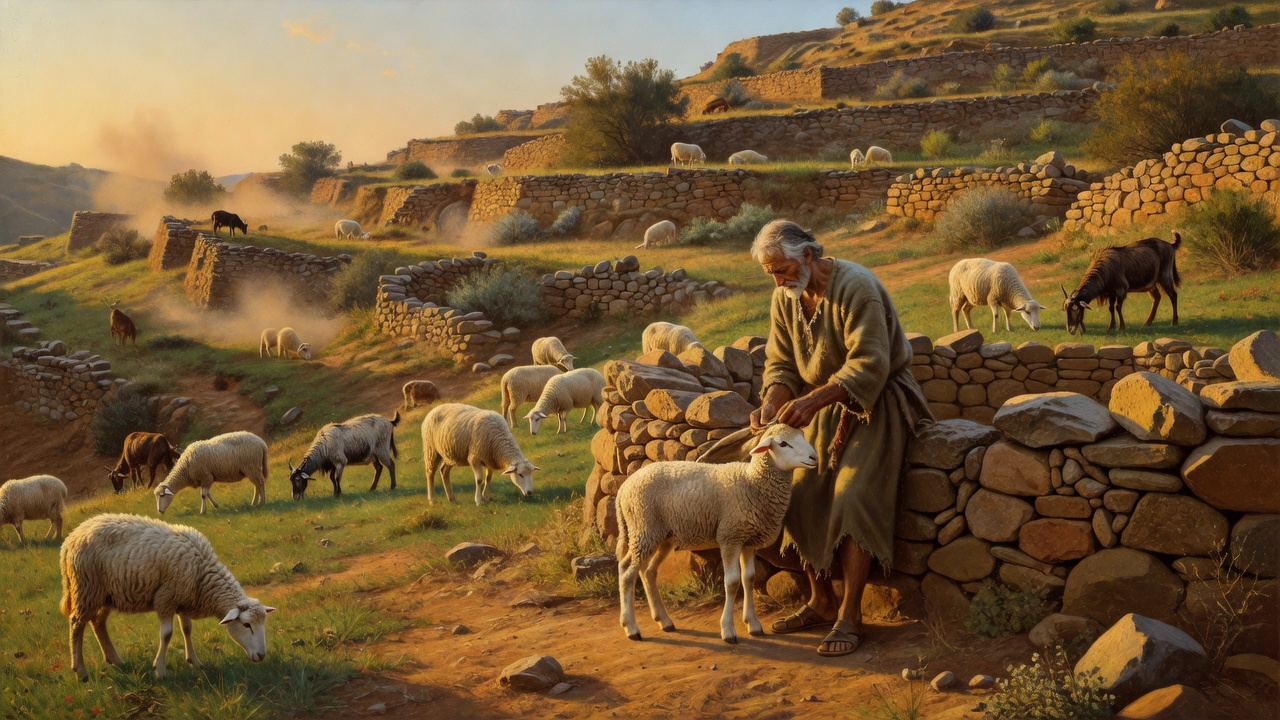
27Na i dademe dad kambingam
gamlé gatas di ge na dad malayam, na balù dad saligam libun.
Did you know?
Friendship, Prudence, and Daily Diligence
- Proverbs 27 places a strong emphasis on authentic relationships, contrasting the deceitful kisses of an enemy with the faithful wounds of a friend. It famously describes constructive interpersonal interaction with the metaphor of iron sharpening iron, while also advising reliance on a nearby neighbor over a distant relative in times of crisis.Sources: the Bible text itself
- The chapter draws on practical illustrations from ancient daily crafts and domestic life, such as refining silver and gold in a crucible and furnace, grinding grain with a mortar and pestle, and observing one's reflection in water.Sources: the Bible text itself
- The closing section outlines the seasonal realities of an agrarian and pastoral economy. It urges careful oversight of flocks and herds, noting that wealth and political crowns are fleeting, while diligent care of livestock and land reliably provides food, goat milk, and wool for the household.Sources: the Bible text itself
Notes written with AI assistance from open sources (Theographic Bible Metadata, CC BY-SA 4.0; Easton’s Bible Dictionary, public domain) and reviewed before publishing.
Credits and license for this translation
I tnalù dwata
New Testament in Blaan, Sarangani
copyright © 1998 Wycliffe Bible Translators, Inc.
Language: Sarangani Blaan (Blaan, Sarangani)
Translation by: Wycliffe Bible Translators
Contributor: Wycliffe Bible Translators, Inc.
Copyright Information
© 1998, Wycliffe Bible Translators, Inc. All rights reserved.
This translation text is made available to you under the
terms of the Creative Commons License: Attribution-Noncommercial-No Derivative Works.
( http://creativecommons.org/licenses/by-nc-nd/3.0/ )
In addition, you have permission to port the text to different file formats, as long as you
do not change any of the text or punctuation of the Bible.
You may share, copy, distribute, transmit, and extract portions
or quotations from this work, provided that you include the above copyright
information:
You must give Attribution to the work.
You do not sell this work for a profit.
You do not make any derivative works that change any of the actual words or punctuation of the Scriptures.
Permissions beyond the scope of this license may be
available if you contact
us with your request.
The New Testament
in Blaan, Sarangani
© 1998, Wycliffe Bible Translators, Inc. All rights reserved.
This translation is made available to you under the terms of the
Creative Commons Attribution-Noncommercial-No Derivatives license 4.0.
You may share and redistribute this Bible translation or extracts from it in any format, provided that:
You include the above copyright and source information.
You do not sell this work for a profit.
You do not change any of the words or punctuation of the Scriptures.
Pictures included with Scriptures and other documents on this site are licensed just for use with those Scriptures and documents.
For other uses, please contact the respective copyright owners.
2015-03-17
Source: http://ebible.org/bps/ · eBible.org