Luke 10
I tnalù dwata · Tap a verse to see its cross-references.
I fitu falò lwe to dek Dyisas tamdò
1Kafnge én, nun fitu falò lwe dademe dad to nalék Dyisas, na dekan ale, man lwe, muna di kenen lamngab di kdee dad lunsud na dademe banwe i fanan gusalu. 2Na manan di dale, “Tadee dad to gatlagad dmawat i Fye Tulen. Salngad ale i dnaru fali too mabal gablà kantu, bay kulang i dad to kamtu. Taman dmasal gamu di Amuito Dwata, i mfun i fali, na fniyu ku dekan kamtu i dademe dad to. 3Mdà gamu nan. Dekta gamu di dad to mayè fsasè gamu. Salngad gamu i dad ngà bilibili gbol di dad labè ayem di bnas. 4Nang gamu mebe kuyut demen gumkah filak, ku demen talumfà galwà di lsakyu. Na gasil gamu, na nang gamu tlag magu du stulen di balù simto to siteyu di dalan.
5“Na balù nè i gumnè gufyakla gamu, di kfusukyu, ani manyu, ‘I ktanak nawa mnè di gamu.’ 6Na ku i to mnè déén mayè dmawat dun, mnè sa di kenen i ktanak nawa nebeyu, bay ku là, na samfulê di gamu. 7Mnè gamu di gumnè gufyak gamu, na balù tan afèla gamu, knaanyu na ninumyu, du i to mimò, gablà tnaden. Na nang gamu mili di dademe gumnè.
8“Na di kakelyu di satu banwe, ku dnawatla gamu, balù tan i fkaanla gamu, knaanyu. 9Di lamyu déén, fangulêyu i dad to nun tduk, na manyu dale, ‘Tamdadong di gamu i kagot Dwata.’ 10Kabay ku nun banwe gusaluyu, na làla gamu dnawat, magu gamu di dad dalanla, na manyu di dad to déén, 11‘Balù i kfung banweyu damkat di blìmi, kakesmi du ilè na gamu i tmimel di Dwata i nimòyu ani. Kabay nangyu glifet tafan kel i kagot Dwata di gamu, bay taknagolyu.’ 12Na tulengu gamu i kaglutan, balù blat i kaflayam i dad to mdà di banwe Sodom, mlaan fa di kaflayam i dad to mdà di dad banwe gambet én di duh kukum Dwata.”
I dad banwe i dad to là msal di salàla
13Na man Dyisas fa, manan, “Magakdo gamu dad to di banwe Korasin! Na gamu di banwe Bétsayda! Ku tateen i dad to ise Dyu di banwe Tiro na Sidon i dad tnikeng tanimògu déén di gamu, tamlo ale nan msal, na lamsak i saku, na mubul i abu di ulula mdà di klidùla, bay gamu là sa msal! 14Na balù blat i kaflayam i dad to mdà di Tiro na Sidon, mlaan fa di gamu kaflayam di duh kukum Dwata. 15Na gamu dad to di banwe Kafernaum, mayè gamu fdatah i ktoyu kel di langit. Kabay bat gamu baling di lanaw lifoh.”
16Kafnge én, man Dyisas di dad to dekan tamdò, manan, “Ku simto to flinge gamu, salngad ku fanlingen agu, na ku simto to là dmawat gamu, laan agu dnawat. Na i to là dmawat deg, laan dnawat Dwata, i mdek deg.”
I kasfulê i dad fitu falò lwe
17Na mimen i fitu falò lwe to i dad flau Dyisas, na di kasfulêla too ale lehew, na manla di ku Dyisas, “Amu, balù i dad busaw, dekmi ale lamwà fagu di dagitam na mimen ale.”
18Na man Dyisas di dale, “Hae, tateengu i kfisan ku Satanas. Mtatek kenen salngad i silà mdà di langit. 19Tabanlégu gamu glal du fye balù gamdà gamu ulad ku demen fagi, na balù tan salig Satanas dmuen gamu, landè gamsasè gamu. 20Kabay knean, nang gamu alò flehew du nimen gamu i dad busaw, bay én tooyu guflehew du tagsulat i dagityu di langit.”
21Na di bang én, too lehew Dyisas fagu di Mtiu Tulus, na dmasal kenen, manan, “E Mà, Amu magot i langit na tanà, mlé agu fye di ge, du i bunim di dad to too fulung na i dad to mdatah gnadè, tafgadeam di dad to mdanà salngad i dad malnak ngà. Hae, mgimò ani, du ani knayeam.
22“Tablé Mà di deg i glal magot i kdee. Na landè gmadè i Tingà Dwata galwà di Maan, na landè gmadè i Maan galwà di Tingaan na i dad to kayègu gufgadè kenen.”
23Na meye Dyisas di dad gal mlalò kenen, na manan di alò ale, “Too nun kafye i kdee dad to mite i dad tateenyu. 24Hae, tulengu gamu, mdà di muna fa, dee dad tugad Dwata na dad harì too mayè mite i dad teenyu, bay landè kibòla mite dun, na mlinge i dad lingeyu, bay landè kibòla mlinge dun.”
I fléd gablà di fye to mdà di Samériya
25Di satu duh tadag i satu to gal mubad dad flalò blé Dwata fagu di ku Mosis, du tnilewan Dyisas, manan, “E To Tamdò, tan i fye nimògu du fye gfungu i nawa landè sen?”
26Na tmimel Dyisas, manan, “Tan i gman di flalò Dwata? Tan i kaglabatam dun?”
27Na tmimel i to én, manan, “Én fye nimò dunan ani, ‘Tooyu kando i Amuyu Dwata mdà di nawayu, na di kdee knayèyu, na di kdee galyu, na di kdee fandamyu. Na kandoyu i demeyu to, salngad kakdoyu i ktoyu.’ ”
28Na man Dyisas, “Too glut sa i timelam. Nimoam én, na gfunam i nawa landè sen.”
29Kabay i to ani, kayean fite nun kaglut i salekan gine, taman snalekan Dyisas, manan, “Na simto kè i dademegu to gablàgu kando?”
30Na tmimel Dyisas fagu di fléd, manan, “Nun lagi fdu di Dyérusalém masol salu di lunsud Dyériko. Na nlifut kenen i dad to tmaku. Nlusla i klawehan na sanbunalla kenen, na silangla tagak, tafan mati. 31Na nun satu bà di Dwata gagu di dalan gugilean. Na di kiten i demen Dyu gilè déén, balingan niwas di bali dalan. 32Na salngad ani nimò i satu to bel Libay. Kagdadongan di gugilè to én, teenan kenen, bay niwasan di bali dalan. 33Kabay nun satu to ise Dyu mdà di banwe Samériya magu déén di dalan gugilean. Na di kiten i to ani toon kenen kakdo. 34Taman fdadong kenen di to én, na bnulungan fngalo na binu i dad seeyan, na bnatangan. Kafnge én, fsakayan di dongkin, na tundan di satu gumnè gumilè i dad to magu, na nifatan kenen déén. 35Di tmadol duh, banlén filak i to mfun gumnè gumilèla, na manan, ‘Toom kenen nifat, na ku tan i gatnuam di kifatam kenen, bnayadgu di ge di kasfulêgu.’ ”
36Na smalek Dyisas di to gal mubad i dad flalò Dwata gine, manan, “Simto di tlu to ani too fite di to nlifut, na kenen i too kamdo i demen to?”
37Na tmimel i to én, manan, “Dunan i to kamdo kenen.”
Na man Dyisas, “Too glut i timelam! Mdà ge, na ganbetam kenen.”
I klauy Dyisas di gumnè Marta na Méri
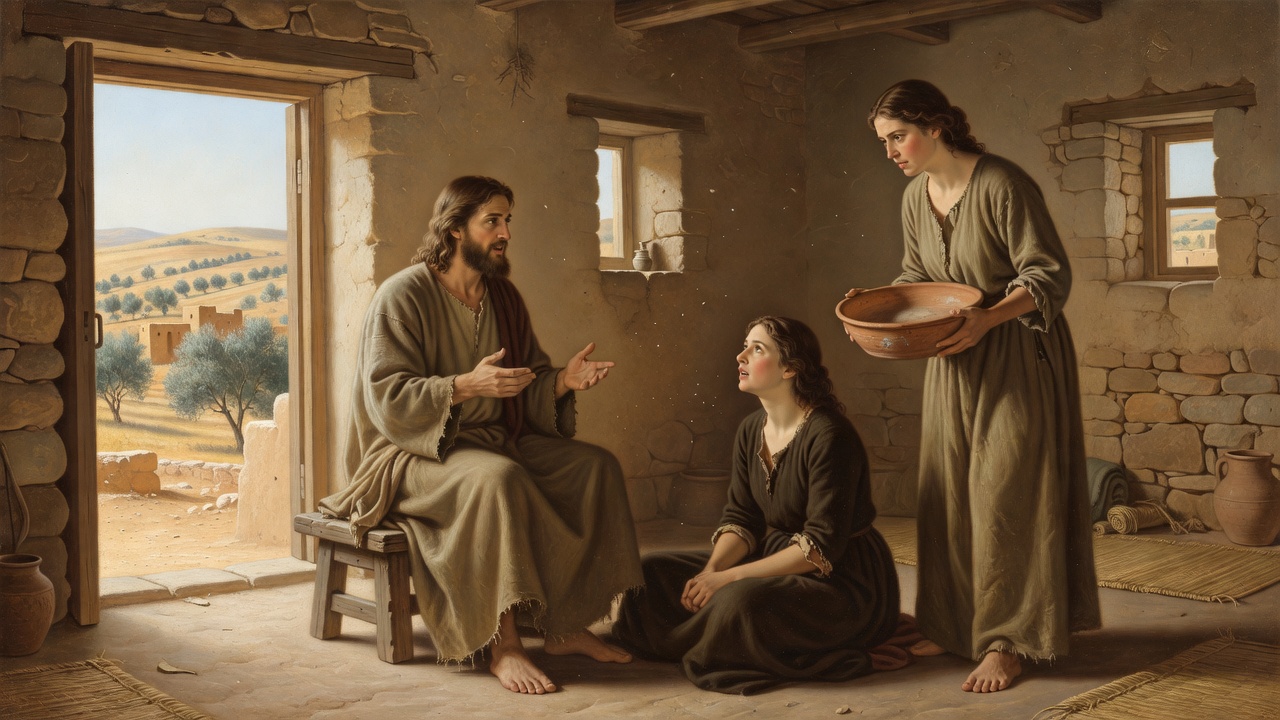
38Na di kagu Dyisas na i dad gal mlalò kenen, kel ale di satu banwe, na nun libun mnè déén dnagit ku Marta fyak dale di gumnean. 39Na nun flanekan libun dnagit ku Méri sudeng di saféd blì Dyisas du fye flinge i tdoan. 40Na Marta, dee gusalu i nawan mdà di dee nimoan, taman fdadong kenen di ku Dyisas, na manan, “Amu, laam kè fandam tatì agu fbayà i flanekgu di kdee nimò di gumnè alògu satu? Fye ku dekam kenen tmabeng deg.”
41Na tmimel Dyisas kenen, manan, “Tay ge Marta! Dee gamsamuk i nawam gablà di dee nimoam. 42Alò satu moon nimoam, i too mabtas nimò. Tanalék Méri i too fye nimò, na landè gamwè dun di kenen.”
Did you know?
The mission, the towns, and Martha and Mary
- Easton's Bible Dictionary (1897) identifies Chorazin, named in this chapter's woes along with Bethsaida and Capernaum, with Kerazeh, about two and a half miles up the Wady Kerazeh from Capernaum. It says that after Jesus was expelled from Nazareth, Capernaum became his own city. The chapter compares those towns with Tyre and Sidon; the dictionary calls Sidon the first home of the Phoenicians on the coast of Palestine and the mother city of Tyre, about twenty-five miles north of Tyre.Sources: the Bible text itself · Chorazin · Capernaum · Sidon
- Easton's Bible Dictionary (1897) gives the name Martha as meaning bitterness, and says that she, her sister Mary, and their brother Lazarus lived at Bethany, with Martha probably the eldest. Because this passage calls the house hers, the dictionary notes that some have supposed she was a widow and that her brother and sister lodged with her. It describes her as anxious and bustling in caring for her guest, unlike Mary, who sat at Jesus' feet and listened.Sources: the Bible text itself · Martha · Mary (sister of Lazarus)
- The Lord appoints seventy-two others and sends them two by two ahead of him, and an event chronology dates that sending to AD 29. When they return, rejoicing that even the demons submit in his name, he says he saw Satan fall like lightning from heaven. Easton's Bible Dictionary (1897) explains the name Satan as adversary or accuser, and notes that the New Testament uses it interchangeably with the devil more than thirty times.Sources: the Bible text itself · 70 Sent Out · Satan
Notes written with AI assistance from open sources (Theographic Bible Metadata, CC BY-SA 4.0; Easton’s Bible Dictionary, public domain) and reviewed before publishing.
Places in this chapter
- Sidon · Today: Sandikli archaeological site in Sidon · 33.561, 35.372 · verses 13, 14
- Tyre · 33.271, 35.196 · verses 13, 14
- Jericho · Today: Tell el Alayiq · 31.852, 35.436 · verse 30
- Jerusalem · 31.777, 35.234 · verses 30, 38
Only places identified with high confidence are shown (90% or more according to the scholarly sources compiled by OpenBible). Period map: DARE (Digital Atlas of the Roman Empire), CC BY 4.0; modern map: © OpenStreetMap contributors; places: OpenBible.info (CC BY 4.0).
Credits and license for this translation
I tnalù dwata
New Testament in Blaan, Sarangani
copyright © 1998 Wycliffe Bible Translators, Inc.
Language: Sarangani Blaan (Blaan, Sarangani)
Translation by: Wycliffe Bible Translators
Contributor: Wycliffe Bible Translators, Inc.
Copyright Information
© 1998, Wycliffe Bible Translators, Inc. All rights reserved.
This translation text is made available to you under the
terms of the Creative Commons License: Attribution-Noncommercial-No Derivative Works.
( http://creativecommons.org/licenses/by-nc-nd/3.0/ )
In addition, you have permission to port the text to different file formats, as long as you
do not change any of the text or punctuation of the Bible.
You may share, copy, distribute, transmit, and extract portions
or quotations from this work, provided that you include the above copyright
information:
You must give Attribution to the work.
You do not sell this work for a profit.
You do not make any derivative works that change any of the actual words or punctuation of the Scriptures.
Permissions beyond the scope of this license may be
available if you contact
us with your request.
The New Testament
in Blaan, Sarangani
© 1998, Wycliffe Bible Translators, Inc. All rights reserved.
This translation is made available to you under the terms of the
Creative Commons Attribution-Noncommercial-No Derivatives license 4.0.
You may share and redistribute this Bible translation or extracts from it in any format, provided that:
You include the above copyright and source information.
You do not sell this work for a profit.
You do not change any of the words or punctuation of the Scriptures.
Pictures included with Scriptures and other documents on this site are licensed just for use with those Scriptures and documents.
For other uses, please contact the respective copyright owners.
2015-03-17
Source: http://ebible.org/bps/ · eBible.org