Genesis 22
I tnalù dwata · Tap a verse to see its cross-references.
Tnilew Dwata Abraham
1Midul i duh, midul i butang, na tnandak Dwata Abraham. Taman, satu duh tlo Dwata Abraham, manan, “E, Abraham.” Na tmimel Abraham, manan, “Hae Amu, gani agu.”
2Na man Dwata, “Gadègu toom kando Isaak, du kenen alò i tingaam di ku Sara. Kabay faginam, na salu gamu ditù di banwe dnagit Moraya. Ditù di banwe atù fitegu ge i satu bulul, na ditù gumatim kenen, na sduléam snakuf du dsuam di deg.”
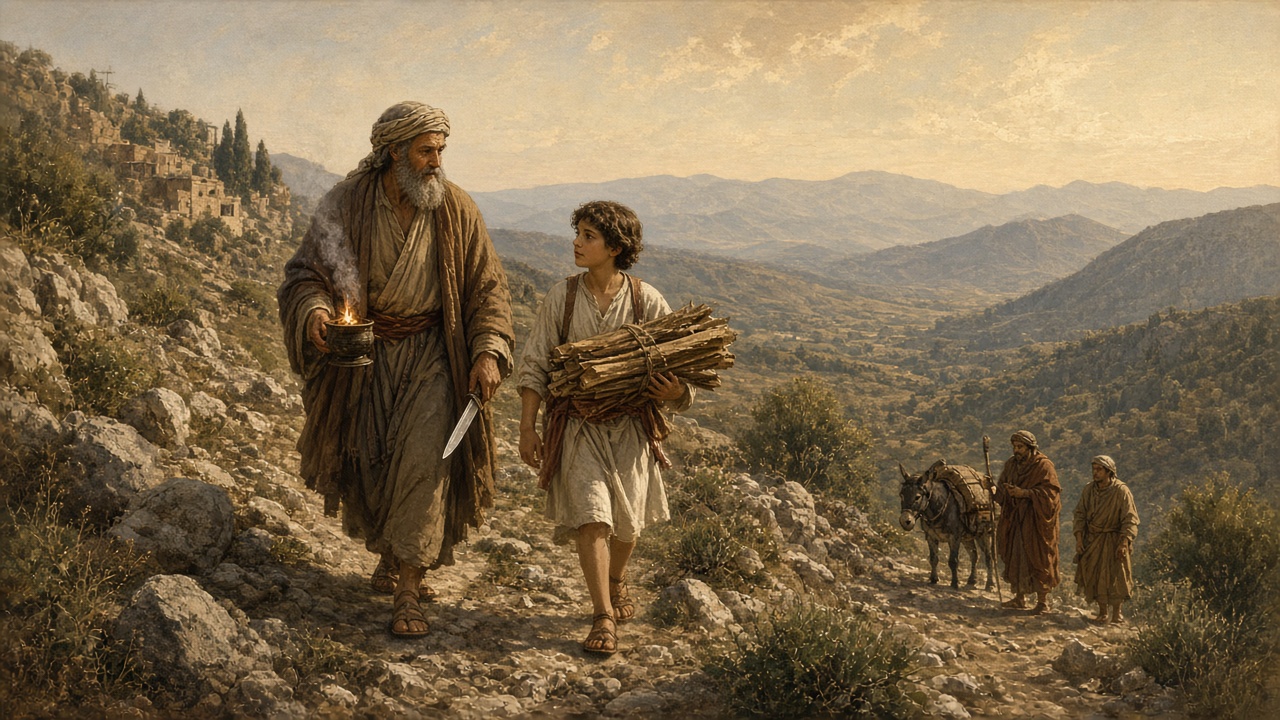
3Kaklinge Abraham ani, too flafus di kwalan én, tmifak kenen kayu, du dutungan i dsuan. Na nafidan i lmanaf gambet i kudà dnagit dongki, du gumlulenan dad neben. Na faginan Isaak na lwe saligan lagi, na mdà ale salu di banwe gumdek Dwata kenen. 4Na di kakel i gatlu duh i kagula, teen Abraham i bulul tamdadong, i bulul gman Dwata kenen. 5Taman manan di dad saligan, “Fatan gamu dini, du neyeyu i dongkiito, du mnagad agu di bulul atù, na fagingu tingàgu, du mangamfù gami di Dwata. Na kafnge én, samfulê gami lêman dini.”
6Kafnge én, ftiang Abraham ku Isaak kayu dutung, na mebe kenen i bansung na kisong du to lifoh. Klola magu, 7talù Isaak di maan Abraham, manan, “E, Mà”. Na tmimel Abraham, manan, “Tan dun Tò?” Snalek Isaak, “Tanun sa dad kayu dutung na lifoh. Kabay landè sa i tingà bilibili fnatita na snakufta, du dsù di Dwata?” 8Na tmimel Abraham, “Tò, Dwata i mlé kadang i klidùta i tingà bilibili dsùta.”
Kafnge én, fadlug ale magu. 9Kakella di sablà i gman Dwata, mimò Abraham i gudamsù na toon fanse samlasud i dutung di tah i gudamsuan di Dwata. Kafnge én, nagotan Isaak na bnakusan kenen, na filean di tah i dutung. 10Na nwean i bansungan, du fanan fnati i tingaan. 11Kabay di fanan kagu mati i tingaan, gasil tamlo kasaligan Dwata i Amu mdà di langit, manan, “E, Abraham, Abraham.” Tmimel Abraham, “Hae Amu, gani agu.”
12Man i kasaligan, “Nangam fanles fnati i tingaam. Ani nan, gadègu too sikof i kimenam Dwata, du balù fa Isaak i sen tingaam di ku Sara, fanam blé di deg.”
13Di keye Abraham di glibutan, teenan i lagi bilibili gasdang i sungketan di sabat. Nwean, bnakusan, fnatin, na sanduléan snakuf, du dsuan di Dwata tlas i tingaan. 14Dnagit Abraham i banwe atù na i gumtatek i dagitan dun, dunan, “Dwata i Amu sa Mlé”. Na balù di bang ani, nun mangman, “Di bulul Dwata, Dwata sa mlé.”
15Na lêman tamlo kasaligan Dwata i Amu, ku Abraham, mdà di langit, 16na manan, “Du tanimenam agu, na fanam blé di deg i sen tingaam, nun fakanggu di ge ani i toogu dnohò, du deg sa Dwata i Amu i talù di ge. 17Ani i fakanggu, toogu mlé i kafye di ge, na toota ge fbel. Na i dad belam kadang, salngad kdee i dad blatik di langit, na salngad kdee i dad falak di kilil i mahin. Satu duh gfisan i dad belam i dad to dmuen dale, na ale baling kadang magot i dad banwela. 18Na fagu di dad belam, mlé agu kafye di kdee dad to, du tanimenam i katedgu ge.”
19Kagman Dwata ani, samfulê Abraham na Isaak di dad saligla, na mdà ale mulê salu di Bérsiba, na mnè ale déén.
Did you know?
God Tests Abraham
- Isaac was Abraham’s only son by Sarah. The next memorable event recorded in his life, after he was weaned, is God’s command that Abraham offer him as a burnt offering on a mountain in the land of Moriah.Sources: Isaac · the Bible text itself
- Easton's Bible Dictionary (1897) notes that some contend the land of Moriah is Mount Gerizim, but regards it as most probably one of the hills of Jerusalem, northeast of Zion, where Solomon’s temple was built on the threshing-floor of Ornan the Jebusite.Sources: Moriah
- The chapter ends with news of Abraham’s relatives: his brother Nahor had remained in Haran, east of the Euphrates, and Milcah had borne him eight sons, among them Bethuel, Rebekah’s father. Rebekah became Isaac’s wife, and contact between the family in Canaan and the kin at Haran lasted until Jacob left Haran.Sources: Nahor (brother of Abraham) · Bethuel · the Bible text itself
Notes written with AI assistance from open sources (Theographic Bible Metadata, CC BY-SA 4.0; Easton’s Bible Dictionary, public domain) and reviewed before publishing.
Credits and license for this translation
I tnalù dwata
New Testament in Blaan, Sarangani
copyright © 1998 Wycliffe Bible Translators, Inc.
Language: Sarangani Blaan (Blaan, Sarangani)
Translation by: Wycliffe Bible Translators
Contributor: Wycliffe Bible Translators, Inc.
Copyright Information
© 1998, Wycliffe Bible Translators, Inc. All rights reserved.
This translation text is made available to you under the
terms of the Creative Commons License: Attribution-Noncommercial-No Derivative Works.
( http://creativecommons.org/licenses/by-nc-nd/3.0/ )
In addition, you have permission to port the text to different file formats, as long as you
do not change any of the text or punctuation of the Bible.
You may share, copy, distribute, transmit, and extract portions
or quotations from this work, provided that you include the above copyright
information:
You must give Attribution to the work.
You do not sell this work for a profit.
You do not make any derivative works that change any of the actual words or punctuation of the Scriptures.
Permissions beyond the scope of this license may be
available if you contact
us with your request.
The New Testament
in Blaan, Sarangani
© 1998, Wycliffe Bible Translators, Inc. All rights reserved.
This translation is made available to you under the terms of the
Creative Commons Attribution-Noncommercial-No Derivatives license 4.0.
You may share and redistribute this Bible translation or extracts from it in any format, provided that:
You include the above copyright and source information.
You do not sell this work for a profit.
You do not change any of the words or punctuation of the Scriptures.
Pictures included with Scriptures and other documents on this site are licensed just for use with those Scriptures and documents.
For other uses, please contact the respective copyright owners.
2015-03-17
Source: http://ebible.org/bps/ · eBible.org