John 7
I Falami Kasafnè (New Testament) · Tap a verse to see its cross-references.
Dyisas na i dad flanekan
1Kafnge ayé, lanngab Dyisas i probinsya Galili. Ta là mayèan lamngab di Dyudiya du fanngabal kenen i dad ganlal i dad Dyu du kayèla fnati. 2Na ta mdadong nan i kimò dad Dyu Fista i dad Slung. 3Na yé duenam man, stulen i dad flanekan di kenen, manla dun, “Tnagakam i banwe ani, na salu ge ditù di Dyudiya du fye teen i dad to galam tdò i dad tnikeng nimòam. 4Du ku nun to knayèan dilè i dad to, là ti bunin i dad nimòan. Na ge, du gaganam mimò i kdee dad tnikeng ani, fitem i kgaganam di klamang banwe.” 5(Yé man dad flanekan du là fa ftoo ale di kenen). 6Bay man Dyisas di dale, “Là fa kel i bang kfitegu i kdatahgu. Bay gamu, balù dét oras fakayyu nimò i knayèyu. 7I dad to nfun i banwe ani, là nang nawala gamu, bay do i knangla du sigigu fite di dale i ksasè i dad nimòla. 8Muna gamu gatù nan di fista. Là tayò agu do gatù du là fa kel i banggu.” 9Di kafngen man ayé, ftagak kenen déé di Galili di là mlo.
I ksalu Dyisas di Fista i dad Slung
10Kanto gatù i dad flanekan di fista, yé klo Dyisas lê salu gatù, na là toon fgadè dun. 11Bay fanngabal kenen i dad ganlal i dad Dyu déé di fista, na too ale smalek, manla, “Ta nè gumnè Dyisas?” 12Na nun dee dad to déé sutab gablà ku Dyisas. Yé man dademe, “Fye kenen to,” bay man dademe, “Ise glut ayé, bay lon fan-gaw i dad to.” 13Bay landè to mlas tmulen i fandaman gablà ku Dyisas, du likò ale di dad ganlal i dad Dyu.
14Na mdadong di kagatngà i fista, salu Dyisas di Gumnè Gal Gumangamfù di Dwata, du tamdò. 15Na too tikeng i dad ganlal i dad Dyu, na manla, “Kan ani ku too gmadè i to ani, na blaam landè skulan?” 16Na tmimel Dyisas, manan, “Ise ku do gumdà i tdògu, bay yé gumdàan di Dwata, i mdek do. 17Du nè to mayè mimò knayè i Dwata, gadèan ku nè gumdà dad tdògu, ku mdà di Dwata, ku demen lo mdà di do kto. 18Du nè to talù mdà di kenen kto, yé kayèan ku dag i dad to kenen. Bay i to mayè ku magdayen i mdek dun, gsalig na là ti tmulenan kéng. 19Dunan sa, Mosis i mlé gamu i uldin Dwata, bay landè satu di gamu mimen dun. Kan ku nusalyu agu fnati?” 20Na tmimel i dad to ayé, manla, “Keng ta nun busawam. Simto kè i musal fmati ge?” 21Na tmimel Dyisas, manan dale, “Lo satu i tnikeng nimògu, bay ta too ti tikeng i kdeeyu. 22Ta dek Mosis gamu fimò ilè di laweh i dad ngàyu lagi, bay blaam ise kenen i too gumdàan, bay mdà di dad gutambulyu. Taman, galyu fimò ilè di laweh i dad ngàyu, balù di Du Kaftud. 23Ku fimò gamu ilè di dad ngàyu di Du Kaftud mdà di kimenyu i uldin Mosis, kan ku lanbutyu agu di kafgulêgu i satu to di Du Kaftud? 24Ta nang gamu mukum mdà di teen i matayu. Yé fye ku glalò di too glut kukum.”
25Na stulen dademe to déé di Dyérusalém, manla, “Sawe dunan ani i to fanngaballa du knayèla fnati. 26Bay neyeyu. Ta talù kenen di bleng i dad to, na landè talù balù satu ku kamnang dun. Keng ta gadè dad ganlalto na kenen i Mgalék Dwata? 27Bay ku ta kel i Mgalék Dwata, landè to gmadè ku nè gumdàan, bay to ani, gadèto i gumdàan.”
28Na di katdò Dyisas di Gumnè Gal Gumangamfù di Dwata, falbongan i talùan, manan, “Ta tooyu agu dilè kè, na ta tooyu gadè ku nè gumdàgu? I ksalugu dini, ise ku mdà di do knayè. I mdek do, too glut kenen, bay là dnilèyu dun. 29Bay do, dilègu kenen du kenen sa i gumdàgu na kenen i mdek do.” 30Taman, tilewla kamfè kenen, bay landè gaganla nimò du là fa kel i bangan. 31Dee dademe to ftoo di kenen, na manla, “Di kakel i Mgalék Dwata, là ti midul i dad tnikeng nimòan di nimò i to ani.”
Fanla fakfè Dyisas
32Na linge dad Farisi i ksutab i kdee dad to gablà ku Dyisas. Taman, i dad Farisi na i dad ganlal di kafaglut i dad Dyu, mdek ale dad sundalu du kanfèla Dyisas. 33Yé duenam man, man Dyisas di dad to stifun déé, “Ta là mlo i knègu di safédyu du ta fan agu samfulê di mdek do. 34Na ku ta mdà agu, balù ku fanngabalyu agu, knèan là teenyu agu, du là ti gafat gamu di gusalugu.” 35Taman, sasalek dad ganlal i dad Dyu, manla, “Nè fan gusalu i to ani kè du manan là teento dun? Keng salu ditù di banwe i dad Grik gumnè i dademe Dyu du lê tamdò di dad to ise Dyu. 36Du yé sa manan gine, ‘Ku ta mdà agu, balù ku fanngabalyu agu, knèan là teenyu agu, du là gafat gamu di gusalugu.’ Dét i kayèan man ayé?”
Éél mlé nawa
37Na i gusen du di fista ayé, yé too mabtas du. Na di du ayé, tadag Dyisas, na falbongan i talùan, manan, “Nè to malinum, salu di do na minum. 38Du ani gsulat di Tnalù Dwata, ‘Mdà di nawa i to ftoo di do, samfut di kenen éél mlé nawa.’ ” 39(I éél manan ayé dunan i guflingen di Tulus Dwata ta fan gdawat i dad to ftoo di kenen. Bay di du atù, là fa gablé i Tulus Dwata du là fa too gdawat Dyisas i kdatahan).
Masgalel fandam i dad to gablà ku Dyisas
40Na dee dad to lminge i man Dyisas ayé, manla, “Dunan ani Tugad i Dwata sanfatanto.” 41Na man dademe, “Ani i Mgalék Dwata.” Bay man dademe, “I Mgalék Dwata, ise ku mdà di Galili, 42du yé ta gsulat di Tnalù Dwata na i Mgalék Dwata i satu bel Harì Dabid, na yé gusutan di Bétléhém, dunan i lunsud gumnè Dabid di munan.” 43Taman, sahal fandam i dad to gablà ku Dyisas, 44na mayè dademe to kamfè kenen, bay landè gaganla nimò.
45Na samfulê i dad sundalu di dad Farisi na i dad ganlal di kafaglut i dad Dyu, na snalek i dad ganlal ale, manla, “Kan ku là nebeyu dun dini?” 46Na tmimel i dad sundalu ayé, manla, “Landè to lmen talù salngad kenen.” 47Na smalek dad Farisi, manla, “Kan kè? Ta lê gamu mafgaw? 48Ta nun kè gadèyu to mdà di dad ganlal i dad Dyu, ku demen mdà di dad Farisi ku ftoo di kenen? 49Landèan, bay lo yé ftoo di kenen i dad to là gmadè i uldin Dwata fagu di ku Mosis, taman, falnayam Dwata ale.” 50Na déé Nikodimus, i satu Farisi i ta salu di ku Dyisas di munan. Manan, 51“Bay di dad uldin Dwata di gito, silang nukum satu to ku ta lingeto i dad tdòan, na ku ta teento i dad nimòan.” 52Bay tmimel ale, manla di kenen, “Kan? Lê ge mdà di Galili kè? Toom bnasa i ta gsulat di Tnalù Dwata du fye gadèam na landè tugad i Dwata ku mdà di Galili.”
Did you know?
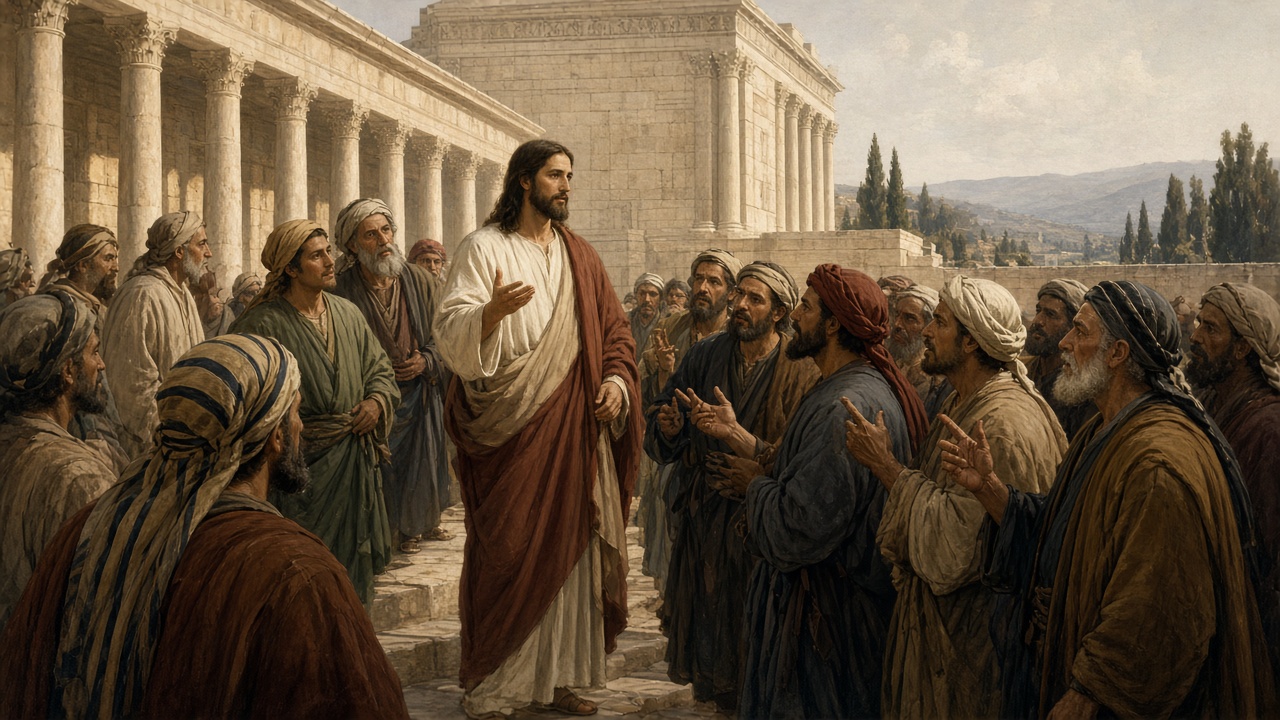
Jesus at the Feast of Tabernacles
- As the Jewish Feast of Tabernacles, a seven-day feast, drew near, Jesus stayed in Galilee and avoided Judea, where people were trying to kill him. In his time Judea was the southernmost of the three Roman divisions of Palestine, distinct from Galilee and Samaria; he later went up to the feast in secret and taught in the temple courts.Sources: the Bible text itself · Feast of Tabernacles · Judea
- The crowds were divided over where the Christ would come from. Some said that Scripture places him in David's line and in Bethlehem, the village where David, the eighth and youngest son of Jesse, lived; others objected that he could not come from Galilee, a region long called Galilee of the Gentiles, and the Pharisees insisted that no prophet comes from there.Sources: the Bible text itself · David · Galilee
- Nicodemus, a Pharisee and a member of the Sanhedrin, had earlier come to Jesus at night. When the officers sent to arrest Jesus returned without him, Nicodemus protested and asked whether their law condemned a man before hearing him and finding out what he had done.Sources: the Bible text itself · Nicodemus
Notes written with AI assistance from open sources (Theographic Bible Metadata, CC BY-SA 4.0; Easton’s Bible Dictionary, public domain) and reviewed before publishing.
Places in this chapter
- Galilee · 32.760, 35.527 · verses 1, 3, 9, 41, 52
- Judea · Today: Judea 1 · 31.777, 35.234 · verses 1, 3
- Jerusalem · 31.777, 35.234 · verse 25
- Bethlehem · 31.704, 35.208 · verse 42
Only places identified with high confidence are shown (90% or more according to the scholarly sources compiled by OpenBible). Period map: DARE (Digital Atlas of the Roman Empire), CC BY 4.0; modern map: © OpenStreetMap contributors; places: OpenBible.info (CC BY 4.0).
Credits and license for this translation
I Falami Kasafnè (New Testament)
New Testament in Blaan, Koronadal
copyright © 1995 Wycliffe Bible Translators, Inc.
Language: Koronadal Blaan (Blaan, Koronadal)
Translation by: Wycliffe Bible Translators, Inc.
Copyright Information
© 1995, Wycliffe Bible Translators, Inc. All rights reserved.
This translation text is made available to you under the
terms of the Creative Commons License: Attribution-Noncommercial-No Derivative Works.
( http://creativecommons.org/licenses/by-nc-nd/3.0/ )
In addition, you have permission to port the text to different file formats, as long as you
do not change any of the text or punctuation of the Bible.
You may share, copy, distribute, transmit, and extract portions
or quotations from this work, provided that you include the above copyright
information:
You must give Attribution to the work.
You do not sell this work for a profit.
You do not make any derivative works that change any of the actual words or punctuation of the Scriptures.
Permissions beyond the scope of this license may be
available if you contact
us with your request.
The New Testament
in Blaan, Koronadal
© 1995, Wycliffe Bible Translators, Inc. All rights reserved.
This translation is made available to you under the terms of the
Creative Commons Attribution-Noncommercial-No Derivatives license 4.0.
You may share and redistribute this Bible translation or extracts from it in any format, provided that:
You include the above copyright and source information.
You do not sell this work for a profit.
You do not change any of the words or punctuation of the Scriptures.
Pictures included with Scriptures and other documents on this site are licensed just for use with those Scriptures and documents.
For other uses, please contact the respective copyright owners.
2014-08-06
Source: http://ebible.org/bpr/ · eBible.org