John 11
Píívyéébé ihjyu: jetsocríjyodítyú cáátúnuháámɨ · Tap a verse to see its cross-references.
Ráátsaro dsɨ́jɨvéne
1Áijyúhjáa ‘Ráátsaro’ némeííbyé Betáániárí íñáállemúpɨma Maaríaa, Máátaá, íjcyámúpɨma íjcyaabe cheméhi. 2Diillée muurá Maaríá Ávyéjuube Jetsóój tuháácyú pácúúcújpácyori imúríjchóne paacyú íhñíwácori. 3Aamúpɨ́hjáa wallóó tsaatéké Jetsóo éllevu dibye náhbévahíjcyaabe ɨ́hnáhó chéménélliíhye.
4Aamée úúballévánetu neébe:
—Árone dibye dsɨ́jɨvéné tsá ɨɨná íjcyatúne. Ihdyu Píívyéébe ɨ́htsútuube íjcyaabe iávyéjújtsámeíkíyé ehdu dííbyeke pajtyéne. Áhdure dííbyé Hajchi o íjcyaabe téénej tééveri o ávyéjújtsámeíki. Ehdúu neebe Jetsóo.
5Mítyanée ɨvámeííbyé diityéké Máátaá, Maaríaa, Ráátsaroo, íjcyámeke. 6Aabée Ráátsaro ɨ́hnáhó chémene ditye úúbállérónáa míjcyoojɨ́cúi ijcyá tétsihyi. 7Átsihdyúu botsíi neebe múúhakye:
—Métsu tsiiñe mepéé Jodéá iiñújɨvu.
8Áánélliihyée muha menéé dííbyeke:
—Uwááboóbej, muuráhjáa éíjyure téhullé múnaa uke imíllerá ɨ́dsɨ́jɨ́vetsóné néwayúúnevu iáámúneri. Áhullévú muhdú ú imíllé mepééneé.
9Áánélliihyée neébe:
—Muurá cóójɨ ímí máájtyumɨ́hi. Áánéllii cóójɨ úllémeke tsá ɨɨná pájtyetúne. 10Áánetu pejco úlleme cábóhcámeíhi.
11Átsihdyúu idyé múúhakye neébe:
—Muurá ihdyu ménahbéébé Ráátsaro íllure cuwáhi. Áróóbeke ó ákyéjtsóteé téhullévú meúújetédu.
12Áánélliihyée muha menééhií:
—Ávyéjuúbej, áánélliihyéhaca bóhɨ́ɨ́iibye ehdu idyé íllure cúwaábe.
13Ehdúu muha menéé ɨ́mɨá cúwáré dibye nééne meɨ́jtsúcunúnema. 14Árónáacáa botsíi ímíñeúvú neebe múúhakye:
—Muurá ihdyu ɨ́mɨááné tsúúca Ráátsaro dsɨ́jɨvéhi. 15Árónáa íllure ó ímíjyuuvé dibye dsɨ́jɨ́vénáa téhulle o íjcyátúneri éhnííñevu ámuha oke mécáhcújtsoki. Ahdícyane cáhawáá metsu meúújetékij.
16Ehdúu Jetsóó múúhakye néénéllii Tomáá dííbyere ‘Jemééro’ némeííbyé nééhií:
—Ané wa ihdyu metsu pámeere mepéé dííbyema téhullévú medsɨ́jɨ́veki.
Dsɨ́jɨ́vémeke Jetsóó bóhɨɨtsóne
17Aanée Betáániávú muha meúújeténáa úúballémé Jetsóoke tsúúca 4 coojɨ́vájuco pájtyene Ráátsaróúvuke ditye cúúúnetu. 18Teenée Betáánia Jerotsaréetu míñéécú kiróómetrój pɨɨnévu. 19Aanéhjáa mítyame péé diityépɨ́ Máátámúpɨke iñáhbénuki. 20Aanéhjáa diille Mááta tsúúca tétsihyíjyuco muha meíjcyane iwáájácúne cáhdahɨ́ró Jetsóoke. Áánetúhjáa Maaríá ááhɨvu coéváhi. 21Aallée Mááta néé dííbyeke:
—Ávyéjuúbej, úpée u íjcyaca táñahbe dsɨ́jɨ́véítyúroobe tsúúca dsɨ́jɨvéhi. 22Árónáa ihdyu ó waajácú Píívyéébe uke pɨ́ááboíñe.
23Áánélliihyée neebe díílleke:
—Díñahbe bóhɨɨ́hi.
24Áánélliihyée neélle:
—Éée, ɨ́mɨááné ó waajácú dibye bóhɨɨíñé páneere tsíhdyuréjuco ímíbáávyéijyu pámeere dsɨ́jɨvémé bóhɨ́ɨ́coóca.
25Áánélliihyée Jetsóó nééhií:
—Muurá dsɨ́jɨ́vémeke ó bóhɨɨtsóhi. Áánéllii pámeere oke cáhcujtsómé dsɨ́jɨ́verómé bóhɨɨ́hi. 26Aame tsá wágóóóvéityúne. ¿A ú cáhcujtsó uke o nééneé?
27Áánélliihyée neélle:
—Éée Ávyéjuúbej, ó cáhcujtsó diibyéjuco éhneváa íñe ííñujɨ́vú tsááiibye Críjto Píívyéébé Hajchi u íjcyane.
Ráátsaróúvuke Jetsóó kímoovéne
28Ehdúu iñééne Mááta íñaalle Maaría éllevu ipyééne áábánéwu neetéhi:
—Muúllej, Uwááboobe éhtsíhyi íjcyaabe uke pɨ́uváhi.
29Áánélliihyéhjáa ɨ́ɨ́cúi peelle dííbyeke iúújetéki. 30Téijyúu tsáhái muha meúújetétú técoomívu. Kémúélléhréikyée muuha Mááta múúhadívú úújetétsihyi. 31Aanéhjáa Maaríá diityépɨke náhbenúmé ɨ́ɨ́ténáa ijchívyeíñú peecútére. Aanéhjáa ɨjtsúcunúmé íñáhbeúvuke ikímóóvéne dille íjchívyeíñúne. Áánemáhjáa úraavyémé díílleke.
32Aallée múúhadívú wájtsɨlle Jetsóó lliiñévú ɨmɨ́móúúvéne néé dííbyeke:
—Ávyéjuúbej, úpée u íjcyaca táñahbe dsɨ́jɨ́véítyúroobe tsúúca dsɨ́jɨvéhi.
33Ehdúu iñééne taálle. Téhdurée dííllema pééme tááhií. Aanée Jetsóoke kímóhcó pajtyéhi. 34Aabée néé diityéke:
—¿Kiátúhjáa ámuha mécuuú dííbyeúvuke?
Áánélliihyée néémeé:
—Cáhawáá metsu meúújeté ténijkye.
35Ehdúu ditye nétsiu Jetsóó táánéllii néjcatsímye:
—Mítyanée muurá wájyuube dííbyeúvuke.
37Áánetúu tsaate nééhií:
—Áánerá hállúvátúméhjɨke ɨ́ɨ́tétsohíjcyaabée ¿ɨ́veekí tsá múhdúubá méénutú dííbyeúvuke dibye ɨdsɨ́jɨ́vétuki?
Ráátsaróké Jetsóó bóhɨɨtsóne
38Aamée dííbyeúvú níjkyé hallúvú muha meúújeténáa tsiiñe Jetsóó kímoovéhi. Áijyúu teene níkyehéjú wátájcámeí mítyau nééwayúvu. 39Aanée neebe diityéke:
—Cána eeu nééwayu méɨɨnétsoj.
Árónáacáa dííbyeúvú naalle Mááta nééhií:
—Ávyéjuúbej, árónáacáubá tsúúca toocújúcoóbe. Muurá tsúúca 4 coojɨ́vájuco mee díbyeúvúu dsɨ́jɨ́vétsihdyu.
40Áánélliihyée neébe:
—Muuráhjané idyé uke o néé oke u cáhcújtsóhajchíí Píívyéébé ɨhtsútú u ájtyúmɨíñe.
41Ehdúu dibye néénéllii awáá ɨ́ɨ́netsómé teeu nééwayu. Áánáacáa cáámevu icyárúúvéne Cááníma íhjyúvaabe nééhií:
—Ayúju Táácáániíj, uke ó téhdujtsó páneere uke o nééne oke u lléébohíjcyáné hallúvu. 42Muurá ó waajácú oke u lléébohíjcyáne. Ehdu íñe uke o néé íjtye mɨ́amúnaa icyáhcújtso ɨ́mɨáánée oke u wálloóne.
43Ehdúu Cááníma iíhjyúvátsihdyu tsɨ́jpánécoba neébe:
—¡Rátsa Ráátsaroj, díjchivye eene níkyéhéjú pañétu!
44Ehdúu dibye néénemáyé ijchívyéjúcoobe dityéhjáa bɨ́ɨ́jɨ́núnéhjɨmáye. Áánélliihyée neebe diityéke:
—Métsiñu eene ɨ́bɨɨjɨ́nuháñe.
Jetsóoke iékééveíñé ditye pítyácójcatsíñe
45Ehdúu dibye méénune iájtyúmɨ́néllii Maaríama péémedítyú mítyame cáhcujtsó dííbyeke. 46Áánetúu cáhcújtsotúmé paritséómu éllevu ipyééne úúbálletéhi. 47Ááné lliiñétúhjáa píhcyaavémé pámeere llúúvájté avyéjujtémá tsijtye páñétúejte ávyéjujte ipítyácójcatsí muhdú dííbyeke imyéénuíñe. Aaméhjáa néjcatsíhi:
—¿Aca muhdú íñe méméénuú dííbyeke? Muurá ɨ́mɨááné méénuhíjcyaabe méénúráítyúronéhjɨ. 48Muurá éhdure dííbyeke meɨ́hvéjtsóhajchíí pámeere dííbyekéréjuco ávyejúúlleíñe. Áijyu muurá romáánómú méhdivu icyáyobáávaténe íñe méduurúvaja iwácávyáhcóne méhdi ɨ́cúbáhráiyáhi. Ehdúhjáa néjcatsímye.
49Áijyúu tééné pijcyábari diityédítyú tsaapi piañétúejpi llúúvájté avyéjuube íjcyaabe Caipáá néé diityéke:
—Ávyétá muutérá mɨ́a ámuha ɨ́ɨ́néubárá wáájácutúme. 50Muurá ihdyu tehdújuco tsáápiiye dsɨ́ɨ́véiyóné pámeere meóúúvéíyóné ɨhdétu.
51Ehdúhjáa neebe Caipáá Píívyéébere ɨ́jtsámeíchóneri Jetsóó dsɨ́jɨ́veíñé jodíómu wájyuri. Tsáháhjáa íhdityúré iújcune ehdu dibye néétune. 52Árónáacáa tsá apáámye wájyuríyé dibye dsɨ́jɨ́vetúne. Téhdurée dsɨ́jɨ́veebe pámeere múhdumé Píívyéébej tsɨ́ɨ́mé ííñújɨri íjcyame dííbyeke cáhcujtsómé ipájtyetéki. 53Aanée téijyu pítyácójcatsímyé muhdú dííbyeke ɨdsɨ́jɨ́vétsoíñe.
54Áánélliihyée tsáhájuco dibye boohówáneúvú péhíjcyatú mɨ́amúnááj pɨɨ́ne. Áábemáa muha mepéé Jodéá iiñújɨtu Eeparaíivu ɨ́ɨ́néubárá píívyétúné iiñújɨ́j pɨɨhɨ́rí íjcyácoomívu. Ácoomíyíi muha méícyahíjcyáhi.
55Áijyúu lleeváríjyuco pajtyété wañéhjɨ́ muháa ténevá pijcyábádú mewáñehjɨ́vatéhijcyáne. Ááné ɨhdéjucóo hállúécoomíjɨ múnaa péécunúné Jerotsaréevu muhdú iícyahíjcyáné iímíbájchómeíki. 56Aaméhjáa duurúvájá pañe íjcyame Jetsóoke iájtyúmɨ́íyóneri íjcyame néjcatsíhi:
—¿Muhdú ámuha méɨjtsúcunúhi? ¿Aca íhya tsááiíbye, mityá tsáhaáj?
57Áánáacáhjáa paritséómú llúúvájté avyéjujtémá pámeekéré néé ditye kiá Jetsóó íjcyane iwáájácúcooca ɨ́ɨ́cúi diityéké iúúbálle ditye dííbyeke iékééveki.
Did you know?
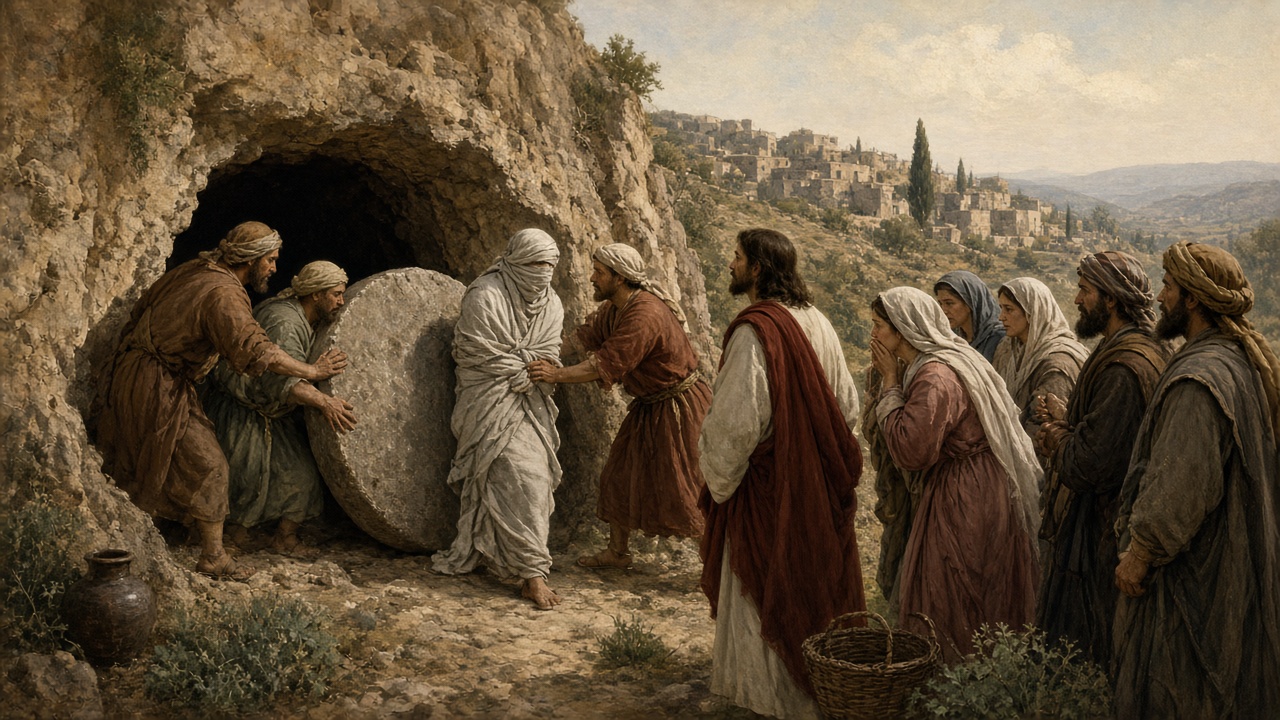
Lazarus Raised at Bethany
- John places Bethany, the village of Lazarus and his sisters Mary and Martha, a little less than two miles from Jerusalem. Easton's Bible Dictionary (1897) locates it on the southeastern slope of the Mount of Olives, on the road to Jericho, and says it took its name from the palm trees that grew there and was known as el-Azariyeh, “place of Lazarus.”Sources: Bethany · the Bible text itself
- Thomas, one of the twelve, was also called Didymus, the Greek equivalent of his name, which means “twin.” When Jesus chose to go back to Judea, where people had just tried to stone him, Thomas said to the other disciples, “Let us also go, so that we may die with Him.”Sources: Thomas · the Bible text itself
- After some reported what Jesus had done, the chief priests and Pharisees convened the Sanhedrin, afraid that if everyone believed in Jesus the Romans would take away both their place and their nation. Caiaphas, high priest that year and, according to Easton's Bible Dictionary (1897), a Sadducee who held office from A.D. 27 to 36, said it was better that one man die for the people than that the whole nation perish. John says that as high priest that year he was prophesying that Jesus would die for the nation, and from that day they plotted to kill him.Sources: Caiaphas · the Bible text itself
Notes written with AI assistance from open sources (Theographic Bible Metadata, CC BY-SA 4.0; Easton’s Bible Dictionary, public domain) and reviewed before publishing.
Places in this chapter
- Judea · Today: Judea 1 · 31.777, 35.234 · verses 7, 8, 54
- Jerusalem · 31.777, 35.234 · verses 18, 54, 55
- Ephraim · Today: Taybeh · 31.954, 35.300 · verse 54
Only places identified with high confidence are shown (90% or more according to the scholarly sources compiled by OpenBible). Period map: DARE (Digital Atlas of the Roman Empire), CC BY 4.0; modern map: © OpenStreetMap contributors; places: OpenBible.info (CC BY 4.0).
Credits and license for this translation
Píívyéébé ihjyu: jetsocríjyodítyú cáátúnuháámɨ
New Testament in Bora (PE:boa:Bora)
copyright © 2008 Wycliffe Bible Translators, Inc.
Language: Bora
Translation by: Wycliffe Bible Translators, Inc.
Boara [boa], Peru
Copyright Information
© 2008, Wycliffe Bible Translators, Inc. All rights reserved.
This translation text is made available to you under the
terms of the Creative Commons License: Attribution-Noncommercial-No Derivative Works.
( http://creativecommons.org/licenses/by-nc-nd/3.0/ )
In addition, you have permission to port the text to different file formats, as long as you
do not change any of the text or punctuation of the Bible.
You may share, copy, distribute, transmit, and extract portions
or quotations from this work, provided that you include the above copyright
information:
You must give Attribution to the work.
You do not sell this work for a profit.
You do not make any derivative works that change any of the actual words or punctuation of the Scriptures.
Permissions beyond the scope of this license may be
available if you contact
us with your request.
The New Testament
in Bora
© 2008, Wycliffe Bible Translators, Inc. All rights reserved.
This translation is made available to you under the terms of the
Creative Commons Attribution-Noncommercial-No Derivatives license 4.0.
You may share and redistribute this Bible translation or extracts from it in any format, provided that:
You include the above copyright and source information.
You do not sell this work for a profit.
You do not change any of the words or punctuation of the Scriptures.
Pictures included with Scriptures and other documents on this site are licensed just for use with those Scriptures and documents.
For other uses, please contact the respective copyright owners.
2014-04-22
Source: http://ebible.org/boaNT/ · eBible.org