Genesis 9
A Nitana Vure · Tap a verse to see its cross-references.
A Vure i Rata a Ngava Dagi Turana e Noa
1Muri a Vure i gamai e Noa turana e tuna mai i taki ria, “Mu bele kupo, mu vakavonu a malala. 2A kanirau lobo na malala, a kadirovo lobo, a maki lobo ri karaka na malala, a manu lobo, bara ri mangenge ne mua. Ngane a ru na limane mua. 3A maka maki mahuri ri laho ga maki ni kani ne mua, i manga a hini muga a habi ne mua a kobo mu kani. Pali ngane a habi a maki lobo ga maki ni kani ne mua. 4Pali a bobona maki i vona a dara, naha ni kani, a vuhuna a dara i habi a nimahuri. 5Pali e rei a bakovi, a kanirau, a livoa hateka i rabalakia tara viri, i muholi hateka bara kolia. E rei i rabalaki a viri tara, iau bara kolia vona a naro i ratea.
6E rei a bakovi i rabalakia a viri tara,
ia kunana bara i mate na limana bakovi,
a vuhuna iau a Vure
a rata rikea a bakovi i manga iau.
7Pali mua, mu bele kupo mu vakavonua a malala.”
8Muri a Vure i takia e Noa turana e tuna mai, 9“Ngane ga vakatubua a ngava dagi turamu, turana e huriki a hamomu ri gi bele muri ma, 10turana a maki mahuri ra ri turane mua: a maka kadirovo, a sipsip a bulmakau, a kanirau, turana a maki lobo ri pagitala turane mua na agarungu, ra maka maki mahuri lobo na malala. 11Iau a rua a ngava dagi nau turane mua. A ta muholi, a marungulolo i uka ma ge ratapile tabu a maka maki mahuri. Muholi hateka a marungulolo i uka ma ge ratapile tabu a malala.”
12Muri, a Vure i ta maea, “Iau a rua a kuriki na bubu, ge a nivakasiri na ngava dagi nau na maka maki mahuri na malala. Ra kuriki iea a nivakasiri na ngava dagi a rata turane mua, turana a maka maki mahuri ri turane mua na agarungu. Ra ngava iea i lakea tabu ne huriki a hamomu bara ri bele muri ma. 14Na tahuna iau a ru a bubu polomeli na hunu, a kuriki bara i pesi vona. 15Iau bara luhoi mule a ngava dagi a ratea turana a maka maki mahuri na malala. Nahea tabu a marungulolo ge ratapile lobo a maka maki mahuri. 16Na tahuna a kuriki i pesi na bubu, bara masia, a luhoi mule a ngava dagi i tabuli vakaroro turagu, turana a kabu na maki mahuri na malala.” 17Muri a Vure i takia e Noa, “A kuriki a nivakasiri na ngava dagi, a habia na maka maki mahuri na malala.”
E Tune Noa ala Tolu
18E tune Noa to pagitala na agarungu ra nga: e Sem, e Ham, e Iapet. (E Ham e tamana e Kenan). 19re tune Noa nga, tou a vuhuna e huriki lobo. To vakabele e huriki, muri ri mariu viliha lae na malala.
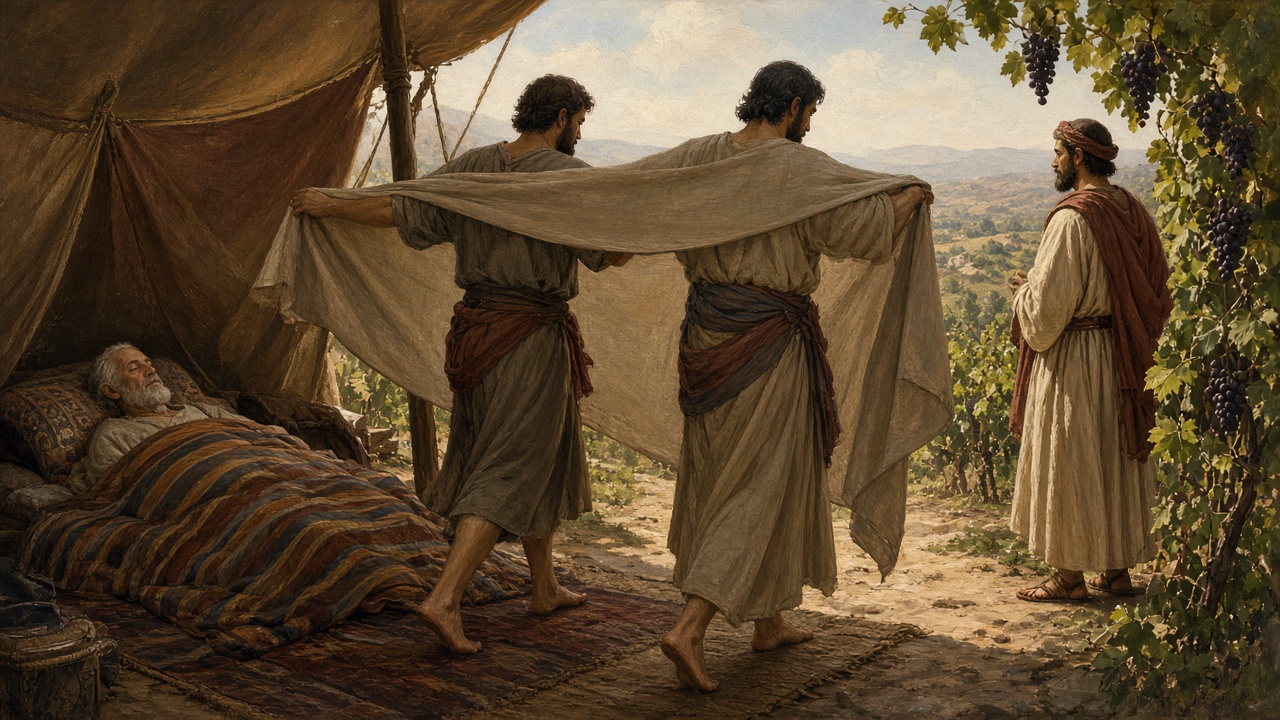
20E Noa a bakovi ni leho na hania, i vakatubu ni varo a vain na hania vona. 21Na parava tara, i ninu ranga vain vona, i manga, i mahita bobo pololilo na kape vona. 22E Ham e tamane Kenan, i masia e tamana i mahita bobo, lakea i pagitala, i vakalongo e turana rua polovavo. 23Lakea e Sem rua e Iapet ru nugu gaviri na bitone rua a varakia, ru laho bitona ru kavitagua e tamane rua, ra i mahita bobo. Ru matahere, a vuhuna ru koi ni masia e tamane rua i bobo. 24Na tahuna e Noa i hadongo, i palala a gina, ni vakalongo vona a naro i ratea vona e tuna, ra kabina ruru. 25Lakea e Noa i tahatea i ta maea,
“E Kenan ni gi ruduraha!
Bara ia a vorakato ne turana rua.”
26Muri i ta maea tabu,
“Ni gi kavurike e BAKOVI DAGI, a Vure ne Sem,
pali e Kenan bara ia a vorakato ne Sem kunana.
27A Vure ge hudo talea a hamone Iapet,
e huriki a hamona ri gi made turana a hamone Sem,
pali e Kenan ge ia a vorakato ne Iapet.”
28Muri na marungulolo, e Noa i made tabu na pida i 350. 29A pida vona ni gi palupu lobo i 950, muri i mate.
Did you know?
Noah's Covenant and the Words about His Sons
- God makes a covenant with Noah, with his descendants, and with every living creature that came out of the ark, promising never again to destroy all life by a flood. The sign is a rainbow set in the clouds, for all generations. One chronology dates this covenant to 2346 BC.Sources: the Bible text itself · God makes a covenant with Noah
- Genesis 9 says the whole earth was populated from Shem, Ham, and Japheth. Shem is explained as 'a name' or 'renown,' probably the eldest and the ancestor of the Israelites, though Japheth is also described as perhaps first by birth. Japheth means 'wide spreading,' a play on the Hebrew 'God shall enlarge Japheth,' and is linked to many tribes in the east of Europe and the north of Asia; Ham, meaning 'warm' or 'hot,' and hence the south, is called Noah's youngest son.Sources: the Bible text itself · Shem · Japheth · Ham
- Noah, a man of the soil, plants a vineyard, drinks the wine, and lies uncovered in his tent. Shem and Japheth cover him while walking backward, faces turned away, an act a dictionary calls filial piety and the occasion of the prophecy that Japheth's descendants would spread. The curse is spoken against Canaan, Ham's fourth son, because of what his father had done; one chronology dates the episode to 2345 BC.Sources: the Bible text itself · Japheth · Canaan · Noah gets drunk and Canaan is cursed
Notes written with AI assistance from open sources (Theographic Bible Metadata, CC BY-SA 4.0; Easton’s Bible Dictionary, public domain) and reviewed before publishing.
Credits and license for this translation
A Nitana Vure
Genesis, Exodus, Leviticus, Numbers, Deuteronomy, Joshua, Ruth, Jonah, and the New Testament in the Bola language of Papua New Guinea
Sampela hap Buk Baibel long tokples Bola long Niugini
copyright © 2011 Wycliffe Bible Translators, Inc.
Language: Bola
Translation by: Wycliffe Bible Translators
This translation is made available to you under the terms of the
Creative Commons Attribution-Noncommercial-No Derivatives license 4.0.
You may share and redistribute this Bible translation or extracts from it in any format, provided that:
You include the above copyright and source information.
You do not sell this work for a profit.
You do not change any of the words or punctuation of the Scriptures.
Pictures included with Scriptures and other documents on this site are licensed just for use with those Scriptures and documents.
For other uses, please contact the respective copyright owners.
2014-12-03
Source: http://png.bible/bnp/ · eBible.org