Genesis 8
A Nitana Vure · Tap a verse to see its cross-references.
A Marungulolo i Hoho Puru
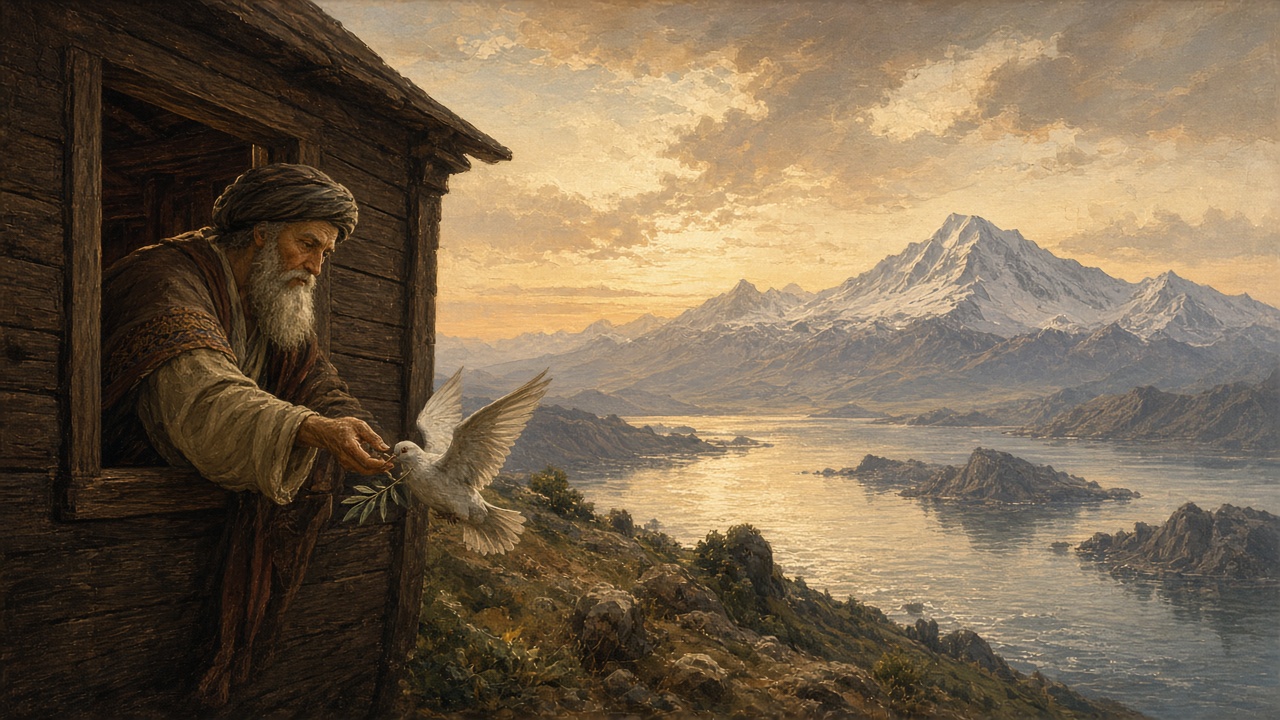
1Pali a Vure, i uka ma i longokaburungi e Noa turana a maka kanirau, a sipsip a bulmakau ra ri kapiloho na agarungu. I rudua a vilu i ngalu langa vona a dari, lakea a dari i hoho puru. 2Ngane a Vure i tukari a maka matana naru na bobona malala a hunu, lakea a vala i lobo na niboru valai meli na hunu. 3Pali a naru i vakatubu ni hoho puru na malala. Muri na parava i 150 a naru i hoho puru lobo. 4Na parava i ravulu a polona i polorua, na poloruana keva, a agarungu i koro na mapana lolo e Ararat. 5A dari i hoho puru, lakea na mugana parava na ravuluna keva i lele a maka mapana lolo. 6I lobo a parava i ravulu va, lakea e Noa i talea a matatalana agarungu, 7i vakabebe talea a kokoa, i bebe lae polovavo, i davea a dari ge hoho puru. 8Muri i vakabebe talea a balu ge kasisia a dari i hoho puru pali, o i tabana. 9A balu i uka ma i puruvisi a hini ge toka vona, a vuhuna a naru i tabana ni kavitagua a malala, lakea i bebe mule ne Noa na agarungu. E Noa i toto tala a limana i bole dilia a balu. 10I dava na parava i polorua tabu na agarungu, muri i vakabebe tabua a balu. 11Na tahuna a balu i hamule na malunga, i gogoa a pagana kai a oliv i karaputu karabea. Ngane e Noa i lohoka a dari i hoho puru pali. 12I dava tabu na parava i polorua, muri i vakabebe tabua a balu, pali na tahuna iea a balu i uka ma i hamule.
13Na tahuna e Noa i tahoka a pida i 601, na mugana parava na mugana keva, a naru i hoho puru liu na malala. I kalipidea a hini polomeli na agarungu, i masia a malala i kere. 14Na parava i ravulu rua a polona i polorua (27) na ruana keva, a malala i kere liu. 15Muri a Vure i takia e Noa, 16“Ioe, turana e girihimu, e tumu mai turana e girihine tou, mu pagitala na agarungu. 17O vakalaho tala a maka maki mahuri takutaku, ra ri turamu. A maka kadirovo, a maka kanirau, a maka maki lobo ri karaka na robo, ri gi poda kupo na malala, ri gi vole, ri gi vakavonu a malala, a kabune ria.” 18Muri e Noa i pagitala, turana e girihina, e tuna mai, turana e girihine tou. 19A maka kanirau, a maki lobo ri laho na robo, a kadirovo lobo, a maki legelege lobo ri mahuri na malala ri laho na tete, ri pagitala na agarungu. 20Muri e Noa i kisia a dede-kedo ne BAKOVI DAGI, i bole ranga kanirau kabakaba, a kadirovo kabakaba, i rabalaki i gutu-vuro ria i habi ne Bakovi Dagi. 21Na tahuna e BAKOVI DAGI i burongi a mangina maki nga i huli lakea vona, lakea i taki mulea, “Iau i uka ma ga ruduraha tabua a malala ne vona ni koli a naro hale ne huriki. I muholi a naro hale ne ria i vakatubu na tahuna ri kiroko vona. Pali ngane, i uka ma ga ratapile tabu a maka maki mahuri, ge manga a hini a rata pali.
22“A malala bara i tahoka a parava, a rodo,
a tahuna ni varo a hania, a tahuna ni mirio a hania,
a tahuna na malangia, a tahuna ni kakarongo,
a tahuna na haro, a tahuna na vala.
A maka tahuna nga i uka ma ge lobo, bara ri tabuli vakaroro na malala.”
Did you know?
The Waters Recede
- The ark came to rest on the mountains of Ararat, a name meaning “sacred land” or “high land” for a country on whose mountains the ark settled after the flood. Easton's Bible Dictionary (1897) suggests those mountains were probably the Kurdish range of southern Armenia, though the name is also commonly applied to a high, almost inaccessible peak rising from the plain of the Araxes. In 2 Kings 19:37 and Isaiah 37:38 the Authorized Version renders the name “Armenia” and the Revised Version “land of Ararat,” while Jeremiah 51:27 uses it for central or southern Armenia.Sources: Ararat · the Bible text itself
- Noah’s Hebrew name means “rest,” and in this chapter the ark itself comes to rest as the waters go down. He was the son of Lamech and the grandson of Methuselah, and the father of Shem, Ham, and Japheth. Easton's Bible Dictionary describes him as the connecting link between the old world and the new, and as a second great progenitor of the human family.Sources: Noah · the Bible text itself
- Chronological notes place the Great Flood in 2347 BC, lasting one year; the subsiding of the waters in 2346 BC, over 220 days; and the leaving of the ark in 2346 BC, as a single day. In the chapter itself, the waters have gone down after 150 days and the ark rests on the seventeenth day of the seventh month; on the first day of the first month of Noah’s six hundred and first year the waters have dried up, and by the twenty-seventh day of the second month the earth is fully dry.Sources: The Great Flood · The flood subsides · Leaving the Ark · the Bible text itself
Notes written with AI assistance from open sources (Theographic Bible Metadata, CC BY-SA 4.0; Easton’s Bible Dictionary, public domain) and reviewed before publishing.
Places in this chapter
- Ararat · Today: Urartu · 39.703, 44.300 · verse 4
Only places identified with high confidence are shown (90% or more according to the scholarly sources compiled by OpenBible). Period map: DARE (Digital Atlas of the Roman Empire), CC BY 4.0; modern map: © OpenStreetMap contributors; places: OpenBible.info (CC BY 4.0).
Credits and license for this translation
A Nitana Vure
Genesis, Exodus, Leviticus, Numbers, Deuteronomy, Joshua, Ruth, Jonah, and the New Testament in the Bola language of Papua New Guinea
Sampela hap Buk Baibel long tokples Bola long Niugini
copyright © 2011 Wycliffe Bible Translators, Inc.
Language: Bola
Translation by: Wycliffe Bible Translators
This translation is made available to you under the terms of the
Creative Commons Attribution-Noncommercial-No Derivatives license 4.0.
You may share and redistribute this Bible translation or extracts from it in any format, provided that:
You include the above copyright and source information.
You do not sell this work for a profit.
You do not change any of the words or punctuation of the Scriptures.
Pictures included with Scriptures and other documents on this site are licensed just for use with those Scriptures and documents.
For other uses, please contact the respective copyright owners.
2014-12-03
Source: http://png.bible/bnp/ · eBible.org