Genesis 26
A Nitana Vure · Tap a verse to see its cross-references.
E Isak e Abimelek
1Ngane a pago i bele na robo e Kenan i manga a hini muga na tahuna ne Abraham. E Isak i vano, i lakea ne Abimelek, a hariki ne huriki a Palestina, na tanga e Gerar. 2Na parava tara, e BAKOVI DAGI i bele ne Isak, i ta maea, “Naha ni puru o Egipto, o made vona a malala ga vakasiri ioe vona. 3O made popote vona a malala iea. Iau ga made turamu, ga gamai ioe. Ra malala iea ga habia vomu turane huriki a hamomu, bara vakatorea ra nita dagi a ta muholi vona ne tamamu, e Abraham. 4Ga rata e huriki a hamomu ri gi kupo manga a hada na hunu. Ga habia ne ria a robo iea. Na hamomu kunana, ga gamai e huriki lobo na malala, 5a vuhuna e Abraham i ramai tora a nitagu a vinara nau.” 6Lakea e Isak i made vonga na tanga e Gerar.
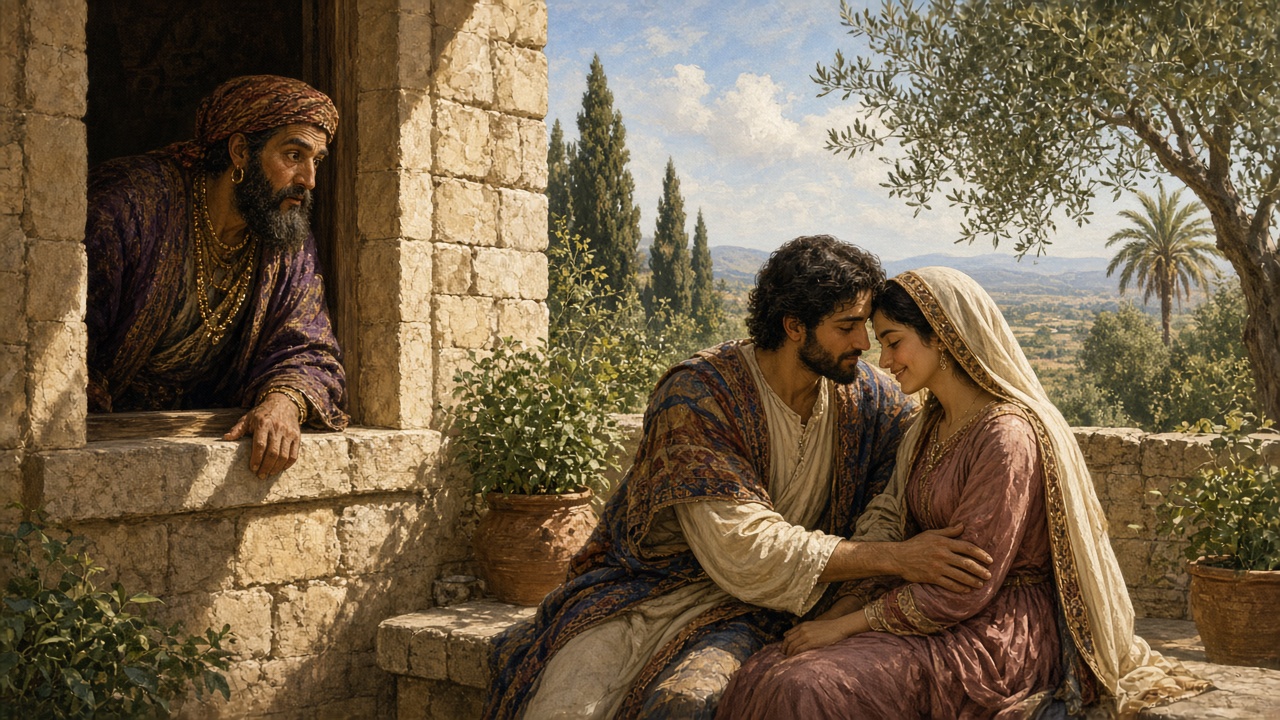
7E huriki na tanga ri nanea vona e girihina, lakea e Isak i ta maea, “Ia e kurabagu.” I koi ni taki ria vona e Rebeka ge girihina, a vuhuna i mangenge. I luhoi maea, “E huriki a bakovi na tanga bara ri rabalaki iau, ri bolea e Rebeka, a vuhuna i mata kamumu hateka.”
8Ngane e Isak i made tabaka pali na tanga iea. Na parava tara, e Abimelek, a hariki ne huriki a Palestina, i mata tala na mataruma, i masia e Isak i kakoa e girihina, e Rebeka. 9Lakea, e Abimelek i galea e Isak, i nanea, “Ra ngatavine iea, e girihimu! I navai o takia ta ia e kurabamu?”
Lakea e Isak i koli mulea, i ta maea, “A vuhuna a luhoi maea, bara takia e girihigu, e huriki a bakovi bara ri rabalaki iau, ri bolea e Rebeka.”
10Muri e Abimelek i ta maea, “A ra o ratea ne mia? A bakovi tara bara i mahita turane girihimu, bara mi tahoka a ngava!”
11Lakea, e Abimelek i vara e huriki a tahotanga, i ta maea, “E rei a viri i rata hale a bakovi iea turane girihina, bara ni rabalaki.”
12E Isak i rata a hania, i varo a maki ni kani vona a robo iea. Na pida iea kunana i vona hateka a maki ni kani a hania, a vuhuna e BAKOVI DAGI i gamaia. 13E Isak i tahoka a mahala i kupo. A mahala vona i bele kupo, i rata ia a viri na mahala. 14E Isak i tahoka a maka kabuna sipsip, a kabuna bulmakau, a vora ni leho, i rata ngane e huriki a Palestina ri masigoro na mahala vona. 15Lakea e huriki a Palestina ri bole a malala, ri kavitagu a lovo na naru e huriki a vora ne tamana, e Abraham, ri keli hosi.
16Muri, e Abimelek i takia e Isak, “O pe mia, o vano, a vuhuna o tuhaka hateka ne mia.”
17Lakea e Isak i pe a hini nga i vano i made na maloku ne Gerar. 18I keli tabu a maka lomu, ra ri kavitagu e huriki a Palestina na tahuna e Abraham i mate. Lakea i gale tabu ria vona a rane ria, i vunu ria vona e Abraham.
19E huriki a vora ne Isak ri keli lae na maloku, ri matavisia a narubele. 20Lakea e huriki a vora na ni matakari a sipsip o Gerar, ri tahate e huriki a vora na ni matakari a sipsip ne Isak, ri ta maea, “Ra lomu iea ne mia.” Lakea e Isak i vunua a lomu iea e Esek a vuhuna ri vagege turana. 21Muri ri kelia a lomu tara, pali ri vatahate tabu maia, lakea i vunua e Sitna. 22I pe a hini ngi, i lakea i keli tabua a lomu tara, pali i uka viri ge tahate vona. I vunua e Rehobot, lakea i ta maea, “Ngane e BAKOVI DAGI i habia ne hita a tabeke iea bara si leho vona, si tahoka a maki kupogala.”
23Muri, i pe a hini nga, i lakea o Bersiba. 24Na rodo tara e BAKOVI DAGI i bele vona, i takia, “Iau a Vure ne tamamu e Abraham. Naha ni mangenge. Iau a made turamu. Iau ga gamai ioe, ga vakabele kupo e huriki a hamomu, a vuhuna e Abraham ia a vora nau.”
25E Isak i haea vonga a dede-kedo i kavurikea a rane BAKOVI DAGI. Muri i vakapesia vonga a kape vona, lakea e huriki a vora vona ri kelia a naru.
26E Abimelek i pea a tanga e Gerar, i valai mai e Isak turana e Ahusat, ra bakovi ni habi a niluhoi vona, e Pikol, ra ubu na tara na vabinga vona. 27Lakea e Isak i nana tou, “I navai moto valai nau? I uka ma i hosi hateka moto tahate iau, moto tono tala iau.”
28Lakea to takia, “Mete matakilaka vona e BAKOVI DAGI i turamu, lakea mete ngaru si gi valongo mai a ngava. A ngava ge maea, 29‘Ioe i uka ma go rata hale mateu. I manga mateu hosi, i uka ma mete rata hale ioe. Mete rata kamumu ioe, muri mete rudu ioe o vano na ni valemu. Ra ngane e BAKOVI DAGI i gamai ioe.’”
30E Isak i ratea a habu ne tou, to kani, to ninu. 31Na hatelanga pokopoko to kaba takutaku vona a nita muholi. Muri to tarulu purua e Isak, to vano.
32Na parava iea kunana, e huriki a vora ne Isak ri valai ri vakalongoa vona a naru ri kelia pali. Ri ta maea, “Mi matavisia a naru!” 33Lakea i vunua e Siba. Mona ni gale liu a tanga iea e Bersiba.
34E Esau i tahoka a pida i ravulu va, i parangi vona e Iudit, e tune Biri, a kabu ne Hiti. E girihina tara, e Basemat, e tune Elon, ia tara a kabu ne Hiti. 35Ngane e Isak e Rebeka ru loho lege lae vona e tune rua i parangi na ngatavine o Hiti.
Did you know?
Isaac in Gerar
- During a famine, Isaac sought refuge with Abimelech, king of Gerar, an ancient town and district on the southern border of Palestine. Easton's Bible Dictionary (1897) notes that Isaac acted toward his wife Rebekah much as his father Abraham had acted toward Sarah there: he said she was his sister. Abimelech later rebuked him when the deception was discovered.Sources: Abimelech (King of Gerar) · Gerar · the Bible text itself
- The names of wells in the Valley of Gerar recall the disputes over them. Esek means “quarrel,” because the herdsmen of Gerar claimed the water, and Sitnah means “strife.” Isaac also reopened wells that his father Abraham’s servants had dug and that the Philistines had stopped up, and he gave them the same names his father had given them.Sources: Esek · Sitnah · the Bible text itself
- Beersheba means “well of the oath” or “well of seven.” According to Easton's Bible Dictionary (1897), Abraham dug a well there and named it after a compact with Abimelech, and Isaac gave it the same name when he reopened it. The dictionary also identifies Phicol—“great”—as chief captain of Abimelech’s army, and says he took part in Abraham’s alliance over that well.Sources: Beersheba · Phichol · the Bible text itself
Notes written with AI assistance from open sources (Theographic Bible Metadata, CC BY-SA 4.0; Easton’s Bible Dictionary, public domain) and reviewed before publishing.
Places in this chapter
- Egypt · 30.129, 31.308 · verse 2
- Valley of Gerar · Today: about 3 km around Tel Haror · 31.382, 34.606 · verses 17, 19
Only places identified with high confidence are shown (90% or more according to the scholarly sources compiled by OpenBible). Period map: DARE (Digital Atlas of the Roman Empire), CC BY 4.0; modern map: © OpenStreetMap contributors; places: OpenBible.info (CC BY 4.0).
Credits and license for this translation
A Nitana Vure
Genesis, Exodus, Leviticus, Numbers, Deuteronomy, Joshua, Ruth, Jonah, and the New Testament in the Bola language of Papua New Guinea
Sampela hap Buk Baibel long tokples Bola long Niugini
copyright © 2011 Wycliffe Bible Translators, Inc.
Language: Bola
Translation by: Wycliffe Bible Translators
This translation is made available to you under the terms of the
Creative Commons Attribution-Noncommercial-No Derivatives license 4.0.
You may share and redistribute this Bible translation or extracts from it in any format, provided that:
You include the above copyright and source information.
You do not sell this work for a profit.
You do not change any of the words or punctuation of the Scriptures.
Pictures included with Scriptures and other documents on this site are licensed just for use with those Scriptures and documents.
For other uses, please contact the respective copyright owners.
2014-12-03
Source: http://png.bible/bnp/ · eBible.org