Exodus 3
A Nitana Vure · Tap a verse to see its cross-references.
E Moses i Masia a Kai i Nono
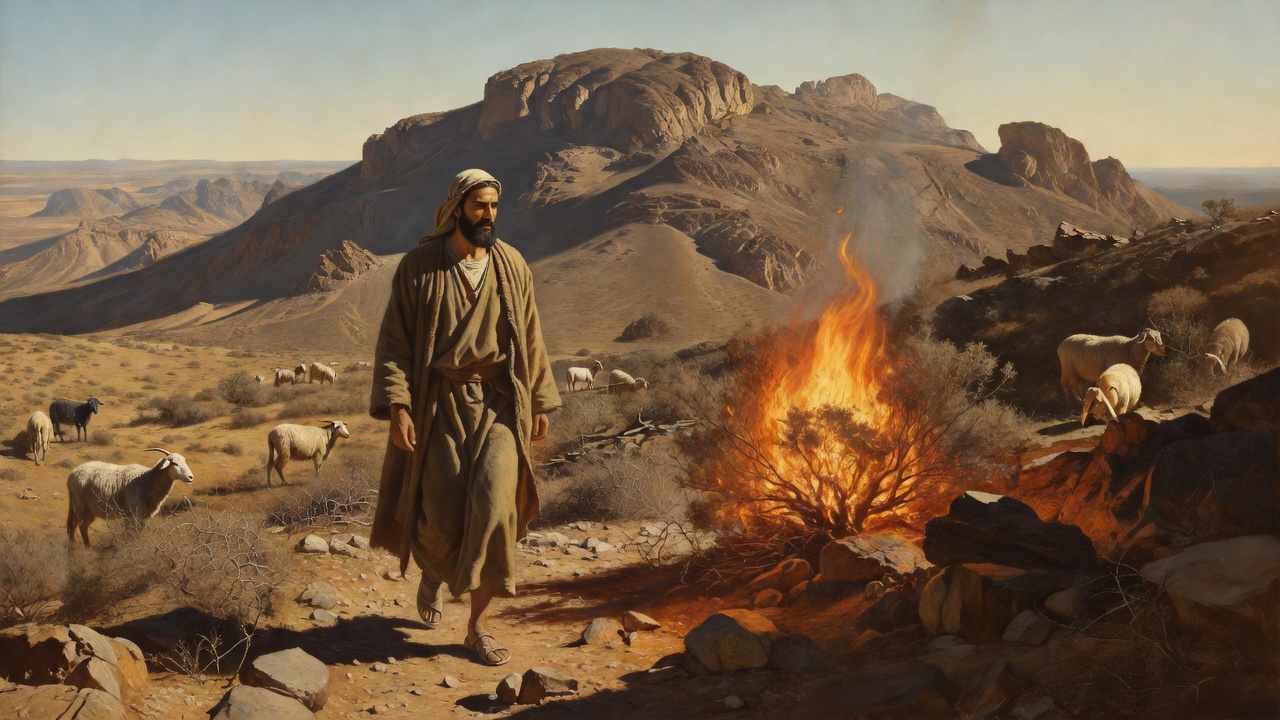
1E Moses i matakari a maka sipsip a meme ne lahuana e Ietro, a prister ne Midian. Na parava tara e Moses i vakalaho a maka sipsip a meme, i lakea na tabeke na nirolona haro na tabeke i ngeki, i bele o Horeb, a lolo na Vure. 2A agelo ne BAKOVI DAGI i bele vona, i manga a kanono i hube langa na kai kiroko tara. Pali e Moses i masia a kai i hube vona a kanono, pali i uka ma i nono. 3Lakea i ta maea, “Ga lokovonga tabukoi, ga masia a maki i hube. I navai a kai kiroko iea i uka ma i nono?”
4E BAKOVI DAGI i made na kurukuruna kai kiroko, i masia e Moses i valai tabukoi, lakea i galea, “Moses, Moses!”
E Moses i koli, i ta maea, “Iau ieni.”
5Lakea a Vure i takia, “Naha ni valai tabukoi. O kali tala a vahapolo vomu, a vuhuna a malala o pepesi vona, a tabea. 6Iau a Vure ne huriki a gare vomu. Iau a Vure ne Abraham, ne Isak, ne Iakop.” E Moses i longoa a ngava iea i kavitagua a matana, a vuhuna i mangenge ni masia a matana Vure.
7Lakea e BAKOVI DAGI i takia, “Iau a matai e huriki a Egipto ri vakavora hateka e huriki a viri nau. Ngane ri gale iau ga korimule ria na limane huriki a matakari hale. A longoa a nigale ne ria, a lohoka hateka vona a nimadihi ri bolea. 8Ngane a puru valai ga korimule ria na limane huriki a Egipto, ga taparaki ria vona a malala kamumu i vona a maki ni kani. Ra malala iea, ngane e huriki a Kenan, a Hiti, a Amor, a Peres, a Hivi, a Iebus ri made vona. 9A longoa pali a nitangi ne huriki a Israel, a masia pali a naro hale ne huriki a Egipto ri rata virihi ria vona. 10Ngane o lakea ne Parao, o takia go tuli e huriki a viri nau, ri gi pea e Egipto.”
11Pali e Moses i takia a Vure, “Iau e rei a bakovi ga lakea ne Parao, ga takia ga tuli tala e huriki a Israel o Egipto?” 12Lakea a Vure i ta maea, “Iau a made turamu. Ngane ga habia vomu tara kilakila ge vakasiri ioe, iau a rudu ioe. Ra kilakila iea ge maea, na tahuna o tuli tala e huriki a Israel o Egipto, ri gi valai, mu kavurike iau na lolo iea.”
13Lakea e Moses i takia a Vure, “Na tahuna ga lakea ne huriki a Israel, ga taki maea ria, a Vure ne huriki a gare ne mua i rudu iau a valai. Pali ma ri gi nana ranga, ri gi ta maea, ‘E rei a rana?’ Ga ta navai?”
14Lakea a Vure i takia e Moses, i ta maea, “Iau ra Iau. O taki maea e huriki a Israel, ‘Iau ra Iau i rudu iau a valai ne mua.’”
15A Vure i taki tabua e Moses ge taki e huriki a Israel, ge ta maea, “E BAKOVI DAGI, ra Vure na gare ne mua e Abraham, e Isak, e Iakop i rudu iau a valai.”
Muri i ta maea, “A ragu i tabuli vakaroro. E huriki a hamone mua ri gi gale maea a rana muri ma.
16“O vano, o gale palupu e huriki a bakovi dagi ne Israel. O vakalongo ria ne nau, iau e BAKOVI DAGI a Vure na gare ne ria e Abraham, e Isak, e Iakop a bele vomu. O taki ria vona iau a matakari ria, a matai pali a maka maki ni rata virihi ria vona o Egipto. 17A luhoi muga pali ta ga bole tala ria na tanga na nimadihi o Egipto. Muri ga bole sike ria na robo ne huriki a Kenan, a Hiti, a Amor, a Peres, a Hivi, a Iebus. Ra malala iea i kamumu, i vona a maki ni kani.
18“O taki e huriki a gare o Israel ri gi longo maia a nitamu, ri gi ramaia. Muri o bole ria ri gi lakea na hariki o Egipto ri gi ta maea, ‘E BAKOVI DAGI, a Vure ne mia a Hibru, i made turane mia. Ngane mi valai mi gi nana ioe ta go longo ne mia, mi gi lakea taro na tabeke i ngeki. Mi gi laho na parava ge tolu, muri mi gi habi a nihabi ne Bakovi Dagi a Vure ne mia.’
19“Pali iau a lohoka vona a hariki, e Parao, i uka ma i ngaru mu gu vano. Na nitora nau kunana bara mu vano. 20I mavonga iau bara vakasiria a nitora nau, ga rata a maka niturutu ga ratapile e huriki a Egipto. Muri e Parao bara i longo ne mua mu vano.
21“Muri na tahuna a vakamadihi e huriki a Egipto, bara ri mangenge ne mua, ri habi tavula a maki ne mua. Na tahuna mu mariu tala i uka ma mu gu laho pa. 22E huriki a ngatavine o Israel bara ri taki e huriki a ngatavine o Egipto ri made tabukoi ne ria, e huriki ri made na ruma ne ria, bara ri habi ne ria a maka kala, a mahala ni rata na gol, a silva. Ra mahala nga bara mu vakabagetu e huriki e tune mua vona. Na naro iea kunana bara mu vakalobo liu a maka mahala o Egipto.”
Did you know?
The Call of Moses at the Burning Bush
- Moses is shepherding in Midian when this chapter begins. The Midianites were a nomadic Arabian tribe descended from Midian, Abraham's fourth son by Keturah, whose name is explained as strife. They lived chiefly in the desert north of Arabia, and the Sinai peninsula was grazing land for their flocks; it was there, after fleeing Egypt, that Moses became a servant and then the priest's son-in-law.Sources: the Bible text itself · Midian · Midian
- His father-in-law is Jethro, called the priest of Midian. Easton's Bible Dictionary (1897) equates that priest with Raguel and says that, if the two names belong to one man, Raguel may be regarded as his personal name and Jethro, meaning excellency, as an official title.Sources: the Bible text itself · Jethro
- Moses leads the flock to Horeb, the mountain of God. The name is explained as desert, or mountain, of the dried-up ground, a general term for the whole range of which Sinai was one summit; Easton's Bible Dictionary (1897) gives the modern name of the range as Jebel Musa and describes a huge block about two miles long and about one mile wide, with a very spacious plain called Er Rahah at its north-east end, where the Israelites later camped for nearly a year.Sources: the Bible text itself · Horeb
Notes written with AI assistance from open sources (Theographic Bible Metadata, CC BY-SA 4.0; Easton’s Bible Dictionary, public domain) and reviewed before publishing.
Places in this chapter
- Midian · 28.495, 35.012 · verse 1
- Mount Horeb · Today: Jebel Musa · 28.540, 33.973 · verse 1
- Egypt · 30.129, 31.308 · verses 7, 8, 10, 11, 12, 16, 17, 18, 19, 20, 22
Only places identified with high confidence are shown (90% or more according to the scholarly sources compiled by OpenBible). Period map: DARE (Digital Atlas of the Roman Empire), CC BY 4.0; modern map: © OpenStreetMap contributors; places: OpenBible.info (CC BY 4.0).
Credits and license for this translation
A Nitana Vure
Genesis, Exodus, Leviticus, Numbers, Deuteronomy, Joshua, Ruth, Jonah, and the New Testament in the Bola language of Papua New Guinea
Sampela hap Buk Baibel long tokples Bola long Niugini
copyright © 2011 Wycliffe Bible Translators, Inc.
Language: Bola
Translation by: Wycliffe Bible Translators
This translation is made available to you under the terms of the
Creative Commons Attribution-Noncommercial-No Derivatives license 4.0.
You may share and redistribute this Bible translation or extracts from it in any format, provided that:
You include the above copyright and source information.
You do not sell this work for a profit.
You do not change any of the words or punctuation of the Scriptures.
Pictures included with Scriptures and other documents on this site are licensed just for use with those Scriptures and documents.
For other uses, please contact the respective copyright owners.
2014-12-03
Source: http://png.bible/bnp/ · eBible.org