Exodus 2
A Nitana Vure · Tap a verse to see its cross-references.
E Moses Ni Poda
1Ngane a bakovi tara na kabu ne Levi i parangi vona a ngatavine, ia tara a kabu ne Levi. 2Muri a ngatavine i singou i podea a koma bakovi. E kinana i masia i mata kamumu hateka, lakea i ruhuloloa na keva i tolu. 3Na tahuna a koma i kulabo, e kinana i keri ni ruhuloloa. Muri e kinana i vaia na pagana gili a kulopi, i pipi karia na kasita, i vakamahitea vona a koma, i ruhuloloa na ganu na dahana naru e Nail. 4E kurabana koma i pesi basi popote, i matanonoa a a ra maki ge bele vona.
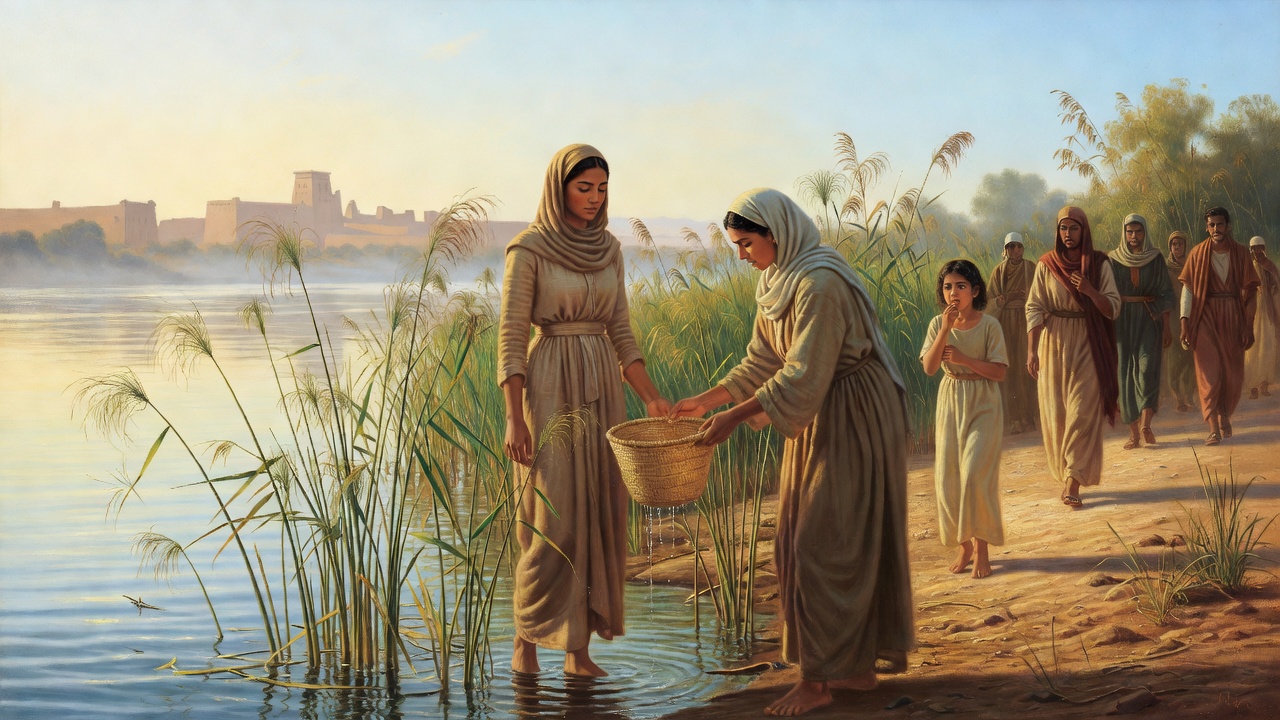
5I uka ma i tabaka, i masia e tune Parao ngatavine i valai turane huriki a vora ngatavine vona, ge hilolo. Na tahuna i hilolo, e huriki a vora ngatavine vona ri laho viliha na dahana naru, ri davea. Lakea e tune Parao i masia a kulopi i papasi na naru pololilo na ganu, i rudua a vora vona ge bole vilia. 6Na tahuna i avea a kulopi, i masia a koma bakovi i mahita pololilo na kulopi, i tatangi. Lakea i dodoa i ta maea, “Ra koma iea a tuna Hibru.”
7Muri e kurabana i valai i takia e tune Parao, “Ioe o ngaru, ga vano ga takia tara ngatavine na Hibru ge matakaria vomu a koma.”
8Lakea e tune Parao i ta maea, “I kamumu. O vano o takia tara ngatavine ge valai.” Lakea e kurabana i vano i takia e kinana muholi, i valai.
9Na tahuna e kinana i valai, lakea e tune Parao i takia, “O bokea a koma, o matakaria ge ne nau, muri ga kona ioe.” Lakea e kinana i bokea, i vakarurua, i matakaria. 10Na tahuna a koma i koru rike, e kinana i boko lakea ne tune Parao i paua ge tuna. Muri i ta maea, “Ra koma iea i papasi na naru, a matavisia. Ngane a vunua a rana e Moses.”
E Moses i Ha Lakea o Midian
11Na tahuna e Moses i koru rike pali, i vano i matai e huriki a viri vona ni vakavora hateka. I masia tara Egipto i ubi halea tara Hibru. 12I mata lae, i uka ma i masia tara viri ge pesi tabukoi, lakea i rabalakia a bakovi o Egipto, i tanua na hire.
13Na parava muri e Moses i hamule tabu i matai a Hibru ala rua ru vaubi. Lakea i takia a viri i vakatubu a vabinga, “I navai o ubia e turamu?” 14A bakovi i koli, i ta maea, “E rei i ru ioe ge ioe a matakari, go pelekado a narone mia? I navai, o luhoi ni rabalaki iau, ge manga a hini o rabalakia a bakovi o Egipto ravi?” Na tahuna e Moses i longoa a ngava iea i mangenge, i luhoi maea, “E huriki ri lohoka vona pali a naro a ratea.”
15Na tahuna e Parao i longoa a naro i ratea e Moses, i madihi a hatena, i ngaru ni rabalakia. Muri e Moses i ha lakea na robo ne huriki a Midian. Na tahuna i bele vonga i made na dahana lomu. 16Na robo iea i tahoka tara prister. I tahoka e tuna ngatavine ala polorua. E Moses i made na dahana lomu i matai e huriki a ngatavine nga ri valai ri gi kiru a maka buroi ne ria, ri gi vakaninu a kabuna sipsip, a meme ne tamane ria. 17Pali i ranga matakari na sipsip ri valai, ri tono tala e huriki a ngatavine nga. Lakea e Moses i hateka ne huriki a ngatavine, i lili e huriki a bakovi, i vakaninu a maka sipsip, a meme ne ria. 18Na tahuna ri hamule, e tamane ria e Ietro i nana, “I navai mu hamule malaviriri?”
19Ri koli ri ta maea, “A bakovi o Egipto tara i tuhori mia, lakea e huriki a tahona sipsip i uka ma ri valili ne mia. Muri i vakaninu a sipsip a meme ne mia.” 20Lakea e tamane ria i nana, “Ra bakovi iea i made vai? I navai mu pe ia vonga? Mu vano mu takia ge valai ge kani turane hita.” Muri ri vano ri takia e Moses, i valai.
21E Ietro i ngarua e Moses ge made turana. Lakea i habia ne Moses e tuna, e Sipora, i parangi vona. 22Muri e Sipora i singou i podea a koma bakovi. Lakea e Moses i taki mule ia i ta maea, “Iau a mosi a made vona a tanga iea. Ngane ga vunua a koma iea e Gersom.”
23Na pida nga, e Moses i made o Midian, a hariki o Egipto i mate. E huriki a Egipto ri vakavora hateka e huriki a Israel, lakea ri dedo, ri tangi, ri nanea a Vure ge tuhori ria. 24A Vure i longoa a nitangi ne ria, i luhoi a ngava dagi i takia ne Abraham ne Isak ne Iakop. 25Lakea a Vure i matai e huriki a Israel ri made hale hateka, i luhoi hateka ria.
Did you know?
The birth and flight of Moses
- Pharaoh’s daughter named the child Moses, explaining that she had drawn him out of the water. Easton's Bible Dictionary (1897) links his name with “drawn,” or with the Egyptian word mesu, “son”—the element from which the dictionary also explains Rameses as “royal son.”Sources: the Bible text itself · Moses
- In Exodus 2 a daughter of Levi hides her son for three months, and Pharaoh’s daughter, finding him among the Nile reeds, recognizes a Hebrew child. Easton's Bible Dictionary (1897) links the Israelites’ affliction to “the new king who knew not Joseph,” long supposed to be Aahmes I, called Amosis by Josephus, though the dictionary, citing discoveries then recent, names Seti instead. Their hardship, it says, began after the Hyksos, masters of Egypt for some five centuries, were driven out and the old dynasty restored.Sources: the Bible text itself · Pharaoh
- After Pharaoh sought to kill him, Moses fled to Midian and sat down beside a well; he later married Zipporah, one of the seven daughters of the priest of Midian. The Midianites were nomadic Arabians descended from Midian, Abraham’s fourth son by Keturah, and they pastured their flocks in the Sinai peninsula and in the desert north of the Arabian peninsula. This chapter calls the priest Reuel, whom Easton's Bible Dictionary (1897) names Raguel, regarding that form as his personal name and Jethro—“excellency”—as an official title if the two are identified.Sources: the Bible text itself · Midian · Midian · Jethro
Notes written with AI assistance from open sources (Theographic Bible Metadata, CC BY-SA 4.0; Easton’s Bible Dictionary, public domain) and reviewed before publishing.
Places in this chapter
- Nile · Today: Nile River · 31.465, 30.367 · verses 3, 5
- Midian · 28.495, 35.012 · verses 15, 16
- Egypt · 30.129, 31.308 · verse 23
Only places identified with high confidence are shown (90% or more according to the scholarly sources compiled by OpenBible). Period map: DARE (Digital Atlas of the Roman Empire), CC BY 4.0; modern map: © OpenStreetMap contributors; places: OpenBible.info (CC BY 4.0).
Credits and license for this translation
A Nitana Vure
Genesis, Exodus, Leviticus, Numbers, Deuteronomy, Joshua, Ruth, Jonah, and the New Testament in the Bola language of Papua New Guinea
Sampela hap Buk Baibel long tokples Bola long Niugini
copyright © 2011 Wycliffe Bible Translators, Inc.
Language: Bola
Translation by: Wycliffe Bible Translators
This translation is made available to you under the terms of the
Creative Commons Attribution-Noncommercial-No Derivatives license 4.0.
You may share and redistribute this Bible translation or extracts from it in any format, provided that:
You include the above copyright and source information.
You do not sell this work for a profit.
You do not change any of the words or punctuation of the Scriptures.
Pictures included with Scriptures and other documents on this site are licensed just for use with those Scriptures and documents.
For other uses, please contact the respective copyright owners.
2014-12-03
Source: http://png.bible/bnp/ · eBible.org