Leviticus 17
GODE EA SIA: IDA:IWANE GALA · Tap a verse to see its cross-references.
Maga:me Manu da Sema Bagade
1Hina Gode da Mousesema, e da Elane, egefela amola Isala:ili dunu huluane ilima amane alofele sia:ma:ne sia:i, 3- 4“Isala:ili dunu da bulamagau o sibi o goudi amo Hina Godema ima:ne medole legesea, be Hina Gode Ea Abula Diasu logo holeiga hame medole legesea, e da Sema gugunufinisi dagoi ba:mu. E da maga:me masa:ne, liligi medole legei dagoi. Amaiba:le, dilia amo dunu Gode Ea fi amoga fadegama.
5Amo sia: ea bai da Isala:ili dunu amo da musa: sogega ohe medole legei, ilia da wali amo ohe Hina Godema oule misunu. Ilia da gobele salasu dunu Hina Gode Ea Abula Diasu logo holeiga esala, ema ohe gaguli misini, Hahawane Gilisili Olofole Iasu gobele salasu hamomusa: medole legema:mu. 6Gobele salasu dunu da maga:me amo oloda Abula Diasu logo holeiga dialebe amo ea la:idiga sogaga:la:le gaganomu. Amola amo ohe ilia sefe, e da Hina Gode hahawane nabima:ne, oloda da:iya gobesimu. 7Isala:ili dunu da Hina Godema hohonoi. Bai ilia da sogega ilia ohe amo goudi wadela:i a:silibu ema nodomusa: gobele salasu. Be wali amo hou yolesima. Ilia da eso huluane mae yolesili, sema amo da Hina Gode ilima olelei, amo nabawane hamoma:ne sia:ma.
8Nowa Isala:ili dunu o ga fi dunu ilia fi amo ganodini esala, da Wadela:i Hou Dabe Ima:ne Iasu o gobele salasu eno, 9amo Godema ima:ne, be Hina Gode Abula Diasu logo holeiga hame gaguli masea, amo dunu ea logo damuma amola bu Gode Ea fi dunu esalebe hame ba:ma:mu.
10Nowa Isala:ili dunu o ga fi dunu ilia fi ganodini esala, amo da hu amoga da maga:me dialebe amo nasea, Hina Gode da amo dunuma ha lai hamomu amola e da Hina Gode Ea fi dunu amoga fadegai dagoi ba:mu. 11Esalebe liligi huluanedafa ilia esalusu da maga:me amo ganodini diala. Amaiba:le, Hina Gode da gasa bagadewane, ohe ilia maga:me dunu ilia wadela:i hou fadegama:ne, oloda da:iya fawane sogadigima:ne sia:i. Maga:me da esalusu liligi, amola amo da dunu ilia wadela:i hou fadegamusa: dawa:. 12Amaiba:le, Hina Gode da Isala:ili dunu ilima gasa bagadewane, ilia amola ga fi ilia fi ganodini esala da hu amo ganodini da maga:me, amo mae moma:ne sia:i.
13Isala:ili dunu o ga fi dunu ilia fi ganodini esala, amo da ohe o sio (sema amo ganodini ledo hamedei liligi) amo benea asili medole legesea, e da amo ea maga:me osoboga sogadigili, osoboga dedebomu. 14Esalebe liligi huluanedafa ilia esalusu da maga:me amo ganodini diala. Amaiba:le, Hina Gode da Isala:ili dunuma olelei dagoi. Ilia da hu amo ganodini da maga:me, amo mae moma:ne sia:i. Amola nowa da amo hu nasea, e da Hina Gode Ea fi amoga fadegai dagoi ba:mu.
15Nowa dunu, Isala:ili fi dunu o ga fi dunu da ohe fi hi bogoi o sigua enoga medole legei, amo ea hu nasea, e da ea abula dodofemu amola hano ulimu. E da ledo hamoi dagoiba:le, daeya doaga:sea fawane bu dodofei dagoi ba:mu. 16E da amo sema hame hamosea, hisu wadela:le hamobeba:le, se iasu ba:mu.
Did you know?
Sacrificial Slaughter and the Sacredness of Blood
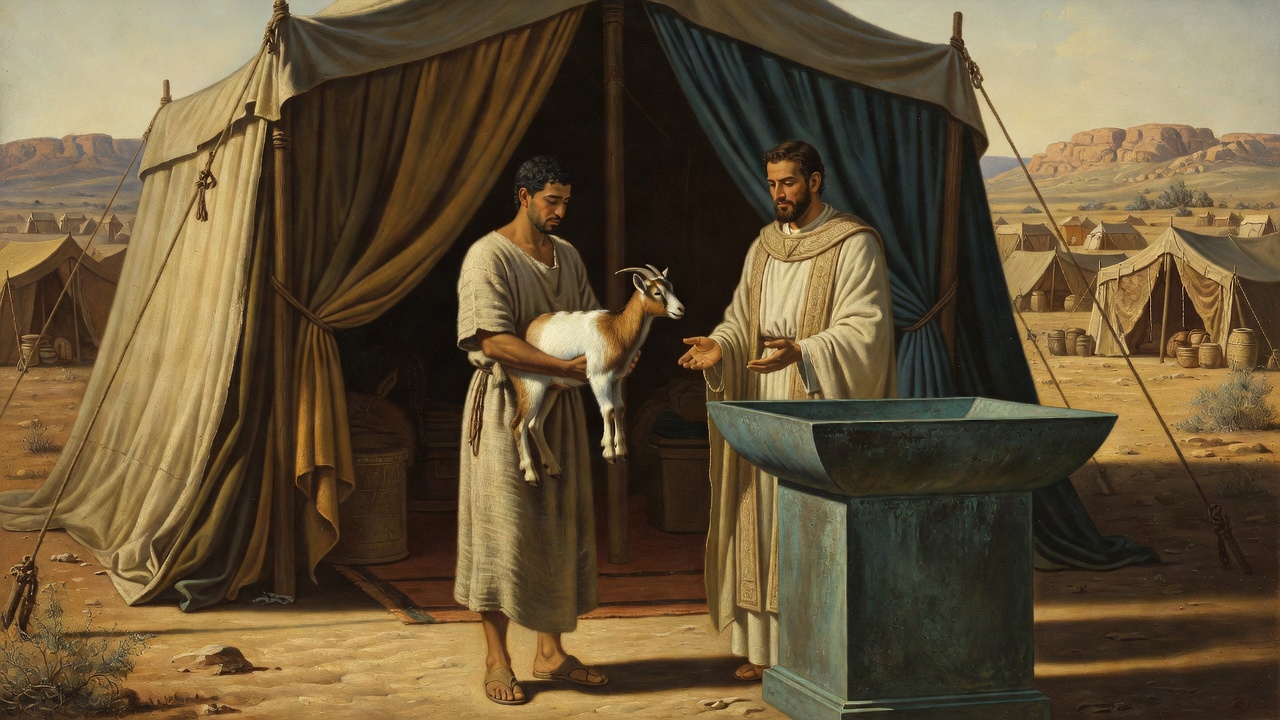
- Leviticus mandates that domestic animals such as oxen, lambs, and goats be brought directly to the entrance of the Tent of Meeting rather than slaughtered in open fields. This rule ensured sacrifices were presented exclusively as peace offerings to the LORD and halted illicit sacrifices to goat demons.Sources: the Bible text itself
- Both native Israelites and resident foreigners were strictly prohibited from eating blood, on penalty of being cut off from the community. The text grounds this law in the theological principle that the life of the flesh is in the blood, which God appointed specifically for making atonement upon the altar.Sources: the Bible text itself
- When Israelites or resident aliens hunted wild animals or birds that were clean for food, they were commanded to drain the blood upon the ground and cover it with dirt. This instruction reinforced that life belongs to God and preserved the sanctity of blood outside the sacrificial sanctuary.Sources: the Bible text itself
Notes written with AI assistance from open sources (Theographic Bible Metadata, CC BY-SA 4.0; Easton’s Bible Dictionary, public domain) and reviewed before publishing.
Credits and license for this translation
GODE EA SIA: IDA:IWANE GALA
The Holy Bible in the Bedamuni language of Papua New Guinea
Buk Baibel long tok ples Bedamuni
Copyright © 2000 Tom Hoey
Language: Bedamuni (Beami)
Translation by: Tom Hoey
This translation is made available to you under the terms of the
Creative Commons Attribution Share-Alike license 4.0.
You have permission to share and redistribute this Bible translation in any format and to make reasonable revisions and adaptations of this translation, provided that:
You include the above copyright and source information.
If you make any changes to the text, you must indicate that you did so in a way that makes it clear that the original licensor is not necessarily endorsing your changes.
If you redistribute this text, you must distribute your contributions under the same license as the original.
Pictures included with Scriptures and other documents on this site are licensed just for use with those Scriptures and documents.
For other uses, please contact the respective copyright owners.
Note that in addition to the rules above, revising and adapting God's Word involves a great responsibility to be true to God's Word. See Revelation 22:18-19.
2025-08-30
Source: http://png.bible/beo/ · eBible.org