Genesis 46
Godeya꞉ To Nafayo꞉ We · Tap a verse to see its cross-references.
Ya꞉koba꞉ e so꞉lo꞉wo꞉ Isib a꞉na ane
1A꞉la꞉fo꞉ko꞉lo꞉ Isolael e kelego꞉wo꞉ tambo dimidalia꞉sa꞉ga꞉ ane. E Bilsiba hen a꞉na fa꞉la꞉dowakiyo꞉, iya Aisa꞉ga꞉ Godemo꞉wo꞉ wabulu sa꞉lakiyo꞉ bobayo꞉ a꞉na so꞉me. 2A꞉la꞉dimida꞉sa꞉ga꞉yo꞉ nulu a꞉namio꞉ Gode eyo꞉ Isolaelbo꞉wo꞉ ofo fa꞉la꞉dowakiyo꞉ a꞉la꞉sio꞉, “Ya꞉kob, Ya꞉kob.” A꞉la꞉ho꞉idabikiyo꞉ “O꞉ba, ne weko꞉” a꞉la꞉sio꞉. 3“Ne Gode, go꞉la꞉ Godeyo꞉ ne ko꞉lo꞉, ge Isibdo꞉ ha꞉na꞉no꞉wo꞉ tagio꞉ dowa꞉so꞉bo! Mo꞉wo꞉ niyo꞉ hen a꞉namio꞉ ge so꞉lo꞉wo꞉ modo꞉ fa꞉la꞉doma꞉ki dimidama꞉no꞉. 4Ne ge o꞉lia꞉ Isib ha꞉na꞉sa꞉ga꞉ dofo꞉la꞉ga꞉yo꞉, tif amio꞉ hendele niyo꞉ so꞉lo꞉ gilo꞉wo꞉ a꞉ma꞉la꞉ hen wena tililia꞉ mia꞉no꞉. Ko꞉sega ge ha꞉sa sena sowaliki, Yosa꞉b e ge o꞉lia꞉ siliki, si gilo꞉wo꞉ go꞉lu alifa꞉ib.” Gode eyo꞉ a꞉la꞉dinali sio꞉.
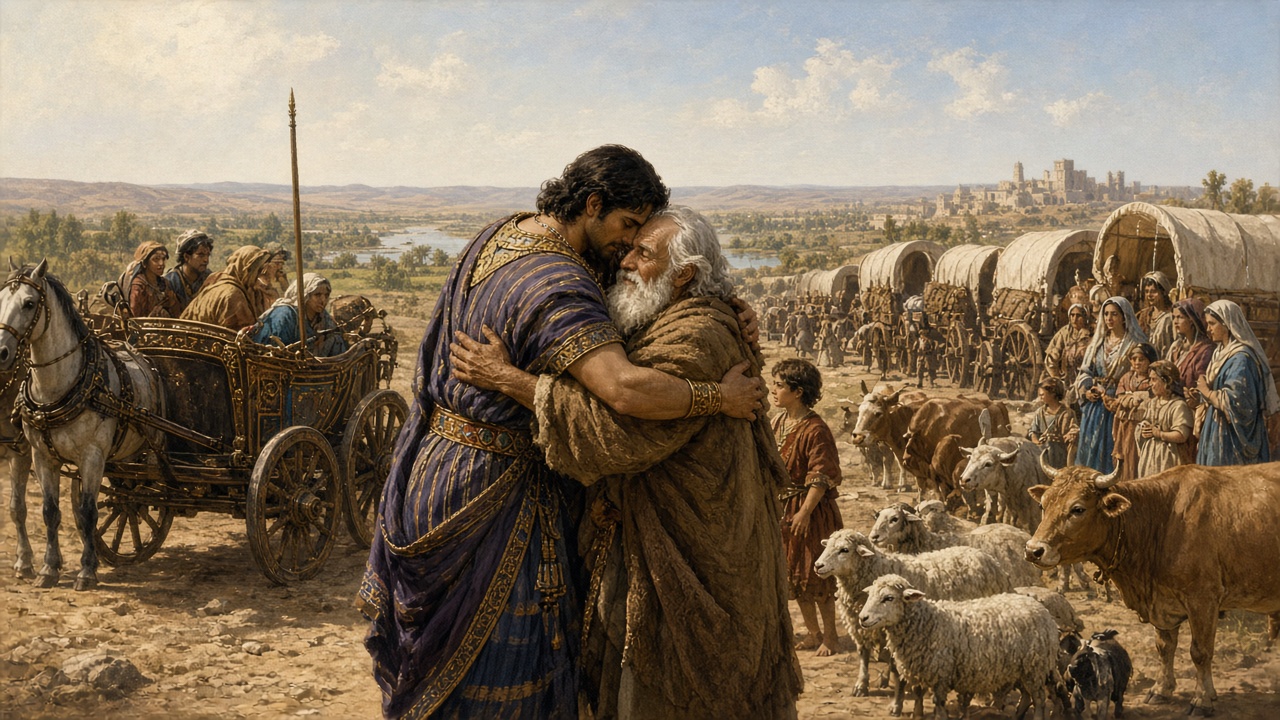
5Ya꞉kob e Bilsiba a꞉na ta꞉ta꞉sa꞉ga꞉ ane. Ya꞉koba꞉ so꞉wa iyo꞉, ini so꞉wa iyo꞉lo꞉, ingala꞉la꞉yo꞉lo꞉, a꞉la꞉ta꞉ga꞉ iya Ya꞉kobo꞉, i fofodo꞉ Isiba꞉ misa꞉ kaluwa꞉lo꞉ iliga꞉fo꞉ a꞉na disa꞉la꞉sa꞉ga꞉ ha꞉na꞉sio꞉. 6Iyo꞉ Isib a꞉na ha꞉nakiyo꞉, no꞉ fofo꞉ o꞉lia꞉ kelego꞉ nafale Ka꞉ina꞉ndo꞉ di a꞉no꞉lo꞉ tambo Isib dia꞉gane. Ya꞉koba꞉ ene kalu so꞉waleyo꞉lo꞉, ene ida꞉yo꞉lo꞉, ene ema꞉mu iyo꞉lo꞉, i a꞉no꞉lo꞉ tambo enen o꞉lia꞉ Isib ane. Ya꞉kobo꞉ ene so꞉lo꞉ o꞉lia꞉ Isib mesa꞉ni ha꞉na꞉sio꞉.|alt="Traveling in wagons to Egypt" src="01_Ge_46_01a_RG_gr.tif" size="col" copy="© Sweet Publishing http://sweetpublishing.com, licensed under a CC: BY-SA 3.0 Unported licence" ref="46.5-7"
Ya꞉koba꞉ insiso꞉iyo꞉ we
8Ya꞉kob, ene wi nowo꞉ Isolael ko꞉lo꞉ ene insiso꞉i o꞉lia꞉yo꞉ e Isib hen a꞉na ane. Ene so꞉lo꞉ e o꞉lia꞉lo꞉ ane wi agelo꞉wo꞉ we.
Ya꞉koba꞉ so꞉wa wa꞉la꞉bo꞉, Luben. 9Lubena꞉ insiso꞉iyo꞉ we. Hanog, Balu, Heslon, o꞉lia꞉ Kami. 10Simeona꞉ insiso꞉iyo꞉ we. Yemuel, Yamin, Ohat, Yakin, Sohal o꞉lia꞉ So꞉l. So꞉l a꞉ma꞉ ene anowo꞉ Ka꞉ina꞉n ga. 11Libaiya꞉ insiso꞉iyo꞉ we. Geson, Kohat, o꞉lia꞉ Melali. 12Yudaya꞉ insiso꞉iyo꞉ we. Ea, Onan, Sa꞉la, Beles o꞉lia꞉ Yela. Ko꞉sega Ea o꞉lia꞉ Onan o꞉lia꞉yo꞉ Ka꞉ina꞉n a꞉naka sowo꞉. Belesa꞉ insiso꞉iyo꞉ Heslon o꞉lia꞉ Hamul. 13Isakaya꞉ insiso꞉iyo꞉ we. Tola, Fufa, Iob o꞉lia꞉ Simlon. 14Sebuluna꞉ insiso꞉iyo꞉ we. Selet, Elon o꞉lia꞉ Yalel. 15Kalu i a꞉no꞉ Lea elo꞉ Ya꞉kobo꞉lo꞉ sa꞉la꞉meo꞉ o꞉m. Lea e Mesobotemia silikilo꞉ so꞉wa sa꞉la꞉la꞉ o꞉lia꞉ e ma꞉mu i o꞉lia꞉yo꞉, a꞉la꞉ta꞉ga꞉ ka꞉isale so꞉wa, Daina a꞉no꞉ tambo agelo꞉wo꞉, do꞉la꞉fo꞉ otalen a꞉la꞉ta꞉ga꞉ otalen dowo꞉.
16Gada꞉ insiso꞉iyo꞉ we. Sifion, Hagi, Suni, Esbon, Eli, Alodi o꞉lia꞉ Aleli. 17Asela꞉ insiso꞉iyo꞉ we. Imina, Isfa, Isfi, Belia a꞉la꞉ta꞉ga꞉ ini adowo꞉ Sa꞉la. Beliaya꞉ kalu so꞉wa a꞉la꞉yo꞉ Hebel o꞉lia꞉ Makiel. 18Kaluka꞉isale do꞉la꞉ta꞉ga꞉ do꞉go꞉fela꞉fo꞉ a꞉no꞉, Silbaya꞉ inso꞉ o꞉lia꞉ inu o꞉lia꞉lo꞉ dikudu agelo꞉wo꞉ o꞉m. Nanog dian ga, Silba a꞉no꞉, Laban eyo꞉ Leamo꞉ dimi.
19Ya꞉koba꞉ inga Lesol elo꞉ so꞉wa sa꞉la꞉liyo꞉ we. Yosa꞉b o꞉lia꞉ Ba꞉nsamen. 20Isib a꞉namio꞉, On amisa꞉ndo꞉ gulugululo꞉ alo꞉ bo꞉fo꞉lowan kalu Botifelaya꞉ ida꞉, Asenat e, Yosa꞉b e dia꞉sa꞉ga꞉, kalu so꞉wa a꞉la꞉, Manasa dia꞉ A꞉flam dia꞉ sa꞉la꞉li. 21Ba꞉nsamena꞉ insiso꞉iyo꞉ we. Bela, Bekel, Asbel, Gela, Naman, Ehi, Los, Mubim, Hubim o꞉lia꞉ Alda. 22Kalu so꞉wa do꞉la꞉ta꞉ga꞉ fa꞉la꞉da꞉in i a꞉no꞉, Lesola꞉ inso꞉ o꞉lia꞉ inu o꞉lia꞉lo꞉ dikudu agelo꞉wo꞉ o꞉m.
23Dan eyo꞉ kalu so꞉wa imilise, Husim ko꞉lo꞉ sa꞉la꞉li. 24Nabtaliya꞉ insiso꞉iyo꞉ we. Yasel, Guni, Yesel o꞉lia꞉ Silem. 25Kalu i a꞉no꞉ Bilha elo꞉ Ya꞉kobo꞉lo꞉ sa꞉la꞉meo꞉ o꞉m. Bilhaya꞉ inso꞉ o꞉lia꞉ inu o꞉lia꞉lo꞉ dikudu agelo꞉wo꞉ doma꞉la꞉fo꞉ dowo꞉. Nanog dian ga, Bilha a꞉no꞉, Laban eyo꞉ Lesolmo꞉ dimi.
26A꞉la꞉fo꞉ko꞉lo꞉ Ya꞉koba꞉ ene eso꞉lo꞉le Isibdo꞉ ha꞉na꞉sa꞉ga꞉lo꞉ sen a꞉ma꞉ wi ko꞉lo꞉ dikudu agelo꞉wo꞉, do꞉la꞉lowo꞉ do꞉go꞉fe a꞉la꞉ta꞉ga꞉ do꞉go꞉fela꞉fo꞉ o꞉m. A꞉la꞉fo꞉ ko꞉sega, Ya꞉koba꞉ inso꞉wa꞉ ingala꞉la꞉ a꞉no꞉ mo꞉agelo꞉. 27A꞉la꞉ta꞉ga꞉ Yosa꞉b e Isib silikiyo꞉, so꞉wayo꞉ a꞉la꞉ sa꞉la꞉li. A꞉la꞉fo꞉ko꞉lo꞉ Ya꞉koba꞉ eso꞉lo꞉ ko꞉lo꞉ Isib hen a꞉na ha꞉na꞉sa꞉ga꞉lo꞉ sen a꞉no꞉lia꞉ dikudu agelo꞉wo꞉ do꞉la꞉lowo꞉ dom a꞉la꞉fo꞉ fa꞉la꞉dowo꞉.
Ya꞉koba꞉ eso꞉lo꞉wo꞉ Isib fa꞉la꞉dowo꞉
28Ya꞉koba꞉ eso꞉lo꞉wo꞉ Isib ha꞉na꞉nikiyo꞉, Gosendo꞉ ha꞉na꞉no꞉ togo꞉ wala sama꞉kiyo꞉, Ya꞉kob eyo꞉ Yudayo꞉ Yosa꞉bdo꞉wa tamina iliga꞉fo꞉. A꞉la꞉gabiki Yuda eyo꞉ togo꞉ imo꞉wo꞉ widabiki, iyo꞉ Gosen hen a꞉na fa꞉la꞉dowo꞉. 29Yosa꞉b eyo꞉ ene ho꞉s amilo꞉ i fofodo꞉ kalulo꞉ dia꞉ha꞉na꞉sen a꞉no꞉ dimidalia꞉sa꞉ga꞉, Gosen hen a꞉namio꞉ iya Isolaelo꞉ ba꞉ba꞉ni ane ko꞉lo꞉, iyayo꞉ galiliakiyo꞉, iyaya ta꞉li dofo꞉liki, e a꞉na ya꞉la꞉liki elen. 30Isolael eyo꞉ Yosa꞉bo꞉wo꞉ a꞉la꞉sio꞉, “O꞉go꞉ niyo꞉ ge o꞉sabi bo꞉do꞉l ko꞉lo꞉, ne o꞉li o꞉la꞉ga꞉ soma꞉no꞉” a꞉la꞉sio꞉. 31Yosa꞉b eyo꞉ ene ao imo꞉wo꞉ a꞉la꞉ta꞉ga꞉ iyaya꞉ eso꞉lo꞉mo꞉wo꞉lo꞉ a꞉la꞉sio꞉, “Ne Fa꞉lo꞉lo꞉wa ha꞉na꞉sa꞉ga꞉yo꞉, emo꞉wo꞉ a꞉la꞉sa꞉ma꞉no꞉, ‘Nao o꞉lia꞉ dowa꞉ ene eso꞉lo꞉ o꞉lia꞉yo꞉ Ka꞉ina꞉n heno꞉ ta꞉ta꞉ga꞉ nelo꞉wa mio꞉. Kalu i we no꞉ fofo꞉lo꞉ bo꞉fo꞉lowan kalu ko꞉lo꞉ mio꞉. Ini kelego꞉wo꞉ dia꞉b a꞉la꞉ta꞉ga꞉ ini sibiyo꞉lo꞉, kaowo꞉lo꞉ tililia꞉ mio꞉.’ 33Niyo꞉ Fa꞉lo꞉mo꞉wo꞉ a꞉la꞉bo꞉ sa꞉ma꞉nigo꞉l ko꞉lo꞉, eyo꞉ gio꞉ elo꞉wa mena꞉ki ho꞉ida꞉sa꞉ga꞉, ‘Gio꞉ o꞉b nanog diano꞉’ a꞉la꞉dabu ba꞉dalikiyo꞉, giliyo꞉ a꞉ma꞉la꞉ a꞉sa꞉lakiyo꞉, ‘Kalu alan, nio꞉ no꞉lo꞉ fofan kalu. Nio꞉ so꞉wagalina a꞉la꞉ta꞉ga꞉lo꞉ nanogo꞉ a꞉no꞉ko꞉ dia꞉li mio꞉ ko꞉lo꞉ so꞉l. A꞉la꞉ta꞉ga꞉ nili ma꞉muwa꞉lo꞉ a꞉la꞉dimida꞉i ya꞉lowan.’ Giliyo꞉ a꞉la꞉sa꞉lalega, Fa꞉lo꞉ eyo꞉ gio꞉ Gosen hen wenaka sa꞉bika꞉ a꞉la꞉likiyo꞉ dinali sa꞉ma꞉ib, mo꞉wo꞉ Isib kaluka꞉isaleyo꞉ sibilo꞉ fofan kalu o꞉lia꞉lo꞉ mesa꞉no꞉wo꞉ mada mo꞉bea꞉sen ko꞉lo꞉, giyo꞉ wena mesa꞉ib.” Yosa꞉b eyo꞉ a꞉la꞉sio꞉.
Did you know?
Israel Goes Down to Egypt
- As Israel set out for Egypt with all that he had, he stopped at Beersheba and offered sacrifices to the God of his father Isaac. Beersheba, meaning well of the oath or well of seven, was a well Abraham dug and named after a compact with Abimelech; when Isaac reopened it, he gave it the same name. It was a favorite dwelling of both patriarchs, and there that night God spoke to Jacob in a vision, telling him not to fear going down to Egypt, for he would make him a great nation there.Sources: the Bible text itself · Beersheba
- Jacob sent Judah ahead to Joseph for directions to Goshen, an Egyptian district east of the Nile, apparently near the royal residence, where the family remained until the Exodus. Easton's Bible Dictionary (1897) calls it the best of the land, now a desert, and also the land of Rameses. Joseph told his brothers to say they had raised livestock from youth, so they might settle there, because shepherds were detestable to the Egyptians; that dictionary suggests Pharaoh was probably Apopi, last of the Hyksos, who welcomed these Asiatic shepherds, while native Egyptians abhorred them, though some argue Joseph arrived later, under Thothmes III, after the Hyksos were expelled.Sources: the Bible text itself · Goshen · Pharaoh (of Joseph)
- The chapter counts sixty-six of Jacob's direct descendants who came to Egypt, not counting the wives of his sons, and seventy when Joseph's two sons already born in Egypt are included. Leah's sons and her daughter Dinah are named in that tally, although Easton's Bible Dictionary (1897) says Leah herself had died in Canaan before the journey and was buried in the cave of Machpelah; Rachel had died earlier giving birth to Benjamin and was buried on the way to Ephrath, that is, Bethlehem. Manasseh and Ephraim were born to Joseph in Egypt by Asenath, daughter of Potiphera, priest of On, a center of sun-worship that the Septuagint and Vulgate call Heliopolis.Sources: the Bible text itself · Leah · Rachel · On
Notes written with AI assistance from open sources (Theographic Bible Metadata, CC BY-SA 4.0; Easton’s Bible Dictionary, public domain) and reviewed before publishing.
Places in this chapter
- Egypt · 30.129, 31.308 · verses 1, 3, 4, 5, 6, 7, 8, 20, 26, 27
- Canaan · 32.767, 35.333 · verses 6, 12, 31
- Heliopolis · Today: Ain Shams · 30.129, 31.308 · verse 20
- Goshen · Today: Goshen 1 · 30.799, 31.834 · verses 28, 29, 34
Only places identified with high confidence are shown (90% or more according to the scholarly sources compiled by OpenBible). Period map: DARE (Digital Atlas of the Roman Empire), CC BY 4.0; modern map: © OpenStreetMap contributors; places: OpenBible.info (CC BY 4.0).
Credits and license for this translation
Godeya꞉ To Nafayo꞉ We
The New Testament, Genesis, and Ruth in the Kaluli language of Papua New Guinea
Sampela hap Buk Baibel long tokples Kaluli long Niugini
copyright © 1998-2022 Wycliffe Bible Translators, Inc.
Language: Kaluli
Translation by: Wycliffe Bible Translators
This translation is made available to you under the terms of the
Creative Commons Attribution-Noncommercial-No Derivatives license 4.0.
You may share and redistribute this Bible translation or extracts from it in any format, provided that:
You include the above copyright and source information.
You do not sell this work for a profit.
You do not change any of the words or punctuation of the Scriptures.
Pictures included with Scriptures and other documents on this site are licensed just for use with those Scriptures and documents.
For other uses, please contact the respective copyright owners.
2025-03-12
Source: http://png.bible/bco/ · eBible.org