Genesis 44
Godeya꞉ To Nafayo꞉ We · Tap a verse to see its cross-references.
Yosa꞉b eyo꞉ ao iyo꞉ a꞉ma꞉la꞉ mena꞉ki dikido꞉
1Iyo꞉ ma꞉no꞉wo꞉ na꞉sa꞉ga꞉yo꞉, Yosa꞉b eyo꞉ ene alo꞉ bo꞉fo꞉lowan kalumo꞉wo꞉ wo꞉no꞉lebo꞉ a꞉la꞉sio꞉, “Giyo꞉ ma꞉no꞉ ililo꞉ dia꞉ha꞉na꞉no꞉ o꞉leaumbo꞉, ini masiyo꞉ wa꞉li alifela꞉sa꞉ga꞉, ini moleyo꞉ a꞉ma꞉la꞉ masi meya disalifela꞉bi. 2A꞉la꞉ta꞉ga꞉ ao tifa꞉ masi amio꞉, ene mole o꞉lia꞉ no꞉no꞉n silba kab a꞉no꞉lo꞉, ene masi meya disalita꞉bi,” a꞉la꞉sio꞉. Yosa꞉b elo꞉ sio꞉ aumbo꞉, ene nanog kaluwa꞉yo꞉ a꞉la꞉ka dimido꞉. 3Kea꞉fo nulu ho꞉idabiki, ao i a꞉no꞉ ini donki o꞉lia꞉ hamana꞉ki iliga꞉tabiki iyo꞉ ha꞉na꞉ni ane. 4Amisa꞉no꞉ semo꞉ sadega꞉fo꞉ amio꞉, Yosa꞉b eyo꞉ ene alo꞉ bo꞉fo꞉lowan kalumo꞉wo꞉ a꞉la꞉sio꞉, “Giyo꞉ kalu i a꞉no꞉ kudu ha꞉na꞉sa꞉ga꞉ galiliakiyo꞉, imo꞉wo꞉ a꞉la꞉sa꞉la꞉bi, ‘Niliyo꞉ gimo꞉wo꞉ man nafa dimidaki sagale alifa꞉, ko꞉sega, gililo꞉ nimo꞉lo꞉ mogago꞉ dimido꞉wo꞉ mo꞉wo꞉ ha꞉? 5Ni misa꞉ kaluwa꞉ ene kab nafaleyo꞉ waga afale diyo꞉? Kab wema꞉yo꞉ ho꞉no꞉ a꞉na na꞉sen a꞉la꞉ta꞉ga꞉ kab wema꞉ halaido꞉ a꞉na ilikiyo꞉, eyo꞉ ho꞉le ba꞉dan. Man gililo꞉ we, mada hala dimido꞉.’”
6Yosa꞉b eyo꞉ emo꞉wo꞉ a꞉la꞉sio꞉ ko꞉lo꞉, kalu a꞉no꞉ ha꞉na꞉sa꞉ga꞉, iyo꞉ galilia꞉sa꞉ga꞉yo꞉, to a꞉no꞉ imo꞉wo꞉ sio꞉. 7To a꞉no꞉ da꞉da꞉sa꞉ga꞉, iliyo꞉ a꞉ma꞉la꞉yo꞉ a꞉la꞉sio꞉, “Kalu alan, giyo꞉ to we waga asulaki sa꞉laya? To gilo꞉ sa꞉lab ko aumbo꞉, niliyo꞉ mada mo꞉dimida꞉sen. 8Dabuma. Nio꞉ Ka꞉ina꞉n a꞉la꞉ta꞉ga꞉ a꞉ma꞉la꞉ Isib wena yakiyo꞉, gililo꞉ mole ko꞉lo꞉ nili masi meya disa꞉ a꞉no꞉ a꞉ma꞉la꞉ ginibo꞉ dimia꞉niki dia꞉mio꞉. Ge a꞉no꞉ asulo꞉ ko꞉lo꞉, gi misa꞉ kaluwa꞉ silba, go꞉l kelego꞉ ayamilo꞉ da꞉lab a꞉no꞉ niliyo꞉ mada mo꞉afale dia꞉no꞉ ko꞉lo꞉lab. 9A꞉la꞉fo꞉ko꞉lo꞉ giyo꞉ nili masi usamio꞉ kab a꞉no꞉ delena ba꞉dalega, giyo꞉ kalu kabdo꞉ disa꞉ a꞉no꞉ sana sowa꞉sa꞉ga꞉, nio꞉ gi madali nanog dian kalu doma꞉no꞉.” 10Iliyo꞉ a꞉la꞉sa꞉labiki, eyo꞉ a꞉la꞉sio꞉, “Gilo꞉ sa꞉lab au dimidama꞉no꞉, ko꞉sega kalu kabdo꞉ disa꞉ a꞉no꞉ko꞉ ni nanog kalu dia꞉no꞉ dowaki, nol gio꞉ ga꞉li ha꞉na꞉ib.” 11A꞉la꞉do꞉ sa꞉lab a꞉no꞉ ao iyo꞉ da꞉da꞉sa꞉ga꞉, iyo꞉ inin masiyo꞉ hena bo꞉bo꞉ge sagasela꞉sa꞉ga꞉ kolalifelabikiyo꞉, kalu a꞉ma꞉yo꞉ wa꞉la꞉ba a꞉la꞉ta꞉ga꞉lo꞉ keda꞉likilo꞉ aneyo꞉, Ba꞉nsamen elo꞉wa kedo꞉ amio꞉, kab a꞉no꞉ Ba꞉nsamena꞉ masiya delena ba꞉ba꞉. 13Ao iyo꞉ a꞉no꞉ ba꞉da꞉ga꞉yo꞉, iyo꞉ nofolaki, inin helebeso꞉g ko꞉lo꞉wo꞉ bidila꞉sa꞉ga꞉yo꞉, kelego꞉ ililo꞉wo꞉ donki wa꞉la dila꞉sa꞉ga꞉, a꞉ma꞉la꞉ Isib amisa꞉na ha꞉na꞉ni ane.
14Yuda o꞉lia꞉ ene ao i o꞉lia꞉yo꞉ Yosa꞉ba꞉ aya fa꞉la꞉dowabikiyo꞉, Yosa꞉b e a ka o꞉sen ko꞉lo꞉, iyo꞉ elo꞉wa gumisi fufudo꞉. 15Yosa꞉b eyo꞉ imo꞉wo꞉ a꞉la꞉sio꞉, “Giliyo꞉ o꞉b dimido꞉wo꞉? Kalu ne o꞉ngo꞉ dowab wema꞉yo꞉, kelego꞉ wo꞉no꞉ledo꞉ delen a꞉no꞉ ho꞉le ba꞉da꞉sen a꞉la꞉bo꞉ giyo꞉ mo꞉asulaya?” 16Yosa꞉b eyo꞉ a꞉la꞉sa꞉labiki, Yuda eyo꞉ a꞉la꞉sio꞉, “Ni misa꞉ kalu, to nililo꞉ sa꞉ma꞉no꞉ nowo꞉ aundo꞉ma. Nio꞉ mogago꞉lo꞉ mo꞉dimido꞉ a꞉lakilo꞉ sa꞉ma꞉no꞉wo꞉ mada halaido꞉. Hendele, nililo꞉ hala dimida꞉sen a꞉no꞉ Gode eyo꞉ kalaba widab ko꞉lo꞉, kaluwa꞉ ene masi amilo꞉ kabdo꞉ delendo꞉ ba꞉ba꞉ a꞉no꞉lia꞉, nio꞉ tambo gi madali nanog dian kalu doma꞉no꞉.” 17Ko꞉sega Yosa꞉b eyo꞉ a꞉ma꞉la꞉ a꞉la꞉sio꞉, “Gilo꞉ sa꞉lab o꞉leaumbo꞉, niyo꞉ mada mo꞉dimidama꞉no꞉. Kalu masi amilo꞉ kabdo꞉ delen amilo꞉ ba꞉ba꞉ a꞉no꞉ko꞉ ni madali nanog dian kalu dowaki, nol gio꞉ go꞉ldo꞉wa ga꞉li ha꞉na꞉bi.”
18A꞉la꞉sa꞉labiki Yuda eyo꞉ Yosa꞉bdo꞉wa kagayaki a꞉la꞉sio꞉, “Ni misa꞉ kalu, halaido꞉ gilo꞉wo꞉ Fa꞉lo꞉wa꞉lo꞉ o꞉ngo꞉ ko꞉sega, niyo꞉ gemo꞉wo꞉ towo꞉ sa꞉ma꞉nigo꞉l ko꞉lo꞉, giyo꞉ nemo꞉wo꞉ gadia꞉so꞉bo. 19Nio꞉ tamin amilo꞉ wilo꞉ mio꞉ amio꞉, giyo꞉ nimo꞉wo꞉ a꞉la꞉dabubadale, ‘Gio꞉ go꞉l o꞉lia꞉ gao nowo꞉lia꞉yo꞉ o꞉saba?’ 20A꞉la꞉dabu ba꞉dalikiyo꞉, niliyo꞉ gemo꞉wo꞉ a꞉ma꞉la꞉bo꞉ a꞉la꞉sio꞉, ‘Do sulo꞉wo꞉lo꞉, a꞉la꞉ta꞉ga꞉ nao tif, dowa꞉lo꞉ anaso꞉ dowakilo꞉ sa꞉la꞉liyo꞉ o꞉sab. Ko꞉sega tif so꞉wa a꞉ma꞉ ene aoleyo꞉ sowo꞉ ko꞉lo꞉, anowa꞉lo꞉ sa꞉la꞉li imilise e o꞉sabiki, iyaya꞉yo꞉ e mada alan asula꞉sen’ a꞉la꞉sio꞉.
21“Giyo꞉ to nilo꞉ sio꞉ a꞉no꞉ da꞉da꞉ga꞉yo꞉, giyo꞉ ‘Gao a꞉no꞉ nelo꞉ ba꞉ba꞉ni tililia꞉ ya꞉bi’ a꞉la꞉sio꞉. 22Ko꞉sega niliyo꞉ gemo꞉wo꞉ a꞉la꞉sio꞉, ‘So꞉wa a꞉no꞉ iyayo꞉ mo꞉ta꞉fo꞉ ha꞉na꞉sen. E iyayo꞉ ta꞉fo꞉ ha꞉nalega, iyayo꞉ soma꞉ib.’ 23Ko꞉sega gi sa꞉lakiyo꞉, ‘Gao tif a꞉no꞉ mo꞉tililia꞉ yalega, gio꞉ nelo꞉ amio꞉ mo꞉mena꞉ki, a꞉la꞉liki eleyo꞉ dia꞉fa꞉no꞉’ a꞉la꞉sio꞉. 24A꞉la꞉fo꞉ko꞉lo꞉ nio꞉ a꞉ma꞉la꞉ dolo꞉wa ha꞉na꞉sa꞉ga꞉, gilo꞉ to sio꞉ o꞉leaumbo꞉ emo꞉ sio꞉.
25“A꞉la꞉ta꞉ga꞉ dowa꞉yo꞉ a꞉la꞉sio꞉, ‘Gio꞉ a꞉ma꞉la꞉ ha꞉na꞉sa꞉ga꞉, ma꞉no꞉ ha꞉lu nolo꞉ a꞉kililia꞉ni hamana.’ 26Ko꞉sega nio꞉ emo꞉wo꞉ a꞉la꞉sio꞉, ‘Nao tif we ni o꞉lia꞉ mo꞉ha꞉nalega, Isibdo꞉ bo꞉fo꞉lowan kalu a꞉ma꞉yo꞉ nio꞉ mo꞉ba꞉ba꞉no꞉ a꞉la꞉sio꞉ ko꞉lo꞉, nao tif ko mo꞉ha꞉nalega nio꞉ a꞉ma꞉la꞉yo꞉ mo꞉ha꞉na꞉no꞉.’ 27A꞉la꞉so꞉lo꞉liki, dowa꞉yo꞉ nimo꞉wo꞉ a꞉la꞉sio꞉, ‘Ni ga, Lesol eyo꞉ kalu so꞉wa a꞉la꞉ sa꞉la꞉li, gio꞉ a꞉no꞉ asulo꞉. So꞉wa nowo꞉ kelege dowab amio꞉, niyo꞉ “E no꞉ igo꞉la꞉sena꞉yo꞉ hendele gegedelia꞉gane,” a꞉la꞉asulo꞉ ko꞉lo꞉, e wa꞉kabiyo꞉ niyo꞉ mo꞉ba꞉ba꞉. 29A꞉la꞉ta꞉ga꞉ ne anaso꞉ dowo꞉ ko꞉lo꞉, no꞉no꞉n so꞉wa tif ko꞉lo꞉ ne o꞉lia꞉lo꞉ a꞉lab welo꞉ giliyo꞉ tililia꞉ ha꞉na꞉sa꞉ga꞉, hida꞉yo꞉ nowo꞉ eyamio꞉ fa꞉la꞉dowalega, giyo꞉ ne nofolo꞉ alan dima꞉ki dimia꞉ib ko꞉lo꞉ ne sowakiyo꞉, dane ane hen a꞉na ha꞉na꞉ib.’ Dowa꞉yo꞉ a꞉la꞉sio꞉.
30“A꞉la꞉fo꞉ko꞉lo꞉ niliyo꞉ dolo꞉ amio꞉ a꞉ma꞉la꞉yo꞉ mo꞉tililia꞉ga꞉ fa꞉la꞉dowalega, dowa꞉yo꞉ so꞉wa a꞉no꞉ mo꞉mio꞉lo꞉b a꞉la꞉asulakiyo꞉, e kele asulaki soma꞉ib. Mo꞉wo꞉ do o꞉lia꞉ so꞉wa we o꞉lia꞉yo꞉ mada kudo꞉ ko꞉lo꞉ so꞉wayo꞉ o꞉salikiyo꞉, dowo꞉lo꞉ o꞉mesa꞉ib. Ko꞉sega so꞉wa we sowalega, dowo꞉lo꞉ soma꞉ib. A꞉la꞉galikiyo꞉ niliyo꞉ do sulo꞉mo꞉wo꞉ nofolo꞉ alan dima꞉ki dimia꞉ib ko꞉lo꞉, e sowa꞉sa꞉ga꞉, dane ane hen a꞉na hamana꞉kiyo꞉, nili dimidama꞉ib. 32Mo꞉wo꞉ niyo꞉ domo꞉wo꞉ dinali sa꞉lakiyo꞉, ‘So꞉wa we niyo꞉ a꞉ma꞉la꞉yo꞉ mo꞉tililia꞉ yalega, mogago꞉ gemo꞉lo꞉ dimiab a꞉no꞉ ho꞉leno꞉ tambo ne o꞉lia꞉ dofo꞉ ha꞉na꞉mela꞉ib.’ 33Niyo꞉ domo꞉wo꞉ a꞉la꞉dinali sio꞉ ko꞉lo꞉, o꞉go꞉ giyo꞉ so꞉wa we sili alitaki, e ta꞉lian aumbo꞉ ne ko꞉lo꞉ gi nanog kalu doma꞉ki ta꞉foma. A꞉la꞉ta꞉ga꞉ giyo꞉ so꞉wa tif ko ao i o꞉lia꞉ iyalo꞉wa hamana꞉ki ta꞉ta꞉bi. 34Mo꞉wo꞉ so꞉wa we ne o꞉lia꞉yo꞉ mo꞉ha꞉nalega, nelo꞉ mada mo꞉ha꞉na꞉no꞉. Nofolo꞉ alan dolo꞉ amilo꞉ fa꞉la꞉doma꞉ib a꞉no꞉ ba꞉ba꞉no꞉wo꞉ ne mada tagilab.”
Did you know?
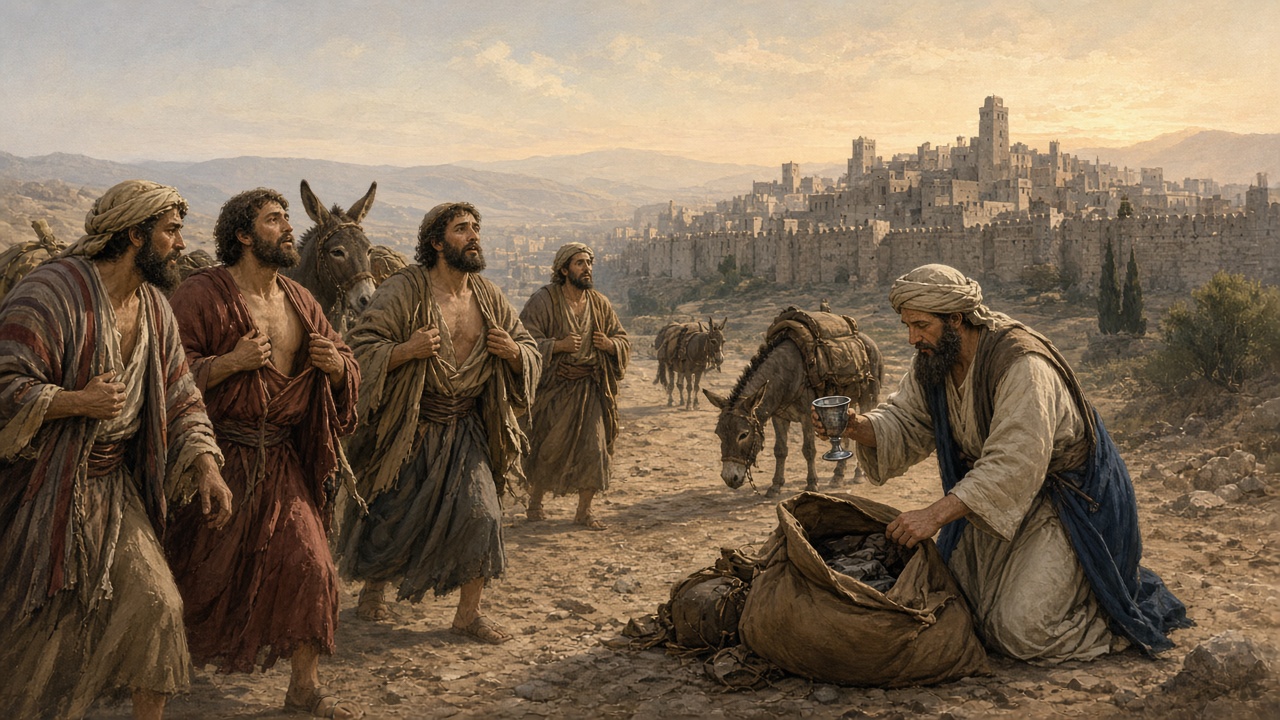
The Hidden Cup and Judah's Plea
- Judah, Jacob's fourth son by Leah, speaks for the brothers and offers to remain as a slave in the boy's place so that Benjamin may return with his brothers. Easton's Bible Dictionary (1897) notes that Judah had earlier intervened to spare Joseph's life, and that he took the lead in the family's affairs, including in the appeal recorded in this chapter.Sources: Judah (patriarch) · the Bible text itself
- Benjamin was the younger of Jacob's two sons by Rachel; she died giving birth to him and called him Ben-oni, "son of my pain," before his father named him Benjamin. The brothers tell Joseph that the boy is the only son of his mother still living, and that their father believes the other was torn to pieces. They say this to Joseph himself—Rachel's elder son, loved by Jacob as the child of his old age—while still speaking to him as a lord equal to Pharaoh.Sources: Benjamin (patriarch) · Joseph (son of Jacob) · the Bible text itself
- On Joseph's orders, the steward hid Joseph's silver cup—the cup he drank from and used for divination—in Benjamin's sack, along with the silver paid for the grain. When it was found, the brothers tore their clothes and returned to the city. Joseph then asked whether they did not know that a man like him could divine the truth, although the narrative shows that he had arranged for the cup to be found.Sources: the Bible text itself
Notes written with AI assistance from open sources (Theographic Bible Metadata, CC BY-SA 4.0; Easton’s Bible Dictionary, public domain) and reviewed before publishing.
Places in this chapter
- Canaan · 32.767, 35.333 · verse 8
Only places identified with high confidence are shown (90% or more according to the scholarly sources compiled by OpenBible). Period map: DARE (Digital Atlas of the Roman Empire), CC BY 4.0; modern map: © OpenStreetMap contributors; places: OpenBible.info (CC BY 4.0).
Credits and license for this translation
Godeya꞉ To Nafayo꞉ We
The New Testament, Genesis, and Ruth in the Kaluli language of Papua New Guinea
Sampela hap Buk Baibel long tokples Kaluli long Niugini
copyright © 1998-2022 Wycliffe Bible Translators, Inc.
Language: Kaluli
Translation by: Wycliffe Bible Translators
This translation is made available to you under the terms of the
Creative Commons Attribution-Noncommercial-No Derivatives license 4.0.
You may share and redistribute this Bible translation or extracts from it in any format, provided that:
You include the above copyright and source information.
You do not sell this work for a profit.
You do not change any of the words or punctuation of the Scriptures.
Pictures included with Scriptures and other documents on this site are licensed just for use with those Scriptures and documents.
For other uses, please contact the respective copyright owners.
2025-03-12
Source: http://png.bible/bco/ · eBible.org