Genesis 25
Godeya꞉ To Nafayo꞉ We · Tap a verse to see its cross-references.
Ablaham e sowo꞉
1Ablaham eyo꞉ ga nowo꞉ di, ene wiyo꞉ Kedula. 2Kedula a꞉ma꞉yo꞉lo꞉ kalu so꞉wa sa꞉la꞉la꞉yo꞉ we. Wa꞉la꞉bo꞉ Similan, nowo꞉ Yogsan, nowo꞉ Medan, nowo꞉ Midian, nowo꞉ Isbag, nowo꞉ Sua. Kalu so꞉wa elo꞉ sa꞉la꞉la꞉yo꞉ o꞉m. 3Yogsana꞉ ene kalu so꞉wayo꞉ Seba o꞉lia꞉ Dedan ko꞉lo꞉ sa꞉la꞉li. Dedan eya a꞉la꞉ta꞉ga꞉lo꞉ so꞉lo꞉ fa꞉la꞉dowo꞉wo꞉ Asul kaluka꞉isale, nowo꞉ Letus kaluka꞉isale, nowo꞉ Leum kaluka꞉isale. 4Midiana꞉ ene kalu so꞉wayo꞉ Efa, nowo꞉ Efel, nowo꞉ Hanog, nowo꞉ Abida, nowo꞉ Elda ko꞉lo꞉ sa꞉la꞉li. Kalu i we tambo Kedula eya a꞉la꞉ta꞉ga꞉ fa꞉la꞉dowo꞉.
5Ablaham eyo꞉ ene dabuno꞉ tambo Aisa꞉g e dima꞉ki saefa꞉. 6Ko꞉sega Ablaham e o꞉silikiyo꞉, nanog dian ga a꞉la꞉ elo꞉ di a꞉ma꞉lo꞉ kalu so꞉wa sa꞉la꞉li i o꞉mo꞉wo꞉ boba kelego꞉wo꞉ sagalifa꞉. A꞉la꞉ta꞉ga꞉ ene so꞉wa Aisa꞉gbo꞉wo꞉ fogo꞉ dimina꞉kiyo꞉, Ablaham eyo꞉ iyo꞉ ofdo꞉ yan doba꞉da꞉ hen a꞉na iliga꞉felo꞉.
7Ablaham e donayo꞉ 175 a꞉la꞉fo꞉wo꞉ ta꞉ta꞉ga꞉yo꞉, elo꞉ ta꞉i mio꞉wo꞉ nafale ko꞉lo꞉, soma꞉no꞉ au sowo꞉. A꞉la꞉fo꞉ko꞉lo꞉ e iasi dane ane sab o꞉lia꞉ galima꞉ni ane. 9E sowabiki, ene so꞉wa Aisa꞉g dia꞉ Ismael dia꞉ma꞉yo꞉ ene do꞉mo꞉wo꞉ dia꞉ha꞉na꞉sa꞉ga꞉, Mamele hen anib a꞉namio꞉, Makbela amilo꞉ u a us a꞉na difa꞉. Tamin amio꞉ hen a꞉no꞉ Eflon eno꞉. E Hit kalu Sohala꞉ inso꞉ ko꞉lo꞉, Ablahama꞉ ingayo꞉ sowabi a꞉na dalima꞉no꞉ a꞉la꞉ta꞉ga꞉ kilili. A꞉la꞉fo꞉ko꞉lo꞉ Selalo꞉ daido꞉wa, Ablahamo꞉lo꞉ a꞉na daido꞉. 11Ablaham e sowa꞉sa꞉ga꞉ dowabikiyo꞉, ene so꞉wa Aisa꞉g e Gode eyo꞉ nafale mesea꞉ki ta꞉fo꞉len. Ho꞉len a꞉namio꞉ Aisa꞉g eyo꞉ Bil Lahai Loi hen aniba sa꞉sen.
Ismaela꞉ eso꞉lo꞉wo꞉ we
12Ismaela꞉ ene eso꞉lo꞉ ta꞉i ane malolo꞉wo꞉ we. Ismael e Ha꞉gaya꞉ inso꞉. Ha꞉ga e Isib ka꞉isale ko꞉lo꞉ Selaya꞉ nanog dia꞉sen gayo꞉ e. Ablaham eyo꞉ e dia꞉sa꞉ga꞉yo꞉, Ismael ko꞉lo꞉ sa꞉la꞉li. 13Ismaela꞉ inso꞉ a꞉la꞉ta꞉ga꞉ so꞉lo꞉ i amilo꞉ fa꞉la꞉dowo꞉ wi agelo꞉wo꞉ we. Wa꞉la꞉bo꞉ Nebayod, a꞉ma꞉ fa꞉so꞉ Kedal, a꞉ma꞉ fa꞉so꞉ Atabel, a꞉ma꞉ fa꞉so꞉ Mibsam, a꞉ma꞉ fa꞉so꞉ Misma, a꞉ma꞉ fa꞉so꞉ Duma, a꞉ma꞉ fa꞉so꞉ Masa, a꞉ma꞉ fa꞉so꞉ Hadad, a꞉ma꞉ fa꞉so꞉ Tema, a꞉ma꞉ fa꞉so꞉ Yedul, a꞉ma꞉ fa꞉so꞉ Nafis, a꞉la꞉ta꞉ga꞉ tifo꞉ Kedema. Wi sadelab a꞉no꞉ Ismaela꞉ inso꞉wo꞉ o꞉m. A꞉la꞉ta꞉ga꞉ wi a꞉no꞉ ili amisa꞉n o꞉lia꞉ hen ilo꞉ sa꞉sen a꞉no꞉lia꞉ a꞉no꞉ko꞉ wikilo꞉. A꞉la꞉fo꞉ko꞉lo꞉ so꞉wa wena a꞉la꞉ta꞉ga꞉lo꞉ so꞉lo꞉ kugula꞉fo꞉ fa꞉la꞉dowo꞉wo꞉ wiyo꞉ o꞉m. 17Ismael e donayo꞉ 137 a꞉la꞉fo꞉ a꞉no꞉ ta꞉ta꞉ga꞉ sowo꞉ ko꞉lo꞉, e iasi dane ane sab o꞉lia꞉ galima꞉ni ane. 18Ismaela꞉ ema꞉mu ilo꞉ mesa꞉ni aneyo꞉, Hafila a꞉na a꞉la꞉ta꞉ga꞉lo꞉ ta꞉i aneyo꞉ Sul hen a꞉na edo꞉. Isib a꞉la꞉ta꞉ga꞉ Asilia hena ha꞉nakiyo꞉, Sul hen a꞉no꞉ Isib o꞉lia꞉ eleya a꞉lab. A꞉la꞉ta꞉ga꞉ so꞉lo꞉ i a꞉no꞉ ao o꞉lia꞉yo꞉ egelebo꞉ ha꞉fa꞉nolowo꞉ mo꞉sa꞉sen.
Aisa꞉g eyo꞉ Iso꞉ o꞉lia꞉ Ya꞉kob o꞉lia꞉ sa꞉la꞉li
19Ablahama꞉ inso꞉ Aisa꞉g ene eso꞉lo꞉ ta꞉i ane malolo꞉wo꞉ we. Ablaham eyo꞉ Aisa꞉g sa꞉la꞉li. 20Aisa꞉go꞉ donayo꞉ 40 a꞉la꞉fo꞉wo꞉ ta꞉ta꞉sa꞉ga꞉, La꞉ba꞉gayo꞉ a꞉na di. La꞉ba꞉gaya꞉ iyayo꞉ Betuel a꞉la꞉ta꞉ga꞉ ene aowo꞉ Laban. Betuel o꞉lia꞉ Laban o꞉lia꞉yo꞉ Alam kalu ko꞉lo꞉ Mesobotemia a꞉na sa꞉sen.
21Aisa꞉ga꞉ ingayo꞉ fain dowabiki, e asuwa꞉foma꞉ki Yawemo꞉ dulugu sio꞉. Eyo꞉ a꞉la꞉gabiki, Yawe eyo꞉ elo꞉ to sio꞉ a꞉no꞉ da꞉da꞉sa꞉ga꞉, La꞉ba꞉gayo꞉ asuwa꞉tabiki, a꞉na alelo꞉. 22La꞉ba꞉ga e alela꞉likiyo꞉, so꞉wa ko꞉lo꞉ kufa꞉ us amilo꞉ sab a꞉no꞉ ida꞉nino꞉ ani tandelabiki, eyo꞉ a꞉la꞉asulo꞉, “Ni kufa꞉ usamilo꞉ dimidab we, wangaki gaba꞉le?” A꞉la꞉fo꞉ko꞉lo꞉ eyo꞉ a꞉la꞉asulakiyo꞉, Yawemo꞉ dabu ba꞉dabiki, Yawe eyo꞉ emo꞉wo꞉ a꞉la꞉sio꞉,
“Gi kufa꞉ usamilo꞉ so꞉wa a꞉la꞉ sab koma꞉yo꞉,
tif amio꞉ so꞉lo꞉ a꞉la꞉ alobanala꞉fa꞉ib.
So꞉lo꞉ nowo꞉ halaido꞉ dowaki, nowo꞉ tiginila꞉ma꞉ib a꞉la꞉ta꞉ga꞉
wa꞉la꞉bo꞉ tifa꞉ nanog dian kalu doma꞉ib.”
24So꞉wa sa꞉la꞉lia꞉no꞉ ho꞉lende dowab a꞉namio꞉, hendele so꞉wayo꞉ a꞉la꞉ sab a꞉la꞉asulo꞉. 25Kalu so꞉wa wa꞉la꞉b sa꞉la꞉liab a꞉no꞉ mada genelo꞉ a꞉la꞉ta꞉ga꞉ do꞉la꞉ma꞉ fo꞉ndo꞉ dowo꞉ ko꞉lo꞉, e Iso꞉ wikilo꞉. 26A꞉ma꞉ fa꞉s amio꞉ ene aowo꞉ handalowakiyo꞉, eyo꞉ Iso꞉wa꞉ gido꞉fo꞉ doma ta꞉lidota꞉ga꞉ handalowo꞉ ko꞉lo꞉, so꞉wa a꞉no꞉ Ya꞉kob wikilo꞉. La꞉ba꞉ga eyo꞉ so꞉wa a꞉la꞉ a꞉no꞉ sa꞉la꞉liabikiyo꞉, Aisa꞉g e donayo꞉ 60 a꞉la꞉fo꞉ dowo꞉.
Iso꞉ e wa꞉la꞉b dowo꞉wo꞉ ka ta꞉fo꞉
27So꞉wa a꞉la꞉yo꞉ anaya꞉sa꞉ga꞉yo꞉, Iso꞉ e hena꞉ usa sia꞉liki, no꞉lo꞉ buluma꞉no꞉ kalu dowo꞉. Ko꞉sega Ya꞉kob e so꞉g a ka siliki, ha꞉fa꞉nolo dowa꞉sen. 28Aisa꞉g e, Iso꞉ elo꞉ no꞉ bululakilo꞉ ho dia꞉yab a꞉no꞉ ma꞉no꞉wo꞉ alan asulab ko꞉lo꞉, eyo꞉ Iso꞉wo꞉ mada alan asulo꞉. Ko꞉sega La꞉ba꞉ga eyo꞉ Ya꞉kobo꞉ mada alan asulo꞉.
29Ho꞉len no amio꞉, Ya꞉kob eyo꞉ ma꞉no꞉ so꞉da꞉len amio꞉, Iso꞉ e hena꞉ usa a꞉la꞉ta꞉ga꞉ a꞉ma꞉la꞉ mio꞉. E halaido꞉lo꞉ma dowaki, maiyo꞉ alan dowo꞉. 30Iso꞉ eyo꞉ Ya꞉kobo꞉wo꞉ a꞉la꞉sio꞉, “Ne mada maiyab ko꞉lo꞉ ma꞉no꞉ gilo꞉ so꞉fa꞉ genelo꞉ ko, nelo꞉ dimina.” (Eyo꞉ a꞉la꞉sio꞉ ko꞉lo꞉, Iso꞉ ene wiyo꞉ nowo꞉ Idom.) 31Ya꞉kob eyo꞉ a꞉ma꞉la꞉bo꞉ a꞉la꞉sio꞉, “Ma꞉no꞉ we gemo꞉ o꞉li dimia꞉no꞉ ko꞉sega giyo꞉ kelego꞉ nowo꞉ nemo꞉ ko꞉le dimina. Ge wa꞉la꞉b ko꞉lo꞉, dowa꞉ dabun nafaleyo꞉ wa꞉la꞉ba꞉ dian. Ko꞉sega o꞉go꞉ giyo꞉ ‘wa꞉la꞉bo꞉ ge dowab’ a꞉la꞉sa꞉lalega, niyo꞉ ma꞉no꞉ we gemo꞉wo꞉ a꞉na mea꞉no꞉” a꞉la꞉sio꞉.
32Iso꞉ eyo꞉ a꞉la꞉sio꞉, “Ne maiyo꞉wo꞉ alan dowaki, soma꞉no꞉wo꞉ o꞉ngo꞉ dowab ko꞉lo꞉, ne maiyo꞉ sowalega, wa꞉la꞉b so꞉wa wi a꞉ma꞉yo꞉ waga asuwa꞉fa꞉iba?”
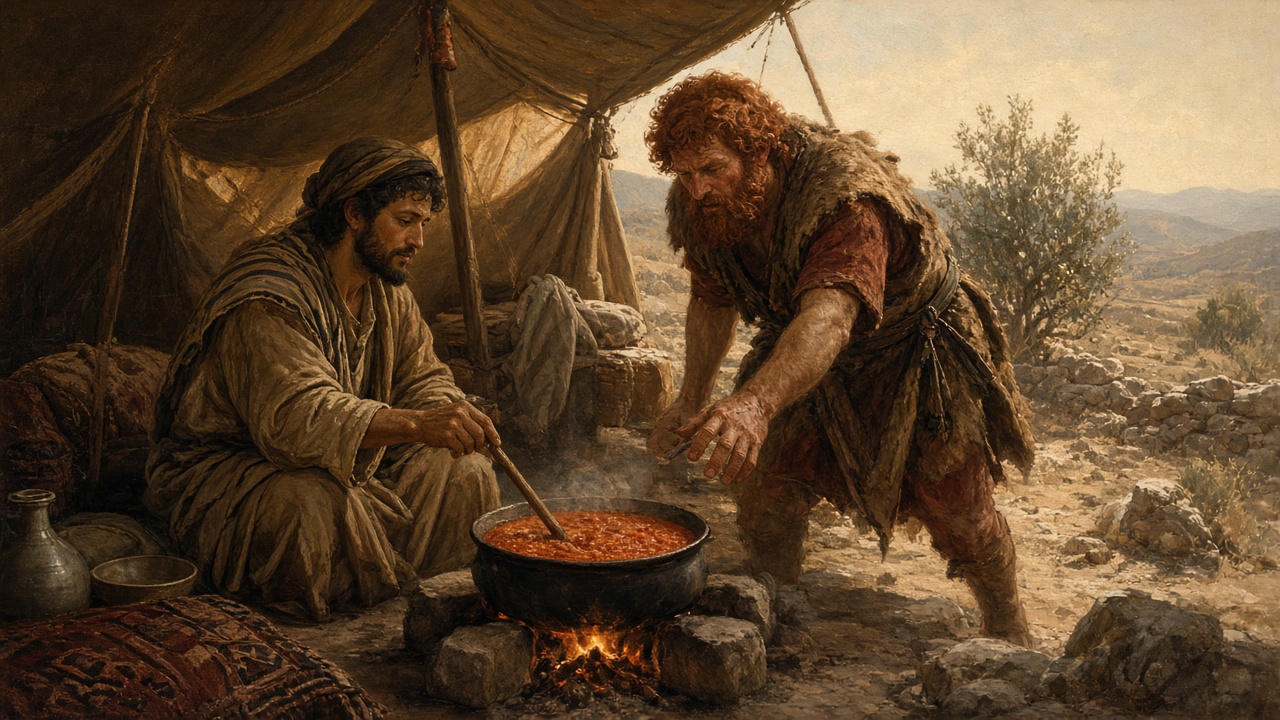
33Ya꞉kob eyo꞉ towo꞉ a꞉la꞉sio꞉, “Ge tamina Godeya꞉ si wa꞉l amio꞉ dinali saefoma.” A꞉la꞉fo꞉ko꞉lo꞉ Iso꞉ eyo꞉ dinali sa꞉la꞉sa꞉ga꞉ dimiabiki, Ya꞉kob e wa꞉la꞉b o꞉ngo꞉wo꞉ a꞉na dowo꞉. 34A꞉la꞉dinali sa꞉la꞉sa꞉ga꞉, Ya꞉kob eyo꞉ falawa so꞉fa꞉ o꞉lia꞉ ta꞉ya꞉la꞉ so꞉fa꞉ ho꞉n wo꞉gelo꞉ o꞉lia꞉yo꞉ Iso꞉ e maiya꞉ki dimi. E ma꞉no꞉ a꞉no꞉ ho꞉n o꞉lia꞉ na꞉la꞉ga꞉, a꞉na ane. A꞉la꞉go꞉ko꞉lo꞉ Iso꞉ e iyayo꞉ sowakilo꞉ dabun kelego꞉ emo꞉lo꞉ dimia꞉no꞉ a꞉no꞉ mo꞉beaki, eyo꞉ o꞉ngo꞉malo꞉ngo꞉ a꞉la꞉asulo꞉. Ya꞉kob eyo꞉ wi wa꞉la꞉b a꞉no꞉ elo꞉ ma꞉no꞉ so꞉fa꞉ a꞉ma꞉ kilili.|alt="Esau sells birthright for stew" src="C019_gr.tif" size="col" copy="© 1997 New Tribes Mission/Foreign Mission Board, Southern Baptist Convention. Used with permission." ref="25.19-34"
Did you know?
Abraham’s heirs and the twin brothers
- Keturah, whose name Easton's Bible Dictionary (1897) explains as “incense,” is introduced here as another wife of Abraham. That dictionary says he probably married her after Sarah’s death, though her nationality is unknown, and notes that 1 Chronicles calls her a concubine. She bore him six sons, including Jokshan and Midian, the father of the Midianites; while Abraham was still alive he gave gifts to the sons of his concubines and sent them away from Isaac to the land of the east.Sources: Keturah · Midian · the Bible text itself
- Isaac and Ishmael together buried Abraham in the cave of Machpelah near Mamre, in the field Abraham had bought from Ephron the Hittite, where Sarah already lay. Easton's Bible Dictionary (1897) explains Machpelah as “portion” or “double cave,” set on a hillside east of Hebron and facing Mamre, a place called the oaks—or, in a margin, the terebinths—of Mamre.Sources: Machpelah · Mamre · the Bible text itself
- Esau, Rebekah’s firstborn twin, was born red and covered with hair like a fur coat. Easton's Bible Dictionary (1897) links the further name Edom, “red,” to the red lentil stew for which he sold his birthright, and explains Jacob as “one who follows on another’s heels” or “supplanter,” matching the report that Jacob was born grasping Esau’s heel. Esau grew up as a skillful hunter and a man of the field, while Jacob was a quiet man who stayed at home.Sources: Esau (Edom) · Jacob (Israel) · the Bible text itself
Notes written with AI assistance from open sources (Theographic Bible Metadata, CC BY-SA 4.0; Easton’s Bible Dictionary, public domain) and reviewed before publishing.
Places in this chapter
- East · Today: region around Amman · 31.955, 35.934 · verse 6
- Machpelah · Today: Cave of the Patriarchs · 31.525, 35.111 · verse 9
- Negeb · 31.245, 34.841 · verse 11
- Assyria · 36.359, 43.153 · verse 18
- Egypt · 30.129, 31.308 · verse 18
Only places identified with high confidence are shown (90% or more according to the scholarly sources compiled by OpenBible). Period map: DARE (Digital Atlas of the Roman Empire), CC BY 4.0; modern map: © OpenStreetMap contributors; places: OpenBible.info (CC BY 4.0).
Credits and license for this translation
Godeya꞉ To Nafayo꞉ We
The New Testament, Genesis, and Ruth in the Kaluli language of Papua New Guinea
Sampela hap Buk Baibel long tokples Kaluli long Niugini
copyright © 1998-2022 Wycliffe Bible Translators, Inc.
Language: Kaluli
Translation by: Wycliffe Bible Translators
This translation is made available to you under the terms of the
Creative Commons Attribution-Noncommercial-No Derivatives license 4.0.
You may share and redistribute this Bible translation or extracts from it in any format, provided that:
You include the above copyright and source information.
You do not sell this work for a profit.
You do not change any of the words or punctuation of the Scriptures.
Pictures included with Scriptures and other documents on this site are licensed just for use with those Scriptures and documents.
For other uses, please contact the respective copyright owners.
2025-03-12
Source: http://png.bible/bco/ · eBible.org