Genesis 22
Godeya꞉ To Nafayo꞉ We · Tap a verse to see its cross-references.
Ablaham eyo꞉ Aisa꞉go꞉ Godemo꞉ dimi
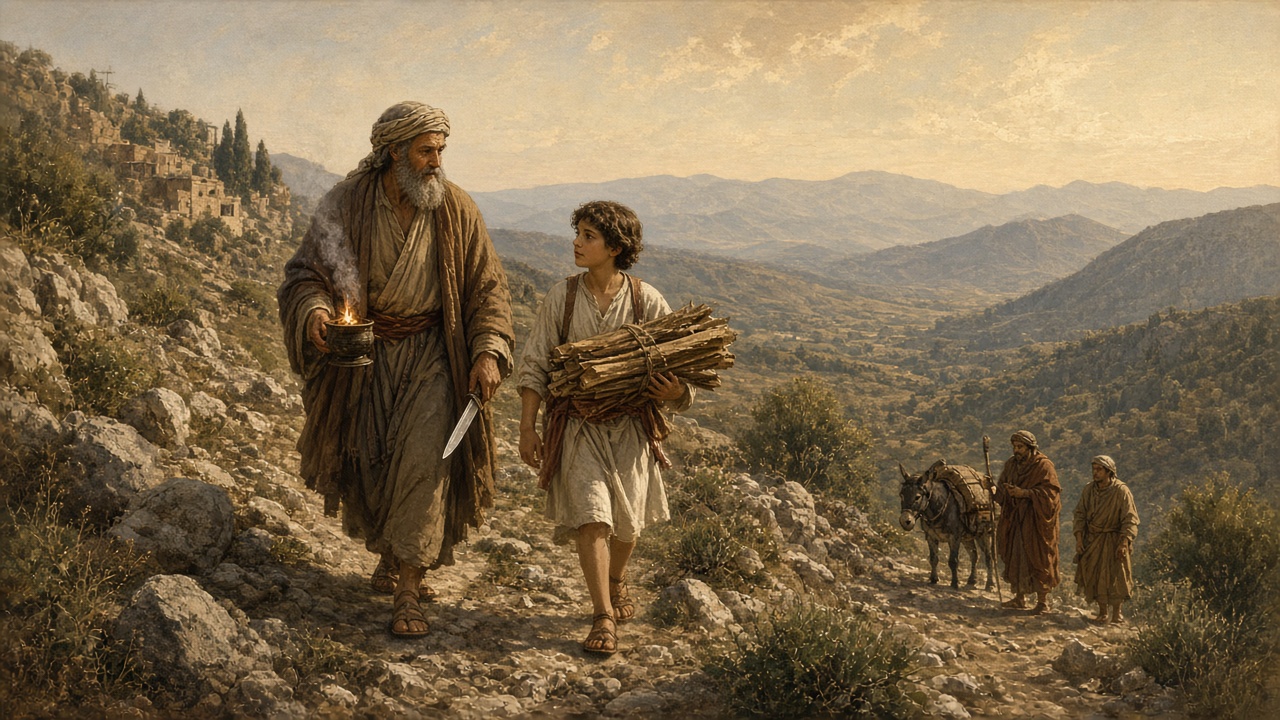
1A꞉ma꞉ fa꞉s amio꞉ Gode eyo꞉ Ablahamo꞉ da꞉fe ba꞉daki, emo꞉wo꞉ a꞉la꞉sio꞉, “Ablaham!” A꞉la꞉ho꞉idabiki Ablaham eyo꞉ a꞉ma꞉la꞉yo꞉ a꞉la꞉sio꞉, “O꞉ba, ne weko꞉” 2A꞉la꞉ta꞉ga꞉ Gode eyo꞉ a꞉la꞉sio꞉, “Giyo꞉ so꞉wayo꞉ imilig, Aisa꞉g a꞉no꞉ ge mada alan asula꞉sen ko꞉lo꞉, giyo꞉ so꞉wa a꞉no꞉ Molaya hen a꞉na tililia꞉ ha꞉na꞉sa꞉ga꞉ fa꞉la꞉dowalikiyo꞉, niyo꞉ misio꞉ nowo꞉ gemo꞉ walama꞉no꞉. Gemo꞉lo꞉ walama꞉no꞉ misio꞉ a꞉na ha꞉na꞉sa꞉ga꞉, giyo꞉ so꞉wa a꞉no꞉ nemo꞉ boba so꞉meaki dimia꞉bi.” Gode eyo꞉ a꞉la꞉sio꞉. 3Ho꞉le bidabikiyo꞉, Ablaham e ha꞉na꞉no꞉wo꞉ donkiyo꞉ dimidalia꞉ga꞉, so꞉mea꞉no꞉ de hi a꞉no꞉ a꞉na basalela꞉. Eyo꞉ basalilia꞉sa꞉ga꞉yo꞉, ene so꞉wa Aisa꞉g o꞉lia꞉ ene nanogdo꞉ dian kalu a꞉la꞉ o꞉lia꞉yo꞉ tililia꞉sa꞉ga꞉, iyo꞉ hen Godeya꞉lo꞉ emo꞉lo꞉ sio꞉ a꞉na ha꞉na꞉ni ane. 4Iyo꞉ ho꞉len a꞉la꞉yo꞉ ha꞉na꞉la꞉ga꞉, ho꞉len asol dowabikiyo꞉, Ablaham eyo꞉ sigiliga꞉fo꞉ amio꞉, hen elo꞉ ha꞉na꞉no꞉ a꞉no꞉ ko꞉na꞉ elena ba꞉ba꞉. 5A꞉la꞉gabiki Ablaham eyo꞉ ene nanogdo꞉ dian kalu a꞉la꞉mo꞉wo꞉ a꞉la꞉sio꞉, “Ga꞉go꞉ donkiyo꞉ bo꞉fo꞉liki, wena yasi sa꞉bi. So꞉wa na꞉no꞉ halona ha꞉na꞉sa꞉ga꞉, Godemo꞉ wabudaki, ene wiyo꞉ dulugu sa꞉la꞉sa꞉ga꞉yo꞉, na꞉no꞉ a꞉ma꞉la꞉ mia꞉no꞉.” 6A꞉la꞉sa꞉la꞉sa꞉ga꞉ Ablaham eyo꞉ so꞉mea꞉no꞉ de hi a꞉no꞉ dia꞉sa꞉ga꞉, ene inso꞉ Aisa꞉gbo꞉ dima꞉ki dimi. A꞉la꞉ta꞉ga꞉ eneno꞉ helebesi o꞉lia꞉ de kudulia꞉gane o꞉lia꞉ a꞉no꞉ dia꞉sa꞉ga꞉, ida꞉ni ha꞉na꞉ni ane. 7A꞉la꞉yo꞉ ha꞉na꞉ga꞉ ha꞉nakiyo꞉, Aisa꞉g eyo꞉ iyamo꞉wo꞉ a꞉la꞉sio꞉, “Dowa.” A꞉la꞉sa꞉labiki “O꞉ba, ne weko꞉” a꞉la꞉sio꞉. Aisa꞉g eyo꞉ a꞉la꞉dabu ba꞉daki, “De kudulia꞉ mio꞉ o꞉lia꞉ de hi o꞉lia꞉yo꞉ welo꞉ka꞉, ko꞉sega sibi kalofo bobalo꞉ so꞉mea꞉no꞉ a꞉no꞉ ha꞉?” 8A꞉la꞉dabu ba꞉dabiki, Ablaham eyo꞉ a꞉ma꞉la꞉ sa꞉laki, “Ni so꞉wa, Godemo꞉lo꞉ boba so꞉mea꞉no꞉ sibi kalofo a꞉no꞉ Godeya꞉ ene dimia꞉ib.” A꞉la꞉sa꞉la꞉sa꞉ga꞉ a꞉la꞉yo꞉ ha꞉na꞉ga꞉ ane. Aisa꞉go꞉ bobalo꞉ so꞉kugulu mea꞉no꞉ de hiyo꞉ e dia꞉gane.|alt="Isaac carries wood for the sacrifice" src="01_Ge_22_04_RG_gr.tif" size="col" copy="© Sweet Publishing http://sweetpublishing.com, licensed under a CC: BY-SA 3.0 Unported licence" ref="22.6"
9A꞉la꞉yo꞉ ha꞉na꞉sa꞉ga꞉, Godeya꞉lo꞉ hen emo꞉lo꞉ sio꞉ a꞉na fa꞉la꞉dowakiyo꞉, Ablaham eyo꞉ uwo꞉ dibida꞉i fa꞉la꞉nda꞉sa꞉ga꞉, imili alitakiyo꞉, de hiyo꞉ wa꞉la difa꞉. A꞉la꞉ta꞉ga꞉ ene inso꞉ Aisa꞉go꞉ meya꞉ mela꞉sa꞉ga꞉, ulo꞉ dibido꞉ a꞉na de hi wa꞉la difa꞉. 10A꞉la꞉ta꞉ga꞉ Ablaham eyo꞉ ene inso꞉wo꞉ sana soma꞉niki, dagiyo꞉ talagala꞉sa꞉ga꞉, helebesiyo꞉ a꞉na di. 11Ko꞉sega Yawe ene ma꞉mul kaluwa꞉yo꞉ Hebene halona ho꞉idaki a꞉la꞉sio꞉, “Ablaham, Ablaham.” “O꞉ba, ne weko꞉” Ablaham eyo꞉ a꞉la꞉sio꞉. 12A꞉la꞉ta꞉ga꞉ ma꞉mul kaluwa꞉ sa꞉laki, “Giyo꞉ so꞉wako sana sowa꞉so꞉bo. Emo꞉wo꞉ mogago꞉ imilise nowo꞉ dimida꞉so꞉bo! Mo꞉wo꞉ giyo꞉ so꞉wa imilise a꞉no꞉ mo꞉kidiaki, nemo꞉wo꞉ o꞉li dimi ko꞉lo꞉, ge Godeyo꞉ tagilaki, mada hendele kudu ha꞉nabo꞉lo꞉b a꞉la꞉bo꞉ niyo꞉ o꞉go꞉ asulo꞉l” a꞉la꞉sio꞉. 13A꞉la꞉sa꞉labiki Ablaham e sigili ba꞉ba꞉ amio꞉, yagilio꞉, sibi de imilise nowo꞉, biso꞉ i ha꞉lu nowa kowa꞉gila꞉fo꞉lena ba꞉ba꞉. A꞉no꞉ ba꞉da꞉ga꞉yo꞉, e ha꞉na꞉sa꞉ga꞉ sibi a꞉no꞉ dia꞉ga꞉, ene so꞉wayo꞉ mo꞉sana sowaki, eyo꞉ sibi de a꞉no꞉ Godemo꞉wo꞉ so꞉kugulu me. 14A꞉la꞉fo꞉ko꞉lo꞉ Ablaham eyo꞉ hen a꞉no꞉ “Yawe Yaile” a꞉la꞉wikilo꞉. To a꞉ma꞉ ha꞉go꞉ we, “Yawe eyo꞉ dimia꞉ib.” A꞉la꞉ta꞉ga꞉ o꞉g a꞉namio꞉ kaluka꞉isale iliyo꞉ a꞉la꞉sa꞉la꞉sen, “Yawe ene misio꞉ a꞉namio꞉ dimia꞉ib.” 15A꞉la꞉ta꞉ga꞉ Yaweya꞉ ene ma꞉mul kalu a꞉ma꞉yo꞉ Hebene a꞉la꞉ta꞉ga꞉ wa꞉ka ho꞉idakiyo꞉ a꞉la꞉sio꞉, “Ni wi Yawe a꞉na ilikiyo꞉, niyo꞉ a꞉la꞉dinali so꞉lo꞉l. Giyo꞉ ga꞉ so꞉wa imilise a꞉no꞉ mo꞉kidiaki, a꞉la꞉ka dimido꞉ ko꞉lo꞉, niyo꞉ gemo꞉ mada sagale alitakiyo꞉, gilo꞉ so꞉wa sa꞉la꞉la꞉i ha꞉na꞉lab a꞉no꞉ akin amilo꞉ tamin gego꞉ o꞉ngo꞉ a꞉la꞉ta꞉ga꞉ ho꞉n amilo꞉ sa꞉ o꞉ngo꞉ fa꞉la꞉doma꞉ki ta꞉fa꞉no꞉. A꞉la꞉ta꞉ga꞉ gilo꞉ so꞉wa sa꞉la꞉la꞉i ha꞉na꞉lab a꞉ma꞉yo꞉ gis kalu ilido꞉wo꞉ tiginilakiyo꞉, amisa꞉n ililo꞉wo꞉lo꞉ dima꞉ki ta꞉fa꞉no꞉. 18Gilo꞉ so꞉wa sa꞉la꞉la꞉i ha꞉na꞉lab i a꞉na a꞉la꞉ta꞉ga꞉yo꞉, henfelo꞉ amilo꞉ so꞉lo꞉wo꞉ tambo nafale mesea꞉ki ta꞉fa꞉no꞉. Giyo꞉ ni towo꞉ kudu ane ko꞉lo꞉, niyo꞉ a꞉la꞉dimidama꞉no꞉.” Yawe eyo꞉ a꞉la꞉dinali sio꞉. 19A꞉la꞉go꞉ko꞉lo꞉ Ablaham e ene nanog kalu a꞉la꞉lo꞉wa a꞉ma꞉la꞉ ha꞉na꞉ga꞉, iyo꞉ egele Bilsiba a꞉na ha꞉na꞉ni ane. A꞉la꞉ta꞉ga꞉ e Bilsiba a꞉na sen.
20Tif amio꞉ kalu noma꞉yo꞉ Ablahambo꞉wo꞉ towo꞉ a꞉la꞉sio꞉, “Gao Nahol ene inga Milka eyo꞉ kalu so꞉wayo꞉ modo꞉ ko꞉lo꞉ sa꞉la꞉li. 21Wa꞉la꞉bo꞉ Us wikilo꞉, a꞉la꞉ta꞉ga꞉ a꞉ma꞉ fa꞉so꞉, Bus. Nowo꞉ Kemuel, nowo꞉ Kesed, nowo꞉ Haso, nowo꞉ Bildas, nowo꞉ Ya꞉dlab, a꞉la꞉ta꞉ga꞉ tifo꞉ Betuel” a꞉la꞉sio꞉. Milka eyo꞉ Ablahama꞉ ao Nahol emo꞉wo꞉ kalu so꞉wa ola꞉fo꞉ a꞉no꞉ ko꞉lo꞉ sa꞉la꞉me. Tif amio꞉ Kemuel eyo꞉ Alam ko꞉lo꞉ sa꞉la꞉li, a꞉la꞉ta꞉ga꞉ Betuel eyo꞉ La꞉ba꞉ga ko꞉lo꞉ sa꞉la꞉li. 24A꞉la꞉ta꞉ga꞉ tif amio꞉ Nahol eyo꞉ ene nanog dian ga nowo꞉ ene a꞉di. Ga a꞉ma꞉ wiyo꞉ Leuma. Eyo꞉ Nahol emo꞉wo꞉ kalu so꞉wayo꞉ fa꞉la꞉da꞉in ko꞉lo꞉ sa꞉la꞉me. Wa꞉la꞉bo꞉ Teba, nowo꞉ Gaham, nowo꞉ Tahas, a꞉la꞉ta꞉ga꞉ tifo꞉ Maka ko꞉lo꞉ sa꞉la꞉li.
Did you know?
God Tests Abraham
- Isaac was Abraham’s only son by Sarah. The next memorable event recorded in his life, after he was weaned, is God’s command that Abraham offer him as a burnt offering on a mountain in the land of Moriah.Sources: Isaac · the Bible text itself
- Easton's Bible Dictionary (1897) notes that some contend the land of Moriah is Mount Gerizim, but regards it as most probably one of the hills of Jerusalem, northeast of Zion, where Solomon’s temple was built on the threshing-floor of Ornan the Jebusite.Sources: Moriah
- The chapter ends with news of Abraham’s relatives: his brother Nahor had remained in Haran, east of the Euphrates, and Milcah had borne him eight sons, among them Bethuel, Rebekah’s father. Rebekah became Isaac’s wife, and contact between the family in Canaan and the kin at Haran lasted until Jacob left Haran.Sources: Nahor (brother of Abraham) · Bethuel · the Bible text itself
Notes written with AI assistance from open sources (Theographic Bible Metadata, CC BY-SA 4.0; Easton’s Bible Dictionary, public domain) and reviewed before publishing.
Credits and license for this translation
Godeya꞉ To Nafayo꞉ We
The New Testament, Genesis, and Ruth in the Kaluli language of Papua New Guinea
Sampela hap Buk Baibel long tokples Kaluli long Niugini
copyright © 1998-2022 Wycliffe Bible Translators, Inc.
Language: Kaluli
Translation by: Wycliffe Bible Translators
This translation is made available to you under the terms of the
Creative Commons Attribution-Noncommercial-No Derivatives license 4.0.
You may share and redistribute this Bible translation or extracts from it in any format, provided that:
You include the above copyright and source information.
You do not sell this work for a profit.
You do not change any of the words or punctuation of the Scriptures.
Pictures included with Scriptures and other documents on this site are licensed just for use with those Scriptures and documents.
For other uses, please contact the respective copyright owners.
2025-03-12
Source: http://png.bible/bco/ · eBible.org