Ruth 1
Tareka Buka · Tap a verse to see its cross-references.
About this book
About Ruth
- The events are set in the days of the judges. A great famine led Elimelech, a man of the tribe of Judah and a kinsman of Boaz, to leave Bethlehem with his wife Naomi and their sons Mahlon and Chilion and settle in Moab, east of the Jordan and the Dead Sea. There Elimelech and both sons died.Sources: Elimelech · Moab · Mahlon · Chilion
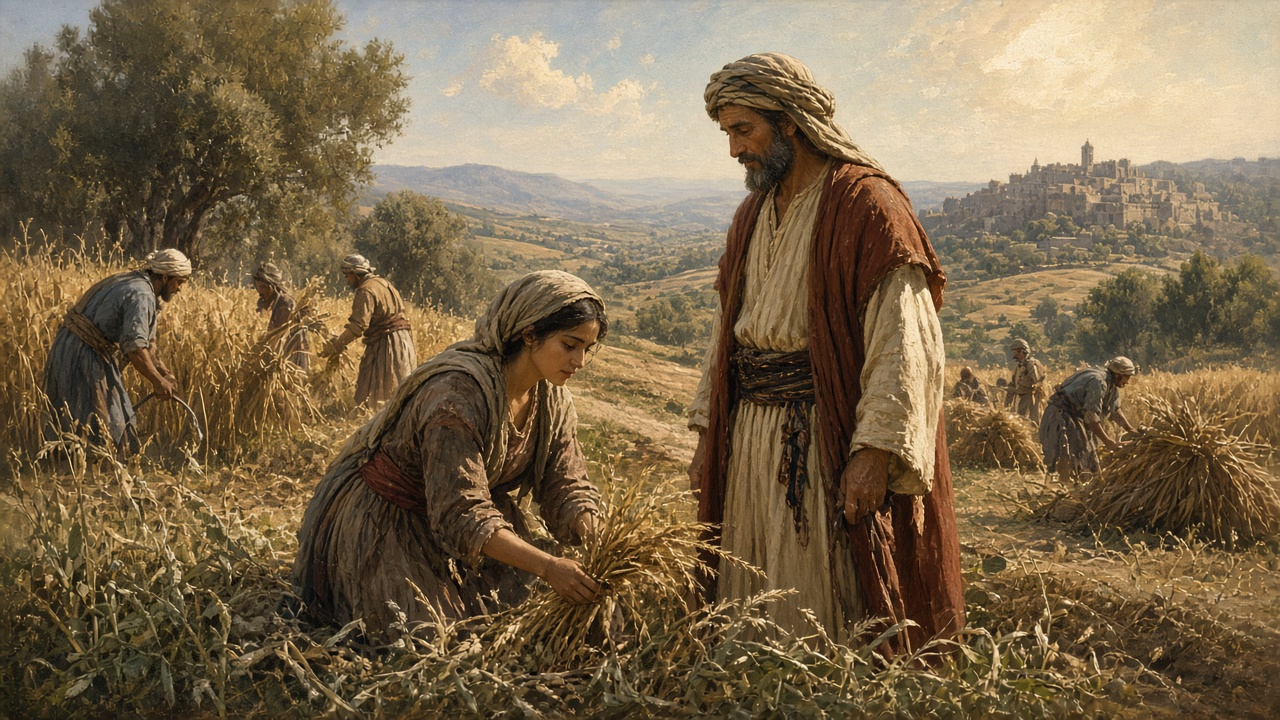
- Naomi then returned to Bethlehem with Ruth, a Moabite and the widow of Mahlon, who refused to leave her. Orpah, Chilion's widow, accompanied Naomi part of the way and then returned to Moab. In the valley east of the town, Ruth gleaned in the fields and was eventually married to Boaz, a wealthy relative.Sources: Easton: Ruth · Orpah · Bethlehem · Boaz
- Easton's Bible Dictionary (1897) says the story of the gleaner Ruth illustrates friendly relations between Boaz and his reapers, the land system, the way property was transferred, and the working of the Mosaic law for the relief of ruined families. By the levirate law, Boaz, a kinsman of Mahlon, took on the duty of marrying Ruth.Sources: Easton: Ruth · Boaz
- Ruth became the mother of Obed, the grandfather of David. The genealogy in Ruth 4:18-22 traces that line, and Matthew 1:5 includes Ruth, a Gentile, among the ancestors of Jesus. Easton also compares her with Tamar and Rahab, who likewise became ancestors of David.Sources: Easton: Ruth · Obed · Ruth
- Bethlehem, in the hill country of Judah, was originally called Ephrath; Ruth 1:2 calls it Bethlehem-Judah and its people Ephrathites. Easton's Bible Dictionary (1897) explains Ruth as meaning a friend, and Naomi as bitter or sad, a symbolic name she gave herself because of her misfortunes.Sources: Bethlehem · Ephrathah · Ruth · Naomi
Notes written with AI assistance from open sources (Theographic Bible Metadata, CC BY-SA 4.0; Easton’s Bible Dictionary, public domain) and reviewed before publishing.
Nou Ruti totomu e nou idaibo sosoro gomidiro
1Isiraere urubia ata kiauri dubu ro na-iaurititi, ata dubu masiro Erimereki nou Beterehema sabowa ato wimidirotiti nou orobo mere teibo mutu. Iedi tau ro nato auna sogoi tau ro gereredea, ina noudo ie neibi ro nou ri gemeserai-birimo edi Eparata duriomoro ro, Iuda duriomoro ato na-owamo. Nou, orobo Naomi, mere teibo Maroni ra Kirioni ra neibi ro edi duriomoro ro aise gemeserai-birimo imese giabu-birimo ata daimodaimo duriomoro to masiro Moabi, neito goi-birimo karaho.
Taie tuturu tau to iato aise wimidirotiti-bimo.
3Ina iato Erimereki aise garaburai Moabi duriomoro ato. Nou orobo garamu mere teibo mutu neibi se gimeserai-biro. 4Neibi ibo wimidirotiti-bimo, mere teibo Moabi orobo teibo iato aise giedea-marido. Kirioni ro a-gedea Opa, Maroni ro gedea Ruti. Neibi nakara se iato imidirotiti-bimo tuturu tau to.
5Ina iedi mere teibo ro iato aise gorowaburai-rido, Naomi nakara ia se geremeserai, mere teibo tato, uramu tato ibo wimidirotiti.
6Ina ata owera nou ro iato girorowai ibo Isiraere urubia neio abora ohona modobo ie, tiho-dumo, sogoi tau ta-goroporeai. Iedi meana ro Godi ro gaiwai neio aboto. Naomi ro na-girorowai, nou eterera garamu teibo mutu neibi namabu keremododiai, 7taie imese gaimai-birimo simara sabowa to, Iuda duriomoro ato na-owamo, edi koroho gabo ro neibi ro nou gemodobowa-birimo neido gabu-birimo ito.
8Neibi neido na-gabu-birimo ipi ato, Naomi ro eterera teibo iato gimowapotai-ma, ‘Nitiro mo se nobodoidiro-do, simara sabowa to dorowameai-do. Nitiro beda kiwarebai tanaro wisioidirotiti-do mo aboto, mo mere teibo edi tau ato na-gomidiro-rido, nitiro Godi ro mea wisa ba-mimowameai-ma. 9Ina nitiro mea se komidiro aboto Godi ro orio uramu teibo ba-mimowea-ma.’
Taie eterera teibo iato giohiai-ma, idobi imese geremerete-birimo. 10Neitiro iato gutura-rido ibo, ‘Marasio neitiro anamadi-iabu-ri oro sabowa to.’
11Ina Naomi ro ibo neitiro aboto, ‘E e, nitiro mo mutu ou-ri pua. Mo abere ie, mo ro modobo pua mere teibo ina kiroto-ma, nitiro kiedea-ma aboto. 12Nodi duwo ro mo uramu ro ma-medea-ro ina niro kowea ato, nato nama-iroto-mari mo ro kiwoubua-ma tuturu e, 13nitiro modobo pua keremotoi tuturu tau to. Komidiro keremiro mo abato ubauba ia se iamo, iedi tanaro ro Godi ro gosioidiro-die mo aboto.’
14Neibi ina idobi iato geremerete-birimo. Opa daramuabere mutu na-gororohiai-rido, iawo kutura, taie nou imese gorowameai simara sabowa to. Kaupoti Ruti arahua pua daramuabere aboudo, koko se girarebidiro.
15Taie Naomi na-gerewesegerai Ruti aboto nou ro ibo, ‘Oro boinana orobo torowameai simara sabowa to, nou simara orora imowameai. Oro ibose ba-dorowameai!’
16Ina Ruti ro ibo, ‘Oro ro nemediawado mo orowameai ri. Oro beda moro to kou ra, mo ibose to kou e. Oro beda moro ato komidiro ra, mo ibose to komidiro ie. Oro edi urubia ro, mo urubia ie. Oro edi na emowabutititi, mo ro ibose to nou anama-emowabutititi-ri. 17Oro karaburai moro, mo karaburai moro ie. Oro bobo kemoba moro, mo iato ibose to anamadime-emoba-ri. Neitiro ata ro nama-ihodowa-mari, Godi ro ba-maiwai-ro ubauba wisa mo aboto.’
Nou idaibo sosoro korowameai gabo rido imese ta-geremowotouti.
18Naomi umoro na-goi Ruti ubi tato ie korowameai, nou ro ina emediawado pua nou orowameai ri.
19Neitiro atu se imese gou-rido Beterehema sabowa to.
Neitiro ito na-gorowateai-rido, urubia sirio ro na-girowai-rimo ibo Naomi ta-wou-ro, neio kamade mutu iato giaiauti-rimo. Mamio ro ibo, ‘Morobise Naomi ra io?’
20Naomi ro ibo, ‘Mo Naomi to asoro ate, mo Mara to dasoro-rimo, mabu mo kamade ro owati pua mo komidiro keremiro mibo ia ie, Godi ro ubauba ta-nemowai-ro. 21Mo neido modobo ato naimai keba se, ina abora mo Godi ro nakara se nowameai-die neito. Mo Naomi to nasoro-rimo, imese pupuwo ia Godi ro mo komidiro keremiro ubauba ta-nemowai-ro.’
22Neitiro na-gorowateai-rido urubia edi tau ro nato bari ohona gidabuti-rimo.
Did you know?
Naomi and Ruth Return to Bethlehem
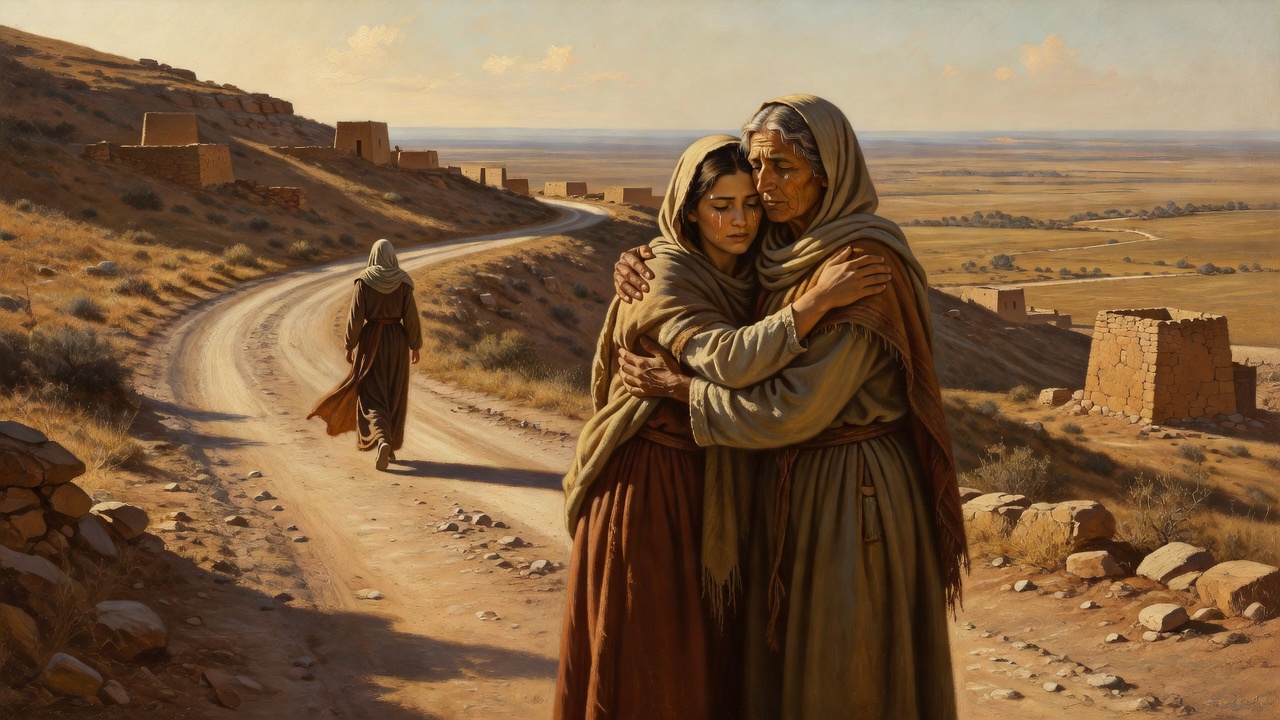
- In the days when the judges ruled, famine forced Elimelech and his family from Bethlehem in the hill country of Judah to migrate to the land of Moab, east of the Dead Sea. After the deaths of Elimelech and her two sons, Naomi decided to return to Bethlehem when she heard that food was once again available in Judah.Sources: the Bible text itself · Bethlehem · Moab · Elimelech
- While Orpah returned to her people and gods in Moab, Ruth clung to her mother-in-law and pledged loyalty to Naomi and her God. Ruth, a Moabite woman, traveled to Bethlehem and would later become an ancestor of King David.Sources: the Bible text itself · Ruth · Orpah
- Upon arriving in Bethlehem at the beginning of the barley harvest, Naomi asked the women of the city to call her Mara, meaning bitter, because she felt the Almighty had dealt bitterly with her. She had departed full with a husband and two sons, but returned empty after their deaths.Sources: the Bible text itself · Naomi
Notes written with AI assistance from open sources (Theographic Bible Metadata, CC BY-SA 4.0; Easton’s Bible Dictionary, public domain) and reviewed before publishing.
Places in this chapter
- Bethlehem · 31.704, 35.208 · verses 1, 2, 19, 22
- Moab · Today: Moab 1 · 31.181, 35.701 · verses 1, 2, 4, 6, 22
Only places identified with high confidence are shown (90% or more according to the scholarly sources compiled by OpenBible). Period map: DARE (Digital Atlas of the Roman Empire), CC BY 4.0; modern map: © OpenStreetMap contributors; places: OpenBible.info (CC BY 4.0).
Credits and license for this translation
Tareka Buka
Portions of the Holy Bible in the Bamu language of Western Province, Papua New Guinea
Buk Baibel long tokples Bamu long Niugini
copyright © 2023 SIL Papua New Guinea
Language: Bamu
This translation is made available to you under the terms of the
Creative Commons Attribution-Noncommercial-No Derivatives license 4.0.
You may share and redistribute this Bible translation or extracts from it in any format, provided that:
You include the above copyright and source information.
You do not sell this work for a profit.
You do not change any of the words or punctuation of the Scriptures.
Pictures included with Scriptures and other documents on this site are licensed just for use with those Scriptures and documents.
For other uses, please contact the respective copyright owners.
2026-08-26
Source: http://png.bible/bcf/ · eBible.org