Isaiah 36
Bibeli Gusunɔn Gari · Tap a verse to see its cross-references.
Asiriɡibu
bɑ koo Yerusɑlɛmu tɑrusi
1Esekiɑsi, Yudɑbɑn sinɑ bokon bɑndun wɔ̃ɔ wɔkurɑ nnɛse sɔɔ, yerɑ Asirin sinɑ boko Sɑnkeribu u Yudɑbɑn wuu si su dɑm mɔ wɔri u kɑmiɑ. 2Lɑkisin diyɑ u win tɑbu sunɔ kɑ tɑbu durɔ dɑmɡibu ɡɔrɑ Yerusɑlɛmuɔ Esekiɑsin mi. Tɑbu sunɔ wi, u dɑ u yɔ̃rɑ nim torɑn bɔkuɔ ye bɑ kuɑ yɑ rɑ kɑ nim nɛ wuuɔ sɑɑ bwiɑn di, be bɑ rɑ bekɑ wɔ̃ken sɔm koo yerun swɑɑɔ. 3Yerɑ Eliɑkimu, Hilikiyɑn bii, sinɑ bokon sɔm kowobun wiruɡii, u dɑ ben mi kɑ Sebinɑ wi u sɑ̃ɑ sinɑ bokon tire yoro, kɑ Yoɑsi, Asɑfun bii, wi u rɑ tirenu bere. 4Asirin tɑbu sunɔ wi, u bu sɔ̃ɔwɑ u nɛɛ, i Esekiɑsi sɔ̃ɔwɔ i nɛɛ, ɑmɛniwɑ bɛsɛ Asiriɡibun sinɑ boko wi u kpuro kere u ɡeruɑ. U nɛɛ, mbɑ u yɔ̃rɑri u nɑɑnɛ sɑ̃ɑ mɛ. 5U ǹ yɛ̃ mɑ u dɑm kɑ bwisin bukɑtɑ mɔ u kɑ tɑbu ko? Gɑri sɑɑrinu tɔnɑ nu ǹ turɑ. Ǹ n mɛn nɑ, mɑ sɔɔrɑ win nɑɑnɛ yɑ wɑ̃ɑ, u kɑ nùn seesi. 6Geemɑ win nɑɑnɛ wɑ̃ɑwɑ Eɡibiti sunɔn mi, wi u sɑ̃ɑ nɡe kɑbɑ te tɑ kɔsikire. Wi u tu nɛnuɑ u tɑ̃siri, kpɑ tu nùn murɑ tu mɛɛrɑ ko. Nɡe mɛyɑ Eɡibitin sunɔ wi, u sɑ̃ɑ be bɑ nùn yĩiyɔ sɔɔ. 7Mɛyɑ i ko ɡere i nɛɛ, Gusunɔ bɛɛn Yinniwɑ i nɑɑnɛ sɑ̃ɑ. Adɑmɑ n ǹ win sɑ̃ɑ yenu kɑ yɑ̃ku yenɑ Esekiɑsi u kɔsukɑ? U ǹ bɛɛ Yudɑbɑ kɑ Yerusɑlɛmuɡibu sɔ̃ɔwɑ u nɛɛ, i n dɑ yɑ̃kuru ko Yerusɑlɛmu mini tɔnɑn sɑ̃ɑ yerɔ?
8Ǹ n mɛn nɑ, Esekiɑsi wi, u de u kɑ nɛn yinni Asirin sinɑ boko ɑrukɑwɑni bɔke kpɑ u nùn dumi nɔrɔbun subɑ yiru (2.000) wɛ̃, ù n yɛ̃ u koo mɑɑsɔbu wɑ bu yi sɔni. 9Domi u ǹ kpɛ̃ u yɔ̃rɑ u wi u piiburu bo nɛn yinnin tɑbu kowobu sɔɔ mɑ, bɑɑ mɛ u tɑmɑɑ Eɡibitiɡibu bɑ koo nùn tɑbu kɛkɛ yi dumi ɡɑwe kɑ mɑɑsɔbu wɛ̃. 10U ǹ yɛ̃ mɑ kɑ Yinni Gusunɔn yɛ̃rɑ Asirin sinɑ boko u kɑ tem mɛ wɔrimɑ, kpɑ u mu kɔsuku? Domi Gusunɔn tiiwɑ u nɛɛ, u doo u tem mɛ wɔri kpɑ u mu kɔsuku.
11Mɑ Eliɑkimu kɑ Sebinɑ kɑ Yoɑsi bɑ durɔ wi sɔ̃ɔwɑ bɑ nɛɛ, ɑ suuru koowo sɑ nun kɑnɑmɔwɑ, ɑ ku mɑɑ kɑ bɛsɛ wunɛn bwɑ̃ɑbu ɡɑri ko kɑ bɛsɛn bɑrum, kpɑ tɔn be bɑ swɑɑ dɑki ɡbɑ̃rɑrun di bu ku nɔ ye sɑ ɡerumɔ. A kɑ sun ɡɑri koowo kɑ ɑrɑmum, domi sɑ mu nɔɔmɔ.
12Adɑmɑ durɔ wi, u bu wisɑ u nɛɛ, i tɑmɑɑ nɛn yinni u mɑn ɡɔrimɑ bɛɛ kɑ bɛɛn yinni tɔnɑn sɔ̃ n kɑ ɡɑri yini ɡere? Aɑwo, kɑ mɑɑ be bɑ sɔ̃ ɡbɑ̃rɑru wɔllɔn sɔ̃nɑ be bɑ koo ben tiin swɑɑ swĩibu di kpɑ bu ben yɛ̃kum nɔ, kɑ bɛɛ sɑnnu. 13Sɑɑ ye sɔɔrɑ durɔ wi, u ɡbɑ̃rɑ kɑ dɑm kɑ Yudɑbɑn bɑrum u nɛɛ, i bɛsɛ Asiriɡibun sinɑ boko wi u kpuro keren ɡɑri swɑɑ dɑkio. 14U nɛɛ, i ku de Esekiɑsi u bɛɛ nɔni wɔ̃ke, domi u ǹ kpɛ̃ u bɛɛ wɔrɑ sɑɑ win nɔmɑn di. 15I ku wurɑ i Yinni Gusunɔ nɑɑnɛ ko, bɑɑ Esekiɑsi ù n nɛɛ, Yinni Gusunɔ wi, u koo bɛɛ wɔrɑ. Yen sɔ̃nɑ n ǹ koorɔ Asirin sinɑ boko u wuu ɡe mwɑ. 16I ku mɑɑ Esekiɑsi swɑɑ dɑki. I Asirin sinɑ bokoɡiɑ nɔɔwɔ wi u nɛɛ, i kɑ nùn nɔɔ tiɑ koowo kpɑ i nùn tii wɛ̃ kpɑ bɑɑwure u wɑ u win tiin resɛm ɡbɑɑru kɑ win fiɡien dɑ̃ɑ binu di kpɑ u mɑɑ win boon nim nɔ. 17Yen biru u koo nɑ u bɛɛ suɑ u kɑ dɑ tem ɡɑm mɛ mu sɑ̃ɑ nɡe bɛɛn tiin tem mɛ, mi resɛm kɑ ɑlikɑmɑ wɑ̃ɑ kpɑ i n pɛ̃ɛ kɑ tɑm mɔ. 18Yen sɔ̃, i ku de Esekiɑsi u bɛɛ nɔni wɔ̃ke u nɛɛ, Yinni Gusunɔ u koo bɛɛ wɔrɑ. Bwese ni nu tien bũnu nu bu wɔrɑ Asirin sinɑ boko win nɔmɑn di? 19Mɑnɑ Hɑmɑti kɑ Aɑpɑdi kɑ Sefɑɑfɑimun bũnu nu wɑ̃ɑ tɛ̃. Bũu ɡoo u kpĩɑ u Sɑmɑriɡibu wɔrɑ sɑɑ win nɔmɑn di? 20Bũu ni nu wɑ̃ɑ tem mɛ kpuro sɔɔ, nin nirɑ̀ nu nin tem wɔrɑ sɑɑ win nɔmɑn di, bu sere nɛɛ, Yinni Gusunɔ u koo Yerusɑlɛmu wɔrɑ.
21Adɑmɑ Yudɑbɑ kpuro bɑ mɑɑri, domi sinɑ boko Esekiɑsi u nɛɛ, bu ku rɑɑ nùn ɡɛɛ wisi. 22Mɑ Eliɑkimu, Hilikiyɑn bii sinɑ bokon sɔm kowobun wiruɡii wi, kɑ mɑɑ win tire yoro Sebinɑ, kɑ sere Yoɑsi Asɑfun bii, wi u rɑ tirenu bere, bɑ nɑ Esekiɑsin mi. Bɑ yɑbe kĩɑnu sebuɑ nuku sɑnkirɑnun sɔ̃, mɑ bɑ nùn sɔ̃ɔwɑ kpuro ye durɔ wi, u ɡeruɑ.
Did you know?
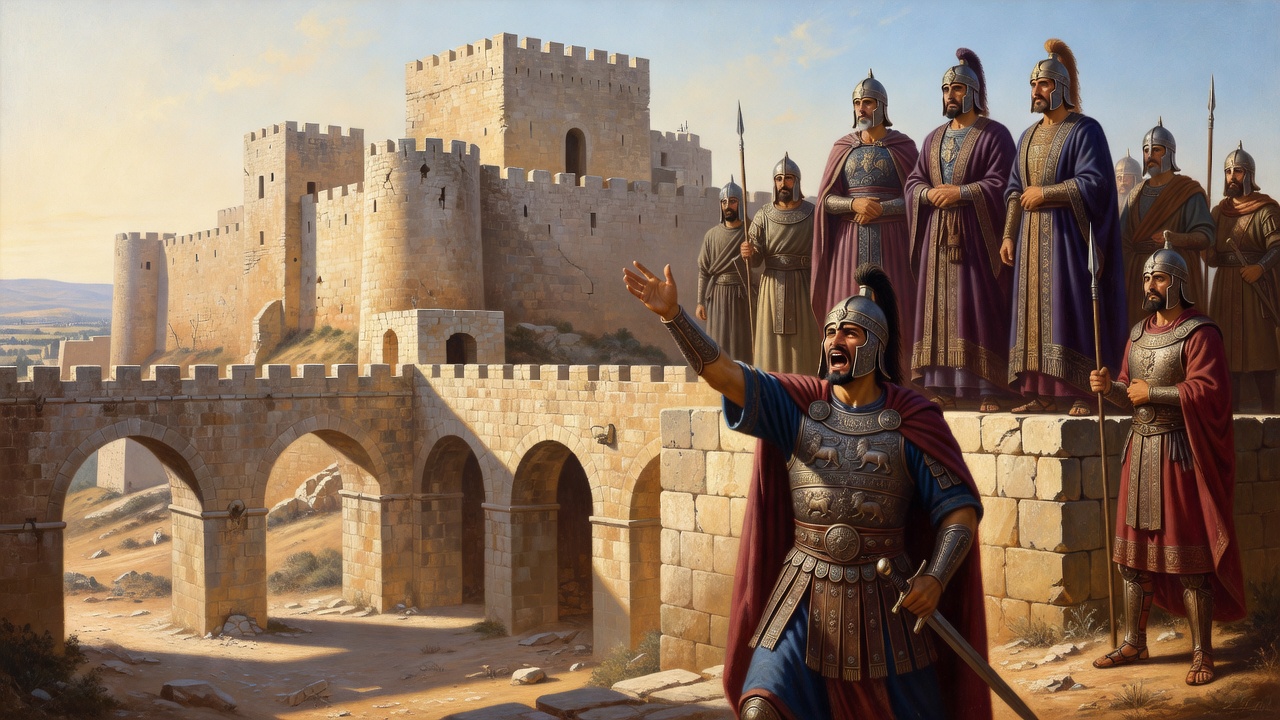
Sennacherib's Threat Against Jerusalem
- The term Rabshakeh was not a personal name, but a high-ranking title designating the chief cup-bearer or vizier of the Assyrian royal court. Sennacherib sent this official from Lachish to Jerusalem with a large army to demand the surrender of King Hezekiah.Sources: Rabshakeh · Lachish · the Bible text itself
- Hezekiah's ministers asked the Assyrian envoy to speak in Aramaic, a language used for international diplomacy that the common people would not understand. Rabshakeh refused and intentionally shouted in Hebrew so that the guards and civilians sitting on the city wall would hear his threats directly.Sources: Rabshakeh · the Bible text itself
- The Judean delegation sent out to meet the Assyrian envoy included Eliakim the palace administrator, Shebna the royal scribe, and Joah the recorder. After listening to the envoy's speech defying their God and their king, they returned to Hezekiah in deep mourning with their clothes torn.Sources: Eliakim · Shebna · Joah · the Bible text itself
Notes written with AI assistance from open sources (Theographic Bible Metadata, CC BY-SA 4.0; Easton’s Bible Dictionary, public domain) and reviewed before publishing.
Places in this chapter
- Assyria · 36.359, 43.153 · verses 1, 2, 4, 8, 13, 15, 16, 18
- Jerusalem · 31.777, 35.234 · verses 2, 7, 20
- Lachish · Today: Tell ed Duweir · 31.565, 34.849 · verse 2
- Upper Pool · Today: in Jerusalem · 31.777, 35.234 · verse 2
- Egypt · 30.129, 31.308 · verses 6, 9
- Hamath · Today: Hama · 35.136, 36.750 · verse 19
- Samaria · 32.276, 35.195 · verse 19
Only places identified with high confidence are shown (90% or more according to the scholarly sources compiled by OpenBible). Period map: DARE (Digital Atlas of the Roman Empire), CC BY 4.0; modern map: © OpenStreetMap contributors; places: OpenBible.info (CC BY 4.0).
Credits and license for this translation
Bibeli Gusunɔn Gari
The Holy Bible in the Baatonum language of Benin, also called the Bariba language
copyright © 2013 SIM
Language: Bariba (Baatonum)
Translation by: SIM International
Bariba, Bibeli Gusunɔn Gari
This translation, published by the UEEB/SIM au Benin, was published in 1996.
If you are interested in obtaining a printed copy, please contact the SIM at SIM, BP 15, Parakou, Benin.
This translation text is made available to you under the
terms of the Creative Commons License: Attribution-Noncommercial-No Derivative Works.
( http://creativecommons.org/licenses/by-nc-nd/3.0/ )
In addition, you have permission to port the text to different file formats, as long as you
do not change any of the text or punctuation of the Bible.
You may share, copy, distribute, transmit, and extract portions
or quotations from this work, provided that you include the above copyright
information:
You must give Attribution to the work.
You do not sell this work for a profit.
You do not make any derivative works that change any of the actual words or punctuation of the Scriptures.
Permissions beyond the scope of this license may be
available if you contact
us with your request.
This translation is made available to you under the terms of the
Creative Commons Attribution-Noncommercial-No Derivatives license 4.0.
You may share and redistribute this Bible translation or extracts from it in any format, provided that:
You include the above copyright and source information.
You do not sell this work for a profit.
You do not change any of the words or punctuation of the Scriptures.
Pictures included with Scriptures and other documents on this site are licensed just for use with those Scriptures and documents.
For other uses, please contact the respective copyright owners.
2014-09-10
Source: http://ebible.org/bba/ · eBible.org